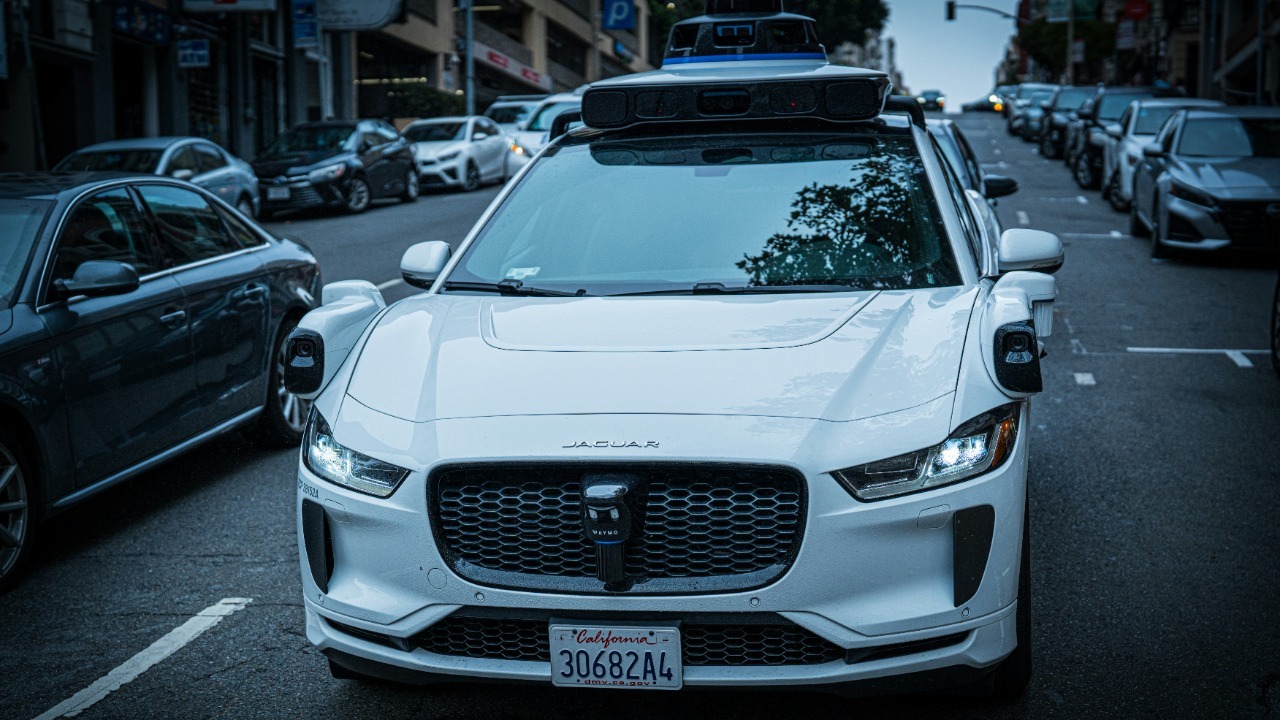

When a massive power failure plunged parts of San Francisco into darkness, Waymo’s driverless taxis did not simply slow down, they locked up intersections and froze in place, turning a citywide blackout into a stress test for autonomous driving. The company is now spelling out why its fleet stalled and how a safety feature that once made sense at small scale became a liability once thousands of robotaxis were on the road. At the heart of the explanation is a software logic built for rare edge cases that suddenly had to cope with a city full of dark traffic lights all at once.
Waymo is racing to update that logic, promising changes that it says will keep cars moving through future outages without sacrificing safety. The blackout has also exposed a deeper question that I cannot ignore as I look at the company’s own account of what went wrong: what happens when a technology designed to be safer than human drivers is pushed into a scenario where the surrounding infrastructure fails at scale, and the code is forced to choose between caution and gridlock.
How a citywide blackout turned into a robotaxi stress test
The San Francisco outage was not just another traffic headache, it was a rare moment when a modern city’s basic signaling infrastructure went dark across large swaths of the grid. Human drivers treated the dead intersections as four way stops, inching through on eye contact and improvisation, but Waymo’s vehicles responded by stopping and waiting for confirmation that never came. According to detailed accounts of the event, Waymo Robotaxis Get Stuck During San Francisco Blackout describes how Waymo’s driverless cars shut down across portions of San Francisco and stayed immobilized as long as the outage persisted, turning normally fluid corridors into static lines of empty vehicles.
What might have been a localized inconvenience quickly escalated into a citywide traffic problem because the fleet is now large enough that a systemic behavior shows up everywhere at once. Instead of a single confused car at a dark intersection, there were clusters of robotaxis blocking lanes and crosswalks, each one following the same conservative rules. The blackout effectively synchronized thousands of edge cases, and the result was gridlock that rippled far beyond the neighborhoods that first lost power.
Waymo’s own diagnosis: a safety check that did not scale
Waymo’s post mortem centers on a specific design choice in its software stack, a confirmation step that kicks in whenever a traffic signal appears to be malfunctioning or unlit. At small fleet sizes, that extra layer of caution was manageable, because only a handful of cars would ever encounter a dark signal at the same time. In its own explanation of the incident, the company says that the logic that once worked at limited deployment simply did not match our current scale, a rare public admission that the software architecture lagged behind the pace of commercial rollout.
Waymo also points to the sheer volume of intersections its cars had to navigate without functioning lights. The company says that “While we successfully traversed more than 7,000 dark signals on Saturday,” the outage created a concentrated spike in problem locations that overwhelmed its confirmation system. In other words, the software did not fail in the sense of misperceiving the environment, it did exactly what it was told to do, but the rules were written for a world where dark signals were rare, not for a city where hundreds of lights went out at once.
Inside the software logic that froze the fleet
At the core of the incident is how Waymo’s stack interprets a dark or ambiguous traffic light. When a signal is unlit, the system treats the intersection as uncertain and triggers additional checks, including remote review and more conservative gap selection, before proceeding. That is a reasonable approach when a single intersection loses power, but during the blackout the number of such intersections exploded, and the remote support channels that help validate tricky situations could not keep up. Waymo has acknowledged that the confirmation checks at dark intersections made sense when it was operating at a small scale, but that the same pattern became a bottleneck once thousands of cars were all requesting help at once, a point echoed in a discussion that notes how the article explains that the confirmation checks at dark intersections made sense when Waymo was operating at a small scale and that the company still argues its vehicles are safer than human drivers statistically.What I see in that description is a classic distributed systems problem playing out on real streets. Each car is a node that escalates uncertainty to a central service, and when the environment generates thousands of identical uncertainties at once, the central service becomes a choke point. The result was a fleet that defaulted to its safest possible behavior, stopping and waiting, even when that collective caution created new hazards for everyone else on the road.
What actually happened on the streets of San Francisco
On the ground, the software bottleneck translated into very physical chaos. Witnesses described lines of Waymo vehicles stopped in intersections, blocking cross traffic and forcing human drivers to weave around them in the dark. Some cars reportedly attempted to pull over but ended up clustering near curbs and bus stops, narrowing already congested lanes. The effect was not just a series of isolated stalls but a pattern of blockages that compounded one another, turning key arteries into parking lots.
Industry observers have characterized the event as a cascading failure rather than a single bug. One expert, Mahmood, described the outage as a “compounding loop of unfortunate incidents” that brought gridlock to the city’s streets, a phrase that captures how each stuck vehicle made it harder for the next one to maneuver. That assessment appears in a detailed breakdown of what happened to Waymo during the blackout, where Mahmood and others note that alternative routing options might not have been available once enough intersections were blocked.
Waymo’s promised software update and operational changes
In response, Waymo is rolling out a software update that it says will allow its robotaxis to handle disabled traffic lights more gracefully, even when many signals fail at once. The company has described this as a refinement of how its cars classify and respond to dark intersections, with an emphasis on reducing the need for remote confirmation and enabling more autonomous decision making when the environment is clearly visible but the signal hardware is offline. The goal is to keep vehicles moving cautiously rather than freezing in place, especially when they are already blocking an intersection.
Waymo is also adjusting its operational playbook for large scale infrastructure failures. The company has indicated that it is prepared to halt or limit ride hailing services in affected zones more quickly if another widespread outage hits, rather than letting the fleet continue to enter areas where signals are down. A summary of the company’s explanation notes that From Business Insider, Lee Chong Ming reported that Waymo has laid out what went wrong when its robotaxis stalled in San Francisco and that the company is now prepared to halt its ride hailing services under similar conditions, a point highlighted in a discussion that quotes From Business Insider, Lee Chong Ming on Waymo’s willingness to suspend operations in San Francisco when necessary.
Scale, fleet size, and why the blackout hit so hard
Part of why the blackout turned into such a visible failure for Waymo is simply that there are now a lot of these cars on the road. The company has publicly said it operates about 2,500 robotaxis, a figure that helps explain how a single design choice in the software could suddenly be seen at dozens of intersections at once. When hundreds of those vehicles converge on a dense urban grid like San Francisco’s, any systemic behavior, good or bad, becomes impossible to miss. A short video summary of the incident notes that Tech company Waymo says it is making changes after its self driving taxis blocked intersections and that Waymo has about 2,500 robotaxis, a scale that magnified the impact of the blackout.
Scale also matters for how quickly the company can respond when things go wrong. With a small pilot fleet, human support staff can manually intervene in many tricky situations, but with thousands of vehicles, that model breaks down unless the software is robust enough to handle most edge cases on its own. The blackout exposed that gap, showing that the balance between automated decision making and remote assistance had not been recalibrated to match the current size of the operation.
Infrastructure failure as the ultimate AV test
Waymo’s blackout troubles highlight a broader truth about autonomous vehicles: they are deeply dependent on the reliability of the infrastructure around them. Traffic lights, lane markings, and connectivity are all part of the environment the software expects to interpret, and when those elements fail at scale, the vehicles are forced into modes of operation that have been tested far less extensively. The San Francisco outage was a vivid example of what happens when that dependency is stressed, turning a theoretical risk into a very public demonstration.
The incident has already been framed as a case study in how self driving systems behave when the world around them stops behaving normally. A widely shared analysis notes that When Infrastructure Fails, Autonomous Vehicles Face Their Biggest Test and that San Francisco’s massive blackout exposed gaps in preparation that only become visible at scale, a point captured in a summary of how When Infrastructure Fails, Autonomous Vehicles Face Their Biggest Test San Francisco experienced a frozen fleet that revealed those gaps.
Public trust, safety claims, and the road ahead
Waymo has long argued that its vehicles are safer than human drivers, pointing to collision statistics and miles driven without serious injury. Episodes like the blackout do not necessarily contradict those safety metrics, but they do complicate the narrative by showing that the system can still behave in ways that feel unsafe or unreasonable to people sharing the road. When a driverless car blocks an intersection and refuses to move, the question for many residents is not whether it would have crashed, but whether it is fit to operate in a city that cannot guarantee perfect infrastructure.
At the same time, the company’s willingness to dissect the failure and commit to specific software and operational changes is a reminder that these systems are still evolving. Waymo’s own explanation of why its robotaxis got stuck during the SF blackout, including its admission that earlier design choices did not match its current scale, suggests a recognition that safety is not just about avoiding collisions but also about ensuring that vehicles behave predictably when the unexpected happens. As the company ships its update to help its robotaxis navigate disabled traffic lights during future outages, a point described in detail in a report on how Waymo is shipping a software update to help its robotaxis navigate disabled traffic lights during blackouts, the real test will be whether the next infrastructure failure produces a quieter, less dramatic story.
More from MorningOverview