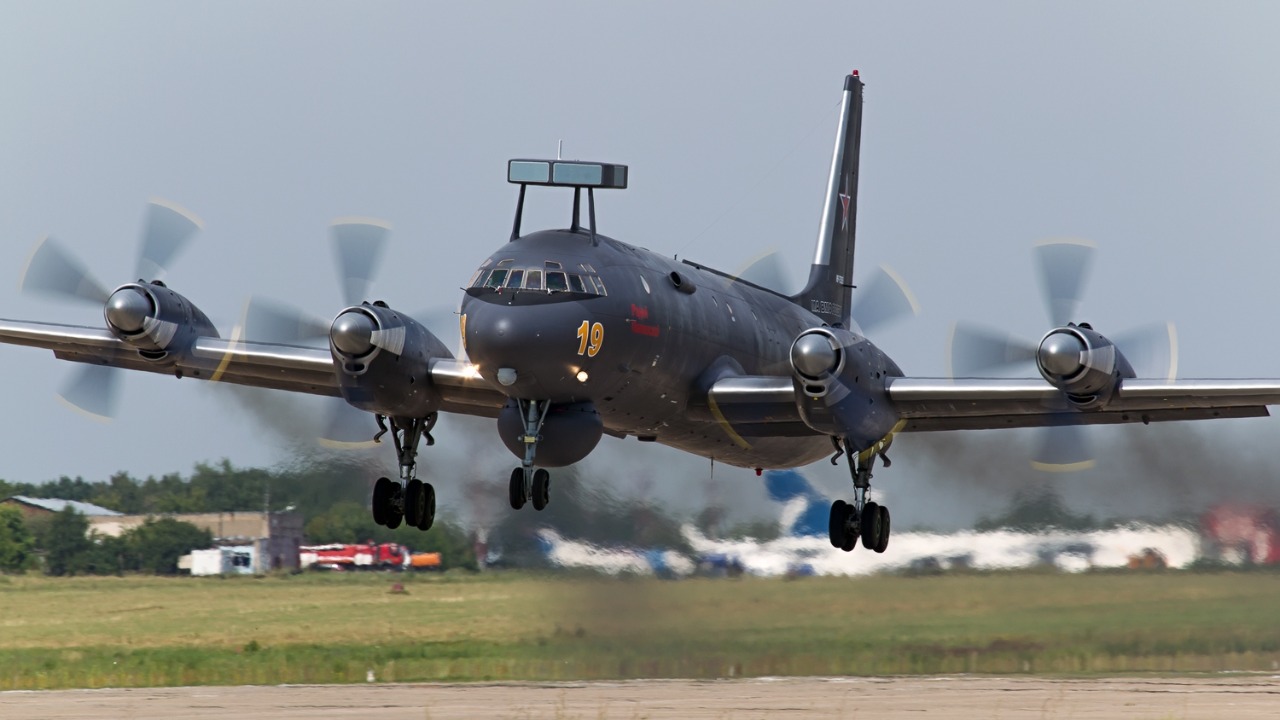

Ukraine’s campaign of long-range drone warfare has reportedly claimed one of Russia’s rarest maritime patrol aircraft, an Il-38N that specialists describe as central to anti-submarine operations in the Black Sea. By knocking out this platform on the ground, Ukrainian security services say they cleared the skies of a key threat before moving to strike a Kilo-class submarine in port, a sequencing that underlines how carefully Kyiv is choreographing its attacks on Russian naval power.
The destruction of the Il-38N, if confirmed in full, would mark a significant blow to Russia’s ability to track underwater targets and protect its fleet, particularly around the Black Sea and approaches to Novorossiysk. It also highlights how Ukraine is using relatively inexpensive drones to dismantle high-value assets that Moscow cannot easily replace, shifting the balance in a theater where air and sea control are increasingly contested.
How the Il-38N was reportedly hit on the ground
According to Ukraine’s Security Service, better known as the SBU, the Il-38N was struck while parked at the Yeysk airfield, a Russian base used by naval aviation. The SBU has said that its operators guided a long-range drone toward the airfield, where it detonated above the aircraft in what they describe as a carefully planned air-burst designed to maximize damage to the Il-38N’s sensitive systems. The claim that the target was a Russian Navy Il-38N at Yeysk is central to the SBU’s narrative of a deliberate effort to blind Russian maritime surveillance before a broader strike package went into motion.
In its account of the operation, the SBU emphasized that the drone’s warhead was packed with thousands of downward-directed lethal elements, a configuration intended to shred the aircraft’s fuselage, radars, and engine area rather than simply crater the runway. Ukrainian officials say this pattern of damage is visible in imagery and video they released, which they argue shows the Il-38N effectively destroyed on the tarmac at Yeysk, a claim echoed in reports that describe how Ukraine’s Security Service (SBU) used an air-burst drone to saturate the aircraft with metal fragments.
Why this Il-38N mattered so much to Russia
The Il-38N is not just another airframe in Russia’s inventory, it is a specialized maritime reconnaissance and anti-submarine warfare aircraft built to patrol vast stretches of sea. The Il is equipped for maritime reconnaissance, underwater target detection, and torpedo deployment, giving Russian commanders a platform that can locate submarines, track surface vessels, and coordinate with other naval assets. Its sensors and weapons bay are tailored to missions that require long endurance over water, something few other Russian aircraft can replicate at scale.
Its elimination is therefore more than a symbolic loss. Ukrainian officials argue that by disabling this aircraft, they removed a key tool Russia relied on to detect underwater threats in the Black Sea and adjacent waters, particularly around critical bases. Reporting on the strike notes that the drone’s detonation damaged the Il-38N’s main equipment and radars and hit the engine compartment, rendering it inoperable and stripping Russia of a rare anti-submarine asset that had been based near the Black Sea theater, a point underscored in detailed descriptions of how The Il was configured and why Its loss matters.
Linking the aircraft strike to the Novorossiysk submarine attack
Ukrainian officials have been explicit that the Il-38N operation was not an isolated act but part of a broader plan to hit Russian naval forces at Novorossiysk. The Security Service of Ukraine, often abbreviated as the SSU or SBU, has said that its operatives targeted the aircraft shortly before a separate strike on a Kilo-class submarine, describing the sequence as a deliberate effort to remove the only aircraft capable of detecting the submarine as it sat in port. In this telling, the Il-38N was a gatekeeper for the Black Sea approaches, and its destruction opened a window of vulnerability that Ukraine quickly exploited.
Accounts of the campaign describe how the SSU first struck the Il-38N naval aircraft and then moved on to the Kilo-class submarine in Novorossiysk, presenting the two attacks as linked phases of a single operation. One detailed report notes that The Security Service of Ukraine, or SSU, downed the Il-38N before the Kilo-class submarine attack in Novorossiysk, framing the aircraft’s loss as the event that cleared the way for the subsequent blow against the submarine and reinforcing the idea that The Security Service of Ukraine is now sequencing strikes to dismantle Russian naval defenses layer by layer.
How Ukraine’s drone tactics are evolving
The reported Il-38N strike illustrates how Ukraine is refining its use of long-range drones from simple harassment tools into precision instruments of strategic disruption. Rather than merely aiming at runways or fuel depots, Ukrainian planners appear to be selecting high-value, low-density targets like specialized aircraft that Russia cannot easily replace, then tailoring warheads and flight profiles to maximize the chance of a mission kill. The use of an air-burst drone over Yeysk, with a warhead designed to shower the aircraft in shrapnel, fits this pattern of moving from crude explosive payloads to more sophisticated munitions optimized for specific targets.
Reports on the operation emphasize that the detonation occurred directly above the compartment housing the main equipment and radars, also damaging the aircraft’s engine area, which suggests detailed knowledge of the Il-38N’s layout and vulnerabilities. Ukrainian sources say the drone was guided to explode at a precise altitude to ensure that the downward-directed fragments would penetrate the fuselage and critical systems, a level of targeting that points to improved reconnaissance, intelligence, and engineering support for these missions, as reflected in accounts that describe how The detonation occurred directly above the Il-38N’s key equipment.
Russia’s shrinking anti-submarine coverage in the Black Sea
By targeting the Il-38N, Ukraine is striking at a niche capability that Russia has struggled to maintain in the Black Sea region. Ukrainian officials and analysts have described this aircraft as Russia’s only operational Black Sea based anti-submarine patrol platform, a claim that, if accurate, would mean its loss leaves a significant gap in Moscow’s ability to monitor underwater approaches to key ports. In practical terms, that would make it harder for Russian forces to detect Ukrainian unmanned surface vessels, special operations teams, or other underwater threats moving toward high-value naval targets.
One account of the operation notes that before striking the submarine, SBU operatives disabled Russia’s only operational Black Sea based anti-submarine patrol aircraft capable of detecting the Sub Sea, a formulation that underscores how central this single Il-38N was to regional undersea surveillance. If Russia cannot quickly replace or redeploy a similar platform, its commanders may have to rely more heavily on shore-based sensors and shorter-range helicopters, which offer less persistent coverage and are more vulnerable to Ukrainian strikes, a vulnerability highlighted in descriptions of how Before the submarine attack, SBU units removed that patrol aircraft from the equation.
Sequencing strikes: from Il-38N to Kilo-class submarine
The reported sequence of events, from the Il-38N’s destruction to the Kilo-class submarine strike, offers a window into how Ukraine is thinking about operational design. Rather than treating each target as a standalone objective, Ukrainian planners appear to be mapping Russian defensive networks and then dismantling them in a logical order, first blinding or degrading surveillance assets, then hitting the high-value platforms those assets were meant to protect. In this case, the Il-38N’s role in detecting underwater threats made it a natural first target before any attempt to damage a submarine in a heavily defended port like Novorossiysk.
Detailed reporting on the campaign notes that Ukraine hit Russian maritime reconnaissance aircraft before striking the Novorossiysk submarine, presenting video that purports to show both phases of the operation. The Security Ser is cited in these accounts as explaining that the aircraft strike was intended to clear the way for the subsequent attack on the submarine, reinforcing the idea that Ukraine is now conducting multi-step operations that integrate intelligence, drones, and naval strikes rather than isolated raids, a pattern captured in descriptions of how Ukraine hit Russian maritime reconnaissance assets ahead of the Novorossiysk blow.
What the Il-38N loss reveals about Russian vulnerabilities
The apparent destruction of the Il-38N at Yeysk highlights several structural weaknesses in Russia’s approach to protecting high-value assets. Parking a rare anti-submarine aircraft in a location within reach of Ukrainian drones, and failing to shield it with hardened shelters or robust air defenses, suggests either an underestimation of Ukraine’s reach or a shortage of protective infrastructure. For a platform that plays such a critical role in maritime surveillance, its exposure on an open apron looks, in hindsight, like a serious oversight that Ukraine was quick to exploit.
At the same time, the fact that a single aircraft could be described as Russia’s only operational Black Sea based anti-submarine patrol platform underscores how thinly stretched some of Moscow’s specialized capabilities have become. If Ukraine can repeatedly identify and neutralize such singular assets, it can impose disproportionate costs on Russia’s ability to control the maritime domain, forcing the Kremlin to either accept greater risk or divert scarce resources from other theaters. This dynamic is reflected in analyses that frame the Il-38N’s loss as a key factor that cleared the way for the Novorossiysk submarine attack, with Ukrainian officials stressing that every day they fight Russian forces with targeted blows that make their own position stronger, a theme echoed in accounts of how Footage released of the Il-38N strike was paired with messaging about sustained pressure on Russian naval power.
How Ukrainian officials are framing the operation
Ukrainian authorities have been keen to present the Il-38N strike as evidence that their security services can reach deep into Russian-controlled territory and hit some of Moscow’s most prized military assets. The SBU has highlighted the technical sophistication of the drone used at Yeysk and the precision with which it was guided to detonate above the aircraft’s critical systems, portraying the mission as a showcase of domestic innovation and intelligence work. By publicizing video of the attack and tying it directly to the later submarine strike, officials are also sending a message to Russian commanders that no asset, however rare, is beyond reach.
Coverage of the operation in Ukrainian war updates has emphasized both the tactical and symbolic dimensions of the Il-38N’s loss. One such update, authored by Kateryna Hodunova, notes that The Russian Il-38N was hit on the eve of the submarine’s destruction and highlights specific figures like 43 and 47 in the context of the broader campaign, underscoring how carefully Kyiv is tracking and communicating each incremental gain. By weaving the Il-38N story into a narrative of cumulative pressure on Russian forces, Ukrainian officials are trying to show domestic and international audiences that their strategy is not just about isolated strikes but about systematically eroding Russia’s ability to wage war, a framing reflected in detailed war coverage that describes how Kateryna Hodunova links The Russian Il-38N’s fate to the submarine attack.
Strategic implications for the wider naval war
From a broader strategic perspective, the reported destruction of the Il-38N and the subsequent Kilo-class submarine strike signal that Ukraine is increasingly comfortable taking the fight to Russian naval assets far from the front line. By combining long-range drones, detailed intelligence, and a clear sense of sequencing, Kyiv is turning what began as a defensive struggle in the Black Sea into a campaign that threatens the survivability of Russian ships and submarines even in their home ports. This shift complicates Russian planning, since assets once considered relatively safe now require additional protection, dispersal, or relocation.
Analysts who track the conflict note that Ukraine’s ability to take out Russia’s only submarine-hunter aircraft before a historic Kilo-class sub strike, as described in reports that reference Dec, Ukraine, Russia, Kilo, VIDEO, Air, illustrates how asymmetric tools can neutralize expensive platforms. If Ukraine can continue to identify and destroy such linchpin systems, it may gradually tilt the naval balance in its favor despite lacking a traditional blue-water fleet, a dynamic captured in accounts that describe how Ukraine took out Russia’s submarine-hunter aircraft before the Kilo-class submarine strike.
More from MorningOverview