
Chinese researchers have unveiled a solar “battery” that does not just generate electricity, it stores it directly, reaching a solar-to-electricity efficiency of 4.2 percent in a single integrated device. Instead of pairing conventional panels with separate storage, the system merges both functions in one compact unit, hinting at a different way to think about solar infrastructure. The result is modest in raw efficiency terms but significant as a proof of concept for a new class of solar redox technologies.
Why a 4.2% solar battery matters more than it sounds
On paper, 4.2 percent efficiency looks underwhelming next to modern photovoltaic modules that routinely exceed 20 percent, but the comparison is misleading. Those headline figures describe only the conversion of sunlight into electricity at the panel, not the losses that accumulate when power is routed through inverters, cables, and then into a separate battery bank. By folding generation and storage into a single architecture, the Chinese team is targeting the full chain from sunlight to usable stored energy, which is where traditional systems quietly give up a large share of their theoretical performance.
What makes this device notable is that it is a working, lab-tested example of a solar redox flow battery, not a speculative sketch. The researchers describe a redox flow configuration that captures light and immediately channels the resulting charge into liquid electrolytes, effectively “bottling” solar energy in chemical form instead of sending it straight to the grid. In that context, a verified 4.2 percent solar-to-electricity figure is less a disappointment and more a baseline for a technology class that could eventually bypass some of the complexity and cost of today’s panel-plus-battery setups.
Inside the solar redox flow concept
The core idea behind this system is the redox flow battery, a design where energy is stored in tanks of liquid electrolytes that circulate through a cell stack. In a conventional flow battery, those electrolytes are charged by an external power source, then later discharged through electrochemical reactions that release electricity on demand. The Chinese group’s twist is to integrate a photovoltaic element directly into that loop so that sunlight itself drives the redox reactions, turning the battery into its own solar generator rather than a passive storage vessel.
In practical terms, that means the device behaves like a small chemical plant for photons. Light hits a specialized solar absorber, electrons are excited and immediately transferred into redox couples in solution, and the charged liquids are stored until the user needs power. Reporting on the project describes it explicitly as a redox flow battery system, underscoring that the storage chemistry is not an afterthought bolted onto a panel but the heart of the design.
The SRFB device and how it is built
The team refers to its prototype as The SRFB, a compact device that packages the solar absorber and flow battery components into a single unit. Rather than sprawling across a rooftop, The SRFB is built from small pieces, with the active area described as being assembled from 2 cm × 2 cm segments that can be tiled together. This modularity is important, because it suggests the concept can be scaled by adding more identical units, much like stacking server blades in a data center rack instead of redesigning a monolithic machine for every capacity jump.
Details from the research indicate that The SRFB uses a triple-junction photovoltaic element paired with carefully chosen redox couples to maximize the overlap between the light spectrum it can absorb and the electrochemical window of the electrolytes. The description of The SRFB device emphasizes that these 2 cm × 2 cm pieces are not just mechanical building blocks, they are finely tuned interfaces where photons, electrons, and ions all have to cooperate with minimal loss.
Nanjing Tech University’s role in the breakthrough
The work is rooted in China, with a research team from Nanjing Tech University, also referred to as Nanjing Tech University (NanjingTech), credited with constructing and testing the device. That institutional detail matters because Nanjing Tech University has built a reputation in electrochemistry and materials science, fields that sit at the intersection of solar conversion and battery design. By bringing those disciplines together under one roof, the university is well positioned to push integrated systems like this beyond the conceptual stage.
According to the reporting, Scientists in China at Nanjing Tech University have already moved past simulations to build and evaluate a functioning prototype. That progression from theory to hardware is what turns an idea into a potential technology platform, and it is why the 4.2 percent figure carries more weight than a purely theoretical efficiency claim. The device exists, it has been measured, and it provides a concrete starting point for further optimization.
How this differs from conventional solar-plus-storage
Most solar installations today follow a familiar pattern: crystalline silicon panels feed direct current into an inverter, which then supplies alternating current to the grid or to a separate battery pack. Each interface introduces conversion losses, and each component adds cost, maintenance, and potential failure points. By contrast, the Chinese solar redox system aims to collapse that chain into a single integrated unit that both captures sunlight and stores the resulting energy chemically, with electricity drawn out only when needed.
In effect, the device trades some peak conversion efficiency for architectural simplicity. Instead of optimizing every stage separately, the researchers are optimizing the combined process of turning sunlight into stored charge and then back into electricity. Reporting on the project notes that the system is designed to convert sunlight directly into stored electricity for the grid, highlighting that the goal is not just off-grid novelty but a pathway to dispatchable solar that can plug into existing infrastructure. One account describes how the Chinese team built a solar redox configuration that channels energy straight into storage and then into electricity for the grid, rather than treating storage as an optional add-on.
China’s broader push on solar storage innovation
The emergence of this device fits into a wider pattern of Chinese investment in advanced energy storage, from large-scale lithium iron phosphate factories to experimental flow batteries for grid balancing. In that context, a solar redox flow prototype is not an isolated curiosity but another branch of a national strategy to pair massive solar deployment with equally ambitious storage solutions. The fact that the work is coming out of a Chinese university lab, rather than a niche startup, suggests that it could be folded into larger research programs and pilot projects if the performance curve continues to improve.
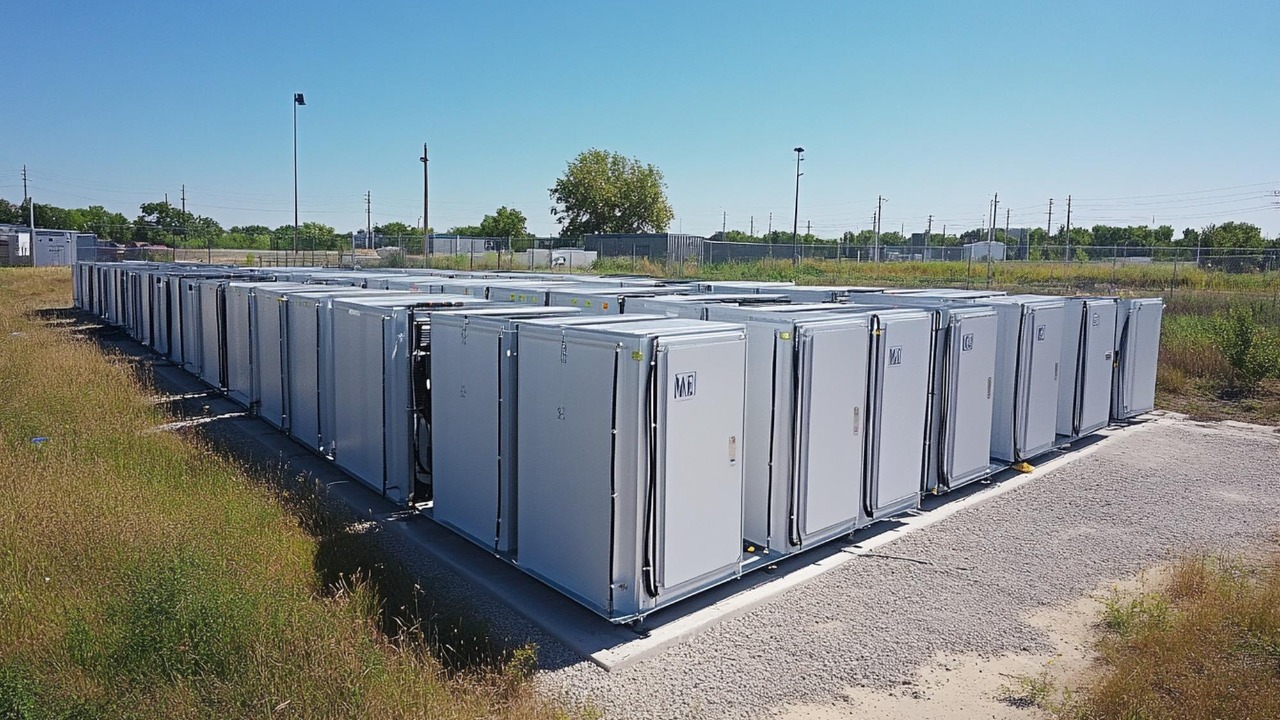
Coverage of the project also situates it alongside other redox flow efforts, including systems developed by companies such as Sumitomo Electric, which has been associated with flow battery deployments in Asia. One report notes that a representational image of a redox flow battery system from Sumitomo Electric was used to illustrate the concept, underscoring that the Chinese researchers are building on a lineage of flow battery work rather than inventing the category from scratch. The mention of a Representational image Sumitomo Electric Chinese system helps place the new solar-integrated design within a broader ecosystem of redox technologies that are already being tested at scale.
What 4.2% efficiency means for real-world use
Translating a 4.2 percent solar-to-electricity figure into practical terms requires looking at the full energy chain. If a conventional rooftop array converts 20 percent of sunlight into electricity but then loses a significant fraction in inverters, wiring, and battery cycling, the effective stored energy yield can drop sharply. An integrated solar redox device that captures and stores energy in one step might start from a lower nominal efficiency but recover some of that gap by trimming intermediate losses and simplifying the path from photon to usable kilowatt-hour.
For now, the prototype’s scale is small, and no one is suggesting that 4.2 percent devices will replace standard panels on warehouses or utility-scale farms overnight. Instead, the immediate applications are likely to be niche scenarios where compact, self-contained solar storage units offer advantages over separate hardware, such as remote sensors, off-grid telecom towers, or specialized industrial equipment. As the chemistry and optics are refined, the efficiency ceiling could rise, but even at current levels the technology provides a valuable testbed for understanding how tightly integrated solar storage behaves under real operating conditions.
Challenges ahead for solar redox batteries
Despite the promise, the path from lab prototype to commercial product is crowded with obstacles. Redox flow batteries rely on liquid electrolytes that must remain stable over thousands of charge and discharge cycles, and integrating a photovoltaic element adds another layer of materials stress from constant exposure to sunlight and temperature swings. Ensuring that The SRFB can maintain its 4.2 percent performance, or improve on it, over years rather than hours will require extensive durability testing and likely new formulations of both the solar absorber and the redox couples.
There are also economic questions that the current reporting does not yet answer. Flow batteries typically shine at large scales, where the cost of tanks and pumps can be spread over substantial energy capacity, while the Chinese solar device is built from relatively small 2 cm × 2 cm pieces. Scaling that architecture up without losing efficiency or driving costs too high will be a central engineering challenge. Until those issues are resolved, the technology will remain a promising research direction rather than a direct competitor to the silicon panels and lithium-ion packs that dominate the market today.
More from MorningOverview