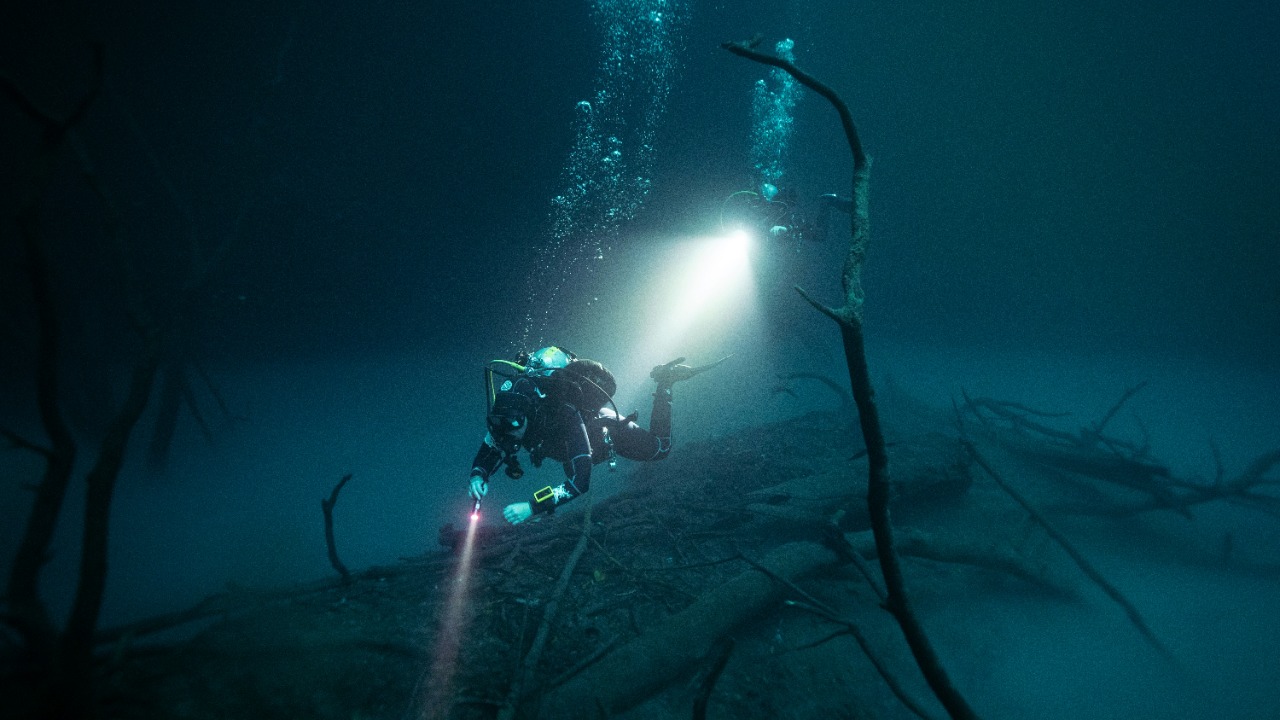

Nearly 4,000 m beneath the Pacific, in water so dark that sunlight has never penetrated, scientists have stumbled on a new way that oxygen can appear where it should not exist. The finding, quickly dubbed “dark oxygen,” is forcing researchers to redraw basic diagrams of how the deep ocean works and to rethink how life might survive on other worlds. What began as a routine survey of metal rich rocks on the abyssal plain has turned into one of the most disruptive discoveries in modern ocean science.
Instead of relying on photosynthesis, this hidden source of oxygen seems to be generated by chemical reactions inside lumps of metal scattered across the seafloor. The surprise is not just that oxygen is there, but that it appears to be produced continuously in a place long assumed to be a one way sink for the gas. For deep sea biologists, geochemists and astrobiologists, the implications reach far beyond a single patch of seabed.
How scientists stumbled on oxygen where none should exist
The story of dark oxygen starts with a puzzle. When researchers lowered instruments into chambers on the abyssal seafloor, more than 13,000 feet down, they expected to see oxygen levels fall as microbes and animals consumed it. Instead, in some measurements, oxygen inside the chambers rose, even though no sunlight could reach this zone and no known process should have been making fresh O2. That anomaly, recorded at about 13,000 feet and confirmed at roughly 4,000 m depth, hinted that something fundamental was missing from standard models of the deep ocean.
The team was working in an area where polymetallic nodules, potato sized lumps rich in manganese and other metals, lie Scattered across an abyssal plain about 4,000 Meters Below Sea Level. These nodules had already attracted attention as a potential mining resource, but the oxygen anomaly suggested they might be doing unexpected chemistry. When the researchers compared in situ readings with lab experiments on the same types of nodules, they saw that the metal rich rocks could behave like tiny electrochemical cells, effectively “batteries” that split water molecules and release what they began to call Dark Oxygen.
What “dark oxygen” actually is, and what it is not
Dark oxygen is not a new chemical substance, it is the same O2 that fills our lungs at the surface. What makes it remarkable is the way it is produced. Instead of being generated by photosynthetic organisms that use light, this oxygen appears to come from abiotic reactions on mineral surfaces, driven by natural electrical gradients between different parts of the metal lumps. In other words, the deep ocean has a second, non biological oxygen factory that operates in total darkness.
For decades, oceanographers assumed that below the sunlit layer, oxygen only moved downward from the surface and was steadily consumed, never created. The discovery that seabed metals can generate O2 at around 13,000 feet, or roughly 4,000 m, breaks that one way picture and suggests that the deep ocean’s chemistry is more dynamic than textbooks have long implied. Reporting on what is 13,000 feet under the sea has emphasized that this is not dark matter style speculation, but a directly measured process that researchers have now reproduced in their lab experiments.
The metal “batteries” on the seafloor
The key to dark oxygen lies inside the polymetallic nodules that carpet large stretches of the abyss. These nodules contain layered mixtures of manganese, iron, nickel, cobalt and other elements that can shuttle electrons between different oxidation states. When parts of a nodule are exposed to slightly different chemical conditions, they can set up tiny voltage differences, turning each lump into a natural battery that can drive reactions such as splitting water molecules into hydrogen and oxygen.
One researcher has described watching a video clip of a rock based battery and suddenly thinking, “could the same thing be happening in the deep ocean.” That moment of recognition, recalled in coverage that quotes, “There was someone on it saying, ‘That’s a battery in a rock,’” helped crystallize the idea that the nodules themselves might be powering the ocean’s dark oxygen production. Subsequent experiments with metal lumps taken from the seafloor showed that when they were placed in seawater under controlled conditions, they did indeed generate measurable amounts of O2 without any biological help.
Why deep sea scientists call it a “profound” discovery
For specialists who have spent careers studying the abyss, the revelation that the seafloor can make its own oxygen has been described as one of the most profound findings of their time. Deep sea scientists have praised the identification of a second source of oxygen, colloquially known as Dark Oxygen, as a discovery that forces a rethink of how life persists in the planet’s largest habitat. Some have argued that it rivals the recognition of hydrothermal vents in terms of how it reshapes our understanding of deep ecosystems.
The excitement is not just academic. A dedicated funding package worth £2m has already been assembled to accelerate research into Deep sea Dark Oxygen, reflecting how quickly institutions have moved to support follow up work. For many in the field, the discovery validates years of hints that the abyssal seafloor is not just a passive sediment trap but an active chemical engine with global consequences.
Rewriting the oxygen budget of the abyss
At the heart of the dark oxygen story is a simple accounting problem. Deep seafloor organisms consume oxygen, and that consumption can be measured directly using benthic chamber experiments that track how O2 levels change over time. When those experiments showed oxygen increasing instead of decreasing in some chambers, the numbers no longer added up. The only way to reconcile the data was to accept that there was an unrecognized source of oxygen at the abyssal seafloor.
In a detailed Abstract of the work, researchers describe how Deep seafloor organisms consume oxygen, which can be measured by in situ benthic chamber experiments, and how Here they report evidence of dark oxygen production that balances or even exceeds that consumption in certain settings. The implication is that global models of ocean oxygen, which feed into climate projections and carbon cycle estimates, may need to be updated to include this newly quantified source at the bottom of the sea.
Life support for deep sea ecosystems
For the animals and microbes that live thousands of meters below the surface, even small amounts of extra oxygen can make the difference between survival and suffocation. Many abyssal species are already adapted to low O2 conditions, but they still depend on a steady trickle of the gas from above. If metal nodules are generating oxygen locally, that could create microhabitats where respiration is a little easier, potentially supporting denser or more active communities than would otherwise be possible.
Reports on the discovery emphasize that the oxygen is being produced more than 13,000 feet below the ocean surface, in a region long thought to be entirely dependent on surface processes. One account notes that Scientists discover ‘dark’ oxygen being produced more than 13,000 feet down and that this could alter how researchers think about the resilience of deep ecosystems to changes higher in the water column. Another highlights that Oxygen discovery defies knowledge of the deep ocean and that Scientists have discovered “dark oxygen” being produced in the deep, suggesting that some organisms may rely directly on the oxygen they make.
Seabed mining collides with a newly discovered life support system
The same polymetallic nodules that act as natural batteries are also the target of a growing seabed mining industry, which sees them as a rich source of metals for electric vehicle batteries and other technologies. Until now, debates about mining these nodules have focused on visible impacts such as sediment plumes, noise and the destruction of habitats for creatures like sea cucumbers and sponges. Dark oxygen adds a less visible but potentially more far reaching concern, because removing the nodules could switch off a local oxygen source that scientists have only just begun to measure.
Environmental groups have seized on the new findings as fresh evidence that the deep ocean is too poorly understood to mine safely. One campaign argues that Dark oxygen discovered in the deep sea spells trouble for the wannabe deep sea mining industry, warning that if the nodules are stripped away, the surrounding waters could lose a critical chemical function. That warning is grounded in the fact that Dark oxygen discovered in the deep sea spells trouble for seabed mining industry, because Scientists have found “dark oxygen” being produced by the same metal lumps that companies want to harvest.
Political pressure and calls for a mining moratorium
As the science has filtered into policy circles, several governments have begun to cite dark oxygen when arguing for caution in the race to exploit the deep seabed. The discovery has arrived at a moment when international regulators are under pressure to finalize rules for commercial mining in areas beyond national jurisdiction, even as many researchers insist that basic ecological and chemical processes are still being mapped. Dark oxygen, with its direct link to the very nodules targeted for extraction, has become a powerful symbol of that uncertainty.
Some countries have already taken a clear stance. One report notes that, However, several countries, including the However, United Kingdom and France, have expressed caution, supporting a moratorium or ban on deep sea mining to safeguard marine ecosystems and conserve biodiversity. Their position is likely to gain new weight as evidence accumulates that the nodules at the center of mining plans are also central to the ocean’s dark oxygen production.
Clues to the origins of life and the search for aliens
Beyond Earth’s present day oceans, dark oxygen has revived old questions about how life first emerged on this planet and how it might arise elsewhere. If metal rich rocks on the seafloor can generate oxygen without biology, then early Earth may have had pockets of O2 long before photosynthetic organisms evolved. Those pockets could have created chemical gradients that primitive microbes exploited, or even helped drive the reactions that produced the first living cells.
One analysis argues that the discovery of dark oxygen from deep sea metal lumps could trigger a rethink of the origins of life, noting that the process might have been active billions of years ago. It points out that the discovery of dark oxygen 13,000 feet (4,000 m) below the waves, where no light can penetrate, challenges scientists to reconsider how oxygen appeared on the early Earth and how it might arise on icy moons. In that context, the report stresses that Jul coverage has highlighted that this mechanism could have been operating billions of years ago, Sweetman said, which in turn feeds into models of habitability for worlds like Europa and Enceladus.
From abyssal plains to icy moons
Astrobiologists are particularly interested in the way dark oxygen decouples O2 from sunlight. If metal lumps on the ocean floor can generate oxygen in total darkness, then similar processes might occur in subsurface oceans on other worlds, where no starlight reaches the water. That would mean that oxygen detected in the atmosphere of an exoplanet, or dissolved in an alien ocean, might not be a straightforward sign of photosynthetic life, but could instead reflect geochemical “batteries” like those now documented at 4,000 m depth on Earth.
One account notes that the researchers suspected the same thing was happening in the deep ocean, thanks to the polymetallic nodules, and that Indeed, they now see parallels with icy moons such as Enceladus and Europa. The report explains that Indeed, the same kind of metal driven chemistry that generates dark oxygen on the ocean floor could, in principle, operate in the hidden seas of those moons, providing both energy and oxidants for any potential life.
The people and institutions racing to understand it
Behind the headlines, a network of institutions and funders has quickly mobilized to study dark oxygen in more detail. The Scottish Association for Marine Science, often shortened to SAMS, has been central to the research, with scientists such as Nick Owens and Andrew Sweetman helping to design and interpret the deep sea experiments. Their work has been supported by philanthropic organizations that see the deep ocean as a frontier for both basic science and environmental stewardship.
One profile notes that Shown are (from left) SAMS’ Nick Owens and Andrew Sweetman and Yohei Sasakawa, chairman of The Nippon Foundation, highlighting how private funding has underwritten some of the most ambitious expeditions to the abyss. The same report explains that uncovering dark oxygen revealed just how much remains unknown about the deep ocean and that The Nippon Foundation has backed efforts to map and understand these hidden processes as part of a broader push to explore the seafloor. In that context, SAMS, Nick Owens and Andrew Sweetman and Yohei Sasakawa, The Nippon Foundation, have become closely associated with the emerging field of dark oxygen research.
From niche curiosity to global talking point
In a remarkably short time, dark oxygen has gone from a puzzling data blip to a global talking point in science and policy circles. Coverage has described how Mysterious Dark Oxygen Discovered at the Bottom of Ocean Stuns Scientists, underscoring the sense of surprise among experts who thought they knew the basics of deep sea chemistry. The phrase “Bottom of Ocean Stuns Scientists” captures how quickly the finding has challenged long held assumptions about what can and cannot happen in the abyss.
As more details have emerged, journalists and commentators have framed the discovery as part of a broader reassessment of the deep ocean’s role in Earth’s systems. One widely shared piece referred to the Mysterious Dark Oxygen Discovered Bottom of Ocean Stuns Scientists, By Tessa Koumoundouros, and emphasized that the scientists’ measurements showed oxygen being produced where theory said it should only be consumed. That narrative has helped propel dark oxygen from a technical geochemical finding into a symbol of how much of the planet remains unexplored.
How the story is being told to the public
As with many complex scientific breakthroughs, much of the public’s understanding of dark oxygen is being shaped by long form explainers and narrative driven features. Some have focused on the human drama of researchers lowering fragile instruments into the abyss and waiting for data to trickle back, while others have zeroed in on the geopolitical stakes of mining versus conservation. Together, they are turning a niche topic in marine geochemistry into a broader conversation about how humanity treats the deep ocean.
One feature, for example, walks readers through how All products featured on WIRED are independently selected by our editors, However, it then pivots to a detailed account of how polymetallic nodules generate “dark” oxygen from seawater and what that means for future mining plans. Another explains how a team of Scientists led an international study into dark oxygen and linked their findings directly to debates over the impacts of deep sea mining. A separate explainer asks, in plain language, what is ‘dark oxygen’, found 13,000 feet under the sea, and why it matters for everything from climate models to the search for extraterrestrial life.
As the research continues, the narrative is likely to evolve, but one point already seems clear. The discovery that the deep ocean can make its own oxygen, 4,000 m down in the dark, has opened a new chapter in our understanding of the planet, and it arrived just in time to influence some of the most consequential decisions humanity is making about the seafloor.
More from MorningOverview