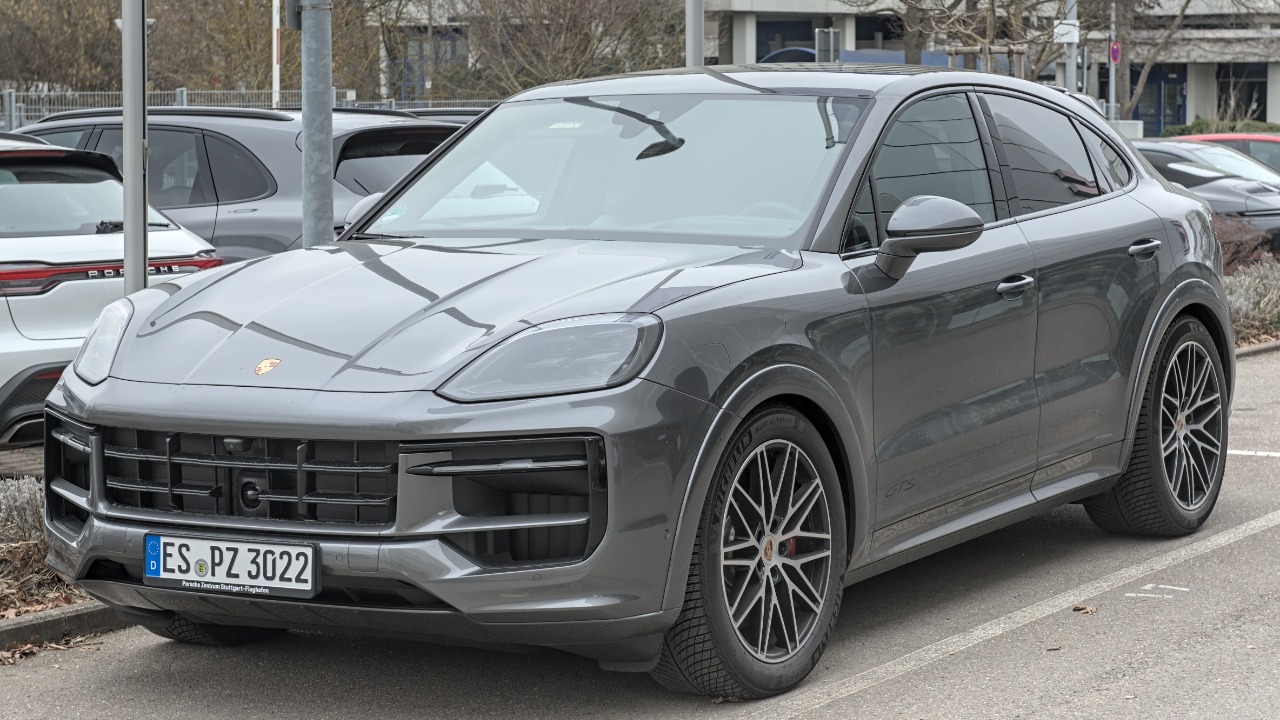

Alpine has spent the past few years flirting with the idea of a U.S. comeback, and the most tempting bait for American buyers would be a big electric SUV aimed squarely at the Porsche Cayenne EV. On paper, a French performance crossover with track-day manners and family practicality sounds like a natural fit for a market that cannot get enough fast utility vehicles. In practice, the company’s own executives and product roadmap now point to a different reality, one where a Cayenne-sized Alpine EV exists, but its path to American showrooms is narrow and increasingly unlikely.
Alpine’s American dream keeps slipping away
Alpine’s leadership has been unusually candid about how often the brand has looked across the Atlantic and then pulled back. At one stage, the company had its sights set on coming to the U.S. in 2027, a date that was meant to mark the return of a nameplate that first made its reputation in Europe in the 1950s. That plan is now described as “pretty much dead and buried,” a blunt acknowledgment that the original timetable for a U.S. relaunch has collapsed under the weight of changing economics and shifting corporate priorities, as reflected in reporting that notes how Alpine has cooled on its earlier ambitions.
That retreat does not mean the idea is gone, only that it has moved from a dated promise to a vague aspiration. Company officials are still described as “thinking about coming to America,” but the tone has shifted from confident planning to cautious hedging, with one report framing the whole exercise as Alpine Is Still Thinking About Coming to America, Possibly With a Porsche Cayenne EV Rival. The nuance matters, because it shows a brand that now treats the U.S. as an opportunity rather than a cornerstone, even as sources underline that Alpine Is Still Thinking About Coming but no longer on a fixed countdown.
The original EV assault that set expectations
When Renault first laid out its electric strategy for the brand, the U.S. was presented as a “crucial market” in a broader EV assault, with a multi-model lineup designed to echo what Porsche has done with its own performance range. The plan called for a series of “Porsche-like” EVs, including an electric successor to the A110 sports car and a pair of crossovers, with the last non-U.S. model in the works described as an EV successor to the Alpine A110 scheduled for early 2027, followed by additional models that would target American buyers, a sequence detailed in coverage of how Alpine mapped out its rollout.
That early blueprint helped fuel expectations that the brand would mirror Porsche’s playbook, using a halo sports car to build credibility and then leaning on profitable crossovers to scale up. Commentators framed it as “Alpine’s Plan,” a deliberate attempt by The European Alpine brand to re-enter global markets with seven new EVs, including models tailored to American tastes, a narrative captured in analysis of how Alpine’s Plan tied its future to a family of electric performance vehicles.
A390: the first building block of a bigger SUV
The clearest sign that Alpine is serious about SUVs is the A390, a sleek electric crossover that serves as the brand’s entry into the segment and a test bed for its EV ambitions. The Renault Group’s Alpine brand has unveiled the production version of this all-electric A390, described as a sporty fastback that blends coupe-like styling with the higher seating position buyers expect from a crossover, a configuration showcased in the official reveal where the Renault Group presents the A390 as a core pillar of its future lineup.
In Europe, the A390 is positioned closer to a Porsche Macan than a full-size Cayenne, which is why Alpine insiders talk about it as the “smaller” of two planned crossovers. Reporting on the company’s U.S. deliberations notes that a larger model, more in line with Porsche’s Cayenne EV than the Macan, would fit better next to the A110 in an American showroom, with one analysis explicitly stating that a bigger SUV would be the more logical anchor for the brand’s debut in the country and that a larger model is the one that really matches U.S. expectations.
A590 and the Cayenne EV-sized gap
Above the A390, Alpine is developing a flagship crossover known internally as the A590, a vehicle that would finally give the brand a true rival to the Porsche Cayenne EV. The A590 is described as a large premium EV, with the subtext that it will offer the kind of space, power, and presence that American buyers associate with high-end utility vehicles, a direction underscored in reporting that explains how Tellingly, Alpine is eyeing an EV flagship crossover beyond the A390.
From what it sounds like, this A590 would be the model aimed at the Cayenne EV, with speculation that it could offer up to seven seats and the kind of performance that would justify a premium price tag. Analysts note that if Alpine is indeed planning to bring over a Cayenne EV fighter to the U.S., that vehicle has not yet been shown publicly, and that right now the only confirmed crossover is the A390, even as some reports suggest the larger SUV could have up to seven seats, a detail highlighted in coverage that states If Alpine does build this Cayenne EV rival, it will be a substantial family vehicle.
Why the U.S. launch is now on ice
The biggest obstacle to seeing an A590 or any Cayenne-sized Alpine EV in American driveways is not engineering, but economics and policy. The Renault-owned performance brand had planned a U.S. launch for 2027 as part of its strategy to achieve 150,000 annual sales by 2030, but that timeline has been pushed back as the company grapples with a 25% import tariff on all European-built cars, a burden that would make it difficult to price a niche performance EV competitively, a reality spelled out in reporting that notes how The Renault brand has postponed its U.S. launch.
That tariff pressure lands on top of the usual costs of building a dealer network, certifying vehicles, and tailoring products to American regulations, all for a company that still sells a fraction of what mainstream brands move each year. Commentators who once treated 2027 as a firm date now warn readers not to hold their breath, with one analysis bluntly stating that Alpine Is Still Considering Coming to America, but Don’t expect it soon, a shift in tone captured in coverage that notes how New internal thinking has turned the U.S. from a near-term target into a long-term maybe.
The A110 sports car and the limits of niche appeal
Any Alpine strategy for America has to start with the A110, the lightweight sports car that revived the brand and earned critical praise for its handling and character. Executives have openly mused about bringing the A110 to the U.S., but they also concede that in the U.S., maybe, it will not be enough for dealers and partners to sell on its own, and that the company might need something more, such as a crossover, to justify the investment, a tension laid out in reporting that explains how the But in the U.S. the A110 could still come, yet not as a solo act.
That reality is why the hypothetical Cayenne EV rival looms so large in discussions about Alpine’s American prospects. A two-seat coupe can build brand image, but it is the high-riding, family-friendly EV that would pay the bills, especially in a market where performance SUVs from Porsche, BMW, and Mercedes-Benz are common sights. Analysts who track the brand’s moves argue that without a larger crossover to sit alongside the A110, Alpine would struggle to convince U.S. dealers that the volumes justify the risk, a concern echoed in commentary that frames Alpine Is Still Considering Coming to America, but Don’t expect a sports-car-only lineup to carry the day, a point reinforced in coverage that notes how Alpine Is Still Considering Coming but knows it needs more than a single coupe.
Platform sharing and the Renault backbone
Behind the romantic image of a boutique French performance brand sits a very pragmatic industrial base. Alpine’s future EVs are tied closely to Renault platforms, including the CMFB-EV architecture that underpins the new Renault 5 and Renault 4, a shared toolkit that allows the company to spread development costs across multiple models. One detailed breakdown notes that a key Alpine model was unveiled in May and will be produced based on the Renault 5 and Renault 4 CMFB-EV platform, and that by the end of 2026 the group expects to have a C-segment crossover GT in the lineup, a roadmap laid out in analysis of how Renault and CMFB platforms will support Alpine’s expansion.
This shared engineering is both a strength and a constraint for any U.S. push. It gives Alpine access to proven battery and motor technology, but it also ties the brand’s product cadence to Renault’s broader priorities, which are focused on Europe and other regions where tariffs and regulatory hurdles are less severe. Earlier coverage of the company’s ambitions stressed that the U.S. would be one of several key markets for a family of seven new EVs, but as the economic picture has changed, the emphasis has shifted back to consolidating in Europe, even as commentators remind readers that The European Alpine still sees global potential if conditions improve.
Why a Cayenne EV rival makes sense, and why it still may not happen
From a product perspective, a Cayenne EV-sized Alpine checks nearly every box that matters in the current American luxury market. It would combine the brand’s motorsport heritage with the practicality and road presence that U.S. buyers expect, slotting neatly into a segment where Porsche, Tesla, and a growing list of rivals are fighting for affluent families who want speed without sacrificing space. Analysts who have followed Alpine’s internal discussions argue that a larger model, more in line with Porsche’s Cayenne EV than the Macan, would fit better next to the A110 in an American lineup, a view reflected in reporting that notes how a Cayenne EV rival is the most logical anchor for a U.S. debut.
Yet the same sources that make the business case for such a vehicle also outline why it is unlikely to reach U.S. shores any time soon. At one point, Alpine had its sights set on coming to the U.S. in 2027, but that plan is now described as “pretty much dead and buried,” and newer analyses caution that while the brand is still considering America, the combination of tariffs, investment costs, and uncertain volumes makes a near-term launch a tough ask, a sobering assessment captured in coverage that notes how Alpine could come with a Porsche Cayenne EV rival, but that it probably will not under current conditions.
What “not now” really means for Alpine and America
For enthusiasts who have been waiting to see Alpine badges in U.S. showrooms, the message is frustrating but not final. The company is still developing large premium EVs like the A590, still refining the A390, and still talking internally about how and when to cross the Atlantic, even if the official line has shifted from firm dates to open-ended possibilities. One detailed report on the brand’s strategy notes that the subtext is clear, scale up carefully or risk losing what makes the badge desirable, and that Alpine is deliberately avoiding the temptation to slap its name on any badge or body style just to chase volume, a philosophy spelled out in analysis that explains how Alpine wants to protect its identity even as it grows.
In that context, a Cayenne EV rival for the U.S. looks less like an inevitability and more like a long-term option that depends on tariffs, exchange rates, and the success of Alpine’s European EV rollout. The brand’s leaders know that America could be a lucrative market, but they also know that a misstep could dilute a name that has only recently been revived, which is why the latest round of reporting frames the U.S. launch as postponed rather than canceled, and why analysts keep returning to the same cautious refrain, Alpine could bring a Cayenne-sized EV to America, but for now it likely will not, a sentiment echoed in coverage that reminds readers that Don’t expect that French Cayenne EV rival to show up in U.S. dealerships any time soon.
More from MorningOverview