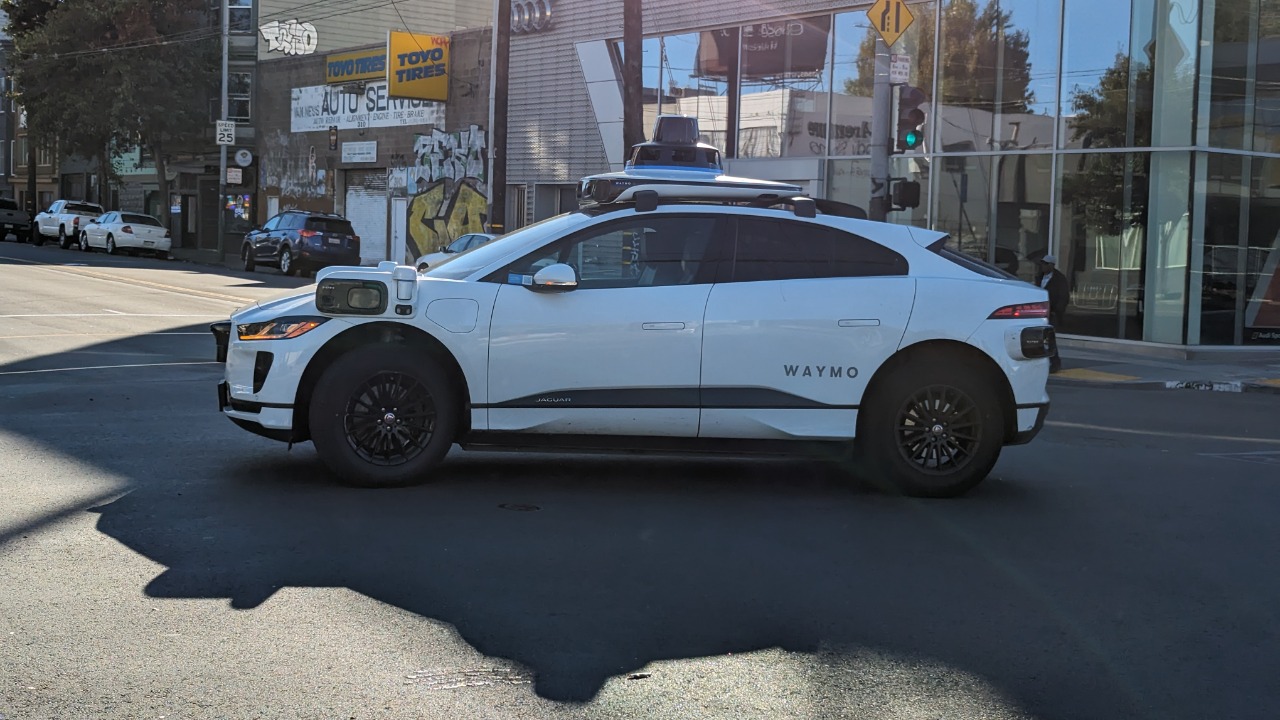

When large parts of San Francisco went dark during a mass power outage, the city got an unscripted stress test of its driverless future. Waymo’s robotaxis stalled at intersections and turned into obstacles, while Teslas with driver-assist features kept threading through the chaos, exposing a sharp contrast in how the two companies design for the edge cases that rarely show up in glossy demos. The blackout did not just snarl traffic, it raised uncomfortable questions about whether today’s most advanced robotaxis are ready for the messy, failure-prone infrastructure of real cities.
At stake is more than bragging rights in Silicon Valley. Waymo has pitched its fully driverless service as a safer, more reliable alternative to human drivers, and Tesla has promised a vast robotaxi network built on the cars it already sells. The blackout episode, and the way both companies responded, offers an unusually clear look at the strengths and weak spots of each strategy just as regulators, investors, and riders are deciding how much to trust software with the steering wheel.
When San Francisco went dark, the Waymos stopped moving
The outage that plunged San Francisco into gridlock started with a fire at a substation that cut power to more than 100,000 homes and businesses and knocked out traffic signals across key corridors. With mass outages for traffic lights, Waymo’s self-driving taxis began shutting down, stopping at intersections and refusing to proceed without the digital cues they normally rely on. Social media posts captured the surreal scene of driverless vehicles frozen in place while lines of human-driven cars stacked up behind them, turning already stressed streets into a maze of stalled metal.
Reports from the city described Waymo robotaxis effectively becoming roadblocks, immobilized in the middle of junctions and unable to improvise their way through the blackout. The mass power outages blacked out large parts of San Francisco and, instead of smoothing traffic, the autonomous fleet amplified the disruption by occupying critical lanes that human drivers might otherwise have used to inch through darkened intersections. The result was a vivid demonstration that a system tuned for orderly, signalized streets can falter when the underlying infrastructure fails at scale.
Inside the navigation gap that froze Waymo’s fleet
What failed inside the vehicles was not the hardware but the logic that tells the Waymo Driver how to behave when its usual reference points disappear. During the blackout, the cars lost key navigation capability, struggling to reconcile missing traffic signals, degraded connectivity, and conflicting sensor inputs about who had the right of way. According to technical accounts of the incident, the software defaulted to conservative behavior, which in practice meant stopping and waiting indefinitely rather than attempting to negotiate ambiguous intersections without clear digital guidance.
In the days that followed, Waymo acknowledged that the event exposed navigation gaps and said it would harden its fleet to cope better with similar shocks. The company described a set of changes aimed at improving how its driverless cars handle “infrastructure instability,” including new behaviors for when signals go dark and communication links degrade, as detailed in analyses of how Waymo hardens fleet operations after the San Francisco blackout. The episode underscored that even a mature robotaxi stack can still be brittle when multiple systems fail at once, especially in dense urban grids where small mistakes cascade quickly.
Waymo’s public response: a rare stress test in the wild
Waymo framed the blackout as a “unique challenge” for autonomous technology, arguing that no amount of simulation can fully replicate a citywide failure of power and traffic control. In a detailed public statement, the company said that navigating an event of this magnitude presented conditions that pushed its systems beyond the scenarios they had most often encountered in real-world driving. While the Waymo Driver is designed to be cautious, the company conceded that the way its vehicles responded in San Francisco created new risks by clogging intersections and complicating emergency response.
The company’s own messaging emphasized that the core autonomy stack remained intact and that human resources, including remote support and on-the-ground teams, were stretched thin as they tried to manually recover stranded vehicles. In its explanation of how it was autonomously navigating the real blackout, Waymo noted that while the Waymo Driver continued to prioritize safety, the coordination between software and human support staff was the problem, a point echoed in discussions of Navigating an event of this magnitude. The company’s willingness to spell out those limits was unusual in an industry that often prefers to talk about miles driven and disengagement rates rather than messy failures.
How Waymo says it will fix the blackout weak spot
In a follow-up blog post, Waymo laid out a set of concrete updates it is rolling out to its driverless fleet for times when “infrastructure instability” hits again. The company said it is implementing changes to how its cars interpret dark traffic signals, how they reroute around clusters of outages, and how they coordinate with human support when large parts of a city are affected. The goal is to prevent a repeat of the scenario in which vehicles simply stop at intersections and wait, contributing to gridlock instead of helping passengers and other road users navigate through it.
Waymo also signaled that it is refining its operational playbook for large-scale disruptions, including new protocols for pausing pickups in affected zones and preemptively repositioning vehicles. In its explanation of how it is updating its fleet after the San Francisco blackout to improve navigation during outages, the company described a more dynamic approach to service areas and routing when a city is hit with widespread gridlock, as outlined in its plan to improve navigation during outages. The fixes amount to a tacit admission that the original system design did not fully anticipate how a robotaxi network itself could become a source of congestion when the lights go out.
On the same streets, Teslas kept rolling
While Waymo’s vehicles were freezing in place, Teslas equipped with driver-assist features continued to move through the darkened city, albeit with humans still legally responsible behind the wheel. Reports from the blackout noted that Tesla cars using Full Self-Driving or Autopilot features were able to handle the loss of traffic signals more flexibly, with drivers taking over when needed and the software still providing lane-keeping and collision avoidance. The contrast was stark: a fully driverless system that could not proceed without its usual infrastructure, and a driver-assist system that could fall back on human judgment when the environment became too chaotic.
Commentary on the incident highlighted that Tesla’s approach, which keeps a human in the loop, may be better suited to handling rare but severe disruptions, at least in the short term. In accounts of how the San Francisco blackout stalled Waymo robotaxis but not Teslas, observers pointed out that Tesla’s design, which assumes a capable driver is always present, allowed the cars to adapt to the outage in ways a remote support team could not match in real time, a point reflected in coverage that contrasted Waymo’s paralysis with Tesla’s ability to handle real-world disruptions better. The blackout effectively turned San Francisco into a live A/B test of two philosophies of automated driving.
Two rival visions: geofenced robotaxis vs camera-first fleets
The divergence in performance during the blackout reflects a deeper split in how Waymo and Tesla think about autonomy. Waymo has built a tightly geofenced robotaxi service that relies on a rich sensor suite, including lidar and radar, combined with detailed maps of the cities where it operates. Its vehicles are designed to drive themselves without any human in the front seat, but only within carefully defined service areas and under conditions the company has validated. That approach has produced impressive safety records in normal operation, yet the blackout showed how dependent it is on stable infrastructure and predictable traffic control.
Tesla, by contrast, is pursuing a camera-centric strategy that it argues will scale more easily because it mirrors how humans drive. The company’s vision is to turn the millions of cars it has already sold into a distributed robotaxi fleet through software updates, leaning on cameras and artificial intelligence rather than high-definition maps and specialized sensors. Analyses of the Tesla robotaxi revolution describe how the fundamental difference between Tesla and Waymo lies in this bet on camera-only perception, which poses its own challenges but promises faster global deployment, as explored in discussions of how the Cybercab competes with Waymo in 2025. The blackout did not prove one vision right or wrong, but it did highlight how each one behaves when the map no longer matches the territory.
Scaling ambitions and the limits of geofencing
Waymo’s model has always traded breadth for depth, focusing on mastering specific cities rather than blanketing entire countries at once. That strategy has allowed it to launch fully driverless services in places like Phoenix and San Francisco, but it also means that each new market requires extensive mapping, validation, and regulatory work. The blackout underscored another constraint: when a city’s infrastructure fails in ways that were not fully modeled, a geofenced system can suddenly find itself operating outside its comfort zone even while technically remaining inside its mapped territory.
Tesla’s leadership has argued that its approach will scale faster precisely because it does not depend on that level of pre-mapped detail. Elon Musk has said he sees a faster path to scaling the business because of Tesla’s reliance on cameras and artificial intelligence, contending that a lidar-heavy, map-centric strategy will always be limited in how quickly it can expand. Analyses of how Tesla and Waymo’s different robotaxi approaches will shape the market note that Musk believes the alternative model’s ability to expand is “limited,” a view that frames the blackout not as a one-off glitch but as a symptom of structural constraints in Waymo’s design, as captured in assessments of how Musk sees a faster path to robotaxi scale. Whether regulators and riders share that skepticism will depend on how each company handles the next crisis.
What the blackout revealed about human backup and city risk
One of the most striking lessons from the San Francisco outage was the importance of human backup, not just inside vehicles but across the entire mobility system. Waymo’s reliance on remote assistance and on-the-ground teams to recover stranded cars ran into hard limits when dozens of vehicles needed help at once and streets were already jammed. Analyses of what happened when the Waymos went haywire describe how the company’s support staff struggled to reach vehicles that had stopped in live lanes, and how the lack of clear protocols for clearing disabled robotaxis apparently added to the problems, as detailed in accounts by Sam Mondros and Max Harrison, Caldwell Published Dec that examined how the Waymos went haywire.
City officials and emergency planners are now grappling with what it means to have fleets of driverless vehicles that can become static obstacles during disasters. The blackout showed that when mass power outages black out large parts of San Francisco, robotaxis that are not designed to gracefully fail out of the traffic flow can magnify the risk to everyone else on the road. Coverage of the mass power outages blacking out large parts of San Francisco noted that Waymo taxis stopped at intersections while lines of human-driven cars piled up behind them, turning what might have been slow but manageable traffic into full-blown gridlock, as seen in reports on how mass power outages black out large parts of the city. For urban planners, the incident was a reminder that resilience is not just about keeping the lights on, it is about ensuring that automated systems fail in ways that keep streets usable.
Waymo, Tesla, and the next phase of robotaxi trust
Waymo is now racing to show that it can learn from the blackout faster than public trust erodes. The company continues to promote its driverless service, highlighting safety metrics and expansion plans on its official channels, where it presents the Waymo Driver as a cautious, reliable alternative to human error. On its main site, Waymo still emphasizes the promise of fully autonomous rides, but the San Francisco incident has added a new layer of scrutiny to those claims, especially from city leaders who must weigh the benefits of robotaxis against the risks during rare but high-impact failures.
Tesla, for its part, is using the moment to reinforce its narrative that a camera-first, software-heavy approach can adapt more fluidly to real-world chaos, especially when paired with human oversight. The company continues to market its vehicles as future participants in a vast robotaxi network, with its official site showcasing models like the Cybertruck and Model 3 as hardware platforms for that vision. On Tesla’s own pages, the emphasis remains on Full Self-Driving as a path to autonomy, even as regulators remind drivers that they must stay engaged. The blackout did not settle the debate over which philosophy will win, but it did make one thing clear: in the race to automate urban mobility, the real test is not how cars perform on sunny days, it is how they behave when the grid itself goes dark.
More from MorningOverview