
In a hillside cemetery in southern Italy, the bones of a small Bronze Age community have yielded a secret that their stone graves never hinted at. Ancient DNA pulled from those remains has exposed a hidden family drama, reshaping what I can say about kinship, power and belonging in a 3,500-year-old settlement. The same genetic tools are now rewriting human stories from Calabria to Argentina, revealing how tightly some groups clung to their own bloodlines and how others opened themselves to the wider world.
The village where the dead still speak
The community at the heart of this story sat in what is now Italy, part of a wider Bronze Age Italian landscape that linked the peninsula to the rest of the Mediterranean. Archaeologists had already mapped its houses, storage pits and graves, sketching a picture of farmers and herders who traded, married and buried their dead according to local custom. Only when researchers extracted genetic material from skeletons in this cemetery did the settlement stop being an anonymous dot on a map and start to look like a network of named individuals, each with parents, siblings and children whose relationships could be traced molecule by molecule.
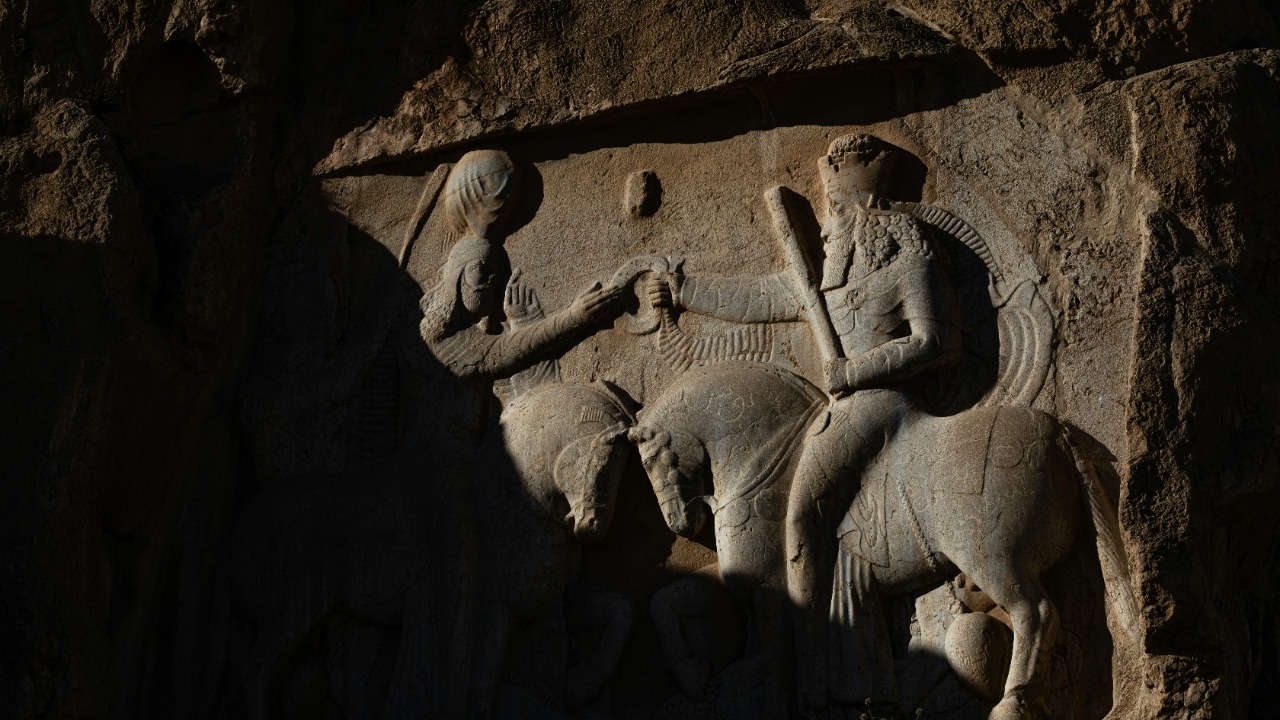
By sequencing genomes from multiple burials, an international team reconstructed the genetic makeup, mobility patterns and family life of this Bronze Age Italian community, turning what had been a static site plan into a living social diagram. The work on this 3,500-year-old settlement, described in detail through Ancient DNA Reconstructs a Bronze Age Italian Community, shows how genetic data can reveal who grew up together, who arrived from outside and how people were grouped in death. Credit for the visual reconstructions of this world goes in part to images attributed as Credit and to the photographer Hulki, whose work helps ground the science in a tangible landscape.
A shocking family secret in the graves
Within that cemetery, the most startling finding was not about trade routes or distant ancestry but about a single household. Genetic comparisons showed that one man buried among the community’s elite adults was not the biological father of the children interred beside him, even though the grave layout and grave goods suggested a tight family unit. In other words, the social father honored in death was different from the genetic father whose DNA the children carried, a discrepancy that would have been invisible without molecular evidence.
This revelation, highlighted in reporting on Ancient DNA Uncovers Startling Family Secret of a 3,500-Year-Old Bronze Age Community, turns the phrase 3,500-Year-Old from a simple chronological label into a reminder that emotional entanglements and hidden paternity disputes are as old as organized society itself. I see in this case a rare chance to compare social identity, as expressed in burial practice, with biological reality, as captured in DNA, and the mismatch forces me to rethink how rigidly blood ties mapped onto status and inheritance in a Year and Old Bronze Age Community that otherwise looks orderly on the surface.
How scientists read kinship from ancient DNA
To reach such intimate conclusions, researchers rely on a toolkit that has matured rapidly over the past decade. They drill into dense bones or teeth, extract fragments of genetic material and then use high-throughput sequencing to piece together enough of each genome to compare individuals. By measuring how much DNA two people share, scientists can distinguish parent-child pairs from siblings, cousins or unrelated villagers, even when the skeletons are incomplete or poorly preserved.
In the Italian case, this approach allowed the team to map extended pedigrees across multiple generations, linking adults and children scattered across the cemetery into coherent family trees. The same logic underpins work in southern Italy’s Calabria region, where researchers used genetic profiles from burials to probe the ancestry and social structure of a Middle Bronze Age settlement. Reporting on Ancient DNA from Calabria Unveils Secrets of a Mysterious Bronze Age Community shows how the same methods can reveal whether a village drew spouses from nearby valleys, welcomed newcomers from across the sea or largely reproduced within a closed circle.
Calabria’s mysterious Bronze Age neighbors
Calabria, the toe of the Italian boot, has long been a crossroads between the central Mediterranean and the wider European mainland, and the Bronze Age was no exception. Archaeologists working there uncovered a settlement whose material culture hinted at outside contacts but whose exact origins and social rules remained obscure. When geneticists sampled skeletons from its cemetery, they found a blend of ancestries that pointed to both local continuity and incoming lineages, suggesting that the community balanced tradition with openness to newcomers.
The study described as Calabria Unveils Secrets of a Mysterious Bronze Age Community shows that, during the Middle Bronze Age, this group sat within a wider network of populations that shared genetic ties across the region. I read this as a counterpoint to the more insular family patterns seen in some other Italian sites, including the 3,500-year-old village with its buried family secret, and it underlines how varied social strategies could be even among neighboring communities that shared similar tools, pottery and burial customs.
An Indigenous lineage that chose isolation
Ancient DNA is not only rewriting European prehistory, it is also exposing how some Indigenous groups in the Americas maintained their distinct identities over extraordinary spans of time. In Argentina, geneticists analyzed remains from multiple archaeological sites and identified a lineage that persisted in the region for nearly 8,500 years. What stands out is not just the longevity of this group but the evidence that it rarely interacted with others, sitting at what researchers describe as an extreme end of human genetic variation.
Reporting on Ancient DNA reveals mysterious Indigenous lineage that lived in Argentina for nearly 8,500 years shows how a population can remain genetically distinctive even as climates shift and neighboring groups move in and out of the landscape. I see a clear thematic link between this Indigenous story and the Italian Bronze Age communities: in both cases, DNA exposes how choices about marriage, migration and alliance shape the genetic fabric of a group, whether that means welcoming outsiders or maintaining a deliberate distance.
Family, power and the politics of belonging
When I put the Italian and Argentine findings side by side, a pattern emerges that goes beyond any single site. In the 3,500-year-old Italian community, the mismatch between social and biological fatherhood hints at complex household politics, where status and inheritance might have followed rules that did not always align with strict bloodlines. In Calabria, the mix of ancestries suggests that some families used marriage to weave themselves into wider networks, perhaps to secure trade or political alliances, while still preserving a core local identity.
The Indigenous lineage in Argentina, by contrast, appears to have prioritized continuity over connection, maintaining a genetic profile that remained distinct for nearly 8,500 years despite the ebb and flow of neighboring populations. Together, these cases show that belonging in the past was negotiated through a mix of biology, culture and power, not dictated by DNA alone. Ancient genomes give me the tools to see those negotiations more clearly, but they also remind me that social categories like “family” and “community” have always been more flexible than they look in a cemetery plan or a genealogy chart.
What daily life looked like in a 3,500-year-old Italian community
Beyond the headline-grabbing family secret, the genetic work on the Bronze Age Italian village offers a rare glimpse into everyday life. By pairing DNA data with grave locations and artifacts, researchers could infer which children grew up together, which adults moved into the settlement from elsewhere and how households were organized across the site. Some clusters of related individuals suggest multi-generational compounds, while isolated burials with different genetic signatures point to newcomers who married in or arrived as part of broader population movements.
The study framed as Ancient DNA reveals the genetic makeup of a Bronze Age Italian community shows that this village was not an isolated backwater but part of the dynamic Mediterranean Bronze Age. I read the combination of local kin groups and mobile individuals as evidence of a society that balanced stability with change, where people could be rooted in long-standing family lines yet still participate in wider currents of trade, migration and cultural exchange that linked Italy to distant shores.
Why these ancient secrets matter now
It might be tempting to treat a 3,500-year-old paternity twist or an 8,500-year Indigenous lineage as curiosities, but they carry real weight for how I think about identity today. The Italian case shows that even in small, tightly knit communities, social roles could diverge from genetic ties, which complicates modern assumptions that biology and family must always align. The Argentine lineage demonstrates that long-term isolation is possible but rare, and that most human groups have historically been shaped by movement and mixture rather than by static purity.
As genetic testing becomes more common in consumer settings, from ancestry kits to medical screening, these ancient stories offer a cautionary note. DNA can reveal hidden connections and secrets, just as it did in the Bronze Age cemetery, but it cannot fully capture the lived reality of kinship, obligation and belonging. By looking closely at cases like the Year and Old Bronze Age Community described in Ancient DNA Uncovers Startling Family Secret of a 3,500-Year-Old Bronze Age Community, or the Indigenous lineage in Argentina for nearly 8,500 years, I am reminded that our genomes are records of both choice and chance, shaped by love, conflict, migration and memory across thousands of years.
More from MorningOverview