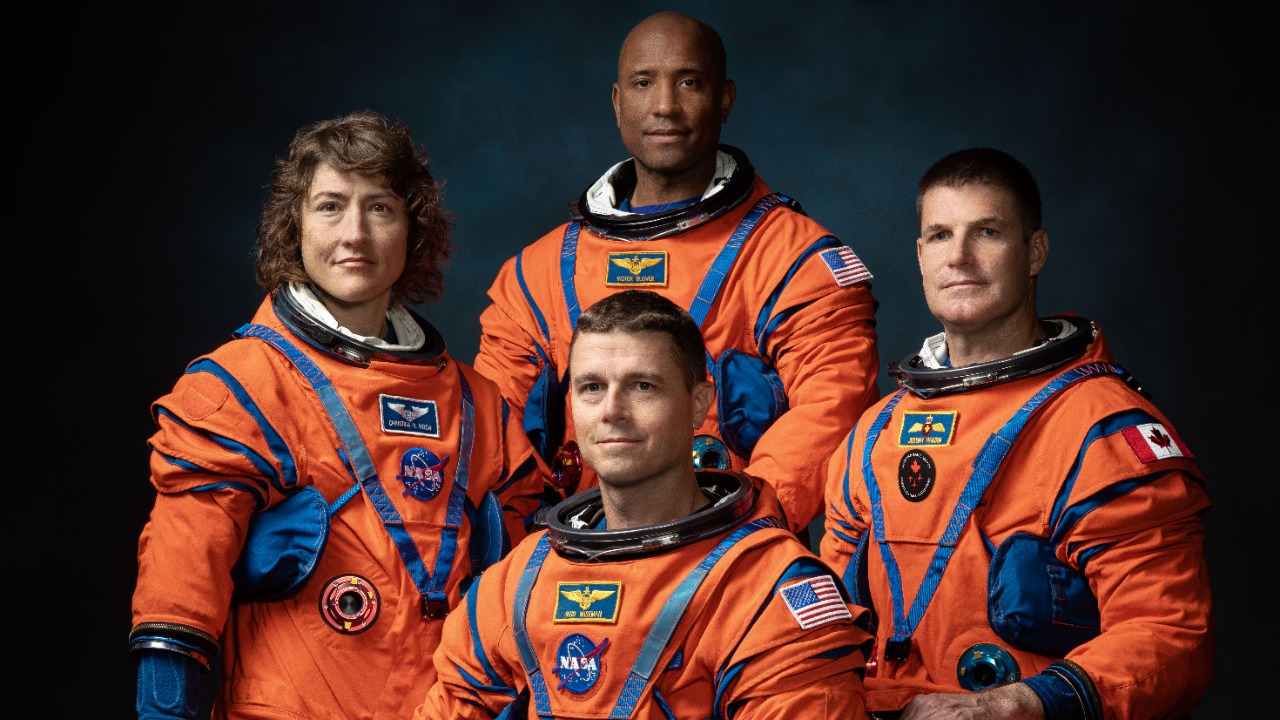

The four astronauts preparing to fly around the Moon on Artemis II have now practiced their biggest moment short of launch itself, completing a full countdown rehearsal that took them all the way to strapped-in seats and simulated “go” calls. The exercise, run at Kennedy Space Center with the integrated rocket and spacecraft still in processing, was designed to prove that crew, ground teams, and hardware can move in lockstep through the most time‑critical hours of the mission. It marks one of the last major human-in-the-loop tests before NASA attempts its first crewed lunar voyage since Apollo.
The rehearsal did more than check a procedural box. It forced NASA’s launch and mission controllers, pad technicians, and recovery forces to work through realistic timelines, communications, and contingency responses with the Artemis II crew in place, mirroring the pressure and pace of launch day. With that run-through complete, the agency has fresh data on how its modern systems and people perform together, and a clearer sense of what still needs refinement before the real countdown begins.
Why this countdown rehearsal matters for Artemis II
The countdown rehearsal is a pivotal proof point for Artemis II because it tests the entire launch-day choreography with the actual astronauts at the center of it. Rather than a tabletop drill or simulator-only run, NASA used this event to walk the crew through suiting, transport, pad ingress, and strapped-in procedures that will unfold in the final hours before liftoff, validating that the plan on paper works in the real world. For a mission that will send humans around the Moon for the first time in more than half a century, demonstrating that the people and processes can handle that pressure is as important as any hardware test.
NASA’s launch and mission teams treated the rehearsal as a full-scale demonstration of how they will support the integrated Space Launch System rocket and Orion spacecraft on the day of flight, coordinating across control rooms, pad operations, and recovery elements as described in the agency’s own account of the Artemis II flight crew demonstration. By running the crew through the same steps they will follow when the countdown is real, the agency can identify small friction points, from timing margins to communications handoffs, while there is still time to adjust. That is especially critical for a mission that will rely on tight sequencing to place the crew on a precise trajectory toward the Moon.
Inside the launch day run-through at Kennedy Space Center
The rehearsal unfolded at Kennedy Space Center as a near-carbon copy of launch day, down to the crew’s arrival at the suit-up facility and their ride to the pad. The astronauts donned their pressure suits, completed leak checks, and moved through the same medical and communications steps they will face before the real launch, giving both the crew and support staff a chance to refine their timing and muscle memory. From there, they boarded the transport that will carry them to the pad, rehearsing the route and timing that must mesh with the broader countdown clock.
Once at Kennedy, the crew and ground teams executed what NASA describes as a Countdown Demonstration Test for Artemis II, which took the astronauts into the Orion spacecraft and through the final strapped-in portion of the countdown. Controllers in the launch control center and mission control rehearsed polling for “go” decisions, monitoring simulated vehicle data, and practicing the handoff of authority as the clock approached the final seconds. The result was a realistic stress test of how the entire launch architecture, from pad to control rooms, will function when Artemis II is ready to fly.
What the crew actually practiced in the capsule
Inside Orion, the astronauts worked through the same checklists they will use on launch day, from seat ingress and harnessing to communications checks with multiple control centers. They rehearsed how to respond to calls from the ground, how to verify cockpit displays, and how to manage their own workload as the countdown clock ticked down. This kind of in-capsule practice is essential because it exposes any mismatch between procedures written for simulators and the realities of the flight hardware, including control placements and sightlines.
Reporting on the event notes that NASA’s Artemis II astronauts completed a full-scale launch day rehearsal that took them all the way to strapped-in positions in their spacecraft, with the integrated systems bringing them within seconds of simulated liftoff, a level of fidelity highlighted in coverage of the Artemis II crew rehearsal. By practicing the final minutes in that environment, the crew can refine how they divide tasks, manage checklists, and maintain situational awareness during the most intense phase of the countdown. It also gives engineers a chance to confirm that audio levels, display readability, and other human-factors details meet expectations when the capsule is fully powered and crewed.
How ground teams synced up with the astronauts
For the launch and mission teams, the rehearsal was as much about coordination as it was about technical performance. Controllers had to manage the same sequence of polls, status checks, and cross-room communications that will occur on launch day, all while keeping the crew informed and confident. That means synchronizing the work of engineers monitoring propulsion, avionics, environmental systems, and range safety, and ensuring that any issue is communicated clearly and quickly to the people strapped into Orion.
NASA describes how its launch and mission teams, along with test and recovery personnel, used the demonstration to validate their integrated roles in supporting the launch of the test flight. That coordination extends beyond the launch control center to include the mission control team that will take over once Artemis II is in flight, as well as the recovery forces that must be ready if the countdown is halted after the crew has boarded. Practicing those handoffs now reduces the risk of confusion later, when seconds can matter for both safety and mission success.
Artemis II in the context of NASA’s return to the Moon
The successful rehearsal underscores how close Artemis II is to becoming the first crewed mission in NASA’s modern lunar campaign. This flight is designed to send four astronauts around the Moon, testing Orion’s life support, navigation, and communications systems on a trajectory that echoes Apollo but relies on entirely new hardware and software. In that sense, the countdown test is not just a procedural milestone, it is a signal that the broader architecture of the Artemis program is maturing toward regular human flights beyond low Earth orbit.
One report on the rehearsal frames it as another significant step toward the first crewed Moon mission since Apollo 17, noting that NASA has concluded a critical dress rehearsal for Artemis that brings the agency closer to sending humans back to lunar distance. That context matters because Artemis II is not a one-off stunt, it is the bridge between the uncrewed Artemis I test flight and later missions that aim to land astronauts on the lunar surface and eventually support a sustained presence. Each rehearsal and systems test feeds into that longer arc, where reliability and repeatability will be as important as the first return itself.
Lessons carried over from earlier SLS and wet dress tests
The countdown rehearsal for Artemis II did not start from scratch. NASA has already run multiple wet dress rehearsals and fueling tests on the Space Launch System, building a playbook for how to manage cryogenic propellants and complex ground systems at Launch Pad 39B. Those earlier exercises exposed issues with valves, sensors, and ground support equipment, and the fixes from those campaigns are now baked into the procedures that supported the latest crewed rehearsal. The result is a countdown flow that reflects years of incremental learning on the same pad and rocket family.
Documentation on the SLS program explains that during the wet dress rehearsal, teams at Kennedy practiced loading and safely removing super-cold propellants at Launch Pad 39B, a core skill that underpins any crewed countdown. Those operations are now integrated with the human-in-the-loop elements of Artemis II, so the same teams that manage propellant flows are working in concert with the controllers responsible for crew safety. By combining the technical lessons from uncrewed tests with the human factors of a crewed rehearsal, NASA is tightening the entire launch system into a more resilient whole.
How the rehearsal fits into the road to rollout and launch
With the countdown demonstration complete, attention now shifts to the remaining integration and verification steps before the rocket and spacecraft roll out to the pad. The rehearsal helps clear the way for that move by proving that the people and procedures are ready to support a real countdown once the hardware is in its final configuration. It also gives managers a clearer picture of schedule risk, since any procedural changes identified during the test must be implemented and revalidated before launch day.
NASA has signaled that ahead of rolling out the integrated SLS, or Space Launch System, rocket to the launch pad, teams will be conducting final checks and rehearsals that build on the momentum of the ahead of rollout planning already in motion. Coverage from Florida notes that after the Artemis II astronauts came to Kennedy Space Center for the countdown demonstration test, the next major visible step will be when the massive rocket rolls out to the pad, a milestone that will signal that launch preparations have entered their final phase, as described in reporting on what comes next before Artemis II. The countdown rehearsal therefore sits at a hinge point in the schedule, bridging the era of ground-based testing and the approach to actual flight.
The human factor: four astronauts learning to fly as a team
Beyond the technical checkouts, the rehearsal was a crucial moment for the four astronauts who will ride Artemis II around the Moon. Spending hours in their suits, moving through the pad environment, and settling into Orion together helps them refine how they communicate under pressure and how they support one another when the timeline compresses. It is one thing to practice procedures in a simulator, and another to feel the constraints of the real capsule, the weight of the suit, and the awareness that every move is being watched by launch controllers.
NASA’s imagery and descriptions of the event emphasize that the four astronauts set to fly around the Moon used the launch day demonstration to walk through each step as a cohesive crew. That experience will pay dividends not only during the countdown but throughout the mission, from translunar injection to splashdown, because it builds shared expectations about how each person reacts when the stakes are highest. In a program that aims to send humans deeper into space than any current operational mission, that kind of team cohesion is as critical as any piece of hardware.
What this milestone signals about Artemis readiness
Completing a full countdown rehearsal with the Artemis II crew in place signals that NASA’s lunar program is moving from design and testing into the realm of operational spaceflight. The agency has now demonstrated that its modern launch infrastructure, from the Space Launch System to Orion and the ground systems at Kennedy, can support a realistic crewed countdown. That does not eliminate risk, but it shows that the pieces are coming together in a way that resembles the cadence of a mature human spaceflight program rather than a one-off demonstration.
Coverage of the event notes that the Artemis II crew completes critical countdown rehearsal ahead of Moon mission, framing it as another significant step toward sending humans back to lunar distance. NASA’s own description of how its launch and mission teams conducted the demonstration ahead of launch reinforces that view, presenting the rehearsal as a key validation of the integrated system that will carry astronauts around the Moon. Taken together, these accounts suggest that while work remains, the path to Artemis II’s liftoff is clearer and more concrete than at any point since the program began.
More from MorningOverview