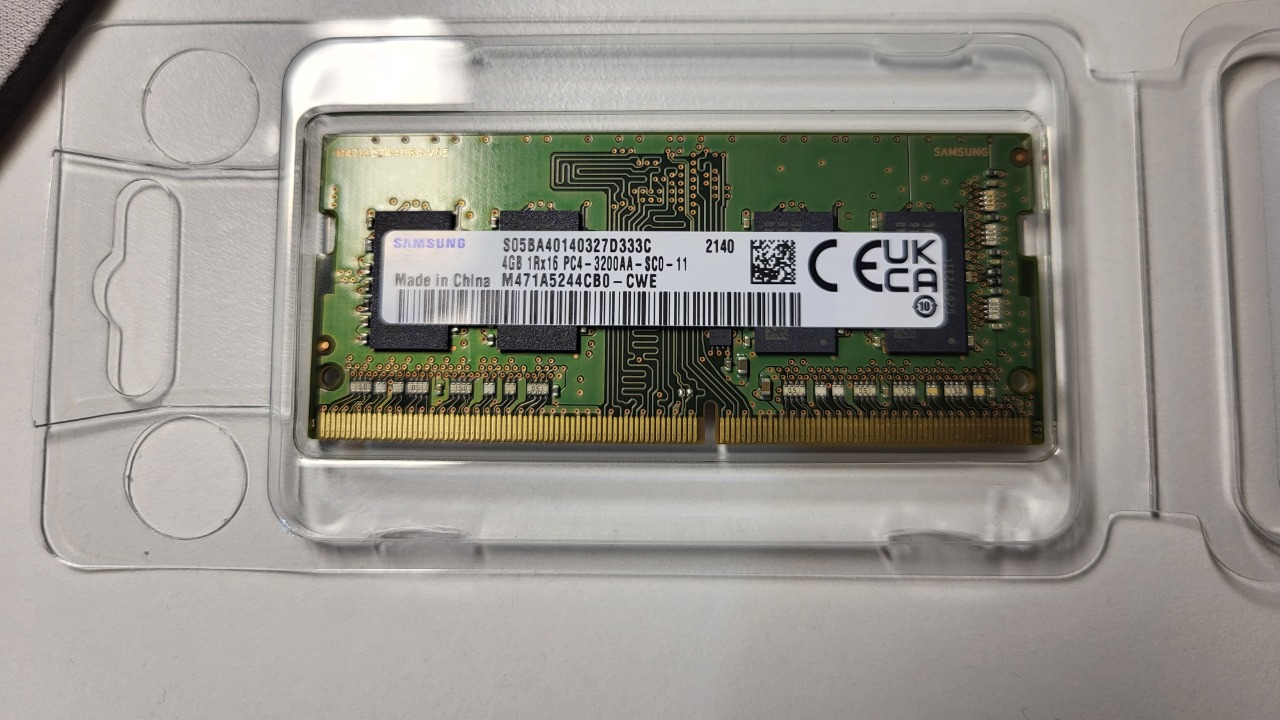

Memory that once felt like an afterthought in a PC budget has become the main event. RAM prices have climbed so aggressively that some boutique builders are now telling customers to supply their own sticks if they want a reasonable total. The result is a strange new normal where “bring your own RAM” is no longer a joke, but a survival strategy.
Behind that shift is a collision of AI demand, supply constraints, and a market that has discovered just how much leverage it has over gamers and creators. I am seeing builders, buyers, and even casual Reddit posters recalibrate what a “good deal” looks like, and the ripple effects are reshaping everything from platform choices to whether a prebuilt or DIY rig makes more sense.
From cheap add‑on to budget killer
For years, RAM sat in the shadow of GPUs and CPUs, a line item you padded a little but rarely obsessed over. That has flipped. Reports now describe how RAM prices have surged across desktop, mobile, and server segments, with Memory costs rising sharply enough to dominate the bill of materials for a mid‑range gaming PC. Where 32 GB of DDR5 once felt like a luxury, it now feels like a financial commitment on par with a high‑end motherboard.
The sticker shock is not just anecdotal. One PC builder has publicly claimed that RAM prices have increased ‘500%’, prompting CyberPowerPC to raise memory charges in both the U.S. and UK. Separate analysis of the RAM market describes a RAM Price Surge: Up to 619% in 2025, a figure that would have sounded absurd a few upgrade cycles ago. When a single component can jump by 500% to 619%, it stops being a tweakable option and becomes the central constraint on the entire build.
AI, HBM, and the great DRAM squeeze
The core of the crisis sits far from gaming desks, in data centers racing to feed AI models. Analysts tracking the RAM Shortage 2025 point to AI data center demand as a primary driver of higher DRAM prices, with spot market quotes signaling tight capacity and online DRAM module prices spiking in late 2025. When hyperscalers are willing to pay almost anything for capacity, consumer DIMMs end up fighting for scraps of wafer and packaging allocation.
That allocation problem is compounded by the rise of high bandwidth memory. One widely shared explanation from the build‑your‑own community notes that DRAM makers have limited wafer + packaging capacity, and HBM for GPUs is the highest‑margin use of it, so traditional DRAM gets whatever is left. Industry analysis of the HBM3e transition adds that, As of late 2025, the global semiconductor landscape has pivoted so aggressively toward HBM3e that it is even reshaping the mobile DRAM market and handing Samsung a larger share of the iPhone supply chain. Every wafer that becomes HBM3e for AI accelerators is a wafer that does not become affordable DDR5 for a home PC.
Builders hit the wall and pass the bill
Prebuilt vendors are caught in the middle, and some are no longer willing to quietly absorb the shock. CyberPowerPC’s warning that RAM prices have increased ‘500%’ is not just a complaint, it is a signal that the old model of bundling “good enough” memory into every system is breaking. When a 64 GB kit can cost as much as a console, the margin structure of a gaming tower starts to look untenable.
That console comparison is no exaggeration. Social posts tracking the spike note that Global RAM Prices Spike, 64GB DDR5 Now Costs as Much as a PS5 Pro, underscoring how distorted the market has become. When a single memory kit rivals the price of a PlayStation 5 Pro, system integrators either have to jack up their base configurations or start stripping RAM out of the default spec and asking buyers to fend for themselves.
MAINGEAR and Paradox Customs go RAM‑optional
That is exactly what some boutique builders are doing. MAINGEAR has rolled out a program that, in its own words, Fights The DDR5 Memory Crisis By Letting Gamers Build PCs Without RAM, Gives Users The Choice To Bring Self. Instead of forcing every buyer into a marked‑up kit, the company is effectively saying: pick your CPU, GPU, and case, then either pay for our validated memory or slot in your own.MAINGEAR’s own explanation is blunt about why this exists. The company says Why: DDR5 pricing has been unpredictable and, in many cases, brutal. BYO RAM Builds are pitched as a smarter way for gamers and creators to navigate that volatility, while still running MAINGEAR’s standard validation before shipping. Paradox Customs has taken a similar path, with coverage noting that All AMD AM5-based desktop CPUs use DDR5, while even many of Intel’s newest platforms favor the new type of RAM, so letting customers source their own memory can make the numbers add up on an otherwise premium build.
Shortages that will not vanish next quarter
Anyone hoping this is a brief spike is likely to be disappointed. Market trackers looking at PCPartPicker data report that, According the PCPartPicker’s memory price trends, DDR5 and DDR4 prices have expanded so sharply that high‑capacity kits now sit in the $600 to ~$750 range in late 2025. The same analysis warns that memory shortages are expected to last till at least Q4 2027, with higher prices persisting throughout 2026, which means this is not a seasonal sale problem but a multi‑year structural squeeze.
Other observers are equally skeptical of a quick fix. One breakdown of the situation notes that RAM prices have skyrocketed globally in 2025, with industry officials pointing to explosive AI data center demand, but also to economic fears and broader uncertainty. A separate overview of the PC building landscape points out that, after a brief window earlier in the year when parts were relatively affordable, The first few months of 2025 were full of graphics card reviews that looked positive, only for RAM and SSD prices to start climbing again. The pattern is clear: even as GPUs stabilize, memory is becoming the long‑term pain point.
When a prebuilt is cheaper than DIY
One of the strangest side effects of the RAM crunch is that it has flipped the usual prebuilt versus DIY calculus. A detailed guide for gamers notes that, But this won’t last long Stockpiles dry up, and demand is high. While there are some decent pre-builds you can get right now, the expectation is that those deals will get a whole lot pricier as integrators burn through cheaper inventory. For the moment, though, some prebuilts still ship with large RAM allocations that would cost far more if purchased as standalone kits.
That inversion is filtering directly into community advice. In one support thread, a user asking “do i get pre build or build it myself cause of the ram shortage?” is told bluntly that You should get a pre-built. Ram prices are extremely high now, with the suggestion that even buying second‑hand memory is painful and that a prebuilt can still be a good deal, especially if you later replace the GPU. When forum regulars are steering budget‑conscious builders toward prebuilts, it is a sign that component pricing has drifted far from the old DIY advantage.
Platform choices: AM4 nostalgia and AM5 sticker shock
The RAM crisis is also reshaping which CPU platforms make sense. Analysts looking at budget gaming rigs argue that, The RAM crisis means it’s time to go back in time, with AM4 still looking like the best platform for budget gaming. The logic is simple: DDR4 kits are not immune to price hikes, but they remain significantly cheaper than DDR5, and the performance gap between a well‑tuned Ryzen 5 5600X with fast DDR4 and a low‑end AM5 chip with expensive DDR5 is not always worth the extra hundreds of dollars in memory.
On the flip side, anyone eyeing the latest AM5 or Intel platforms is being warned to budget carefully. Coverage of Paradox Customs’ RAM‑free builds stresses that Why a RAM-Free PC Option Makes Sense for Buyers Today is precisely because Prices for DRAM are starting to move higher after a brutal supply glut, and the fact that new platforms lean so heavily on DDR5 just adds stress. For many buyers, that makes a last‑gen board with cheaper RAM feel less like a compromise and more like a smart hedge against a volatile market.
How builders and buyers are adapting
In response to this chaos, both sides of the counter are getting more tactical. System integrators like MAINGEAR are formalizing “bring your own RAM” as a feature, with BYO RAM Builds that still run through the company’s validation pipeline so customers are not left troubleshooting memory compatibility alone. Paradox Customs is selling PCs without RAM at all, effectively turning DIMMs into a user‑supplied accessory like a keyboard or mouse.
On the consumer side, advice is getting more granular. Enthusiast guides suggest watching for short‑lived sales as stockpiles dry up, while community posts dissect the trade‑offs between buying a prebuilt with “too much” RAM now or building a system with minimal memory and upgrading later. Some are even recommending that buyers prioritize GPUs and CPUs today, then plan a RAM upgrade in a year or two if and when prices normalize, a reversal of the old wisdom that memory was the easiest part of the build to max out from day one.
The new reality of PC building
All of this adds up to a PC market that feels upside down. Reports on Why RAM Prices Are Surging describe a perfect storm of AI data center demand, supply constraints, and a pivot toward high‑margin HBM that has left consumer DRAM exposed. Analyses of DRAM prices and shortages lasting till at least Q4 2027 suggest that builders and buyers are not dealing with a blip, but with a multi‑year reset of what memory costs.
In that environment, it is no surprise that boutique shops are telling customers to bring their own RAM, that Reddit threads are advising people that Ram prices are extremely high now, and that even mainstream guides are floating AM4 as the best budget play. Until AI demand cools or new capacity comes online, memory will remain the brutal line item that dictates whether a dream build ships fully loaded or arrives as a barebones tower waiting for the sticks you managed to score on sale.
More from MorningOverview