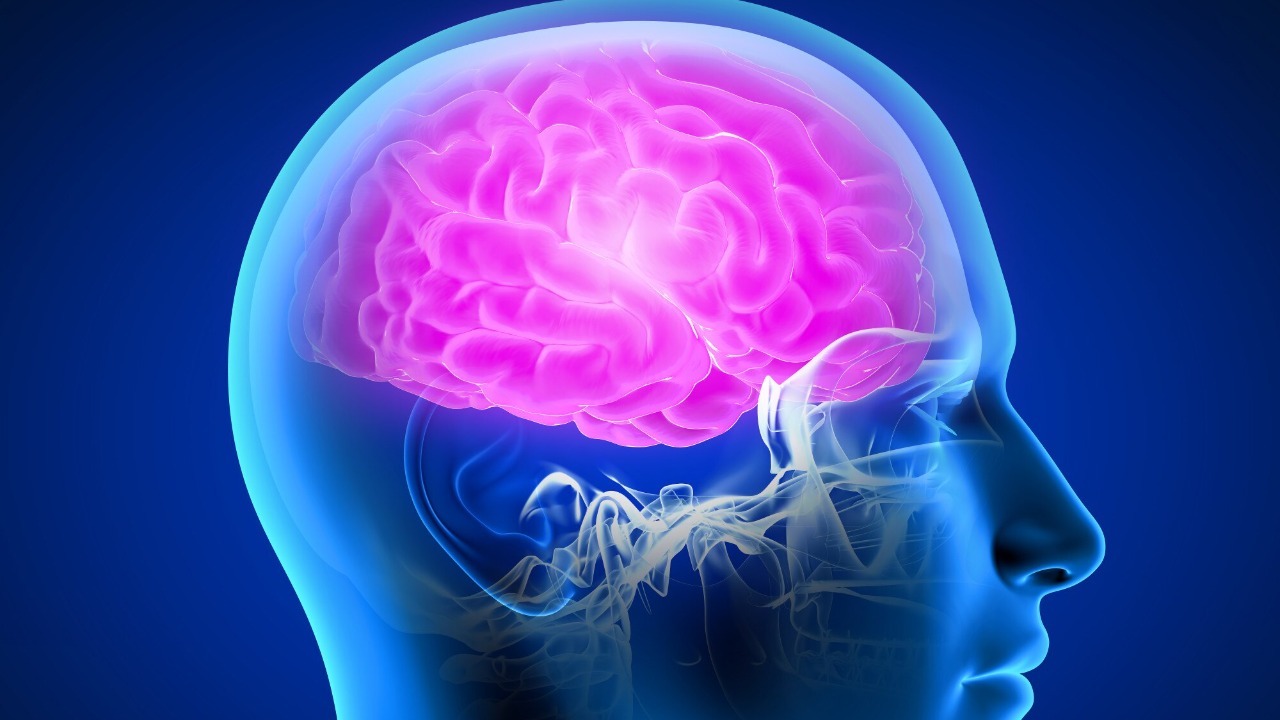

The idea of “reading minds” has shifted from science fiction to a concrete engineering challenge, and the latest breakthroughs suggest the brain’s private code is finally yielding. Researchers are not only translating brain activity into text and speech, they are also learning to “listen in” on the electrical whispers that neurons exchange long before a word is spoken. Together, these advances point to a future in which the brain’s hidden language can be decoded with a precision that would have seemed impossible a decade ago.
At the center of this shift is a new generation of tools that combine ultra-sensitive biology, non-invasive imaging and artificial intelligence. I see a pattern emerging: scientists are moving from crude, averaged signals toward detailed, moment-by-moment reconstructions of what a person sees, hears or silently says to themselves. That change is not just technical, it is conceptual, because it forces us to rethink what “language” means inside the brain.
From spikes to sentences: a new era of brain decoding
For years, brain decoding meant looking at broad patterns, such as which region lit up when someone heard a word or saw a picture. The new work goes much further, treating neural activity itself as a language that can be parsed into units, syntax and meaning. Instead of asking which area is active, researchers are starting to ask which specific pattern of activity corresponds to a particular thought, image or phrase, and how those patterns change over time as the brain interprets the world.
One line of research uses functional magnetic resonance imaging to capture how blood flow shifts across the cortex while a person watches videos or imagines scenes, then trains artificial intelligence models to map those patterns onto natural language descriptions. In one study, a non-invasive imaging technique was able to turn complex brain activity into sentences that described what a person was seeing, effectively creating a kind of mind-captioning AI that links internal experience to text.
The ultra-sensitive protein that hears neurons whisper
The most striking recent advance comes from a team that engineered an ultra-sensitive protein capable of detecting the tiny voltage changes that ripple across a neuron’s membrane when it is about to fire. By inserting this protein into brain cells and imaging its fluorescence, the researchers can watch the electrical language of neurons unfold with a temporal and spatial resolution that traditional methods could not reach. Instead of relying only on electrodes or slow blood-flow signals, they can now see how individual cells participate in fast, coordinated computations.
This protein-based sensor is sensitive enough to capture signals that had been extremely difficult to observe, such as the subtle depolarizations that predict which neurons will fire next in a circuit. The work, described as a way to uncover the brain’s hidden language, turns the membrane voltage itself into a readable signal, giving scientists a direct window into the code that underlies perception, memory and decision making.
Inside the Allen Institute’s push to “listen in” on the brain
The protein breakthrough is part of a broader effort at the Allen Institute to build tools that can systematically map how neurons compute. Researchers there have focused on circuits in the cortex, where layers of cells integrate sensory inputs and generate outputs that drive behavior. By combining the new voltage-sensitive protein with high-speed imaging, they can record from many neurons at once and reconstruct how information flows through a network as it processes a stimulus or prepares a movement.
In reports describing how scientists develop a new way to “listen in” on the brain, the team emphasizes that these signals were previously out of reach because they are both fast and faint. The new approach, which uses the engineered protein as a biological microphone, allows them to capture the fleeting dynamics that define how neurons actually compute information, rather than inferring those dynamics indirectly from slower downstream effects.
Visualizing the brain’s code with light instead of wires
Traditional electrophysiology relies on metal electrodes to pick up spikes from a handful of neurons, which is powerful but limited in coverage. The new protein sensor changes that equation by turning electrical activity into light, so that a single optical setup can monitor many cells simultaneously. This shift from wires to photons makes it possible to see how patterns of activity spread across a circuit, revealing the “grammar” of neural computation in a way that single-point recordings cannot.
Descriptions of how scientists unlock a new way to hear the brain’s hidden language highlight that this optical method can capture events that were impossible to observe until now. By watching voltage changes sweep across dendrites and axons, researchers can test long-standing theories about how neurons integrate inputs, how inhibition shapes network rhythms and how specific microcircuits contribute to perception and action.
From hidden speech signals to inner voice decoding
While the protein work targets the raw electrical code, other groups are focusing on the brain’s internal speech, the words we say silently in our heads. In one project, scientists are developing a brain-computer interface that can pick up hidden speech signals, including those that are not meant to be spoken aloud. By analyzing patterns of activity in speech-related regions, they can infer which words a person is internally articulating, even when no sound is produced.
Researchers describe this as a way to access the brain’s hidden speech signals, opening a path for people who are “lost for words” because of paralysis or injury. By decoding internal speech that is not meant to be spoken, the system could eventually provide a communication channel for individuals who cannot move their lips or vocal cords, translating their inner voice directly into text or synthesized audio.
Mind-captioning and the rise of non-invasive thought-to-text
Parallel to invasive interfaces, non-invasive imaging is making surprising progress in turning thoughts into language. Functional magnetic resonance imaging, which tracks blood oxygenation as a proxy for neural activity, has long been used to map brain regions, but it was considered too coarse for detailed decoding. Recent work challenges that assumption, showing that with enough data and the right models, functional signals can support remarkably fine-grained reconstructions of what a person is thinking about.
In one study, a non-invasive imaging technique was trained to translate complex scenes in a person’s head into sentences, effectively creating a system that can turn brain activity into text without surgery. The same line of work notes that functional magnetic resonance imaging is a non-invasive way to explore brain activity, but decoding more abstract content, such as imagined shapes, has proved more difficult, underscoring both the promise and the current limits of functional imaging as a window into the mind.
Inner speech on command and the ethics of “mind-reading”
Another frontier is decoding inner speech on command, where participants are asked to think specific words while their brain activity is recorded. In one experiment, scientists achieved up to 74 percent accuracy in identifying silently spoken words using a brain-computer interface that analyzed patterns of neural activity associated with speech planning and articulation. The system could distinguish between different target words when participants were prompted, demonstrating that the inner voice leaves a reliable neural signature.
The work is described as a breakthrough in inner speech decoding, but it also raises obvious ethical questions. If inner speech can be decoded with high accuracy when a person cooperates, it is natural to ask how such systems might be constrained to protect privacy and consent. For now, the technology requires active participation and controlled conditions, but as decoding improves, the line between assistive communication and intrusive surveillance will need careful legal and social guardrails.
How the brain’s language system mirrors artificial intelligence
As decoding tools improve, they are revealing that the brain’s language system may operate in ways that resemble modern artificial intelligence models. Research on how the human brain understands language suggests that neural activity tracks not just individual words, but also context, tone and meaning in a sequence that closely mirrors how large language models process text. Instead of treating each word in isolation, the brain appears to build predictions and update them as new information arrives, much like an AI model that anticipates the next token.
One analysis argues that the human brain processes spoken language in a sequence that is more like AI than previously imagined, integrating context, tone and meaning in a dynamic loop. This convergence is not accidental: both biological and artificial systems face the same problem of extracting structure from streams of symbols. As a result, techniques developed to interpret AI models, such as probing internal representations, may become increasingly useful for interpreting the brain’s own internal code.
AI that learns to think in steps, and what it teaches neuroscience
The feedback loop between neuroscience and artificial intelligence runs in both directions. As brain decoding improves, AI researchers are building models that reason in more human-like ways, including systems that are trained to generate long chains of thought rather than single-step answers. Work on effective long chain-of-thought training for small language models, for example, shows that models can be pushed to maintain coherent multi-step reasoning if they are guided through carefully designed curricula and optimization strategies.
In one technical report, Team and Guo describe how models such as DeepSeek-R1 can be trained to handle complex reasoning tasks by traversing a “valley” of difficulty, gradually improving their ability to sustain long sequences of internal computation. For neuroscientists, this kind of work offers a conceptual template for thinking about how the brain might structure its own chains of thought, and how decoding tools could be tuned to capture not just isolated representations, but the unfolding of reasoning over time.
From lab tools to therapies: why decoding the brain’s code matters
Beyond the scientific intrigue, the practical stakes of decoding the brain’s hidden language are enormous. If researchers can reliably map patterns of activity to specific thoughts, sensations or intentions, they can design therapies that intervene at the level of code rather than crude anatomy. For people with paralysis, that might mean brain-computer interfaces that translate intended movements or words into actions on a screen or in a robotic limb. For those with psychiatric conditions, it could mean identifying maladaptive patterns of activity and nudging them toward healthier states.
Reports on how scientists unveil a method to decode the brain’s hidden language emphasize that understanding the brain’s code can guide the search for better therapies. By moving from descriptive maps to mechanistic models, clinicians could eventually personalize treatments based on how an individual’s circuits encode information, rather than relying solely on symptoms or broad diagnostic categories.
The road ahead: stitching together spikes, speech and meaning
What stands out across these projects is how complementary they are. The ultra-sensitive protein reveals the raw electrical alphabet of neurons, inner speech decoders translate the brain’s private monologue, and non-invasive mind-captioning systems connect large-scale patterns to natural language. Together, they form a multi-layered approach that spans from ion channels to sentences, each layer offering a different vantage point on the same underlying code.
As I see it, the next challenge is to stitch these layers into a coherent framework that explains how spikes become symbols and symbols become stories. That will require not only better sensors and smarter algorithms, but also a shared conceptual language between neuroscience and AI. The work already underway at places like the Allen Institute, described in detail in accounts that note it is By Allen Institute December and framed as scientists who unlock how neurons actually compute information, suggests that such a synthesis is possible. If that effort succeeds, decoding the brain’s hidden language will not just be a technical feat, it will be a new way of understanding what it means to think at all.
More from MorningOverview