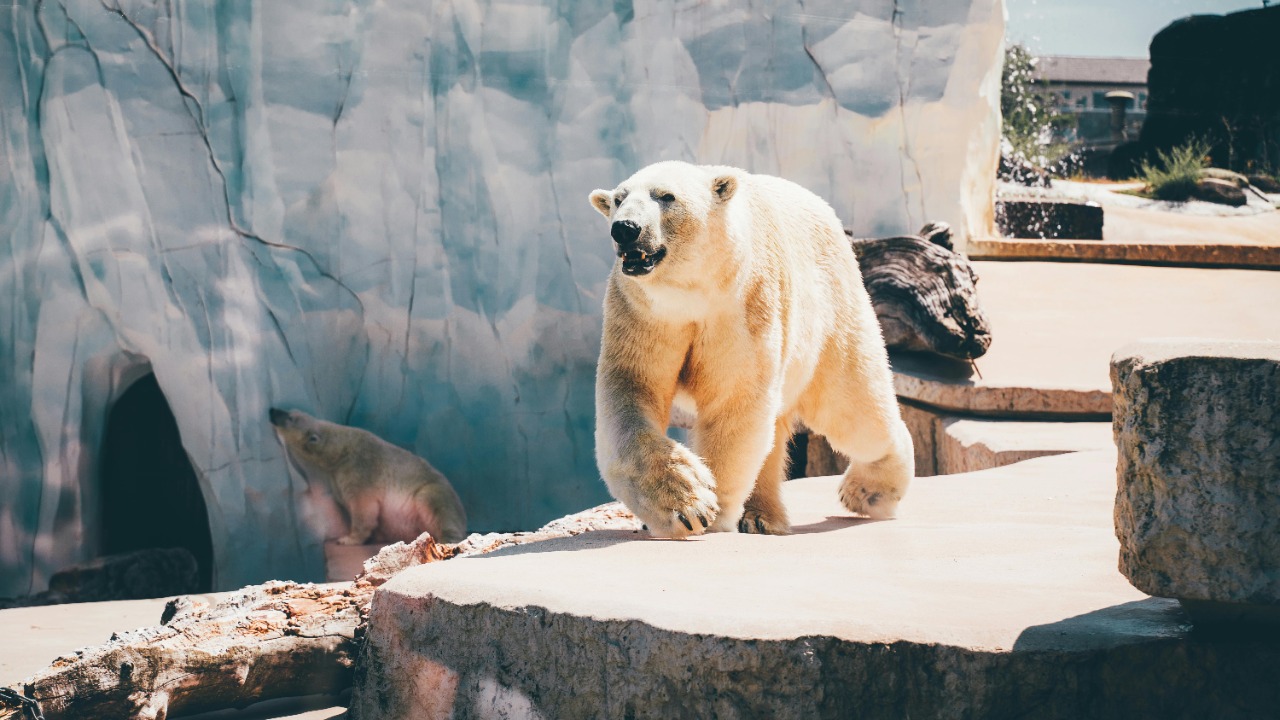

Polar bears are running out of ice and out of time, yet inside their cells something remarkable is happening. As the Arctic warms and traditional hunting grounds vanish, researchers are finding that polar bear DNA is shifting in ways that look like a last-ditch biological counterattack on Climate Change. The question is whether this genetic ingenuity can keep pace with a crisis that is erasing their world faster than any large predator has ever had to endure.
The brink: a top predator squeezed by a vanishing Arctic
Polar bears have become a global shorthand for climate peril because their survival is tied so tightly to sea ice, the frozen platform they use to hunt seals, rest and travel. Scientists now describe Polar Bears Are on The Brink of Extinction, with most living in Canada and scattered across Greenland, Russia, Alaska and Norway, as the Arctic warms and sea ice seasons shrink. The loss of that ice is not a distant forecast but a measurable contraction of habitat that is already forcing bears to swim farther, fast, and often unsuccessfully, in search of food.
Researchers tracking habitat trends report that The Polar Bear Specialist Group used the sea ice metric as a measure of polar bear habitat in the IUCN Red List ( Inte ) assessments, because the length of the ice season has become a direct proxy for survival odds. As sea ice breaks up earlier and forms later, bears are pushed onto land where they burn energy walking and scavenging instead of efficiently hunting seals from the ice edge. That shift is why conservation groups warn that Polar Bears Are on The Brink of Extinction, But Their DNA May Be Fighting Back, even as the physical world they evolved for disappears around them.
Climate Change and the race against biology
The core threat is brutally simple: Climate Change is warming the Arctic faster than almost anywhere on Earth, stripping away the frozen platform that shaped polar bear evolution. As the Arctic warms and sea ice retreats, bears are forced into longer fasting periods and more frequent encounters with people, a combination that drives starvation, conflict and declining reproduction. For every degree of warming since the 1960s, scientists now find that polar bears have aged more quickly, a sign that the stress of a hotter world is accelerating their biological wear and tear.
One research team, led by Aug specialist Kaylyn Zipp, used a molecular clock to estimate biological age and showed that climate change is speeding up polar bear aging, with older “biological” bears appearing at younger calendar ages as temperatures rise. That accelerated aging compounds the pressure from shrinking ice seasons documented by The Polar Bear Specialist Group and factored into the IUCN Red List, tightening the window in which any natural adaptation can take hold. Against that backdrop, the discovery that Climate Change is forcing polar bears to rewire parts of their DNA in surprising ways is both startling and, for some scientists, a rare sliver of optimism.
Rewriting DNA: what scientists are actually seeing
Geneticists digging into polar bear genomes are not finding a slow, glacial pace of evolution but a flurry of changes that look more like an emergency rewrite. According to Dec analyses of blood samples and genome sequences, Polar Bears Are on The Brink of Extinction, But Their DNA May Be Fighting Back through rapid shifts in specific stretches of DNA linked to metabolism, fat storage and stress response. Surprisingly, a new study shows that Climate Change is forcing polar bears to rewire parts of their DNA in surprising ways, suggesting that the species is not passively succumbing to warming but actively reshaping its own biology.
Researchers describe these changes as a kind of genomic triage, with different groups of bears showing different sections of their DNA changing at different rates as they confront local conditions. One review framed it as polar bears using their own DNA as a toolkit to cope with a rapidly heating Arctic, even as the overall population remains highly vulnerable. The work, summarized in a Dec Quick Take on how Polar bears are showing rapid DNA changes in response to warming climates, emphasizes that this is a rare example of a large mammal displaying such fast genetic shifts in real time, a process that could help them adjust to changing climates and diets if other pressures do not overwhelm them first.
Jumping genes and a “unique group” in Greenland
At the heart of the new findings are so-called “jumping genes,” mobile pieces of DNA that can copy and paste themselves around the genome and, in doing so, tweak how other genes work. Geneticists examining polar bear samples report that these jumping genes are unusually active, hinting that they may be helping bears fine tune traits like fat metabolism, immune function and even behavior as conditions change. One analysis notes that Polar bears face “total extinction” by the end of this century, but scientists have found a small beacon of “hope” in the way these jumping genes appear to be helping them adapt to changing climates and diets, potentially altering how they process new foods when traditional seal hunting fails.
Some of the most striking evidence comes from Greenland, where According to a study, Greenland’s polar bears show Genetic adaptations that appear tailored to survive climate change in fjords with limited sea ice. These Greenland bears, isolated by geography and currents, rely more on glacial ice and land-based hunting, and their genomes carry distinctive signatures that may reduce the risk of extinction by supporting survival in ice-poor conditions. Scientists at the University of East Anglia have described a “unique group” of polar bears evolving to survive the modern world, after studying the genetic material from blood samples of 17 polar bears, 12 of which came from these Greenland subpopulations, and a review of the pangenome highlighted how selection and breeding patterns are reshaping their DNA.
Inside the lab: how researchers track a moving genome
To understand how fast polar bears are changing, scientists are combining fieldwork in some of the harshest conditions on Earth with cutting edge genomic tools. Researchers at the University of East Anglia analyzed blood samples from polar bears in northeast and southeast Greenl fjords, comparing their DNA to bears from other parts of the Arctic to see which genes were shifting. Their work, described in reports on how Climate Change Is Forcing Polar Bears to Rewrite Their DNA, suggests that certain genetic pathways linked to fat use, stress hormones and immune defenses are under intense selection as bears navigate longer ice-free seasons.
In parallel, other teams have used a pangenome approach, layering multiple polar bear genomes to capture the full diversity of genetic variants across the species. One summary of this work notes that Scientists at the University of East Anglia studied the genetic material from blood samples of 17 polar bears, 12 of which came from Greenland, and that a review of the pangenome highlighted hotspots of variation tied to metabolism, selection and breeding. By comparing these hotspots with environmental data, including the shorter sea ice seasons tracked by The Polar Bear Specialist Group for the IUCN Red List, researchers can see where DNA is changing fastest and which subpopulations may be on the front line of adaptation.
Rewiring in real time: what “jumping genes” are doing to bears’ bodies
The phrase “rewriting DNA” can sound like science fiction, but in polar bears it refers to very specific molecular events that may be reshaping how their bodies work. One line of research focuses on transposable elements, the jumping genes that can insert themselves near or within other genes and change how those genes are switched on or off. Reports on how climate change is rewriting polar bear DNA explain that the findings, published on Friday in the journal Mobile DNA, suggest the genes that are changing play a role in how bears respond to stress, store fat and regulate inflammation as a rapidly heating climate pushes them beyond historical limits.
Another study, summarized in coverage of how polar bears are rewiring their own genetics to survive a warming climate, quotes researchers saying, “Essentially this means that different groups of bears are having different sections of their DNA changed at different times,” as they respond to local prey and temperature patterns. One scientist noted in a university press release that this shows how bears in areas with less sea ice are already shifting their diets and physiology, and that “Food availability is a real” driver of these genetic responses to their warmer environments. A related report on how polar bears are rewiring their own genetics to survive a warming climate, published at 6:49 AM PST and written By Elmira Aliieva, highlighted that these changes are most pronounced in bears living in northeastern and southeastern Greenland, where sea ice loss has been especially severe.
The cost of adaptation: aging faster in a hotter world
Even as polar bears’ genomes show signs of flexibility, their bodies are paying a steep price for life in a rapidly warming Arctic. Biologists tracking health markers have found that for every degree of warming since the 1960s, polar bears have aged more quickly, with their biological age outpacing their actual years. The study led by Aug researcher Kaylyn Zipp used a molecular clock to estimate biological age and concluded that climate change is speeding up polar bear aging, altering the balance between youth and old age in ways that could undermine reproduction and survival.
This accelerated aging intersects with the genetic story in complicated ways. On one hand, older bears may carry valuable adaptations in their DNA that have helped them survive repeated lean years and extreme conditions. On the other, if Climate Change is forcing polar bears to rewrite their DNA while simultaneously shortening healthy lifespans, there may be fewer chances for those beneficial variants to spread through the population. Analyses that frame polar bears’ DNA as changing in response to warming climates caution that while rapid genetic shifts are remarkable, they do not erase the basic arithmetic of energy, food and time that is now tilted against the species.
Conservation on a moving target: how groups are responding
Conservation organizations are scrambling to keep up with a species whose habitat and genome are both in flux. WWF funding is directed toward scientific monitoring of polar bear subpopulations, developing non-intrusive tracking methods and supporting the protection of vital polar bear habitats, a strategy that assumes protecting sea ice and key denning areas remains the most effective way to buy time for any natural adaptation. Those efforts are increasingly informed by genetic data, as managers weigh which subpopulations, such as the unique Greenland bears, may hold crucial adaptations that need extra protection.
Public campaigns are also trying to keep polar bears in the spotlight as climate fatigue sets in. The WWF ( World Wildlife Fund for Nature ) launched the Rare Page initiative with a Russian social networking site to showcase endangered species selected from the Int Union for Conservation of Nature’s Red List, including the snow leopard, polar bear and gray whale. By tying iconic animals to concrete conservation actions, such as reducing emissions and safeguarding sea ice corridors identified by The Polar Bear Specialist Group for the IUCN Red List, advocates hope to ensure that the genetic resilience now emerging in polar bears is not squandered by political inaction.
Hope, limits and what comes next for a species in flux
The emerging picture is of a species caught between extraordinary biological ingenuity and an unprecedented environmental shock. Reports that Climate Change Is Forcing Polar Bears to Rewrite Their DNA describe a new study suggesting polar bears may be genetically adapting to survive a rapidly warming Arctic, in what researchers describe as a rare example of rapid evolution in a large carnivore. Yet the same analyses stress that adaptation has limits, especially when sea ice loss, accelerated aging and food scarcity are all hitting at once.
Geneticists caution that while there were some interesting DNA changes that appear to be helping polar bears adapt to this, the overall trajectory still points toward severe declines if emissions and ice loss continue unchecked. One synthesis of the research on how polar bears’ DNA is changing asks what it really means for their future and concludes that the species’ best chance lies in a combination of natural genetic flexibility and aggressive human action to stabilize the climate. In other words, polar bears’ DNA may be pushing back against Climate Change, but without a rapid slowdown in warming, even the most agile genome will struggle to outrun the melt.
More from MorningOverview