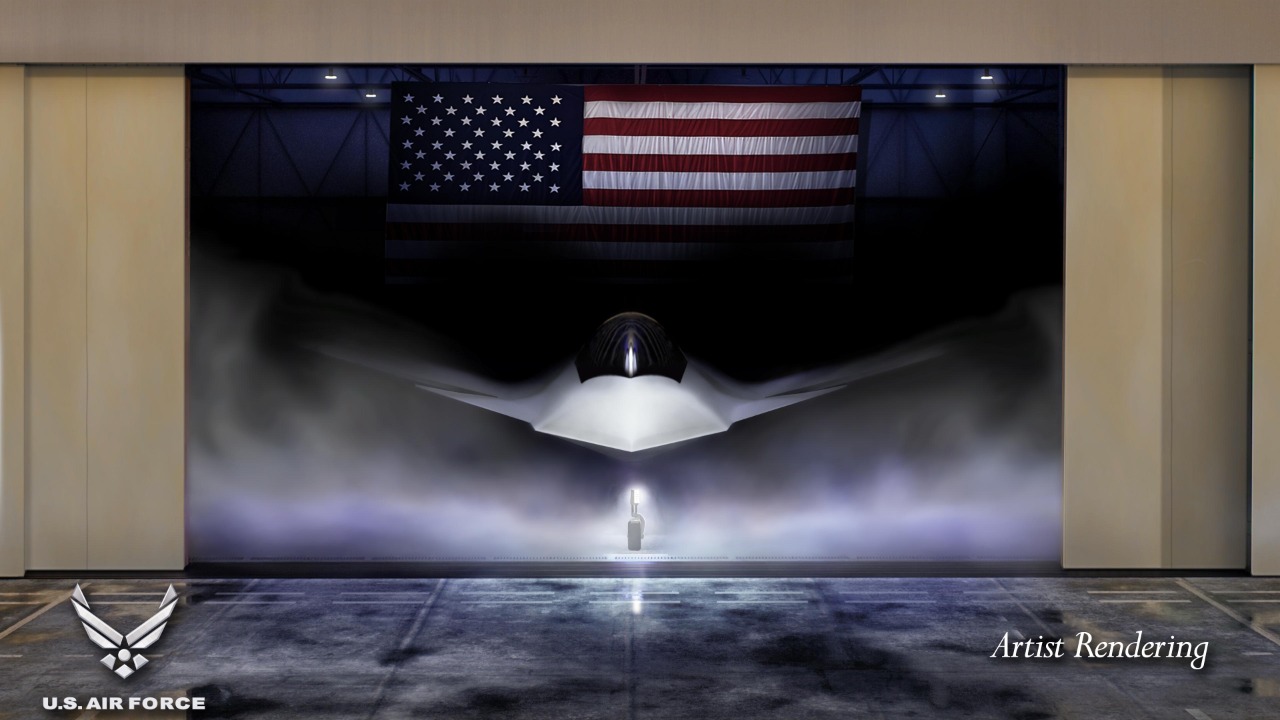

The NGAD F-47 is being shaped to do something no American fighter has done before: slip into the battlespace with the radar and thermal subtlety of a stealth bomber while still fighting like an air superiority jet. Early descriptions suggest a design that hides its presence not only from radar but also from infrared sensors, blurring the line between classic fighters and long range strike aircraft. If that vision holds, the F-47 could redefine how the United States opens a war in heavily defended airspace.
From secret X-plane to centerpiece of American air dominance
The F-47 is emerging from years of classified experimentation under the Next Generation Air Dominance concept, which the Pentagon describes as a family of systems rather than a single aircraft. Officially designated as Next Generation Air Dominance, or NGAD, the program has been deliberately obscured from what one report calls the world’s combat aviation watchers worldwide. That secrecy is not just habit, it is part of the operational concept, because the United States wants potential adversaries to guess at the F-47’s exact performance envelope and signature management tricks.
Publicly available information confirms that The Boeing F-47 is a planned American air superiority aircraft under development by The Boeing for the United States Air Force, or USAF, with the service expecting to field it in the 2030s. Many details of the F-47 remain classified, but open sources already link its mission set to deterring and, if necessary, defeating the advanced air defenses and fighter fleets of China, North Korea, and Russia, a role that places it at the forward edges of combat rather than in a niche experimental slot.
Why the Air Force picked Boeing and what that signals
The decision to award the NGAD fighter contract to Boeing was one of the most consequential defense choices of the year, and it instantly elevated the F-47 from concept art to centerpiece of future force planning. Reporting on the competition notes that Boeing wins Air Force contract for the NGAD next generation fighter, dubbed 47, in what was described as the biggest air warfare story of the year and the culmination of a long running case to award its contract. That outcome locks in Boeing as the design authority for the jet that will eventually replace the F-22 in the air dominance role.
Boeing’s win did not come out of nowhere, it followed years of investment in sixth generation infrastructure and X-plane work that accelerated the F-47’s schedule. One detailed account explains that Boeing previously made major investments to expand its operations in St. Louis, Missouri, specifically to prepare for sixth generation production, and that the F-47 program’s accelerated pace was made possible by earlier NGAD X-plane efforts. Those sunk costs and testbeds gave Boeing a head start in proving it could deliver a stealth jet ready for the forward edges of combat rather than a paper concept.
A fighter that hides like a bomber
What sets the F-47 apart conceptually is how aggressively it borrows from stealth bomber design to reduce its visibility across multiple sensor bands. Early descriptions of the airframe emphasize a smooth, blended planform with minimal protrusions, a layout that one analysis says is intended to make the F-47 NGAD Stealth fighter present as little radar cross section as possible to generate a return rendering. That same reporting underscores that the jet is meant to combine stealth, speed, dogfighting prowess, long range weapons delivery, and control of unmanned escorts, a mix that pushes it closer to a multi role strike platform than a pure dogfighter.
Visuals released so far show a graphical artist depiction of the aircraft with a smooth, rounded horizontal surface and deeply buried inlets, a configuration that one description notes is designed for heat reduction and radar signature reduction. In other words, the F-47 is being sculpted to look more like a compact flying wing bomber than a traditional fighter with a vertical tail, which helps explain why early observers describe its stealth as bomber like rather than simply incremental over fifth generation designs.
Heat Signature: burying the engine to stay invisible
Radar stealth is only half the survival equation in an era of proliferating infrared search and track systems, so the F-47’s designers are attacking its thermal footprint with equal intensity. One detailed breakdown of the jet’s thermal management explains that the program’s engineers are focused on Heat Signature and that the F-47 aims to be on the cutting edge of thermal management, meaning an internally buried engine, complex exhaust shaping, and active cooling to minimize the heat signature from the aircraft. That approach mirrors what the Air Force has already done on stealth bombers, where exhaust is mixed and cooled before it ever meets the outside air.
By burying the engine deep inside the fuselage and routing exhaust through long, shielded channels, the F-47 can make it harder for enemy sensors to pick up the hot spots that usually betray a jet’s position. The same analysis of the F-47 NGAD Stealth design notes that the aircraft’s smooth, rounded horizontal surface is part of this strategy, because it allows heat to be spread and vented in ways that avoid sharp, easily detectable temperature gradients. In practical terms, that means the F-47 is being built to be as hard to spot with an infrared sensor as it is with a radar, a key requirement if it is to survive inside dense integrated air defense systems.
Range, payload, and the “Stealth++” label
Stealth alone will not win the next air war, which is why planners are emphasizing the F-47’s reach and weapons load as much as its signature. Analysts describe the F-47 NGAD: The 6th generation “Stealth++” fighter America Is Betting Everything On as having a combat radius potentially exceeding 1,000 nautical miles, a figure that would outclass the F-22 and F-35 and allow it to operate from bases farther from enemy missile threats. That same reporting frames the aircraft as the first true sixth generation platform, with stealth, range, and networking all pushed beyond current benchmarks.
Those performance promises are tied to how the jet will be used in the broader NGAD ecosystem, where it is expected to carry a mix of long range air to air missiles and stand off strike weapons. One assessment of the factors that will determine the F-47’s impact highlights that its range and payload will extend its reach and capabilities, especially when paired with new weapons and sensors. That is where the “Stealth++” label matters, because it signals that the jet is not just harder to see, it is also designed to fight effectively at distances that complicate an adversary’s planning.
Adaptive engines and high agility at the edge of the envelope
Under the skin, the F-47 is expected to rely on a new generation of adaptive cycle engines that can shift between fuel efficient and high thrust modes in flight. A detailed program overview notes that The 47’s propulsion system is expected to be an adaptive cycle engine, with Both GE and Pratt & Whitney currently developing competing designs, and that the program’s success will depend on whether this complex technology can be fielded at scale. If it works, the F-47 will be able to cruise efficiently over long distances, then rapidly shift to maximum power for combat without the fuel penalties that limit current fighters.
Agility is another area where the F-47 is expected to leap ahead of legacy jets, particularly at high angles of attack where control surfaces struggle to bite into the airflow. One assessment of America’s upcoming sixth generation F-47 aircraft prospects states that, compared to current F-22s, the new jet is expected to maintain better control at high angles of attack, which would give pilots more options in close in engagements and evasive maneuvers. That combination of adaptive thrust and high alpha agility is central to the idea that the F-47 will not just sneak into contested airspace but also dominate any fight it cannot avoid.
Commanding a “Part Of A Much Larger System”
The F-47 is not being built as a lone wolf, it is intended to sit at the center of a web of sensors, shooters, and unmanned escorts that together make up the NGAD family of systems. One technical overview describes the aircraft as Part Of A Much Larger System, with advanced datalinks, longer ranged missiles, lasers, advanced jet engines, battle management tools, and low observability (advanced stealth) all integrated into a single architecture. In practice, that means the F-47 will act as both a shooter and a flying command node, passing targeting data to other aircraft and weapons while staying as silent as possible itself.
Within that architecture, the F-47 will be the heart of the NGAD concept’s “family of systems”, which also includes collaborative combat aircraft and cutting edge sensors. One regional analysis notes that The 47 will be the heart of the NGAD concept’s family of systems, which also includes the CCA and cutting edge sensors, and that American officials frame it as a warning to those who dare to challenge us. That language underscores how political leaders see the F-47 not just as a piece of hardware but as a strategic signal to rivals in the Indo Pacific and beyond.
Penetrating A2/AD bubbles and sending a message “for Every Air Force on Earth”
The F-47’s mission is not abstract, it is explicitly tied to breaking open anti access and area denial networks built by China and other potential adversaries. One assessment of the Fighter Has a Message for Every Air Force on Earth states that its purpose is to destroy enemy aircraft and air defenses inside advanced A2/AD bubbles, and notes Air & Space Forces Magazine as highlighting that role. That framing makes clear that the jet is being optimized for the first days of a high end conflict, when integrated air defenses and enemy fighters are still largely intact.
Other analysts echo that theme, describing the NGAD F-47 as a platform designed to operate inside advanced A2/AD bubbles and arguing that its success will determine whether the United States truly delivers a generational edge. Another piece on The New F-47 Fighter Has a Message for Every Air Force on Earth reinforces that the aircraft is meant as a visible signal to other air forces that the United States intends to stay ahead in air dominance, not simply match peer capabilities.
Concept art, X-planes, and what we can really see so far
For all the secrecy, the public has already seen hints of the F-47’s shape and role through concept art and descriptions of earlier demonstrators. One report on Early concept designs notes that art renderings of the NGAD fighter show little more than the jet’s sleek exterior and wings, but that officials have said NGAD will include attributes such as increased range, payload, and survivability to counter what they describe as a threat from China today and in the future. Those renderings, while stylized, align with later depictions of the F-47 as a tailless, blended wing body with a broad, flat upper surface.
Behind those images sit real flying testbeds that have already validated key technologies for the production jet. Coverage of the many details of the F program points out that much of what we know about the F-47 comes from hints about NGAD X-plane efforts, which quietly demonstrated advanced stealth, propulsion, and networking concepts before the production contract was awarded. Those demonstrators are the reason the F-47 program can move at what officials describe as an accelerated pace without starting from a clean sheet in every subsystem.
Training the pilots who will fly a “Stealth++” jet
Even the most advanced fighter is only as effective as the pilots who fly it, which is why the Air Force is already reshaping its training pipeline for the F-47 era. A video feature on how US pilots are preparing explains that the service is using new T-7 jets to train aviators for the secret fighter, noting that Dec training flights on the T-7 are already focused on the kind of high workload, data rich cockpit environment they will encounter in the F-47. The idea is to make the transition from trainer to operational jet less jarring by exposing pilots early to advanced displays, sensor fusion, and manned unmanned teaming concepts.
That training focus reflects the reality that the F-47 will ask pilots to manage more information and more offboard assets than any previous fighter. In addition to flying the aircraft and employing weapons, they will be expected to direct collaborative combat aircraft, interpret complex sensor pictures, and make rapid decisions about emissions control to preserve stealth. The Air Force’s decision to invest in the T-7 and related simulators now suggests that it understands the human side of operating a Stealth Fighter Is Coming platform is as critical as the hardware itself.
Politics, strategy, and the Trump administration’s bet on NGAD
The F-47 is not just a technical project, it is also a political and strategic bet by the current administration on how future wars will be fought. One analysis of America’s upcoming sixth generation F-47 aircraft prospects notes that, on March 21st, 2025, President Trump directed the formal announcement of the program, signaling that the White House was willing to commit significant resources to a platform that will not enter service until the 2030s. That decision locks in a long term modernization path that assumes air dominance will remain a central pillar of US deterrence strategy.
Strategists argue that this bet is shaped by the perceived trajectory of Chinese and Russian air and missile forces, which are fielding longer range weapons and more capable fighters of their own. By pushing ahead with a jet that combines bomber like stealth, long range, and advanced networking, the administration is effectively stating that it expects contested airspace to be the norm, not the exception, in any future conflict with a peer. The F-47’s role as the heart of NGAD, its integration with CCA, and its mission to operate inside advanced A2/AD bubbles all flow from that assessment, and they explain why the program has been framed as a message for every air force on Earth rather than a niche capability.
More from MorningOverview