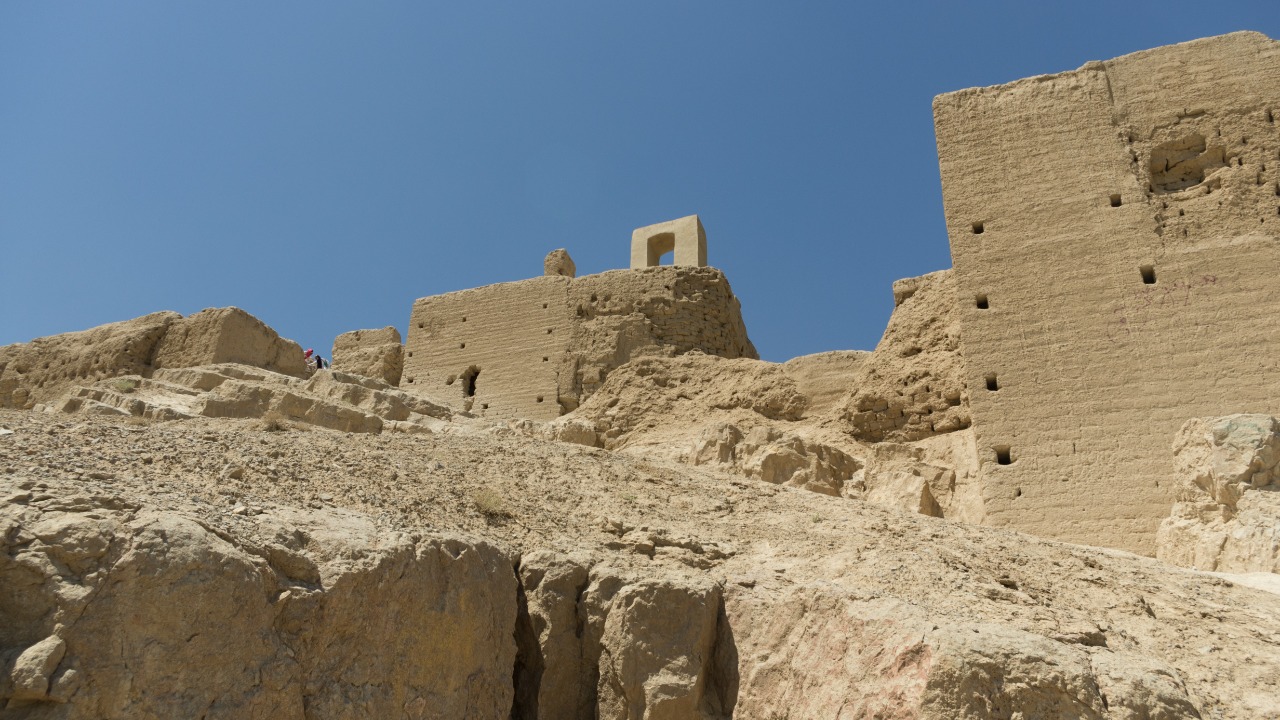

A newly documented Christian complex in Northern Iraq is forcing historians to rethink how faith communities shared sacred ground in late antiquity. The 1,500-year-old church, uncovered beside a Zoroastrian place of worship, suggests that everyday coexistence between Christians and followers of Zoroastrianism was more intertwined, and more local, than traditional imperial narratives have allowed.
Rather than a story of neat religious frontiers, the site reveals overlapping rituals, shifting power and a landscape where sacred architecture was reused and reinterpreted across centuries. The discovery gives rare, concrete form to a period when Christianity and Zoroastrianism were both expanding, and it hints at how villagers navigated those changes far from the centers of empire.
The Gird-î Kanî Gawra discovery and its “huge surprise”
The complex at Gird-î Kanî Gawra in Northern Iraq emerged from what began as a routine regional project, only to deliver what excavators describe as a huge surprise. Beneath layers of soil, archaeologists identified the foundations of a substantial Christian building that they date to roughly 1,500 years ago, directly adjacent to a structure interpreted as a Zoroastrian fire temple. The proximity of the two buildings, and the fact that they appear to have functioned in the same broader period, immediately raised questions about how two very different religious communities could operate side by side in a single rural landscape.
Reporting on the Iraq finding notes that the team did not initially expect to encounter such clear Christian remains in a zone long associated with Zoroastrian influence and with the spread of Christianity in the fourth century, yet the newly investigated church at Gird-î Kanî Gawra sits right next to a Zoroastrian place of worship, a juxtaposition that the project statement itself highlights as remarkable in the Iraq finding. That pairing, unexpected even to specialists, is what turns a single excavation into a broader challenge to how historians map religious boundaries in late antique Mesopotamia.
A 1,500-year-old church beside a Zoroastrian sanctuary
At the heart of the story is the simple but striking fact that a 1,500-year-old church stands next to a Zoroastrian sanctuary in Iraq, a configuration that is rare in the archaeological record. The Christian building, with its recognizable liturgical layout, appears to have been active at roughly the same time as the neighboring fire temple, which would have hosted rituals centered on sacred flame and the veneration of Ahura Mazda. For archaeologists, the shared horizon of use suggests that Christian villagers and Zoroastrian adherents were not separated by distance or by rigid zoning of sacred space, but instead lived and worshipped within sight of one another.
Coverage of the excavation stresses that the Christian structure is explicitly identified as a 1,500-year-old church and that it lies next to a Zoroastrianism place of worship in Iraq, while the same research project has also brought to light a 2,000-year-old pre-Christian layer that helps anchor the site in a longer local history 1,500-year-old church. That deep stratigraphy underscores that the Christian and Zoroastrian phases did not emerge in a vacuum, but were layered onto an already complex cultural landscape.
From imperial narratives to village realities
For decades, scholarship on late antique religion in this region has focused on imperial capitals and doctrinal conflicts, often treating rural communities as passive recipients of decisions made in distant courts. The Gird-î Kanî Gawra complex pushes against that top-down view by foregrounding a village-scale setting where Christians and Zoroastrians appear to have negotiated space, ritual and perhaps even shared infrastructure. Instead of a clean handover from one faith to another, the site suggests a more gradual and negotiated process, in which local actors adapted imperial religious policies to their own needs and relationships.
Researchers involved in the broader project argue that this kind of evidence helps correct an imbalance in how historians approach the period. In particular, Tamm and Wicke argue that the traditional emphasis on large urban centers neglects the essential economic and cultural role played by smaller villages and rural hubs, where religious practices may have changed over generations and where the material traces of those shifts are still visible in the soil today Tamm and Wicke. The church and fire temple at Gird-î Kanî Gawra, read through that lens, become a case study in how rural communities actively shaped the religious map of Northern Iraq.
Evidence of Christian Zoroastrian coexistence in Northern Iraq
The physical arrangement of the buildings at Gird-î Kanî Gawra is only one strand in a growing body of evidence that Christians and Zoroastrians coexisted in Northern Iraq. Architectural overlaps, shared access routes and the absence of clear fortifications between the two sacred spaces all point toward a landscape where religious difference did not automatically translate into spatial segregation. Instead, the site hints at a kind of practical coexistence, in which communities with distinct theologies nonetheless shared roads, water sources and perhaps even markets that clustered around their respective sanctuaries.
Archaeological reporting on the project explicitly frames the finds as Evidence of Christian Zoroastrian Coexistence Emerges from Northern Iraq, noting that the research in this part of Iraq is uncovering not only the Christian complex but also a Zoroastrian fire temple and associated installations that together provide material indication of Christian use alongside Zoroastrian ritual space Evidence of Christian Zoroastrian Coexistence Emerges. That language reflects a cautious but clear shift from speculation about coexistence to a claim grounded in excavated walls, floors and artifacts.
The Frankfurt-led team and layered sacred landscapes
The excavation at Gird-î Kanî Gawra is part of a larger research initiative led by a team based in FRANKFURT, which has emphasized how religious sites in the region often sit atop one another in complex vertical sequences. Under the direction of archaeologists such as Alexander Tamm, affiliated with FAU and the Friedrich-Alexander-Universität Erlangen-Nürnberg, the project has documented how sacred buildings are reused, repurposed or replaced as political and religious regimes change. That pattern is visible at Gird-î Kanî Gawra, where the Christian and Zoroastrian phases form only part of a longer story of occupation.
One striking detail from the same research program is the identification of an earlier religious structure that was later overlaid by an Islamic cemetery, a sequence that captures in miniature the broader transitions from pre-Christian to Christian to Islamic religious landscapes in the Near East FRANKFURT. When I place the Gird-î Kanî Gawra church and fire temple within that layered context, they read less as isolated anomalies and more as one chapter in a long-running pattern of sacred sites being reinterpreted by successive communities.
How surveys and excavation rewrote expectations
The path to identifying the church at Gird-î Kanî Gawra began with careful survey work that mapped surface features and subtle changes in the terrain before any large-scale digging took place. Initial surveys suggested the remains could belong to a church, possibly part of a larger monastery, based on the orientation of walls and the presence of architectural fragments that resembled liturgical furnishings. Those early hints guided the placement of excavation trenches and shaped the questions archaeologists brought to the site, including whether they were dealing with a self-contained Christian complex or a more integrated religious landscape.
As excavation progressed, what made the site stand out was not only the confirmation of a Christian building but also the realization that it shared its immediate surroundings with a Zoroastrian sanctuary, a configuration that challenges any attempt to reduce the region’s religious history to a single landscape dominated by one faith at a time Initial surveys. For me, that methodological sequence, from survey to targeted excavation, is a reminder that how archaeologists look often determines what they are able to see about coexistence and conflict.
A 1,500-Year-Old Church-Like Structure and Christian–Zoroastrian relations
The team has described the Christian building at Gird-î Kanî Gawra as a 1,500-Year-Old Church-Like Structure Offers New Insight into Christian–Zoroastrian Relations in Northern Iraq, a formulation that captures both the building’s age and its interpretive weight. Architecturally, the structure appears to have combined familiar elements of church design, such as a defined nave and possible altar area, with local construction techniques that tie it to the surrounding village. Its proximity to the fire temple suggests that Christian worshippers were not isolated converts on the edge of Zoroastrian territory, but participants in a shared local society where religious identities intersected with kinship, trade and land use.
According to a research summary, a research team from Goethe University’s Institute for Archaeological Sciences has emphasized that the 1,500-Year-Old Church-Like Structure Offers New Insight into Christian–Zoroastrian Relations in Northern Iraq by providing a concrete setting in which Christian and Zoroastrian Relations can be studied through walls, floors and discarded objects rather than only through later texts 1,500-Year-Old. When I weigh that material against long-standing narratives of sharp religious rivalry, the site instead points toward a more entangled relationship, in which boundaries were negotiated daily on shared ground.
Why this Northern Iraq site matters beyond archaeology
Although the discoveries at Gird-î Kanî Gawra are rooted in Archaeological practice, their implications extend well beyond the trenches. For historians of religion, the pairing of a Christian church and a Zoroastrian fire temple in Northern Iraq offers a rare chance to test theories about coexistence, competition and conversion against a specific, datable landscape. For local communities, the site adds another layer to a regional heritage that already includes ancient Mesopotamian cities, early Christian monasteries and Islamic shrines, underscoring how deeply intertwined different faith traditions have been in this part of Iraq.
From my perspective, the most striking lesson is how a single hill, once carefully examined, can complicate sweeping stories about religious domination or decline. The Gird-î Kanî Gawra complex shows that even in periods often framed as eras of stark religious confrontation, villagers built, prayed and buried their dead in ways that produced shared, layered sacred spaces rather than cleanly divided zones. As further work continues at the site and at comparable locations, I expect more such local histories to surface, each one nudging the broader narrative of late antique Iraq toward a richer, more entangled picture of Christian and Zoroastrian life.
More from MorningOverview