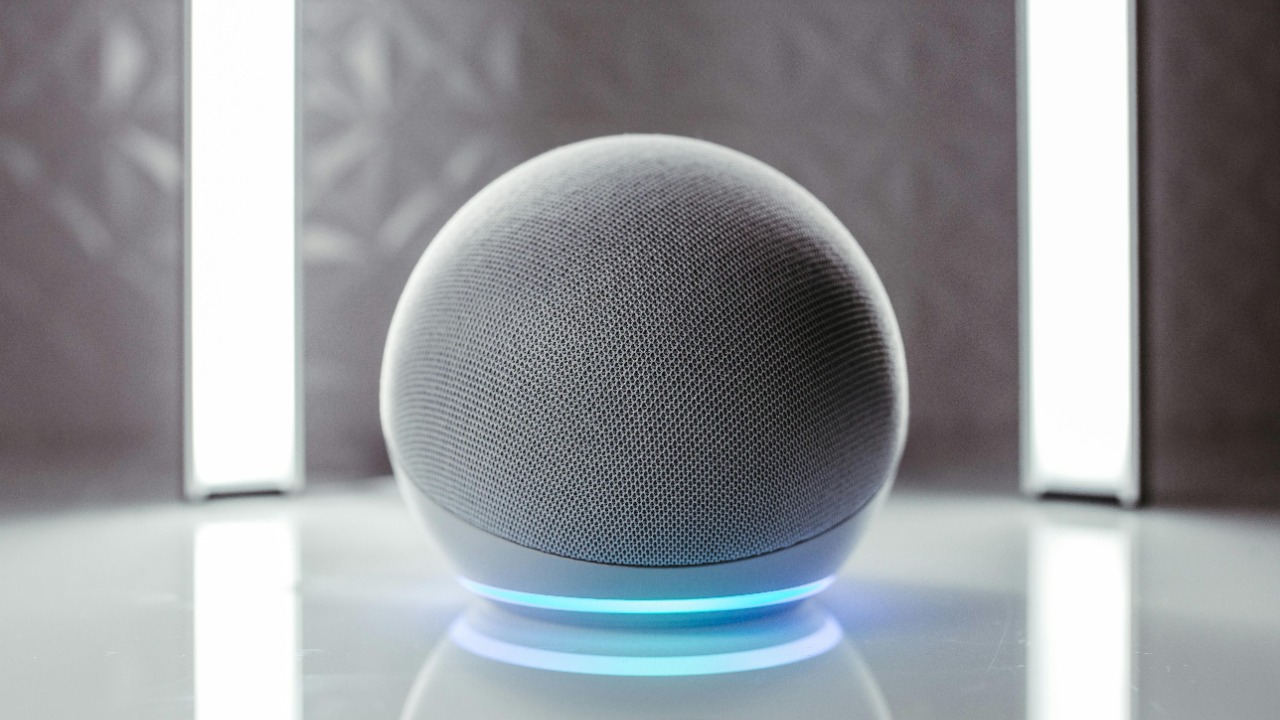

Alexa+ is moving from a smart speaker feature to a full-blown digital concierge, and its latest partners show exactly where Amazon wants to take it. By wiring the service into Angi, Expedia, Square, and Yelp, Amazon is turning everyday voice requests into transactions that touch travel, local services, dining, and payments in one place.
Instead of juggling separate apps to book a hotel, find a contractor, reserve a table, or pay at a small business, customers will increasingly be able to ask Alexa+ to handle the entire workflow. That shift, from answering questions to completing tasks, is what makes these new integrations more than just another batch of skills.
Alexa+ grows up: from assistant to agent
The most important change with Alexa+ is not a new voice or a new device, it is the move toward what Amazon and its partners describe as agentic artificial intelligence that can take on multi-step jobs. Rather than stopping at a recommendation, Alexa+ is being designed to discover options, compare them, and then execute bookings or purchases through partners like Expedia, Yelp, Angi, and Square. In practice, that means a single spoken request could trigger a chain of actions that used to require several apps and a lot of tapping.
Amazon has framed this shift as a collaboration with partners that are building new AI capabilities directly into Alexa+, so that customers can discover and book a wide range of services through one conversational interface. The company has said that Expedia, Yelp, Angi, and Square are working on these agentic experiences, which are expected to arrive on Alexa+ in 2026, signaling that this is a long-term platform play rather than a quick experiment.
Inside the Angi, Expedia, Square, and Yelp partnerships
Each of the four partners fills a different gap in the everyday tasks people already try to offload to voice assistants. Expedia brings lodging and travel inventory, Yelp contributes local discovery and reviews, Angi covers home services and contractors, and Square connects Alexa+ to the payments and commerce layer that powers many small businesses. Together, they give Amazon a way to turn a casual voice query into a booked trip, a scheduled repair, or a completed purchase without forcing the customer to leave the Alexa ecosystem.
Reporting on the initiative describes how these companies are building agentic AI capabilities that will let customers discover and complete bookings using Expedia’s lodging inventory, tap Yelp’s local listings, connect with Angi professionals, and transact through Square. One account notes that Expedia, Yelp, Angi, and Square are all building these capabilities for Alexa+, underscoring that this is not a one-off integration but a coordinated effort to embed generative AI into core consumer services.
How Alexa+ will actually handle bookings
What makes these integrations interesting is the promise that Alexa+ will not just hand off a user to a partner app, but will orchestrate the entire booking flow through conversation. In a travel scenario, that could mean Alexa+ asking follow-up questions about dates, budget, and preferences, then using Expedia’s inventory to propose specific hotels or vacation rentals before confirming the reservation. For a home project, Alexa+ could gather details about the job, surface Angi professionals who match the criteria, and then schedule an appointment on the customer’s behalf.
The travel side of this vision is already visible in Amazon’s own documentation, which explains that customers can plan and manage itineraries with the help of Alexa for trips up to 14 days long, using supported Alexa-enabled devices or the Alexa app. That guidance describes how users can plan and manage their travel, and the new Expedia integration effectively plugs a richer supply of lodging options into that existing itinerary framework so Alexa+ can move from reminders and updates into full booking flows.
Why Amazon is betting on “Smarter Alexa” partners
From Amazon’s perspective, these deals are as much about signaling a new era for Alexa+ as they are about specific features. Panos Panay, who leads devices and services at Amazon, has publicly framed the partnerships as a way to make Alexa+ smarter by design, not just by adding more skills. His message is that the assistant is evolving into a generative AI system that can collaborate with specialized partners rather than trying to do everything itself.
In a recent post, Panos Panay described the initiative with the phrase “New partners = Smarter Alexa+”, and said he was “pumped” to team up with Expedia Group, Yelp, Angi, and Square to build new generative AI experiences for Alexa+ at Amazon and beyond. That language, shared in his LinkedIn post, underlines that Amazon sees these companies not just as content providers but as co-creators of the next generation of Alexa experiences.
How partners like Angi see the opportunity
For Angi and its peers, Alexa+ is a new distribution channel that could surface their services in moments when customers are most likely to act. If a homeowner can describe a leaking 2018 Whirlpool dishwasher to Alexa+ and immediately get matched with a local repair professional, the friction that often causes people to delay home maintenance starts to disappear. That kind of low-friction, voice-driven funnel is particularly attractive for marketplaces that depend on timely, high-intent leads.
Angi’s leadership has already highlighted the collaboration in public, emphasizing that Expedia, Yelp, Angi, and Square are working together to build new agentic experiences for Alexa. Angie Hicks, a co-founder and prominent leader at Angi, shared a post that explicitly called out Expedia, Yelp, Angi, and Square as partners in this effort, signaling that the home services platform sees Alexa+ as a strategic way to reach customers who prefer to talk through their projects rather than fill out long web forms.
Devices, pricing, and who gets Alexa+ first
Even the smartest integrations will not matter if customers cannot access Alexa+ easily, which is why Amazon’s device and pricing strategy is central to how these partnerships will land. The company has said that Echo Show 8, 10, 15, and 21 devices will be the first to get Alexa+, effectively seeding the new experience across a range of smart displays that already sit in kitchens, living rooms, and home offices. Those screens will be particularly useful when Alexa+ pulls in rich content from Expedia, Yelp, Angi, or Square, such as hotel photos, contractor ratings, or itemized receipts.
On the business model side, Amazon has positioned Alexa+ as a premium service that is still accessible. Official guidance explains that Alexa+ will be free during Early Access, and that after Early Access ends, customers will not be automatically charged and Alexa+ will be free with Prime or available for $19.99 per month. One customer-facing page spells out that Alexa+ will be free during Early Access, while separate reporting notes that Echo Show devices will be the initial hardware to support the upgraded assistant, tying the subscription pitch directly to a clear set of screens in the home.
The AI engine behind Alexa+ and its partners
Under the hood, Alexa+ is not tied to a single large language model, which gives Amazon flexibility as it scales these new agentic experiences. The company has described Alexa+ as model agnostic, meaning it can route different tasks to different AI systems depending on what works best. That architecture is particularly important when Alexa+ is juggling complex partner workflows, such as comparing hotel options, parsing Yelp reviews, or interpreting a loosely described home repair problem.
Among the models Alexa+ uses are Nova, which is Amazon’s in-house generative AI model family, as well as models from close partner and collaborator Anthropic. By positioning Alexa+ as a service that can draw on Nova and Anthropic models, Amazon is effectively telling partners like Expedia, Yelp, Angi, and Square that the assistant can keep improving its reasoning and language skills without forcing them to rebuild their integrations every time a new model comes along.
What early users are seeing from Alexa Plus
While the Angi, Expedia, Square, and Yelp integrations are still being built out, early users of Alexa Plus are already getting a taste of how the upgraded assistant behaves. People who have tried the new experience describe a system that can handle more natural conversation, remember preferences, and adapt over time, which is exactly the kind of behavior needed to manage complex bookings or service requests. That shift from command-and-control to conversational back-and-forth is what will make it feel normal to ask Alexa+ to plan a weekend in Chicago or coordinate a kitchen remodel.
One early review video walks through how the new Alexa Plus can be spoken to naturally, remembers details, and learns user preferences, while also noting that it is free during the initial rollout period. In that walkthrough, the creator emphasizes that you can “meet the new Alexa Plus you can talk naturally to it it remembers and learns your preferences and it is free during” the early phase, a description captured in a widely shared seven day test that aligns with Amazon’s own positioning of Alexa+ as a smarter, more personal assistant.
How everyday scenarios could change
Once the Angi, Expedia, Square, and Yelp integrations are live, the most striking changes will show up in mundane routines rather than flashy demos. A family planning a spring break trip might ask Alexa+ to find a four night stay in Orlando near Universal Studios, with a pool and free breakfast, then have the assistant book through Expedia and add the confirmation to a shared itinerary. The same household could later ask for a well reviewed plumber to fix a 2015 Moen faucet, rely on Angi to surface a vetted professional, and then confirm the appointment by voice while seeing the details on an Echo Show 10.
On the local side, a couple could ask for a highly rated sushi restaurant within a 15 minute drive, have Alexa+ lean on Yelp data to suggest options, and then use Square powered payments to settle the bill at a participating small business without ever pulling out a physical card. In each case, the customer is interacting with Alexa+, but the heavy lifting is being done by Expedia, Yelp, Angi, and Square behind the scenes, which is exactly the kind of invisible collaboration that agentic AI is meant to enable.
More from MorningOverview