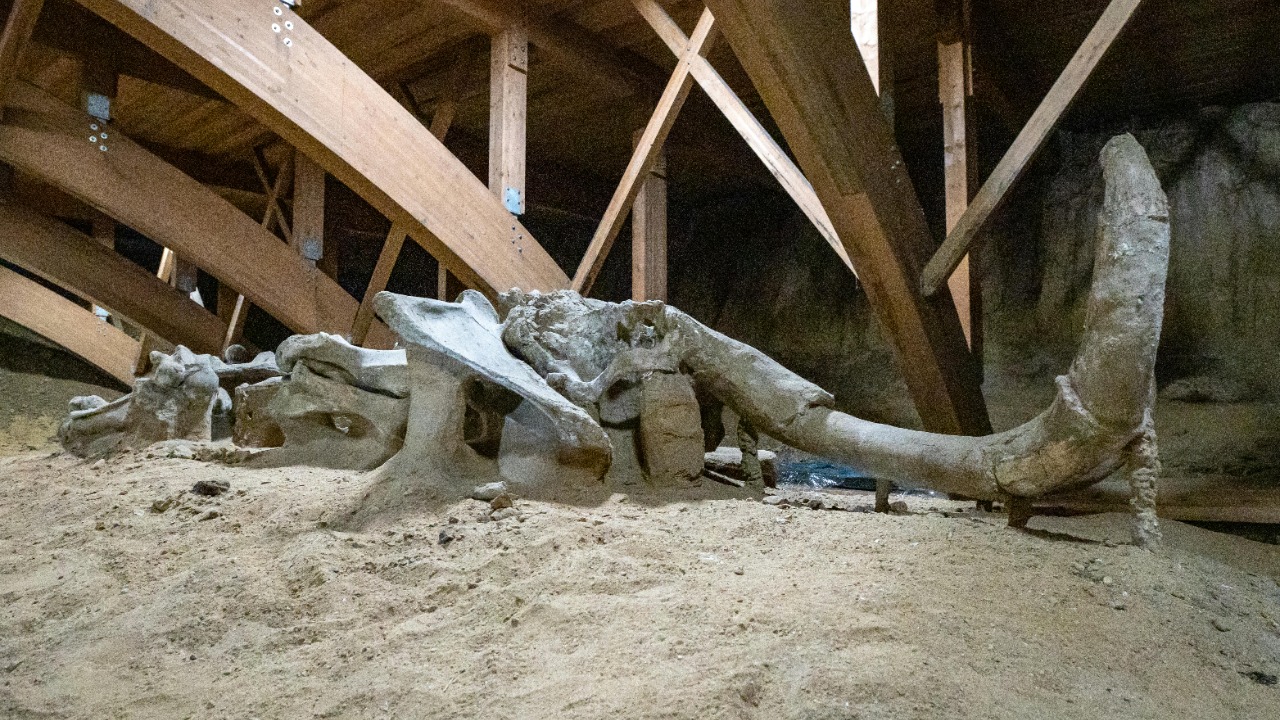

On a windswept plateau in what is now central Ukraine, hunter gatherers facing brutal Ice Age winters did something astonishingly modern: they built permanent style homes. Around 18,000 years ago, these people assembled rings of mammoth skulls, jaws, tusks and long bones into circular walls, then roofed and insulated them to create warm, durable shelters. Their ingenuity turned the remains of one of the era’s largest animals into architecture, heating systems and even raw material for tools and fuel.
Those bone houses, clustered in a small Upper Paleolithic settlement, show how far human planning and engineering had advanced long before farming or cities. Instead of simply following migrating herds, some groups in Ukraine invested in fixed dwellings, stockpiled resources and transformed a harsh steppe into a livable neighborhood. When I look at the evidence from this site, I see not just survival, but a deliberate experiment in building a home in the coldest edge of the world they knew.
The Ice Age bluff where a village took shape
The settlement sat on a high bluff above the valleys of the Ros and Rosava rivers, a strategic perch that gave its residents a wide view of the surrounding steppe and the movements of game. Roughly 18,000 years ago, the climate here was far colder and drier than today, with strong winds scouring the open landscape and winter temperatures plunging well below freezing for long stretches. In that environment, any group that wanted to stay in one place for more than a season needed shelter that could stand up to snow, wind and months of cold.
Archaeologists describe this community as part of an Ice Age network of hunter gatherers who followed herds of woolly mammoths, horses and reindeer across what is now Ukraine. At this particular bluff, people chose to build a cluster of dwellings rather than a single hut, creating what later researchers would call a small Village of mammoth bone houses. The location, on a promontory above the Ros and Rosava, matches the description of a site where Roughly 18,000 years ago in Ukraine, Ice Age hunters built a settlement that could withstand extreme winters.
Why mammoth bones became building blocks
In a treeless or sparsely wooded steppe, wood for large structures was scarce, and digging deeply into frozen ground for semi subterranean houses was difficult. Mammoth carcasses, by contrast, offered an abundance of long, strong elements that could be stacked, leaned and interlocked. Using bones as construction material solved several problems at once: it provided rigid supports for walls and roofs, created windbreaks and allowed people to recycle the remains of animals they were already hunting for meat, fat and hides.
Archaeologists studying these dwellings in Ukraine have documented rings of skulls and jaws forming the base of walls, with long bones and tusks filling gaps and rising upward to support roofing. One research team, examining a site where Some people in Ukraine weathered the cold in such structures, has argued that the pattern of bones is too regular to be accidental and reflects deliberate architectural planning. Their work on how Ice Age humans built dwellings out of mammoth bones about 18,000 years ago in Ukraine underscores that these were not simple windbreaks, but carefully engineered homes.
Inside a mammoth bone house
From the outside, a mammoth bone dwelling would have looked like a low, rounded mound, its white framework partly hidden under layers of hide and earth. Excavations show circular or oval footprints several meters across, with dense concentrations of bones forming a continuous ring. Entrances appear as narrow gaps in the bone circle, sometimes marked by larger tusks or skulls, suggesting that residents controlled airflow and limited drafts by keeping doorways small and possibly covered with skins.
Inside, the living space was likely divided informally around a central hearth, with sleeping and working areas arranged along the walls. Archaeologists have found ash, charcoal and burned bone in the middle of these structures, evidence of repeated fires that would have provided heat, light and a place to cook. At one well documented camp, Hides lining the hut serve as insulation, according to a display whose Text was Translated and adapted from original field notes, and Mammoth bones used in the walls are described as both structural and symbolic. That description comes from a reconstruction of a hut at Mezhyrich, presented on a page about the Mammoth camp near where the Ros River flows into the Ros, which closely matches the layout of the Ukrainian bone houses.
Mezhyrich, the mammoth bone settlement
The best known example of this kind of architecture is Mezhyrich, a site in central Ukraine where several mammoth bone houses have been excavated. Mezhyrich sits on a promontory above a river valley, and its dwellings form a loose cluster that suggests a small, semi permanent community rather than a single family camp. Archaeologists interpret the pattern of houses and associated pits as evidence that people returned to this spot repeatedly, perhaps seasonally, and invested in maintaining and rebuilding their shelters over generations.
Modern summaries describe Mezhyrich as an ancient settlement made from mammoth bones, used as homes 14,000 years ago, and emphasize that People there organized their dwellings in a distinctive pattern on the promontory top. Those details come from a synthesis of research on the Upper Paleolithic mammoth bone settlement at Mezhirich, where Key Takeaways highlight how People used bones as building material. Although some studies place the main occupation closer to 14,000 years ago and others emphasize activity around 18,000 years ago, all agree that Mezhyrich represents a rare concentration of mammoth bone architecture in Ukraine.
Decades of excavation and international research
Mezhyrich did not reveal its secrets all at once. After the first discoveries of mammoth bones and unusual circular features, archaeologists returned repeatedly to map, excavate and interpret the site. Other excavations took place in 1976–83, 1989, 1989–98 and 2002–8, often involving joint teams that brought different methods and questions to the same cluster of houses. This long timeline of fieldwork has allowed researchers to refine their understanding of how the dwellings were built, how long they were used and how they fit into broader patterns of Ice Age life.
Those campaigns included collaborations between Ukrainian and American researchers, followed later by a joint Ukrainian French team, reflecting the site’s importance for understanding human adaptation to cold climates. A detailed overview of the Mezhyrich archeological site notes that Other excavations took place in 1976–83 and 1989–98, and that some proposed conservation and presentation projects have not so far been realized. That summary, prepared by Ukrainian scholars, appears in an entry on the Mezhyrich archeological site, which highlights the role of Ukrainian, American and French teams in piecing together the story of the mammoth bone houses.
How people lived in and around the bone houses
Life in these dwellings revolved around more than just staying warm. The distribution of tools, animal bones and small features like pits and postholes suggests a complex daily routine that included butchering, hide working, tool making and perhaps ritual activities. Outside the houses, archaeologists have found large pits filled with mammoth bones and other debris, which may have served as storage, refuse dumps or even places to anchor additional structures like windbreaks or drying racks.
Inside, the presence of multiple hearths and overlapping layers of ash indicates that families or small groups used the same spaces repeatedly, cleaning and rearranging as needed. At Mezhyrich, for example, the pattern of hearths, bone concentrations and artifacts has led some researchers to argue that the settlement functioned as a base camp from which hunting parties fanned out across the surrounding steppe. A synthesis of work on this Village made of mammoth bones notes that Mezhyrich is one of several Ice Age sites where people combined substantial houses with evidence of wide ranging hunting, a pattern described in detail in a discussion of how Ice Age hunters at Mezhyrich organized their Village and daily tasks.
Fuel, food and insulation: using every part of the mammoth
The architecture of these houses was only one part of a broader strategy to squeeze as much value as possible from each mammoth. Meat and fat provided calories, but the bones and tusks had multiple secondary uses. Some long bones were split for marrow, others burned as fuel when wood was scarce, and still others were shaped into tools, ornaments or structural elements. The hides, thick and heavy, became roofing and wall coverings, while tendons could be used as cordage to lash bones together.
Archaeological reconstructions show that hides stretched over the bone framework, sometimes with additional layers of earth or snow piled on top, created a surprisingly effective barrier against wind and cold. In one widely cited reconstruction, Hides lining the hut serve as insulation, turning the interior into a relatively stable microclimate even when temperatures outside plunged. That image, based on field data from Mezhyrich and similar sites, is presented in a detailed description of the Mammoth camp where Text was Translated and adapted to explain how Hides and Mammoth bones worked together to keep residents warm.
What the bone houses reveal about Ice Age planning
For me, the most striking aspect of these mammoth bone houses is what they say about planning and social organization. Building a single dwelling required the remains of multiple mammoths, careful selection and transport of bones, and coordinated labor to arrange and stabilize the structure. That level of effort makes sense only if people expected to use the house for an extended period, or to return to it seasonally, which implies a mental map of the landscape and a shared understanding of where the group would regroup after hunting trips.
Researchers who have analyzed the spatial layout of Mezhyrich and similar sites argue that these settlements represent a shift toward more anchored lifeways, even within a hunter gatherer framework. Instead of moving camp every few days, people invested in durable shelters and created a home base that could store tools, food and knowledge. A synthesis of work on how Ice Age humans survived extreme winters in Ukraine notes that by around 18,000 years ago, Ice Age groups in Ukraine were using mammoth bones for shelter in ways that required long term planning and cooperation, not just opportunistic scavenging.
A long legacy in the Ukrainian landscape
Today, the mammoth bone houses of Ukraine exist mostly as stains in the soil, clusters of bones in museum drawers and reconstructions in diagrams and models. Yet their legacy runs deeper than the physical remains. They show that long before agriculture, people in this region were experimenting with permanent or semi permanent architecture, reshaping their environment and building social spaces that anchored their communities. In that sense, the bone houses are early chapters in a much longer story of settlement on the Ukrainian steppe.
Ongoing work by Ukrainian, American and French teams at Mezhyrich and related sites continues to refine the chronology, construction techniques and social context of these dwellings. Summaries that highlight excavations in 1976–83, 1989–98 and 2002–8 emphasize how much remains to be learned, from microscopic traces of plant use inside the houses to broader questions about how these communities interacted with neighbors. As I follow that research, I see the mammoth bone houses not as curiosities, but as evidence that people in Ukraine, tens of thousands of years ago, were already thinking like architects, engineers and urban planners, using the materials at hand to build a home in the cold.
More from MorningOverview