
Russia has quietly taken a bold step toward solving one of spaceflight’s oldest problems by patenting a space station design that could generate its own gravity-like pull. The concept, which arrives just as the International Space Station nears retirement, signals that Moscow wants to stay in the game of long-duration human spaceflight by rethinking the very architecture of an orbital outpost.
Instead of accepting permanent weightlessness as a given, Russian engineers are sketching out a station that spins to create artificial gravity, potentially reshaping how crews live, work, and stay healthy in orbit. The patent is still only a blueprint, but it lands at a moment when every major space power is deciding what comes after the ISS and how much comfort and safety future astronauts can expect.
Russia’s artificial gravity patent, explained
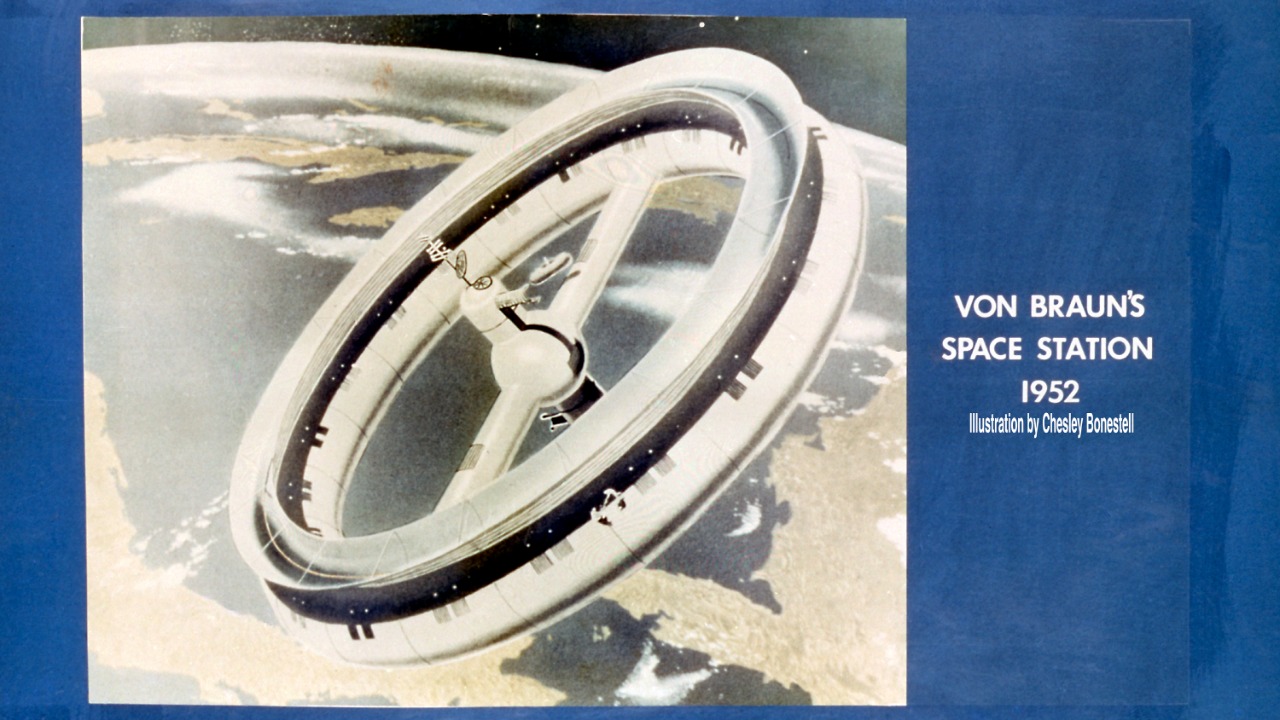
The newly disclosed patent describes a modular orbital complex that can rotate to simulate gravity, using centrifugal force to press astronauts gently against the floor of their living quarters. In practical terms, the design imagines a central hub with long arms or connected modules that can spin as a unit, creating a gradient of artificial gravity that is weakest near the center and strongest at the outer edge. The goal is not to perfectly mimic Earth, but to give crews enough downward pull to walk, sleep, and exercise in a way that feels more natural than floating in microgravity.
What makes this filing stand out is that it is not just a theoretical sketch of a spinning wheel in space, but a structured proposal for a real station that could be assembled in orbit and adjusted over time. Russian documents describe a system that can vary its rotation rate and reconfigure modules, hinting at a flexible platform that could support both research and long-term habitation. The patent surfaced in the same ecosystem of reporting that tracks how Russia is planning its post-ISS future, with coverage noting that the design is intended to generate artificial gravity rather than rely solely on the weightless environment that has defined orbital life for decades.
Why gravity still matters in orbit
For all the romance of astronauts floating through modules, gravity, or the lack of it, remains the central medical challenge of living in space. Without a constant downward pull, muscles atrophy, bones lose calcium, and the cardiovascular system adapts in ways that can cause dizziness, vision changes, and long-term health risks once crews return to Earth. Engineers and flight surgeons have spent years trying to counter these effects with exercise machines, pharmaceuticals, and strict daily routines, but none of those measures fully replaces the simple, relentless tug that shapes every cell and organ on the ground.
One of the reports on the Russian patent underscores this point bluntly, noting that “Gravity is the glue that holds us together; without it, our muscles lose their purpose and bones lose strength.” That line captures why artificial gravity is more than a science fiction flourish, it is a potential medical tool for keeping crews functional on missions that last months or even years. The same analysis points out that microgravity undermines the body’s structural systems so thoroughly that long-term exploration missions become risky unless engineers can restore some form of downward pull, which is exactly what the new Russian design aims to provide through controlled rotation and carefully placed living spaces that experience a steady, engineered Gravity.
How the rotating station concept would work
At the heart of the patent is a simple physical principle: if you move in a circle fast enough, you feel pushed outward, and that outward push can stand in for gravity. The Russian design takes that idea and scales it up to station size, with a structure that can spin around a central axis so that the outer modules feel a constant centrifugal force. Astronauts living in those modules would experience a floor under their feet, with “down” pointing away from the center of rotation, while the station’s core could remain relatively calm for docking, storage, and delicate experiments that still need microgravity.
The patent materials describe a system that can adjust its spin rate, which would let mission planners dial in different levels of artificial gravity for different tasks or phases of a mission. Lower rotation speeds could simulate the weaker pull on the Moon or Mars, while higher speeds could approach Earth-like conditions, at least in one direction. The design also contemplates how to manage the transition between spinning and non-spinning sections, a notorious engineering challenge because any connecting corridor has to bridge two very different inertial environments without making astronauts sick. Reporting on the patent notes that the Russian team is trying to solve these problems in a single integrated structure, rather than bolting a centrifuge onto an otherwise conventional station, which is why the entire complex is described as a space station “designed to generate artificial gravity” rather than a simple add-on.
From ISS to ROSS: Russia’s post-ISS ambitions
The timing of the patent is not accidental, it arrives as Russia is publicly pivoting from its long partnership on the International Space Station toward a national outpost in orbit. Russian officials have been promoting the Russian Orbital Service Station, or ROSS, as the country’s next big platform in low Earth orbit, with a focus on national priorities and independent operations. In public remarks, Roscosmos leaders have framed ROSS as both a replacement for the aging ISS modules and a testbed for new technologies that could support deeper exploration and more autonomous operations.
One video presentation that tracks these developments highlights how, by December 2024, Roscosmos head Yuri Borisov was already sharing more detailed plans for the new station. In that account, he described how Roscosmos under Yuri Borisov was preparing Crewed missions to ROSS and positioning the complex as a platform for experiments that were previously limited by the constraints of the ISS partnership. The artificial gravity patent fits neatly into that narrative, suggesting that Russia does not just want a replacement outpost, it wants a station that can differentiate itself technologically and medically by offering a more Earth-like environment for at least part of the crew’s daily life.
Health, science, and the promise of spin gravity
If Russia can turn its rotating station concept into hardware, the medical implications would be significant. Long-duration crews could spend part of their day in artificial gravity, giving their bones and muscles a chance to bear weight and their cardiovascular systems a more familiar workload. That could reduce the need for hours of daily exercise on treadmills and resistance machines, freeing up time for research and maintenance. It could also make life in orbit more psychologically tolerable, since simple acts like sleeping in a bed, using a shower, or cooking a meal become easier when objects stay put and liquids behave predictably.
From a scientific perspective, a station that can switch between microgravity and artificial gravity opens up new experimental regimes. Researchers could study how plants grow, how materials solidify, or how biological tissues respond under different levels of simulated gravity, all within the same facility. The patent’s emphasis on adjustable rotation suggests that Russian planners are thinking about this dual role, with some modules optimized for weightless research and others for gravity-assisted living. That approach would turn the station into a kind of orbital laboratory for gravity itself, letting scientists test how much “downward” force is enough to protect human health and how different organisms adapt when the pull is dialed up or down.
Robots, automation, and the new Russian space toolkit
The artificial gravity patent does not exist in isolation, it is part of a broader Russian push to modernize its orbital infrastructure with more automation and robotic support. As budgets tighten and crew time becomes more precious, space agencies are leaning on robots to handle routine inspections, repairs, and cargo handling, leaving astronauts to focus on complex tasks and scientific work. Russia is no exception, and recent discussions of its orbital plans have highlighted a growing interest in space-capable robots that can operate alongside or even ahead of human crews.
One podcast episode that dives into these trends describes how Russia is patenting and developing space robots as part of what it calls orbit’s new era. The discussion, hosted by the Jun program Weon, frames these machines as essential partners for any next-generation station, especially one as mechanically complex as a rotating habitat. In that conversation, the hosts explain that Weon sees robotic systems as crucial for tasks like external inspections, module assembly, and emergency response, all of which become more challenging when parts of the station are spinning. Integrating such robots into the artificial gravity design from the start could give Russia a way to maintain and upgrade the station without exposing crews to unnecessary risk during spacewalks.
Engineering hurdles between patent and orbit
Turning a rotating station from a patent into a functioning outpost will require solving a series of hard engineering problems that have stymied designers for decades. The first is structural: any spinning system in orbit has to be strong enough to handle the stresses of rotation without flexing or vibrating in ways that could damage equipment or make crews sick. That means careful attention to mass distribution, joint design, and the way modules are connected, especially if the station is meant to be reconfigurable or expandable over time. Launching and assembling such a structure also poses challenges, since rockets must deliver large, rigid components that can lock together precisely before the spin-up phase begins.
The second major hurdle is human comfort. Artificial gravity created by rotation is not uniform, it varies with distance from the center and can introduce side effects like Coriolis forces that make moving your head or arms feel strange. If the station spins too quickly, astronauts could experience nausea or disorientation, undermining the very health benefits the system is meant to provide. The Russian patent’s focus on adjustable rotation suggests that designers are aware of this trade-off and plan to experiment with different spin rates and radii to find a sweet spot where the gravity feels helpful without triggering motion sickness. That kind of tuning will require extensive testing, likely starting with short stays and gradually extending crew time in the rotating sections as doctors and engineers learn how the human body responds.
Geopolitics and the race to define life after ISS
Beyond the technical details, Russia’s artificial gravity station is a geopolitical signal. As the ISS era winds down, every major spacefaring nation is trying to define its own path in low Earth orbit, whether through national stations, commercial platforms, or international partnerships. By patenting a design that promises a more Earth-like environment for crews, Moscow is staking a claim to a particular vision of orbital life, one that emphasizes long-term habitation and medical resilience rather than short, spartan expeditions. That vision could appeal to partners who want their astronauts to live and work in conditions that feel less like a survival exercise and more like a sustainable presence.
At the same time, the move highlights how fragmented the post-ISS landscape is becoming. While some countries are betting on commercial stations that look like smaller, more modular versions of the ISS, Russia is exploring a more radical architectural shift with its rotating design. If it can demonstrate that artificial gravity improves crew health and mission efficiency, other players may feel pressure to follow suit or risk being seen as offering second-tier accommodations in orbit. For now, the patent is a marker of intent, a sign that Russia wants to be part of the conversation about what human life in space should feel like once the familiar silhouette of the ISS finally slips below the horizon.
More from MorningOverview