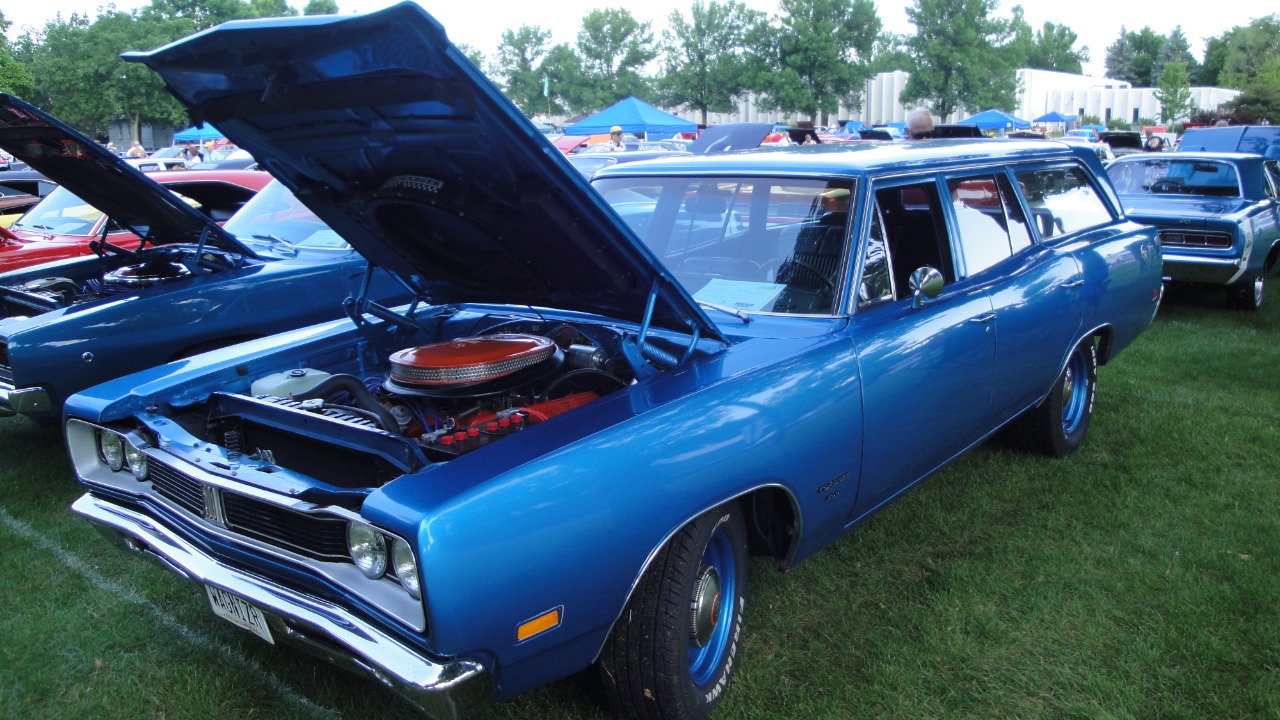

In the middle of the 1960s horsepower wars, Dodge quietly turned a sensible family hauler into a genuine performance machine. The result was a station wagon with a 325 HP V8, a car that could haul kids and groceries in the morning and embarrass coupes at the stoplight that night. That unlikely mix of practicality and power is what makes Dodge’s muscle wagon story one of the most intriguing side notes in American performance history.
How a family wagon ended up with muscle car power
When enthusiasts picture 1960s performance, they usually think of two-door hardtops and convertibles, not long-roof family haulers. The stereotype is so strong that, as one account notes, most gearheads do not picture a family wagon at all when they think about 1960s muscle cars, even though the era was full of big-displacement engines that shook the pavement at idle. Dodge leaned into that contradiction by slipping serious V8 power into a wagon body, creating a car that looked like a suburban shuttle but accelerated like a street bruiser, a combination that still surprises people who discover it today.
The key was Dodge’s willingness to treat the wagon as more than a stripped fleet special. Instead of limiting performance hardware to coupes and convertibles, engineers and product planners allowed the same big engines and heavy-duty components to be ordered in a long-roof shell. That decision turned what could have been a forgettable hauler into a sleeper that embodied the phrase “Classic American Muscle In Disguise,” a car that only revealed its intent when the driver buried the throttle and the rear tires protested.
The 1966 Dodge Coronet 440 wagon and its 325-HP surprise
The clearest expression of that philosophy arrived with the 1966 Dodge Coronet 440 wagon, a model that looked like any other mid-size Family Wagon parked at the curb. Under the hood, though, buyers could specify a V8 rated at 325-HP, a figure that put this long-roof squarely in muscle car territory for its time. The Coronet name had already been associated with performance in two-door form, but seeing that same output in a wagon that could carry kids, luggage, and a dog gave the car an almost subversive appeal.
Part of the charm was how ordinary the Coronet 440 appeared to everyone else in traffic. The trim level badge that read “440” did not refer to the engine displacement in this context, but it still hinted at the performance mindset behind the car’s configuration. Period buyers could order the wagon with the same kind of big-block V8 that enthusiasts expected in a coupe, which is why one detailed breakdown of the 1966 Dodge Coronet 440 describes it as a Rare 325-HP Family Wagon and lists its Engine and Power figures right alongside more traditional muscle models. The result was a car that did not need stripes or scoops to make its point; the spec sheet did that on its own.
Dodge’s muscle mindset before the wagon: Dart and Polara
Dodge did not stumble into the idea of a hot wagon by accident, it arrived there after several years of pushing performance into its mainstream sedans. Earlier in the decade, the company had already experimented with serious power in relatively ordinary bodies, most notably with the 1962 Dodge Dart 413. In that lineup, Topping the list were bucket-seat Polara 500 convertible, hardtop coupe and, later in the year, a hardtop sedan, while Darts could be ordered with a 413 cubic inch V8 that delivered big power courtesy of Ram Induction manifolding. That willingness to bolt a huge engine into a mid-size shell laid the groundwork for treating other body styles, including wagons, as fair game for performance.
The Dart and Polara experiments showed Dodge that buyers were willing to pay for speed even when it came wrapped in a relatively conservative package. The Polara 500 badge signaled a blend of comfort and power, and the Dart 413 proved that a car did not need a flashy nameplate to deliver serious acceleration. By the time the Coronet wagon arrived with its 325 HP rating, Dodge already had a track record of turning everyday models into unexpected performers, which made the leap from hot sedans to a hot wagon feel like a logical next step rather than a marketing stunt.
From early Dodge Dart workhorses to serious V8s
To understand how radical a 325 HP wagon was, it helps to look back at where Dodge’s mid-size cars started at the beginning of the decade. The 1960-1961 Dodge Dart power teams were basically those of Plymouth’s 1960 standards, plus a few more, which meant a mix of modest sixes and V8s aimed at family buyers rather than street racers. All models save the V-8 Darts shared a lot of hardware with their Plymouth cousins, and the interiors focused on features like an ornate two-tier Dodge dash instead of quarter-mile times. These early Darts were competent and comfortable, but they were not yet the kind of cars that would scare a sports coupe away from a stoplight.
That baseline makes the later transformation more striking. Within a few years, Dodge had gone from sharing Plymouth’s conservative powertrains to offering engines that turned the same basic platforms into genuine performance threats. The evolution from those early Dart workhorses to the later big-block cars shows how quickly the company embraced the muscle car trend, and it set the stage for applying the same formula to a wagon. Once the engineering and parts existed to make a mid-size sedan fast, bolting them into a long-roof variant was more a matter of will than of technical difficulty.
The Dodge Standard Specifications that framed the era
The mechanical context of the early 1960s also helps explain why a 325 HP wagon felt so outrageous. In the 1962, 1963, 1964 Dodge Standard Specifications, the Engines list starts with an overhead valve inline six of 225 cubic inches, with bore and stroke figures of 3.40 by 4.13 inches and an output of 145 brake horsepower. Above that, buyers could move up to a 318 cubic inch V8 and other options, but the core of the lineup was still aimed at delivering reliable, economical transportation rather than headline-grabbing performance. Those numbers show how a typical family car of the period might have less than half the power of the later Coronet wagon.
When I compare those figures to the 325-HP rating available in the mid-1960s wagon, the contrast is stark. The jump from a 145 horsepower six to a big V8 more than twice as strong turned the same basic vehicle type into something entirely different on the road. It also meant that a buyer who had previously driven a modest Dodge Standard sedan could step into a wagon that felt like a completely different species, even though the badge on the grille still said Dodge. That gap between expectation and reality is a big part of why the muscle wagon concept still fascinates enthusiasts today.
America’s rarest V8 muscle wagon and the 440 Magnum connection
The 1966 Coronet 440 wagon was not the only time Dodge flirted with high-powered long roofs, but it stands out as one of the rarest and most intriguing. Later coverage of Dodge’s wagon history often highlights a particular V8 long-roof as America’s rarest muscle wagon and describes it as Classic American Muscle In Disguise, a car that hid its intent behind a practical body. In that context, the 440 Magnum, in particular, was a standout, Producing 375 horsepower and 48 units of torque in the period figures, and turning what looked like a family car into a true sleeper. While that specific configuration was exceptionally scarce, it shows how far Dodge was willing to push the wagon formula when the right customer checked the right boxes.
To handle the extra power, these wagons needed more than just a big engine. Heavy-duty suspensions, stronger rear axles, and upgraded brakes were all part of the package that allowed a long-roof Dodge to cope with the output of a 440 M big-block. Those components made the cars more capable when driven hard and also contributed to their charm today, since they underline how serious the engineering effort was behind what could have been a simple marketing gimmick. The combination of rarity, real performance hardware, and an unassuming exterior is why collectors now hunt for surviving examples of these V8 wagons with almost the same intensity they reserve for better-known muscle coupes.
The fifth-generation Coronet and the muscle wagon sweet spot
The broader Coronet lineup helps explain why the wagon variant hit such a sweet spot in the mid-1960s. The model’s fifth generation, launched in 1965, is where things started to heat up for Dodge in the muscle car game, as the company realized that even its mid-size family cars could get a serious V8. That shift meant that a customer walking into a showroom could look at a range of Coronets, from basic six-cylinder sedans to fire-breathing big-blocks, and choose the body style that fit their life without giving up on performance. The wagon simply extended that logic to the most practical shape in the catalog.
By the time the 1966 Coronet 440 wagon arrived with its 325 HP option, Dodge had already proven that the fifth-generation platform could handle serious power. The same chassis that underpinned hot two-door models now supported a long-roof that could tow, haul, and still sprint. That versatility is part of what makes the muscle wagon concept so compelling: it shows how a single platform, when engineered with enough headroom, can serve radically different roles without losing its character. In the Coronet’s case, that character was defined by the availability of big V8s and the confidence that came with them.
Why the 325 HP wagon still matters to enthusiasts
Looking back from today, the idea of a 325 HP family wagon feels oddly modern, given how many contemporary performance SUVs and crossovers promise similar blends of speed and practicality. Yet the 1960s Dodge approach was purer in some ways, because it simply dropped a big engine into an otherwise straightforward car without layers of electronic aids or marketing spin. The 1966 Dodge Coronet 440 wagon, with its Rare 325-HP Family Wagon specification, anticipated the notion that a family vehicle could be genuinely quick long before that became a mainstream expectation. For enthusiasts, that makes it a kind of spiritual ancestor to today’s fast family haulers.
There is also an emotional appeal in knowing that such a car existed at all. In an era when most people still saw wagons as the ultimate symbol of domestic routine, Dodge quietly offered a way to subvert that image without sacrificing practicality. The fact that most gearheads still do not immediately picture a family wagon when they think about 1960s muscle cars only adds to the mystique, because it means the owners who ordered these cars new were in on a secret that the broader market largely overlooked. That sense of hidden history is why I find the story of Dodge’s 325 HP muscle wagon so compelling, and why it continues to resonate with anyone who loves the idea of performance hiding in plain sight.
More from MorningOverview