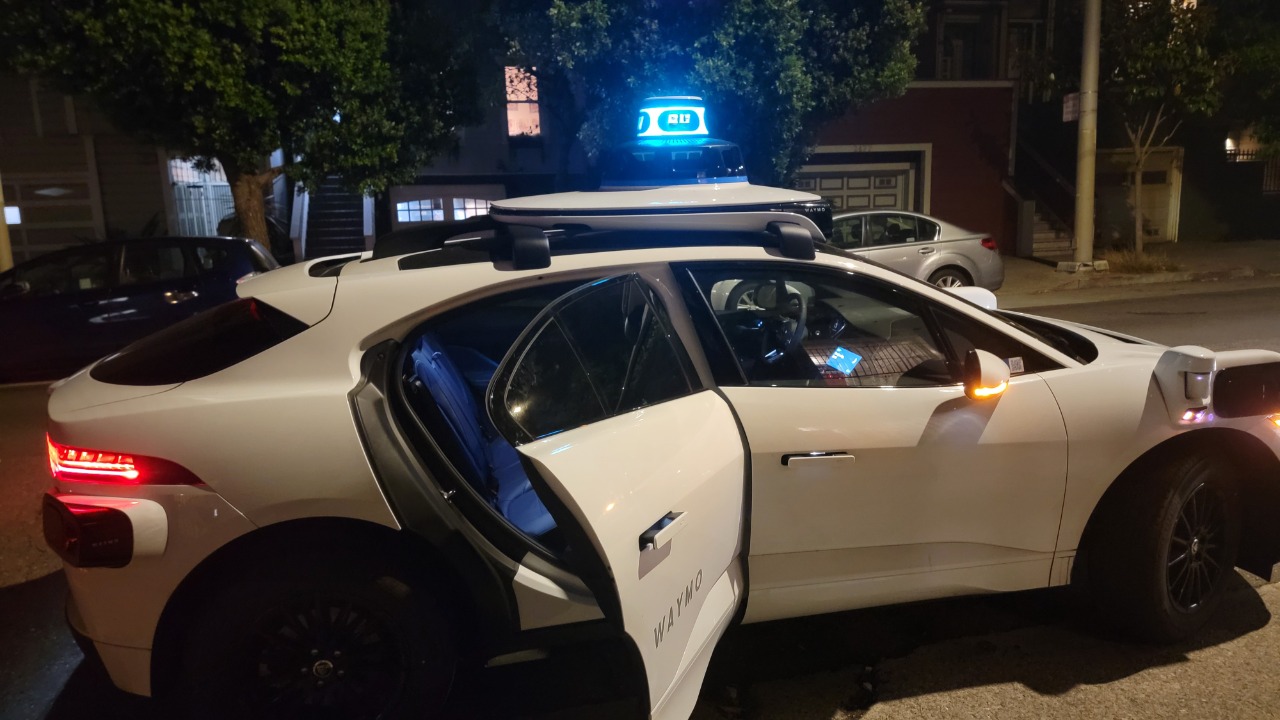

A massive power failure in San Francisco turned a flagship fleet of autonomous taxis into stationary obstacles, exposing how dependent self-driving systems still are on the city infrastructure they promise to transcend. Waymo is now racing to retool its software so its robotaxis can navigate when traffic lights, cell towers, and parts of the digital map go dark, a test of whether the technology can handle the messy edge cases of real urban life. The blackout has become a case study in how quickly a futuristic service can unravel when the grid that supports it suddenly disappears.
How a citywide blackout turned robotaxis into roadblocks
The chain of events started with a very old-fashioned failure: a fire at an electric substation that plunged large parts of San Francisco into darkness and knocked out traffic signals across key corridors. Local utility officials said the outage traced back to a blaze at a Mission Street substation, a failure that rippled through the grid and left streets without working signals or streetlights. In the middle of that chaos, dozens of Waymo vehicles did exactly what their safety logic told them to do when they lost key inputs: they stopped and waited.
What looked like a cautious choice in isolation quickly became a citywide headache as the driverless cars froze in intersections and travel lanes, snarling traffic that was already struggling to cope with darkened signals. Reporting from the scene described Waymo robotaxis stalled across the city after the blackout, with the company’s self-driving network effectively paralyzed until power and connectivity could be restored in San Francisco. One account noted that the outage affected more than 100,000 homes and businesses, a reminder that the robotaxis were only one part of a much larger disruption.
Waymo’s safety logic meets a real-world edge case
At the core of the incident is a design choice that, on paper, sounds prudent: when the system loses critical signals from infrastructure, it defaults to stopping and waiting for clarity. The Waymo Driver is built to treat non-functioning traffic lights as four-way stops, a conservative rule that assumes other road users will behave predictably around a cautious, slow-moving vehicle. In normal conditions, that approach can reduce the risk of running a red light or misreading a flashing signal, and the company has pointed to a growing number of rides in 2024 as evidence that its software can handle complex city streets.
During the blackout, however, that logic collided with a city where almost every signal was dark and where human drivers were improvising their own rules in the absence of clear guidance. Some reports described Waymo cars stopping at intersections and then refusing to proceed, even when it was their turn, effectively blocking cross traffic and forcing other drivers to squeeze around them. In official statements, the company acknowledged that “While the Waymo Driver” is designed to handle isolated outages, the scale of the blackout and the loss of supporting infrastructure created a scenario its current safeguards did not fully anticipate.
Inside the blackout: infrastructure failure meets autonomy
The outage that crippled the robotaxis was not a minor flicker but a systemic failure that rippled across transportation, communications, and public services. In addition to the fire at the Mission Street substation, local coverage described how power cuts shut down some commuter train lines and stations, leaving riders stranded and forcing emergency services to reroute around darkened intersections. City Hall itself remained closed while crews worked to restore electricity, underscoring how deeply the blackout disrupted normal operations.
For autonomous vehicles, the loss of power was only part of the problem. When traffic lights, street lighting, and parts of the communications network all fail at once, the carefully layered redundancy that self-driving systems rely on begins to fray. One analysis noted that When those inputs disappear during a blackout, the vehicles’ fallback behavior of stopping and waiting can create new hazards, especially when human drivers are making split-second decisions in the same space. The blackout did not just test Waymo’s code, it exposed how fragile the broader ecosystem around autonomous driving can be when the grid fails.
Waymo’s rapid pause and restart in San Francisco
Faced with images of its cars frozen in intersections and mounting frustration from local drivers, Waymo moved quickly to halt operations and regroup. The company, a unit of Alphabet, temporarily suspended its robotaxi service across the San Francisco Bay Area while engineers assessed what had gone wrong and how widespread the failures were. That pause was a tacit admission that the system, as configured, could not guarantee safe and predictable behavior in a citywide outage, even if no major collisions were reported.
Service did not stay offline for long. After power was restored to much of the city and traffic signals came back online, Alphabet-owned Waymo resumed its robotaxi operations in the San Francisco Bay Area Sunday evening, framing the suspension as a temporary step taken out of an abundance of caution. Another account noted that Waymo’s robotaxis were allowed back on the streets of San Francisco late Sun after regulators and the company agreed on immediate safeguards, a sign that officials were not ready to pull the plug on the experiment but expected concrete fixes. That quick restart set the stage for the more substantive software changes that followed.
The software patch: how Waymo says it will fix the problem
In the days after the blackout, Waymo outlined a series of software updates that it says will help its vehicles navigate more intelligently when the grid falters. The company has told regulators and riders that it will update its driverless fleet after the San Francisco outage to improve navigation during future power failures, focusing on how the system interprets non-functioning traffic lights and how it decides when to pull over instead of stopping in live lanes. The goal is to give the Waymo Driver more nuanced behaviors in low-information environments, rather than a binary choice between normal operation and full stop.
Those changes are not just internal promises. In a statement from WASHINGTON, the company said that Alphabet unit Waymo will update the software used to operate its self-driving vehicles after the San Francisco power outage snarled traffic and gridlocked parts of the city. A separate filing described how Waymo will update its driverless fleet after the San Francisco blackout to improve navigation during outages, detailing steps that it is taking following the outage and signaling that regulators expect measurable progress. The company has framed the patch as part of its normal iteration cycle, but the context makes clear that this is a response to a very public failure.
What the blackout revealed about AV dependence on connectivity
Beneath the immediate software tweaks lies a more uncomfortable reality for the industry: autonomous vehicles are deeply dependent on infrastructure that they do not control. Many people reported that cell networks were down during the blackout, raising questions about how much the Waymo Driver relies on real-time connectivity for routing, remote assistance, and coordination with other vehicles. In online forums, residents asked how Waymo’s cars could avoid becoming a public safety issue in an emergency if they could not count on a stable data link, and some argued that guaranteeing robust connectivity in a disaster is very hard.
Technical reporting on the incident has underscored that the problem was not just about traffic lights but about the entire stack of inputs that feed the autonomy system. One detailed account described how a Power outage paralyzed Waymo robotaxis when traffic lights went out, noting that the vehicles also lost access to some remote support functions that normally help them resolve ambiguous situations. Another analysis argued that the blackout showed how infrastructure risks and autonomous driving risks can intersect in unexpected ways, especially in dense urban environments where a stalled vehicle can quickly create gridlock. The lesson is that autonomy cannot be evaluated in isolation from the networks and utilities that surround it.
Regulators, residents, and the trust gap
The blackout has sharpened an already tense debate in San Francisco about how quickly robotaxis should be allowed to scale and under what conditions they should be pulled off the road. Before the outage, city officials and some residents were already wary of incidents in which autonomous vehicles blocked fire trucks or confused construction zones, and the sight of driverless cars sitting motionless in dark intersections has added a new layer of concern. In neighborhood discussions, people have questioned whether the city has enough leverage to demand changes from a service operated by a powerful tech company backed by Alphabet.
Public reaction has ranged from frustration to outright anger, with some residents sharing photos and videos of stalled cars and calling for stricter limits on where and when the vehicles can operate. On Reddit, one widely shared thread titled “how are Waymos not going to be a public safety issue” captured the mood, with users pointing out that Many people reported that cell networks were down during the blackout and arguing that this made it even harder for the company to manage its fleet. Regulators, for their part, have signaled that they will be watching how effectively Waymo implements its promised software updates and how it communicates with local authorities during future emergencies.
Waymo’s broader ambitions and the stakes of getting this right
Waymo has spent years positioning its robotaxis as a safer, more reliable alternative to human drivers, and San Francisco is one of its most important proving grounds. The company has touted a rising number of rides in 2024 and has expanded service hours and coverage areas as it seeks to demonstrate that its technology can handle the city’s hills, fog, and dense traffic. The blackout incident does not erase those milestones, but it does highlight a category of risk that glossy safety reports rarely emphasize: what happens when the environment itself becomes unpredictable in ways that were not fully modeled.
That tension was captured vividly in a narrative account of the blackout that described how a robotaxi network built to navigate complex urban streets suddenly became a liability when the lights went out. One long-form piece noted that a blackout in San Francisco revealed a new way for robotaxis to go wrong, with writer By Patrick George describing how the failure of cell networks prevented a key safeguard from working and photographer Jeff Chiu documenting stalled vehicles in the dark. The story argued that the incident exposed a huge problem Waymo did not see coming, a reminder that even the most advanced systems can be blindsided by real-world conditions that fall outside their training data.
From crisis to case study for autonomous driving
For all the embarrassment and disruption, the blackout is likely to become a foundational case study for the next generation of autonomous driving systems. Engineers across the industry will be dissecting how Waymo’s vehicles behaved, what signals they lost, and how different design choices might have produced better outcomes. The company itself has already framed its response as part of a broader effort to harden its technology against rare but high-impact events, telling investors and regulators that it is learning from the outage and baking those lessons into its software roadmap.
There are signs that the episode is already reshaping how Waymo talks about resilience and redundancy. In one update, the company said it would update its driverless fleet after the San Francisco blackout to improve navigation during outages, detailing steps that it is taking following the outage and emphasizing that it wants its vehicles to be more adaptable when infrastructure fails. Another report noted that Waymo will update its driverless fleet after the San Francisco blackout to improve navigation during outages, reinforcing that message. Whether those changes are enough to restore public trust will depend not just on code, but on how the company collaborates with the city the next time the lights go out.
Why the San Francisco outage matters far beyond one city
San Francisco has long been a bellwether for emerging mobility technologies, from ride-hailing to scooters to driverless cars, and what happens on its streets often shapes policy debates elsewhere. The blackout that stalled Waymo’s fleet is already being watched by officials in other cities that are weighing whether to allow large-scale robotaxi deployments, especially in places with aging grids or frequent storms. If a single substation fire can turn a cutting-edge service into a citywide headache, regulators in those markets will want to know what safeguards are in place before they sign off on similar experiments.
Coverage of the incident has emphasized that the outage did not just inconvenience riders, it snarled traffic and gridlocked parts of San Francisco, with Waymo robotaxis stalled across the city and emergency services stretched thin. Another report noted that Waymo’s robotaxis were allowed back on the streets of San Francisco late Sun after the company and regulators agreed on next steps, suggesting that officials see value in the technology but are not willing to ignore its vulnerabilities. For cities watching from afar, the message is clear: autonomous vehicles are only as resilient as the infrastructure they depend on, and planning for the next blackout is now part of the job.
A stress test for Waymo’s business model and public narrative
Beyond the technical fixes and regulatory scrutiny, the blackout has also challenged Waymo’s core narrative about what it is selling to cities and riders. The company has marketed its service as a way to reduce crashes, ease congestion, and provide reliable transportation even when human drivers are scarce. When its vehicles became part of the gridlock instead of a solution to it, that pitch took a hit, especially among residents who experienced the disruption firsthand and are now more skeptical of the idea that more automation automatically means more resilience.
At the same time, Waymo has tried to frame its response as evidence that it can adapt quickly and responsibly when things go wrong. One account noted that Waymo’s robotaxis were allowed back on the streets of San Francisco late Sun after the blackout, highlighting that regulators were satisfied with the company’s immediate steps. Another report emphasized that Waymo will update its driverless fleet after the San Francisco blackout to improve navigation during outages, a move the company hopes will show that it can learn from failure. Whether that is enough to preserve its long-term business model in a city that has become both its showcase and its toughest critic remains an open question, but the blackout has ensured that future debates about robotaxis will be grounded in lived experience rather than abstract promises.
Lessons for the next generation of urban autonomy
The San Francisco blackout has crystallized a set of lessons that go beyond any single company or city. First, autonomous vehicles need more sophisticated behaviors for rare but high-stakes scenarios, including the ability to recognize when their presence is making a situation worse and to get out of the way. That might mean prioritizing safe pullovers over static stops in intersections, or building in protocols for coordinating with human traffic officers when signals fail. Second, the industry will need to invest more in understanding and mitigating dependencies on external infrastructure, from power grids to cell networks, rather than assuming those systems will always be available.
Finally, the episode has shown that public trust in autonomy is fragile and can be shaken not only by crashes but by visible, disruptive failures that make everyday life harder. Long-form reporting on the blackout, including a piece that described how a blackout in San Francisco revealed a new way for robotaxis to go wrong and featured By Patrick George and Jeff Chiu, has helped shape that perception by giving residents and policymakers a vivid narrative to latch onto. For Waymo and its rivals, the path forward will require not just better code but a more honest conversation with the cities they operate in about what happens when the lights go out and the map, quite literally, disappears.
More from MorningOverview