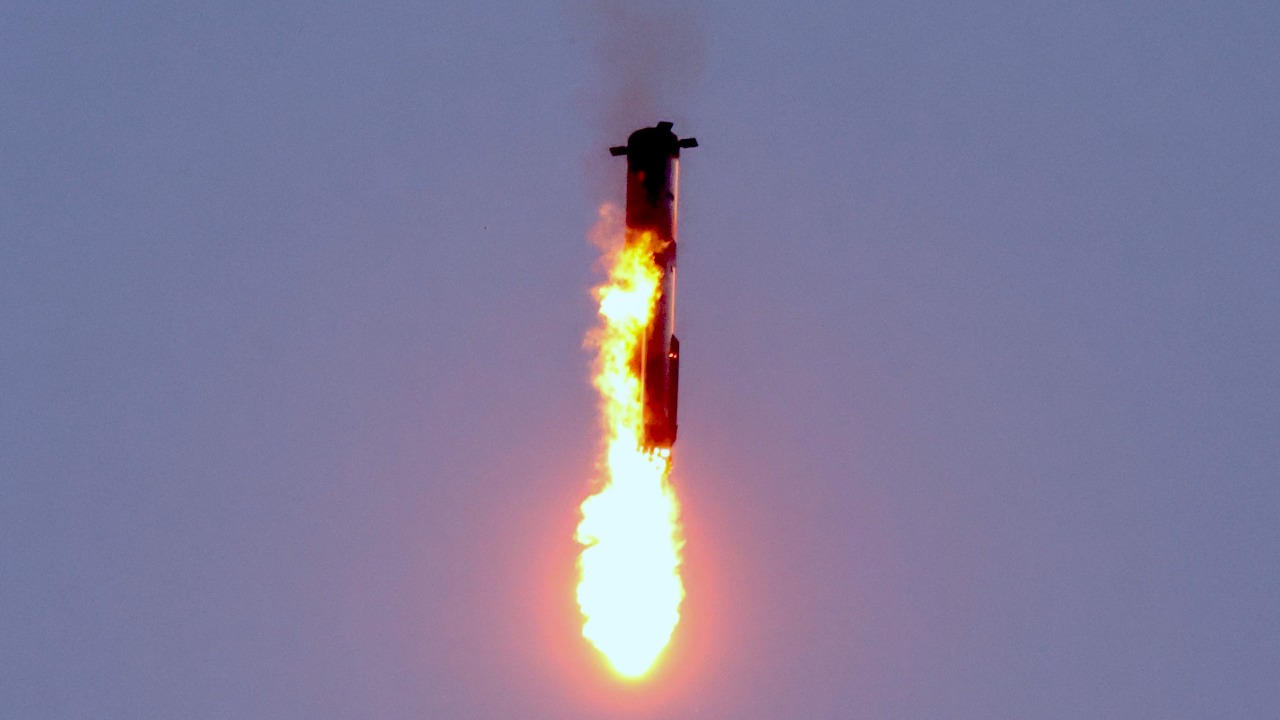

The latest test of Elon Musk’s most ambitious rocket did not just fail in spectacular fashion, it briefly turned a routine stretch of Caribbean sky into a potential disaster zone for hundreds of people strapped into commercial airliners. Internal aviation records now show that when a Starship vehicle broke apart in flight, debris and shock waves intruded into airspace that was supposed to be protected, forcing pilots and controllers into split‑second decisions to keep passenger jets clear of danger. What was billed as a controlled experiment in pushing the frontier of spaceflight instead exposed how fragile the safety margins can be when rockets and airline routes intersect.
The incident has sharpened a question regulators and airlines can no longer treat as theoretical: how much risk to people in ordinary window seats is acceptable in the name of rapid private‑sector innovation in orbit. As I trace what happened to those flights and how officials responded, the picture that emerges is not of a freak one‑off, but of a system straining to keep up with a launch cadence that is outpacing the rules meant to contain it.
What happened when Starship came apart
The test in question involved Starship, the towering vehicle that Elon Musk has pitched as the backbone of future missions to the Moon and Mars. On this uncrewed flight, the rocket climbed away from its pad and appeared to be performing nominally before an “energetic event” in its aft section triggered a breakup less than ten minutes into ascent, scattering hardware into the upper atmosphere and toward the ocean. In a follow‑up statement on its website, SpaceX described that energetic event and insisted that debris had fallen within a pre‑planned Debris Response Area, language that signaled confidence the company had kept the fallout inside a box regulators had already approved, a claim echoed in a later account of how the SpaceX Starship explodes and grounds flights at Florida airports.
Regulators and aviation experts, however, have since painted a more troubling picture of what unfolded in the sky. The seventh uncrewed test flight of Elon Musk’s Starship, launched earlier this year, is now described in Federal Aviation Administration documents as a failure that put passenger jets at “extreme” safety risk when the vehicle exploded shortly after liftoff from its coastal site. Those records, summarized in one detailed account of how the Starship explosion put passenger jets at “extreme” safety risk, show that debris and blast effects did not stay neatly inside the theoretical footprint SpaceX had modeled, but instead intruded into airspace that commercial aircraft were already using.
The three airliners and some 450 people in harm’s way
At the heart of the scare were three aircraft that had every reason to believe they were flying through safely managed corridors. One was a JetBlue flight headed for San Juan, Puerto Rico, that had been routed near the Caribbean segment of the launch hazard area and then found itself uncomfortably close to the fallout when Starship broke apart. Two other planes, one operated by Iberia Airlines and a private jet, were also in the vicinity and had to adjust course on the fly, a sequence later reconstructed in detail in reporting that described how the plane initially went into a holding pattern to stay clear of the danger zone.
Between them, those three aircraft were carrying a total of 450 people, a figure that turns an abstract risk calculation into a very human number of lives that could have been affected if even a single large fragment had intersected a flight path. One account of the SPACEX test flight notes that the launch was the company’s eleventh Starship mission and that the explosion less than ten minutes after liftoff endangered several packed passenger jets, specifying that the three planes with a total of 450 people onboard ultimately landed safely, a detail that underscores how close the industry came to a catastrophe when the launch was the company’s latest attempt to push Starship higher and faster.
Inside the cockpit as debris rained over the Caribbean
For the crew of the JetBlue flight, the danger was not theoretical. As the rocket came apart, the captain suddenly had to weigh fuel reserves, passenger safety and the opaque geometry of a debris field that no one on the flight deck could see. According to internal accounts, the plane initially went into a holding pattern over water to stay clear of the hazard area, a maneuver that bought time but also burned fuel, and as the situation dragged on the crew began to worry about running low while still over the ocean. That tension is captured in reporting that describes how the JetBlue captain faced a stark choice as the FAA issued an extreme emergency warning after the Elon Musk rocket exploded, a moment summarized in documents that later chronicled the stark FAA extreme emergency warning that went out as debris scattered across the Caribbean sky.
Meanwhile, an Iberia Airlines aircraft and the private jet were being instructed by air traffic controllers to change course and altitude, threading their way around a hazard that was expanding in real time as fragments fell. Controllers had to rely on their understanding of the planned debris footprint and on updates from launch tracking, even as it became clear that the actual spread was not matching the original models. One reconstruction notes that, meanwhile, an Iberia Airlines aircraft and a private jet had to be instructed to change course by an air traffic controller who was working from FAA documents reviewed by the editorial team, a reminder that the people in the tower were improvising within the limits of the information they had as documents reveal that a SpaceX rocket explosion put commercial flights at risk.
What the FAA’s “extreme risk” label really means
In the days after the incident, the FAA’s internal language about what had happened was unusually blunt. The agency’s records describe the Starship failure as an “extreme risk” to passenger jets, a phrase that carries specific weight in the risk matrices regulators use to judge whether a launch can proceed. Internal aviation documents reveal that the rocket failure posed an extreme risk to passenger jets when debris from the Starship test flight came closer to airliners than the safety models had predicted, a finding that emerged from a review of how the hazard area had been drawn and how the actual breakup unfolded, as detailed in one account that cites internal aviation documents describing a near miss over the Caribbean.
FAA records also show that the agency initiated a formal investigation into the launch, focusing on whether SpaceX had accurately characterized the risk and whether the company’s real‑time coordination with air traffic control was adequate as the situation deteriorated. One summary of those records notes that the rocket explosion put planes at risk on routes to San Juan, Puerto Rico, and that the FAA’s own analysis concluded the event had created a safety hazard that exceeded acceptable thresholds, a conclusion that underpins the description of how the rocket explosion put planes at risk according to FAA records.
How close did the debris really get?
One of the most contentious questions to emerge from the incident is just how close the falling hardware came to the airliners. SpaceX has maintained that debris remained within the pre‑planned area and that the risk to aircraft was managed, but subsequent analyses suggest the margins were far tighter than the company has publicly acknowledged. A detailed technical review concluded that Starship debris came closer to airplanes than SpaceX admits, indicating that fragments penetrated portions of the sky that were supposed to be clear of any significant risk to commercial traffic, a finding that has fueled calls for more conservative modeling of how rockets break apart, as captured in a report that Starship debris came closer to airplanes than previously disclosed.
From the perspective of the pilots, the precise distance in nautical miles matters less than the fact that they were flying in airspace that regulators had effectively certified as safe at the time of takeoff. FAA documents reviewed after the fact show that the agency believed the debris field posed a credible threat of damage to planes and potential passenger fatalities if a large piece had intersected a flight path, language that goes beyond the usual cautious phrasing of risk assessments. That assessment is echoed in reporting that describes how internal FAA documents showed the explosion created a hazard that could have led to damage to planes and passenger fatalities, a stark conclusion embedded in the same reconstruction that detailed how FAA documents reviewed after the explosion laid out the stakes.
Why rocket failures are colliding with crowded skies
Behind the drama of this single event lies a structural problem: rockets are flying more often, and the airspace they need overlaps with some of the busiest corridors for commercial aviation. Industry data show that roughly one‑third of new rockets fail on their first flight, a statistic that makes careful debris planning a growing concern for aviation safety as more companies push new vehicles into the sky. That ratio, cited in an analysis of how a SpaceX test flight put hundreds of airline passengers at risk, underscores why regulators are under pressure to refine how they carve out launch hazard areas and how they coordinate with airlines when industry data show that roughly one‑third of new rockets fail on their first outing.
In response to an earlier Starship mishap in January, the FAA and SpaceX had already adjusted some procedures to reduce disruptions to flights, including tweaking the timing and shape of temporary flight restrictions. The latest incident shows that even with those changes, the margin for error remains thin when rockets and planes share the same airspace, particularly over chokepoints like the Caribbean routes into San Juan. The January incident sharpened the debate over how to balance the economic benefits of rapid launch operations with the obligation to protect passengers on commercial flights, a tension that has only intensified as this newest failure demonstrated how easily a test flight can spill over into the lives of people who never signed up to be part of an experiment in planes share the same airspace with experimental rockets.
SpaceX’s silence and Elon Musk’s high‑stakes bet
Elon Musk has built SpaceX on a culture of rapid iteration, where failures are treated as data points on the path to a fully reusable system that can dramatically cut the cost of reaching orbit. That philosophy has delivered breakthroughs, but it also means accepting that some rockets will explode in flight, sometimes in ways that stress the assumptions regulators have made about where debris will go. In this case, Musk’s SpaceX Starship, which flies without passengers but underpins plans for future crewed missions, suddenly exploded and left airliners in danger, according to a report that found the failed launch forced pilots to maneuver around a debris field and left them asking whether they had been adequately warned, a narrative captured in an account that begins, “By Anthony Blair, Published Dec,” and goes on to describe how Elon Musk’s failed SpaceX launch left airliners in danger after the rocket suddenly exploded.
Publicly, SpaceX has emphasized that no one was hurt and that the data gathered will feed into design improvements, while declining to answer detailed questions about how closely it coordinated with air traffic control as the failure unfolded. One account notes that Musk’s SpaceX Starship, which flies without passengers, did not respond to requests for comment about the FAA’s findings that planes were forced to fly through a debris field or around it, and that the agency found the planes were navigating through it informed them only after the fact, a criticism embedded in a reconstruction that describes how the planes were forced to adjust course as the FAA later concluded they had been exposed to unnecessary risk.
What regulators and airlines do next
The FAA now faces a difficult task: tightening oversight of a marquee private launch provider without choking off the cadence of flights that has made the United States a dominant player in commercial space. The agency has already signaled that it will scrutinize how hazard areas are drawn for future Starship missions and how quickly launch operators must notify air traffic control when something goes wrong. FAA documents released since the incident disclose that the agency believes the debris scattered across the Caribbean sky in ways that were not fully anticipated, and that it alleges SpaceX did not promptly inform all pilots navigating through the affected airspace, a concern laid out in the same records that describe the FAA documents released since the explosion.
Airlines, for their part, are reassessing how much they can rely on regulators and launch providers to keep them out of harm’s way. Some carriers are already pressing for more conservative routing around launch windows, even if that means longer flight times and higher fuel burn, arguing that the cost of a single debris strike would dwarf the incremental expense. The broader industry conversation is shifting from whether rockets and airliners can safely coexist to how much buffer is needed when they do, a debate that has been sharpened by the realization that a SPACEX test flight, intended as a controlled experiment, instead endangered several packed passenger jets when it exploded less than ten minutes after launch and sent debris raining toward busy routes, a scenario laid out starkly in the account that begins, “Dec, SPACEX,” and details how the SPACEX test flight endangered those jets.
More from MorningOverview