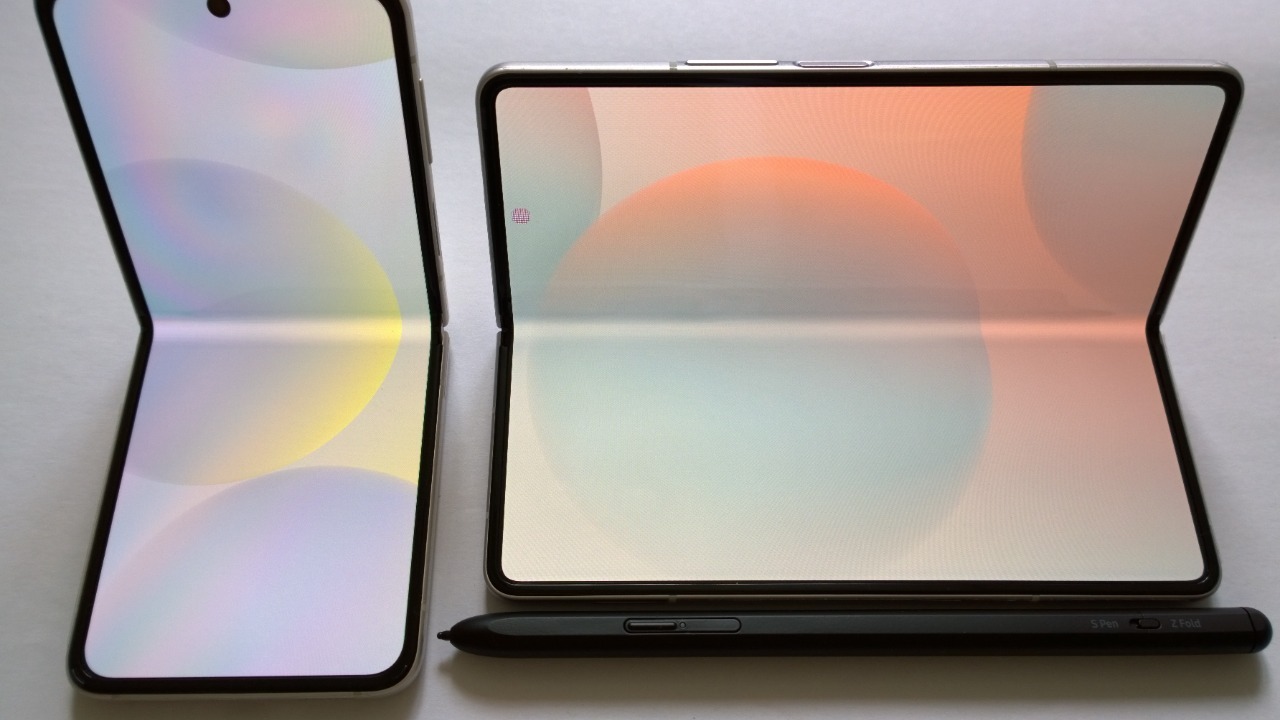

Foldable phones have finally nailed the sci‑fi part of the dream: big tablet screens that collapse into something pocketable, hardware that feels less like a prototype and more like a daily driver, and designs that keep getting thinner and lighter. Yet for all that progress, one stubborn problem still holds the category back from the mainstream. The hardware revolution arrived, but the everyday experience is still undermined by software that never quite catches up to the folding screen.
After years of rapid iteration, the core complaint is no longer that hinges snap, displays crease, or prices scrape the stratosphere, even if those issues have not vanished. The real drag on foldables is that the software, from Android itself to individual apps, still treats these devices like oddly shaped slabs instead of something genuinely new. That gap between hardware ambition and software reality is where foldables fixed almost everything, except the one problem that matters most.
Foldables solved the hard engineering problems
When I look at the latest generation of foldables, it is clear that the industry has already cleared the most daunting engineering hurdles. Early models were thick, heavy, and fragile, but current designs are aggressively chasing thinness and polish. Samsung, for instance, has pushed its Galaxy Z line toward ever slimmer profiles, to the point where some reviewers now argue that the company’s obsession with shaving off millimeters is starting to make Samsung foldables worse in other ways, a complaint that only makes sense once the basic hardware is mature enough to nitpick.
Competing devices show similar confidence. Retail listings for high‑end foldables now emphasize premium materials, refined hinges, and bright, high refresh rate displays in the same breath as conventional flagships, whether you are looking at a book‑style device or a compact clamshell in a current product listing. The message is that the category has grown up: the hinge counts, the crease depth, and the durability ratings are no longer science experiments, they are selling points.
Yet the “easy” part, software, is still a mess
The irony is that once the industry cracked the physics of folding glass and complex hinges, the remaining challenge should have been the easy one: software. Instead, the folding experience is still defined by apps that refuse to adapt, layouts that break when you rotate or unfold, and multitasking tools that feel bolted on. Analysts have described it as a classic chicken‑and‑egg problem, where Developers hesitate to invest in beautiful adaptive layouts for a niche device category, and users in turn hesitate to buy devices that do not fully exploit their screens.
Even sympathetic observers concede that hardware alone cannot fix this. One critic put it bluntly, arguing that Foldable is not software, and that You can buy the most advanced hinge in the world and still get the same stretched phone app on a tablet‑sized display. Without a coherent software story, from the operating system to the app ecosystem, foldables risk becoming expensive curiosities that show off in demos but disappoint in daily use.
The crease, hinge, and durability are no longer the main villains
For years, the visible crease at the center of big foldable screens was the symbol of everything that felt compromised about the form factor. That is still a sore point for some buyers, but rivals have proved it is not an unsolvable flaw. Honor, for example, has shipped devices like the Honor V2 where reviewers describe the crease as barely visible compared with the “canyons” on Samsung’s larger models, and have urged Samsung to treat that Honor level of subtlety as a top priority. The fact that the crease can be minimized shows that even this once‑defining annoyance is gradually being engineered away.
Durability narratives have also shifted. Manufacturers now talk openly about hinge cycle counts and drop resistance, and brands like Honor stress that Foldable phones need Software that can seamlessly transition between folded and unfolded states for people who rely on their devices for productivity, putting software reliability on the same level as physical toughness. When the conversation moves from “will this break” to “will this keep my workflow intact,” it is a sign that the hinge is no longer the only thing users worry about.
Battery life and thinness show how hardware trade‑offs linger
Even as the big structural problems fade, some hardware compromises still shape how foldables feel. Battery life is the most persistent of these. Large inner displays, powerful chipsets, and limited internal space make it hard to match the endurance of a traditional slab phone. Reviews of devices like the Samsung Galaxy Z Fold 7 spell this out, noting that the Samsung Galaxy Fold Specs Its only drawbacks are its exorbitant high price and just‑average battery life, which is a polite way of saying that the battery is fine but not impressive for something this expensive.
Analysts looking ahead argue that this is not going away quickly. One recent assessment of the category warned that Battery life remains a quiet disappointment for Foldables, because combining large displays with limited internal space means that even “good enough” battery life feels underwhelming. At the same time, companies are racing to make devices thinner, with some critics warning that the push toward ultra‑slim designs can hurt ergonomics and thermal performance, echoing the concern that thinner foldables are not always better if they sacrifice comfort or longevity.
Apple’s rumored iPhone Fold shows the stakes
The rumored iPhone Fold has become a kind of Rorschach test for the entire category. Enthusiasts see it as validation that foldables have arrived, but people who have spent years repairing phones see red flags. One former technician, writing about the device, pointed out that Battery life has been another area where even the best foldable phones struggle, and that the Fold Apple may be working on will have to overcome that history if it wants to live up to the hype. The implication is that Apple cannot simply rely on its usual efficiency gains; it has to solve a structural problem that has dogged every big foldable so far.
Design concerns go deeper than endurance. Another analysis of the same device highlighted Design and camera concerns, noting that the news that the iPhone Fold could be the thinnest iPhone ever produced when unfolded raises questions about whether the Fold would come up short on optics or structural rigidity. A separate breakdown of Apple’s challenges with this form factor argued that One big problem is switching smoothly between folded and unfolded modes, and that One of the hardest tasks is making sure that When you open the phone, the screen should change modes instantly and reliably. Those worries are not about whether Apple can build a hinge, they are about whether the software and design can keep up with the hardware trick.
Real users are already walking away
For all the marketing about productivity and immersion, some of the most telling feedback comes from people who have already tried foldables and decided not to buy another. In one widely shared post, a Galaxy Fold owner explained why they were done with the line, listing trade‑offs that never quite felt worth it. They mentioned that they would miss using the device for workout sessions and a cardio run on a treadmill, but also argued that Cameras will always be nerfed compared with the best slab phones, and that the compromises on weight and durability overshadowed the benefits.
Short‑form reviews echo that tension. In one clip about the Galaxy Z Fold 7, a creator opens by saying, “do not get me wrong I love my Z47,” before rattling off five problems that honestly annoy them, from occasional main screen glitches to software quirks that break immersion. That video, which lists issues like the main screen sometimes just going black, captures how even fans feel let down when the experience stutters. The fact that this critique comes wrapped in affection, in a Jul short that still calls the device a favorite, underlines how close foldables are to greatness and how frustrating it is when software or reliability keeps them from getting there.
Multitasking and app continuity are still unreliable
The core promise of a foldable is continuity: start something on the small outer screen, then open the device and keep going on a larger canvas. In practice, that flow still breaks too often. Technical guides for developers warn that one evident challenge with a large screen is that it, in their words, affects the continuity of the application, because when you unfold the phone the system can treat it as a configuration change and the app may restart. One such guide notes that But if developers do not handle that transition correctly, the screen can rotate or expand and applications instantly stop working or lose state.
Manufacturers themselves acknowledge that this is a critical pain point. Honor, in its own breakdown of common durability issues, explicitly states that foldable phones need software that can seamlessly transition between folded and unfolded states, and warns that software glitches or lag during that process can be just as damaging to user trust as a cracked screen. The company stresses that such problems are especially serious for people who rely on their devices for productivity, because a frozen app or broken layout in the middle of a work task feels like a failure of the entire concept, not just a minor bug.
Developers are not convinced the audience is there
Behind every broken layout is a developer who had to decide whether supporting foldables was worth the effort. The economic logic is brutal. Analysts describe a market where Developers are reluctant to dedicate resources to building beautiful, adaptive layouts for a niche device category, especially when those same engineers could be improving the experience for hundreds of millions of slab phones instead. Without clear evidence that foldables will explode in popularity, many teams treat them as a nice‑to‑have rather than a priority.
That hesitation feeds back into the user experience. As one critic put it, You can have the best hardware in the world, but if the software does not treat the device as anything more than a tall phone, adoption will never get there. The result is a landscape where a handful of marquee apps, like YouTube or a few office suites, showcase clever split‑screen or drag‑and‑drop features, while countless others simply stretch to fill the space, wasting the potential of the inner display.
Samsung, Honor, and others keep promising the next big leap
Hardware makers are not blind to these frustrations, and they keep promising that the next generation will finally tie everything together. Samsung, in particular, has turned its Galaxy Z Fold line into an annual statement about the future of mobile computing. Commentators joke that every year Samsung somehow manages to convince us that foldables are the future, and that 2025 might finally be the year when the Galaxy Z Fold 8 fixes every major complaint. In one detailed preview, a reviewer argued that Samsung could finally deliver a Fold that addresses the crease, the weight, and the software polish in one package, framing the device as a potential turning point.
Honor and other challengers are pushing from the other side, using devices like the Honor V2 to show that it is possible to reduce the crease and improve durability without sacrificing too much on thickness or weight. Their messaging often leans heavily on productivity, promising that users can run multiple apps side by side, drag content across windows, and treat the device as a mini laptop. Yet even in these optimistic pitches, the fine print about app support and layout quirks remains, a reminder that no matter how good the hardware gets, the software ecosystem has to follow. Retail listings for competing models, such as those highlighted in another product search, still focus more on specs than on what the software actually lets you do with the extra screen.
The YouTube test: when big screens do not mean better viewing
One of the simplest ways to judge a foldable is to open YouTube and see what happens. On a well‑optimized device, the app should recognize the larger inner display, adjust the video player, and keep playback smooth as you fold and unfold. In practice, users still report odd behaviors, from videos pausing during the transition to aspect ratios that waste huge chunks of the screen. Long‑form reviews on platforms like YouTube often spend several minutes walking through these quirks, showing how even a flagship app can stumble when asked to handle multiple orientations and screen sizes on the fly.
Shorter clips, including those focused on specific models, highlight similar frustrations. In the same ecosystem where creators praise the Galaxy Z Fold 7 for its immersive inner display, they also complain about inconsistent app behavior, lag when switching between folded and unfolded modes, and occasional crashes. These issues are not limited to one brand or one app; they are symptoms of a broader problem where the software stack, from Android to individual apps, still treats foldables as edge cases. Even product listings for rival devices, such as those surfaced in another foldable, tend to emphasize display size and resolution without promising that the apps you actually use will make the most of that canvas.
Why 2026 still may not be “the year of the foldable”
Looking ahead, there is a growing consensus that the breakthrough moment for foldables keeps slipping further into the future. Analysts who track the category argue that 2026 still will not be their year, in part because the remaining problems are not the kind that can be solved with a single hardware refresh. One recent assessment concluded that Foldables face a combination of Battery constraints, software fragmentation, and pricing that keeps them from breaking out of their niche, even as individual models improve.
That does not mean the form factor is doomed. It does mean that the last unsolved problem, the one that keeps foldables from feeling truly inevitable, is not a hinge or a crease but a software ecosystem that still treats them as an afterthought. Until developers see enough users to justify the work, and users see enough polished apps to justify the price, the category will remain stuck in that chicken‑and‑egg loop. In the meantime, manufacturers will keep shipping ever thinner devices, as seen in another product listing, hoping that if they perfect the hardware, the software will eventually follow. So far, that final piece is the one thing foldables still have not fixed.
More from MorningOverview