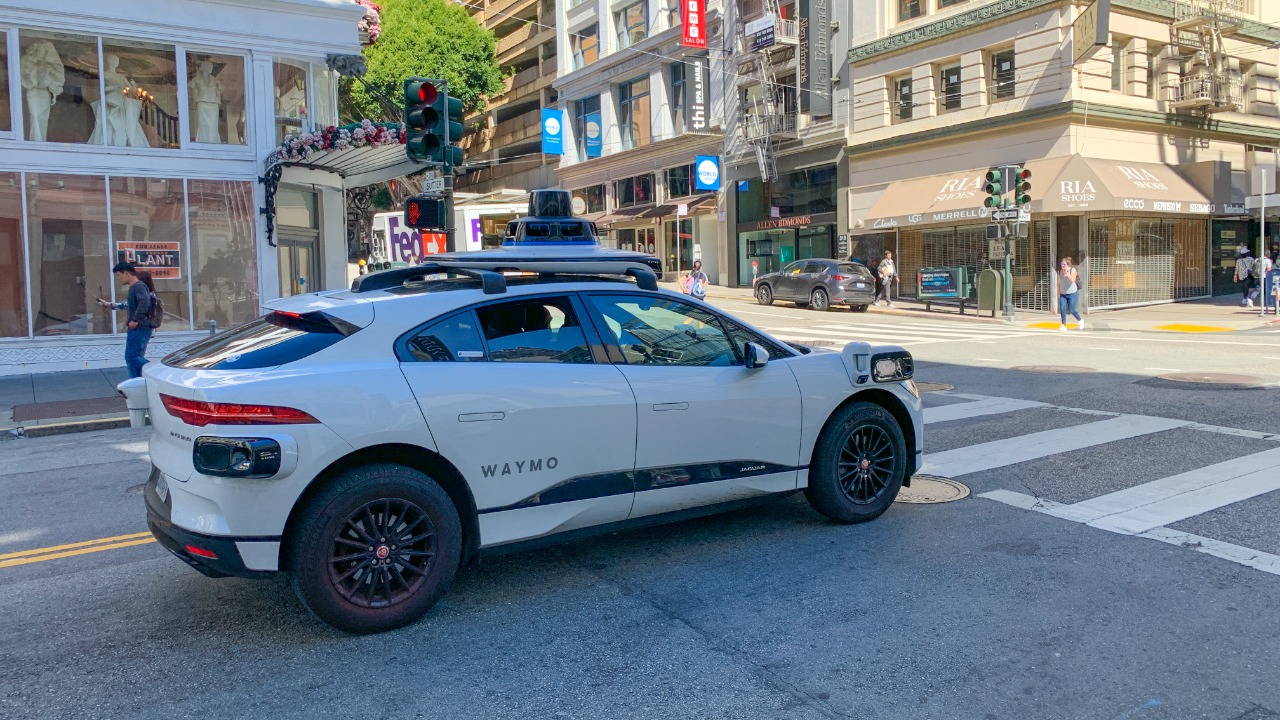

Waymo’s driverless taxis are back on San Francisco streets after a citywide power failure turned the company’s fleet into a symbol of how fragile high tech can look when basic infrastructure goes dark. The restart marks a critical test of public trust, regulatory patience, and the company’s own confidence in its software after cars were filmed stalled in intersections and blocking traffic during the blackout.
As service resumes, the question is no longer whether Waymo can operate in ideal conditions, but how its robotaxis behave when the city around them is in crisis. I see this outage as a real-world stress test for autonomous vehicles, one that will shape how San Francisco, regulators, and rivals judge the technology’s readiness for the messy reality of urban life.
How a citywide blackout turned into a robotaxi stress test
The chain of events started with a massive failure of the power grid that plunged large parts of San Francisco into darkness and chaos. The blackout knocked out traffic lights across key corridors, snarled commutes, and left first responders juggling collisions and stalled vehicles as Mass power outages black out large parts of San Francisco and disrupt Traffic. In that environment, any vehicle that relied on predictable signals and clear right-of-way rules was suddenly operating in a city that no longer matched its training data.
Waymo’s cars were caught in the middle of that disruption. With intersections dark and human drivers improvising their own rules, the robotaxis had to interpret a landscape where the usual cues, from illuminated signals to orderly lane behavior, had vanished. The blackout did not just test the resilience of the grid, it exposed how deeply autonomous systems depend on the stability of the urban infrastructure around them, even when their own sensors and onboard computers remain powered and online.
Videos of stalled Waymo cars become the defining image
As the lights went out, the most vivid images to emerge were not of darkened skyscrapers but of Waymo vehicles frozen in place at key junctions. Videos quickly circulated showing multiple driverless cars stopped in live lanes and at crosswalks, with some clips highlighting how Videos show Waymo cars stuck at San Francisco intersections during the blackout. Witnesses described the autonomous vehicles as obstacles that other drivers had to weave around, a reversal of the usual narrative in which human error is the problem and robots are the fix.
Those clips, amplified across social platforms, crystallized public anxiety in a way technical briefings never could. Instead of sleek, futuristic shuttles gliding through the city, residents saw machines that appeared confused by the absence of working traffic signals and transit disruptions, with Witnesses recounting how the cars sat motionless even as humans tried to improvise a new traffic rhythm. In a single evening, the optics shifted from innovation to immobility.
Waymo’s rapid shutdown and the decision to pause service
Faced with that chaos, Waymo moved to suspend its robotaxi operations in the city, a step that underscored how seriously the company viewed the risk of compounding an already dangerous situation. The company confirmed that it had shut down its San Francisco service as the outage unfolded, a move detailed in reports that Waymo suspends robotaxi service in San Francisco amid the blackout. In effect, the company chose to remove its vehicles from the equation rather than risk unpredictable interactions at dark intersections.
That pause was not just a technical decision, it was a reputational one. By halting rides, Waymo signaled that its priority in a crisis is to avoid becoming a hazard, even if that means stranding some users and conceding that its system is not yet robust to every edge case. The reporting that urged readers to Follow Lauren Edmonds and that noted how Every update from reporter Lauren would hit subscribers’ inboxes captured how closely the tech and financial worlds were watching the shutdown. In a sector where rivals often tout uptime and resilience, voluntarily going dark is a high stakes call.
Inside the outage: what actually went wrong on the streets
From the outside, it was easy to assume that Waymo’s software had simply failed, but the reality on the ground was more nuanced. The blackout itself stemmed from a fire at a PG&E facility that cut power to a wide swath of the city, leaving traffic signals dead and forcing police to direct vehicles by hand in some neighborhoods. In that environment, Waymo resumed its San Francisco service Sunday after a power outage pause, but only after its fleet had been instructed to pull over or return to depots during the worst of the disruption.
Witness accounts and video evidence show that the vehicles did what they are programmed to do when the environment becomes ambiguous: they defaulted to caution and stopped. Clips shared online and in broadcast segments highlighted how videos show Waymo self-driving cars blocking roads during the San Francisco blackout, particularly at intersections with non functioning traffic signals. From a safety engineering perspective, stopping in the face of uncertainty is rational. From the perspective of a driver stuck behind a motionless robotaxi in a darkened intersection, it felt like paralysis at the worst possible moment.
Waymo’s explanation, and why the company says it is ready to roll again
Once power was restored and the immediate crisis passed, Waymo moved quickly to explain what had happened and why it believed it was safe to restart rides. Company representatives emphasized that the vehicles remained powered and connected, and that the decision to halt service was a precaution taken while the city’s infrastructure was in flux. In their account, the fleet was guided to safe locations, either pulled over at the curb or directed back to maintenance hubs, before Waymo resumed its San Francisco service Sunday.
Waymo has also framed the incident as a learning opportunity, saying it is focused on rapidly improving how its software responds to unusual traffic conditions during similar disruptions. In statements cited in coverage that noted how Dec 22 (Reuters) Alphabet unit Waymo said on Monda that it had already begun analyzing the data, the company stressed that its priority is to refine how its vehicles interpret non standard traffic patterns when signals fail. That message is aimed as much at regulators and investors as at riders, signaling that the outage is being treated as a software and operations problem to be solved, not a fatal flaw in the concept of driverless service.
Rivalries and comparisons: Tesla, Musk, and the optics of resilience
The blackout did not just test Waymo, it also became a stage for competitors to draw contrasts. Reporting on the incident noted that Waymo resumes San Francisco robotaxi service after blackout chaos as Musk says Tesla car service unaffected, highlighting how Elon Musk seized on the moment to argue that Tesla’s driver assistance systems and ride services had not been disrupted in the same way. For Musk and Tesla, the outage was an opportunity to position their approach, which still relies on human drivers in many scenarios, as more adaptable when infrastructure fails.
That comparison matters because it shapes how the public and policymakers think about the tradeoffs between fully driverless systems and human supervised automation. If Tesla can credibly claim that its services rode out the blackout while Waymo’s cars were filmed stuck between lanes, it strengthens the narrative that Alphabet’s more cautious, sensor heavy model is brittle under stress. At the same time, the fact that Alphab is willing to halt operations rather than push its vehicles through uncertain conditions can be read as a commitment to safety over bravado. The rivalry is not just about who has the better technology, it is about whose risk calculus the public is willing to accept.
Regulators, radio, and the politics of getting back on the road
Waymo’s return to service did not happen in a vacuum. State and city regulators have been under pressure for months to balance innovation with safety, and the blackout handed critics fresh ammunition. Yet within days, coverage on outlets including regional broadcasters such as Waymo resumes San Francisco service after power outage pause on 1330 & 101.5 WHBL made clear that regulators had not moved to shut the program down. Instead, the focus has shifted to post mortem analysis and potential new conditions on future permits.
That regulatory posture reflects a broader political reality. San Francisco has become a proving ground for autonomous vehicles, and officials know that pulling the plug entirely would send a chilling signal to the industry. At the same time, they cannot ignore residents who watched intersections clog as driverless cars sat immobile. The path forward is likely to involve more detailed contingency planning requirements, clearer protocols for how fleets respond to infrastructure failures, and closer coordination between companies like Waymo and agencies responsible for traffic management when the grid falters.
What the outage reveals about the future of urban autonomy
For all the drama of stalled cars and viral clips, the most important lesson from this episode is that autonomy does not exist in isolation. Waymo’s vehicles rely on a dense web of assumptions about how cities function, from working traffic lights to predictable human behavior, and the blackout showed how quickly those assumptions can collapse. The fact that By Doha Madani and other reporters could document cars blocking roads at non functioning intersections underscores that the edge cases are not theoretical. They are baked into the fabric of urban life.
As Waymo restarts service in San Francisco, the company is effectively betting that it can learn from this failure faster than public patience wears thin. Its parent, Alphabet, has the resources to pour engineers and data scientists into refining how the system responds when the grid fails, but the social license to operate will depend on whether residents feel safer, not just whether the code is cleaner. In that sense, the blackout may prove to be a turning point, forcing companies, regulators, and cities to treat infrastructure resilience and autonomous vehicle deployment as a single, intertwined project rather than separate challenges.
More from MorningOverview