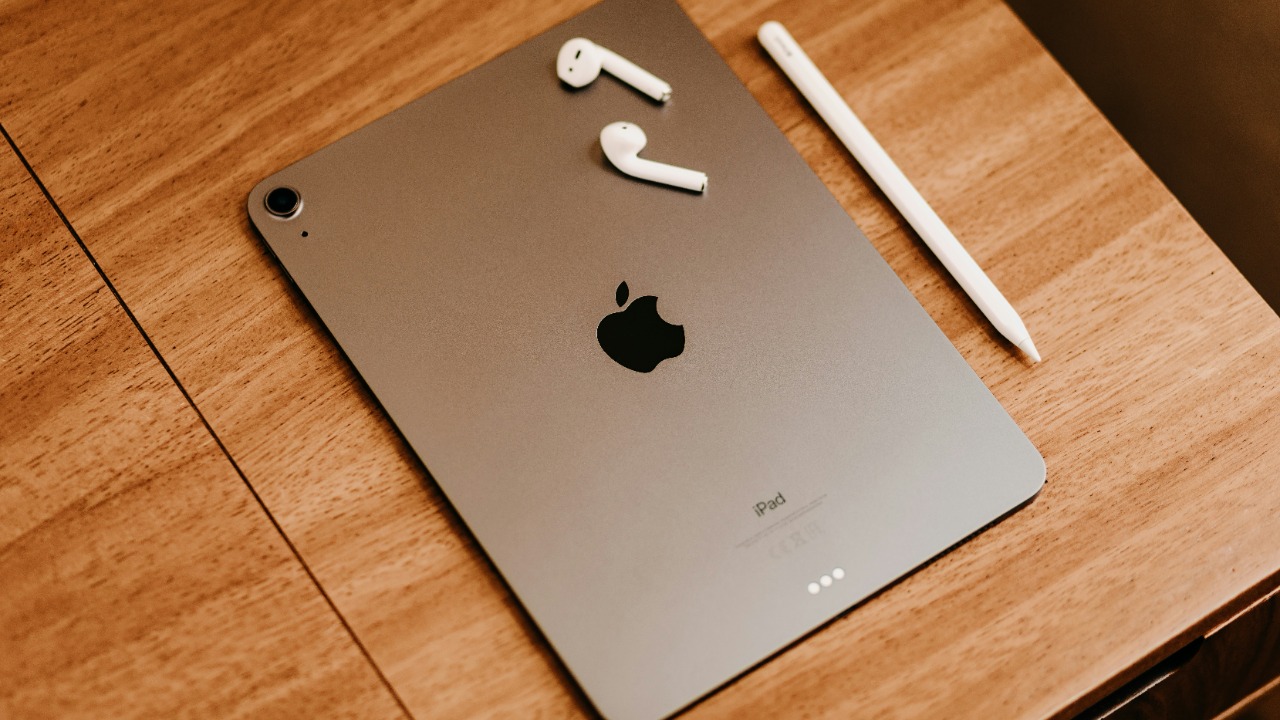

Apple’s next midrange tablet has effectively been outed by Apple itself, with internal software pointing directly to an M4 iPad Air long before any stage presentation. Instead of a vague supply chain whisper, the clearest evidence so far lives inside code that references new hardware identifiers, chip families, and even accessories that match what an upgraded Air would need. The result is a rare moment where Apple’s own engineering breadcrumbs sketch a surprisingly detailed picture of its 2026 iPad strategy.
Those references do more than spoil a product name. They hint at how Apple plans to split its tablet lineup between an A19 powered entry model and an M4 based Air, how much performance headroom each device will get, and how new accessories and sensors could reshape what an iPad is supposed to do. Taken together, the leaks suggest that the next Air will not just be a routine spec bump, but a key piece of Apple’s broader move toward more powerful, AI ready mobile hardware.
How Apple’s own code gave the M4 iPad Air away
The clearest sign that an M4 iPad Air is real did not come from a case maker or a blurry factory photo, it came from Apple’s own software. Internal builds referenced an iPad Air class device tied to the M4 family, effectively confirming that the Air line is jumping straight to the same chip generation that powers Apple’s latest Macs. One detailed breakdown described how a prototype configuration surfaced in code that developers were never meant to see, turning what would normally be a rumor into something much closer to a product slip.
According to one analysis, the discovery arrived in Dec when an unreleased build exposed identifiers for an M4 based Air, with the leak framed as Apple “accidentally” confirming the product in its own internal listings. That walkthrough of the Apple code described an actual prototype profile rather than a placeholder, which is why it carries more weight than the usual guesswork around future iPads. For a company that usually keeps silicon roadmaps locked down, seeing the M4 name tied directly to the Air family in Apple’s own software is about as close to official as a leak can get.
The anonymous software leak and Mac Rumors’ role
The code did not surface by accident on a public server, it was passed along by someone with direct access to internal software. An anonymous source obtained a build that contained references to unreleased iPads, then shared that package with outside analysts who could parse the identifiers and cross check them against Apple’s existing lineup. That is how the M4 Air reference moved from a private engineering artifact to a public data point that anyone following Apple hardware could scrutinize.
In a follow up segment, the same Dec leak was described as coming from software handed to Mac Rumors, with the telling detail that the M4 Air reference was “buried inside” configuration files rather than highlighted in any obvious way. The fact that the information was nested deep in code, and that it took a careful teardown to surface, supports the idea that this was genuine internal material rather than a staged marketing tease. It also explains why a whiteboard full of Apple’s launch plans, as one commentator joked, would be “definitely crying” after such a controlled environment let a key product name slip.
J581, J588 and the early 2026 iPad roadmap
Once the first code snippets were out, a broader pattern started to emerge around Apple’s 2026 tablets. Internal identifiers pointed to two main iPad projects, J581 and J588, which line up with a refreshed base model and a new Air. The J581 device is tied to an A19 chip, while J588 is linked to the M4, a split that mirrors how Apple has been separating its entry level and midrange tablets for the last few years.
Reporting on those identifiers in Dec described how the code for J581 and J588 suggested that an A19 iPad and an M4 iPad Air are both scheduled for early 2026, with the leak framed as a reason to Stay tuned for a coordinated launch. That same internal data pointed to an “AI focused” angle for the event, which fits with Apple’s broader push to brand its latest chips as engines for on device intelligence rather than just faster CPUs. In other words, the M4 Air is not arriving in isolation, it is part of a two pronged update that redefines the entire non Pro iPad stack.
Why the current iPad Air is suddenly a bad buy
The existing iPad Air only arrived earlier this year, but the code leaks make it look like a product already nearing retirement. The current model was Refreshed in March 2025, bringing an M3 chip and some modest upgrades, yet the discovery of an M4 successor in active development suggests that Apple is compressing the Air’s refresh cycle. For anyone thinking about buying an Air right now, that timing matters more than usual, because it means a significantly more capable version could be only a few months away.
Consumer guidance around the Air has already shifted in Dec, with buyer’s guides warning that a tablet Refreshed so recently is now “nearing the end of its product cycle” and that it is “not a good time to buy” given the strength of the Rumor mill. Those same rundowns note that the Air typically sees its best discounts late in its life, which means the current model may still make sense if you find a steep deal and do not care about M4 level performance. For most buyers, though, the combination of a short cycle and credible code references to a successor is a strong signal to wait.
How the M4 Air fits into Apple’s chip strategy
Apple’s decision to move the Air to M4 rather than an A series chip is not just about raw speed, it is about aligning the tablet with the company’s broader silicon story. The M4 family is designed to scale across Macs and higher end iPads, which lets Apple reuse architecture, software optimizations, and marketing around features like advanced neural engines. By putting that chip into the Air, Apple effectively turns its midrange tablet into a bridge between the entry level iPad and the Pro line, both in performance and in the kinds of apps it can realistically run.
Parallel leaks about the A19 help explain that positioning. Internal code seen in Dec described the A19 as about 50 percent faster than the A16, with more RAM, specifically 8GB vs. 6GB, and references to an N1 chip configuration for the M4 Air. That gap means the base iPad will already feel significantly quicker than older models, but the Air will still sit in a different class, especially for multitasking and AI heavy workloads. In practice, that could be the difference between comfortably editing a 4K Final Cut project on the Air and simply trimming clips in iMovie on the A19 iPad.
What iOS 26 code tells us about unreleased Apple hardware
The M4 Air leak did not arrive in a vacuum, it was part of a broader wave of discoveries inside iOS 26 and related software. Internal builds referenced multiple unreleased Apple products, including new iPads and accessories, which together sketch a rough roadmap for the next two years. Those references were detailed enough to include codenames, chip families, and even hints about new sensor arrays, suggesting that Apple is already wiring support for future hardware deep into its operating systems.
One report on the iOS 26 code highlighted how an internal build examined by Marko Zivkovic referenced several unreleased devices, including the J581 and J588 iPads, and tied them to specific chip generations. Another discussion on the same theme stressed that some of the statements around the A19 and M4 Air suggest this is not code from iOS 26.2, explicitly citing version 26.2 as a point of comparison. That nuance matters, because it implies Apple is baking support for these devices into multiple branches of its software, not just a single upcoming update.
Performance expectations and AI ambitions for the new iPads
The code hints around A19 and M4 are not just about faster benchmarks, they point to a shift in how Apple wants people to use its tablets. With the A19 described as roughly 50 percent faster than the A16 and paired with 8GB of RAM, the base iPad is being positioned as a much more capable machine for multitasking, gaming, and creative apps. That extra headroom, combined with a more powerful neural engine, sets the stage for on device AI features that would have been difficult to run smoothly on older chips.
Coverage of the same internal builds noted that Apple could release new iPads early in 2026, and that the leaked code for the A19 iPad and M4 Air suggests a significant performance upgrade for the entry level model in particular. One analysis argued that Apple could even break its usual release pattern to highlight those gains, especially if it wants to frame the A19 and M4 as the baseline for a new generation of AI features. In that context, the M4 Air becomes the tablet that shows off the full potential of Apple’s on device intelligence push, while the A19 iPad brings a scaled down version of the same capabilities to a wider audience.
Rumors of a more refined Air design and accessory ecosystem
Beyond raw performance, the M4 Air is expected to refine the hardware design and accessory story that Apple has been building around its tablets. Earlier commentary on Apple’s chip rollout suggested that the Pro line tends to debut a new architecture first, and then “the air catches up later with a more refined version,” a pattern that fits the idea of an M4 Air arriving after M4 Pro iPads. That refinement usually shows up in weight, battery life, and how well the device balances power with portability, which is central to the Air’s identity.
One Nov breakdown of the upcoming tablets leaned on that pattern to argue that the M4 Air will likely inherit the best parts of the Pro’s silicon and display tech while trimming cost and complexity, describing how “the air catches up later with a more refined version” of the chip and feature set. That same segment, which paused to thank viewers who had “made this far,” underscored how the Nov analysis sees the Air as the sweet spot for people who want Pro level speed without the full price or bulk. If Apple pairs that with updated accessories, such as a lighter keyboard or a more precise Pencil, the M4 Air could become the default choice for students and mobile professionals who live in apps like Notion, Affinity Photo, and Logic Remote.
Hints of new sensors and a longer term iPad roadmap
The same internal code that outed the M4 Air also hinted at a longer term roadmap for Apple’s tablets, including references to an “iPad 12” and accessories with embedded sensors. Those mentions suggest that Apple is experimenting with new ways for the iPad to sense its environment, whether through improved cameras, depth sensing, or peripherals that can track motion and pressure more precisely. For a device that already serves as a sketchbook, camera, and workstation, adding richer sensor data could open up new use cases in areas like AR, health, and advanced creative tools.
One roadmap oriented report described how internal references to an iPad 12, labeled J581 in some contexts, and a mysterious accessory with multiple sensor mentions point to Apple planning hardware well into 2027. The same analysis noted that There are indications of a refresh later in the year for some of these devices, which lines up with Apple’s habit of staggering iPad launches rather than dropping the entire lineup at once. For the M4 Air, that means it will likely sit at the center of a multi year strategy where accessories and software updates gradually unlock more of what the hardware can do.
More from MorningOverview