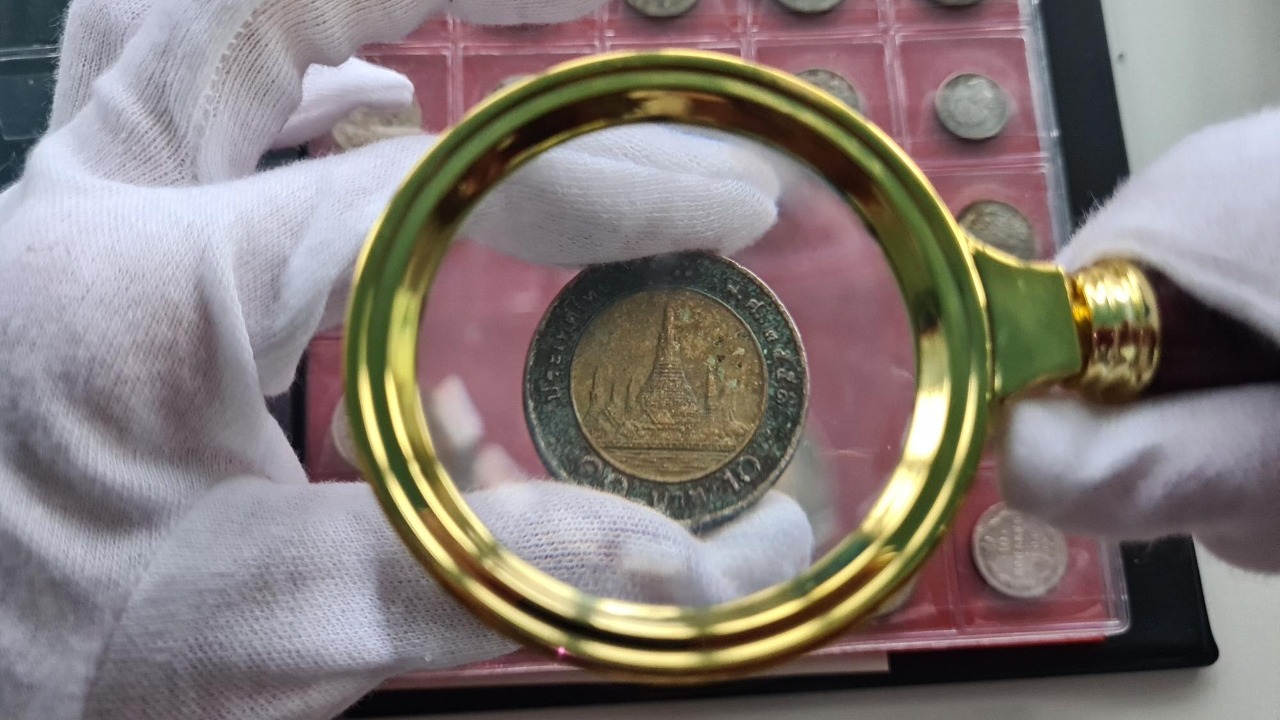

Rare coins surfacing on the Black Market rarely come with a return address, yet a recent case has led straight back to a 3,200-Year-Old stone stronghold and the people who once lived behind its walls. By following the money, quite literally, researchers have exposed not only a looting pipeline but also a forgotten fortress economy that minted its own currency and anchored an entire community.
I want to unpack how those coins were first spotted, how they were traced to a 3,200-Year-Old fortress, and what that detective work reveals about both ancient statecraft and today’s illicit trade in antiquities. The story is as much about modern science and enforcement as it is about the ancient minters who struck those coins in the shadow of heavy stone ramparts.
From anonymous listing to archaeological lead
The trail began with a handful of rare coins quietly offered for sale, the kind of objects that usually vanish into private collections without leaving a paper trail. Dealers described them in vague terms, but their unusual iconography and metal composition immediately caught the attention of specialists who monitor the Black Market for suspicious artifacts. To those experts, the pieces looked too distinctive, too coherent as a group, to be random finds from a farmer’s field or a casual metal-detecting haul.
Once numismatists started comparing notes, a pattern emerged that pointed to a single, previously undocumented minting authority. The coins shared consistent weight standards, die styles, and symbols that suggested a centralized production site tied to a fortified settlement, not a scattered village economy. That stylistic fingerprint, combined with the sudden appearance of multiple examples at once, convinced researchers that they were looking at the product of a specific ancient polity whose remains had yet to be fully understood, a conclusion later reinforced when investigators linked the pieces to a 3,200-Year-Old stone fortress described in detail in reports on how Scientists Spotted Rare Coins on the Black Market and then traced them back to that Old Fortress.
How scientists followed the coins back in time
To move from suspicion to proof, researchers had to treat the coins like forensic evidence, combining stylistic analysis with hard science. Metallurgists examined the alloy ratios, looking for a chemical signature that could be matched to known ore sources or smelting traditions in a specific region. At the same time, high resolution imaging of tool marks on the coin faces allowed experts to reconstruct the dies used to strike them, effectively reverse engineering the mint’s workshop and its production methods.
Those technical findings were then cross checked against excavation data from a recently explored fortress site that had yielded slag, crucibles, and other debris from metalworking. When archaeologists compared the chemical profile of metal residues from that 3,200-Year-Old stronghold with the coins circulating on the Black Market, the overlap was striking. The match between the fortress metallurgy and the coin alloy, combined with the shared iconography, gave investigators the confidence to argue that the disputed pieces had been minted at the fortress itself, a link later summarized in accounts of how researchers tracked coins from illicit sales back to the very place where they had been produced.
The 3,200-Year-Old fortress behind the mystery
The fortress at the center of this story was not a modest hilltop outpost but a substantial stone complex that dominated its surrounding landscape. Thick defensive walls, towers, and a commanding position over trade routes all point to a community that expected conflict and sought to control movement of goods and people. Within those walls, archaeologists have uncovered evidence of planned streets, storage facilities, and specialized workshops, the physical infrastructure of a local power that could project authority beyond its immediate hinterland.
Crucially, the site dates to roughly 3,200 years ago, a period of upheaval in many parts of the ancient world when established powers were fragmenting and new regional centers were emerging. The decision to mint coins inside the fortress suggests that its rulers were not simply reacting to instability but actively shaping their own economic system, using currency to standardize payments, taxes, or trade. Later syntheses of the excavations emphasize that investigating this 3,200-Year-Old stone fortress revealed it was more than a military redoubt, it in fact housed an entire community with the capacity to produce its own money, a conclusion highlighted in discussions of how investigating the fortress exposed its role as a population center.
What the coins reveal about an ancient economy
For archaeologists, coins are more than collectibles, they are compact records of political ambition and economic practice. The pieces tied to this fortress carry symbols that likely reference local deities, ruling families, or territorial claims, effectively broadcasting the identity of the authority that issued them. Their standardized weights and diameters indicate a deliberate effort to create a trusted medium of exchange, one that merchants and soldiers could accept without weighing or testing every piece, which in turn implies a network of transactions large enough to justify that standardization.
The distribution of similar coins at sites beyond the fortress, where they appear in hoards or scattered finds, helps map the reach of that economy. If the same types show up along caravan routes or in coastal markets, it suggests that the fortress was plugged into wider trade circuits rather than operating in isolation. The fact that modern looters could extract enough of these coins to feed the Black Market hints at substantial original production, reinforcing the view that the 3,200-Year-Old mint was a significant regional player, a point underscored in analyses that describe how Scientists Traced Coins from illicit circulation back to a fortress that had once anchored an entire community and its economy.
Inside the looting pipeline that fed the Black Market
While the scientific detective work is impressive, it also exposes the darker reality of how these coins left the ground in the first place. Looters typically target remote or poorly guarded sites, using metal detectors and quick excavation to strip portable valuables before authorities can respond. In the case of the fortress, the concentration of metalworking debris and the likelihood of buried hoards would have made it a prime target for such raids, especially if local communities were under economic pressure and saw antiquities as a source of cash.
Once removed, artifacts usually pass through a chain of middlemen who clean, sort, and bundle them for sale to international dealers. Documentation is often fabricated or vague, with coins described as coming from an unspecified “old collection” to obscure their true origin. By the time they appear in online catalogs or at small auction houses, the physical link to the 3,200-Year-Old fortress has been deliberately severed, leaving only stylistic clues for experts to follow. The fact that scientists were able to reconnect those dots in this case highlights both the sophistication of modern analytical methods and the persistent vulnerabilities that allow looters to strip heritage sites for the Black Market.
Scientific tools that turn artifacts into evidence
What makes this case stand out is the way researchers combined traditional archaeological reasoning with laboratory techniques more often associated with forensic science. Isotope analysis of the metal, for example, can narrow down the geological sources of the ore, while trace element profiles can link a coin to specific smelting practices. When those data are compared with samples from known workshops at the fortress, they effectively create a chemical fingerprint that ties the object to a particular production line.
Digital tools add another layer of precision. High resolution 3D scans of coin surfaces allow experts to identify minute die flaws and production quirks, which can then be matched to other specimens from controlled excavations. Over time, this builds a reference library that makes it harder for traffickers to pass off looted items as unprovenanced curiosities. In the fortress case, such methods turned a handful of suspicious coins into hard evidence of illegal excavation, strengthening the argument that the pieces had been minted, buried, and then illicitly removed from a 3,200-Year-Old stronghold that archaeologists were only beginning to understand.
A fortress that was also a community
One of the most striking revelations from the excavations is that the fortress was not just a military installation but a lived-in town with its own social fabric. Domestic structures, food storage pits, and everyday tools show that families made their homes inside the walls, sharing space with soldiers, artisans, and administrators. The presence of specialized workshops, including the mint that produced the coins, points to a division of labor and a level of organization that goes well beyond a temporary garrison.
This blend of defense, governance, and daily life helps explain why the fortress invested in its own currency. Coins would have facilitated payments to workers, soldiers, and traders, knitting together the economic life of the community and reinforcing the authority of whoever controlled the mint. When I look at the modern journey of those coins, from buried hoards to Black Market listings, I see a distorted echo of that original circulation, with objects once meant to grease the wheels of a 3,200-Year-Old community now serving as commodities in a global trade that threatens to erase the very context that gives them meaning.
What this case means for protecting the past
The successful tracing of these coins back to their source offers both a warning and a roadmap for cultural heritage protection. On one hand, it shows how vulnerable even major sites can be to targeted looting, especially when economic hardship and limited enforcement create incentives for illicit digging. On the other, it demonstrates that careful scientific work can pierce the veil of anonymity that traffickers rely on, turning seemingly untraceable artifacts into leads that point back to specific crime scenes.
For policymakers and law enforcement, the lesson is that investment in archaeological science is not a luxury but a practical tool for combating the Black Market in antiquities. When coins and other portable objects can be tied to a 3,200-Year-Old fortress or any other documented site, it becomes easier to prosecute traffickers, pressure buyers to demand provenance, and justify stronger protections on the ground. As more cases follow this model, the hope is that the economic calculus will shift, making it harder for looters to profit from dismantling the very past that researchers are working so hard to reconstruct.
More from MorningOverview