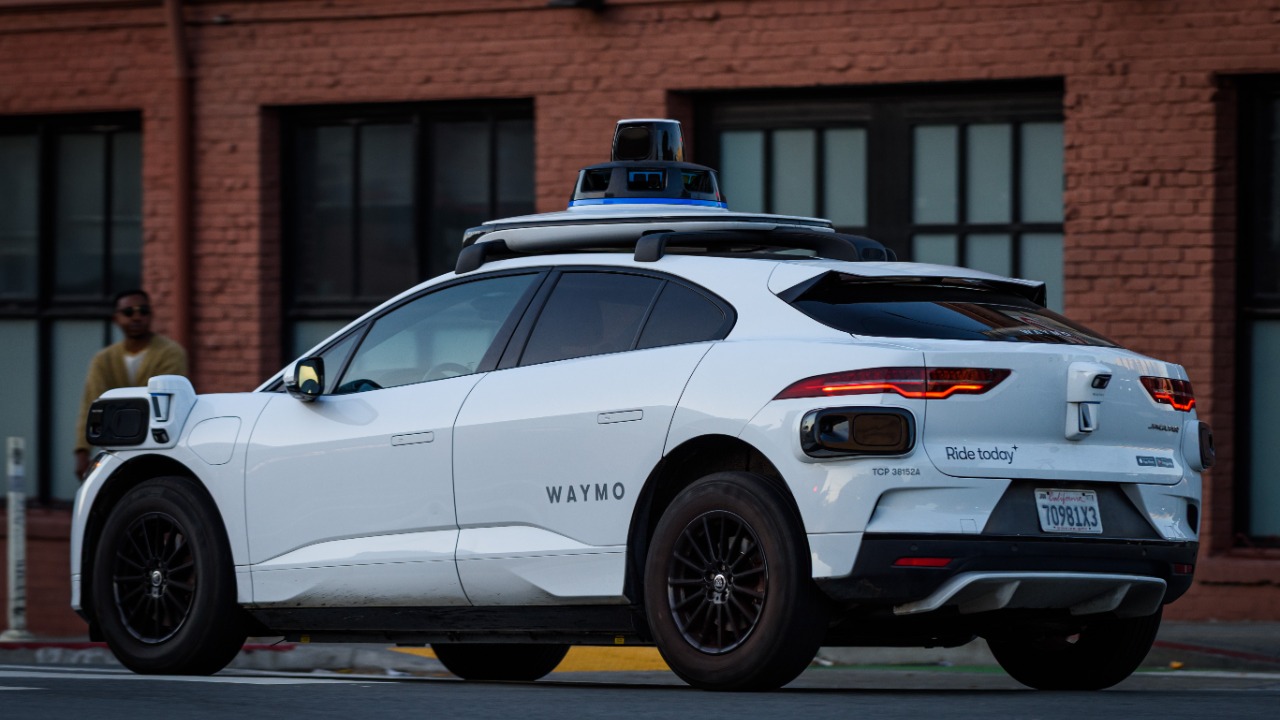

A routine robotaxi pickup in Los Angeles turned into a viral nightmare when a woman opened the trunk of her Waymo and found a stranger curled up inside. The surreal encounter, captured on video and shared widely on TikTok and Instagram, has quickly become a touchstone in the debate over how safe driverless cars really are when something goes wrong. I see it as a case study in what happens when cutting edge automation collides with very old human fears about vulnerability, privacy, and control.
The story is not just about one man in one trunk. It exposes how gaps in procedures, app design, and real world operations can leave riders, pedestrians, and even the people misusing these vehicles in precarious situations. As Waymo expands its driverless fleet across dense neighborhoods, the MacArthur Park incident forces a hard look at how these systems are monitored, how quickly companies respond, and whether regulators are keeping up with the pace of deployment.
The viral moment in MacArthur Park
The core incident unfolded in MacArthur Park in Los Angeles, where a mother summoned a driverless Waymo taxi for her daughter and instead discovered a man hiding in the trunk. The video shows the vehicle pulling up to the curb, the passenger door opening as expected, and then the mother deciding to check the rear compartment before letting her child get in. When she lifts the hatch, a man is visible inside, turning what should have been a mundane pickup into what one account described as a contender for the worst kind of Taxi and rideshare horror story in a busy Park in Los. That framing captures how quickly a futuristic convenience can feel like a threat when the unexpected appears in a confined space.
In the clip, the woman’s shock is audible as she confronts the stranger and demands to know why he is there, while her daughter stays back from the curb. The fact that this unfolded in a dense urban area, with people nearby and phones rolling, helped the footage spread across platforms within hours. The combination of a driverless Waymo, a family trying to get home, and a man emerging from a trunk in MacArthur Park created a perfect storm of fear, fascination, and online outrage that would soon draw in local television, national outlets, and a wave of commentary about what autonomy really means on city streets.
“Why are you in it?” – the unsettling exchange
The most haunting part of the video is not the visual of a man in the trunk, but the brief, strange dialogue that follows. The unnamed woman asks, “Why are you in it?” and the man replies, “They just put me in it.” When she presses, “Who put you in it?” he answers, “The People,” a phrase that has since been repeated and dissected across social media. That odd invocation of The People, delivered from inside a confined space in a driverless car, lands somewhere between paranoia and metaphor, and it has fueled speculation about his mental state and how he ended up there in the first place.
For the mother, the exchange is not abstract. She is standing on the curb, trying to decide in real time whether this is a dangerous situation for her daughter or a confused person who needs help. The man’s insistence that They put him there, without naming anyone specific, only heightens the sense of unease. It is a reminder that even in a highly instrumented vehicle, with sensors and software tracking traffic and pedestrians, the most unpredictable variable is still the human being who is not supposed to be there at all.
How the man got into the trunk
As the clip spread, attention quickly shifted from the shock of discovery to the more technical question of how a stranger could end up in the trunk of a commercial robotaxi without anyone noticing. According to a company explanation, the man climbed into the trunk after a previous ride and was able to remain there without triggering any alarms or automatic checks. That account suggests that the vehicle completed one trip, dropped off its passenger, and then, at some point before the next pickup, became a hiding place for someone who was not authorized to be there, a scenario that exposes a blind spot in how these cars are secured between rides.
The detail that he slipped into the compartment after an earlier journey also raises questions about how long he remained inside and whether the system logged any unusual weight or movement in the rear of the vehicle. One report notes that a driverless Waymo taxi with California license plates was seen on the street with its trunk door open, a visual that now reads very differently in light of the MacArthur Park video. If a person can enter the trunk after one fare and stay there until the next, then the handoff between riders is not just a software problem, it is a physical security gap that needs to be closed.
From TikTok clip to citywide controversy
The incident might have remained a neighborhood rumor if not for the power of short form video. The original TikTok shows the driverless Waymo pulling up, the door opening, and then the mother walking to the back of the car and revealing the man inside, a sequence that is easy to replay and share. Local coverage noted that a woman in Los Angeles found a man inside a Waymo trunk before the ride even began, and that the company was already looking at how to prevent anything like it from happening again. That framing turned a single clip into a broader question about system design and oversight.
As the footage migrated from TikTok to Instagram, it picked up new audiences and commentary. One widely shared reel described how a woman in Los Angeles ordered a self driving Waymo taxi for her daughter and then discovered a man hiding in the trunk when the car arrived, a summary that captured the parental fear at the heart of the story. By the time local television segments and online explainers weighed in, the MacArthur Park encounter had become a citywide controversy about whether autonomous vehicles are ready for unsupervised service in crowded neighborhoods where families, students, and workers rely on them for everyday trips.
Waymo’s response and promised fixes
Faced with viral video and mounting questions, Waymo moved to explain what happened and to promise changes. A spokesperson said that the man had climbed into the trunk after a previous ride and that the company was implementing changes to address this, a phrase that signals both an admission of a gap and a commitment to technical or procedural fixes. In practice, that likely means new checks before a vehicle is dispatched, additional sensors or weight detection in the cargo area, and updated protocols for remote operators who monitor the fleet when something looks off.
The company’s response came as it continues its expansion into more parts of Los Angeles, a rollout that was already drawing scrutiny from residents and city officials. One account noted that while Waymo continues its expansion, the MacArthur Park incident has become a reference point in debates about how quickly to scale up service and what safeguards must be in place. The promise of a safer, more efficient ride system now has to be weighed against the reality that a man was able to hide in a trunk without the car, the app, or the next passenger being alerted until a mother decided to physically check the hatch herself.
Local TV, “Taxi and rideshare horror stories,” and public fear
Local television coverage amplified the emotional stakes by framing the event alongside other frightening experiences in cabs and ride hailing vehicles. One report described the MacArthur Park encounter as something that will most certainly make the list of worst Taxi and rideshare horror stories, placing a driverless Waymo in the same mental category as late night rides gone wrong in traditional cars. That comparison matters, because it shows that for many viewers, the presence of advanced sensors and software does not erase the basic fear of being trapped in a small space with a stranger.
Another segment highlighted how a Woman finds stranger in Waymo trunk during ride in LA, emphasizing the shock of the discovery and the fact that the video had already drawn thousands of views on social media. By centering the mother and daughter in their storytelling, local outlets made it easy for parents across the city to imagine themselves in the same position, standing on a curb and wondering whether to trust a vehicle with no human driver and, now, a history of someone hiding where luggage is supposed to go. That emotional resonance is likely to linger long after the specific clip falls out of the algorithm.
Safety gaps in a driverless world
For all the drama of the video, the underlying issues are surprisingly concrete. A man was able to enter the trunk of a driverless vehicle, remain there through at least one dispatch cycle, and only be discovered because a cautious parent decided to look. That sequence exposes a set of safety gaps that go beyond any one company: how do autonomous fleets verify that cabins and cargo areas are empty between trips, what kinds of sensors or manual checks are in place, and who is responsible when those systems fail. The fact that a Man hid in the trunk of a self driving Waymo in Los Angeles without triggering any obvious alarms suggests that the current answers are not sufficient.
Other coverage spelled out the stakes in similar terms, noting that a Woman discovers man hiding in trunk of driverless Waymo vehicle when ordering ride and that the episode has prompted questions about how these cars are inspected and monitored. When a system is marketed as safer because it removes human error behind the wheel, any incident that involves a human exploiting a blind spot in the design hits especially hard. It is not just about one trunk, it is about whether the architecture of autonomy has been built with the messy realities of city life in mind.
Regulators, liability, and the question of trust
Incidents like this do not unfold in a vacuum. They land in a regulatory environment that is still catching up to the rapid deployment of robotaxis on public streets. When a woman in Los Angeles found a man inside a Waymo trunk before her daughter’s ride, local authorities opened an investigation into how it happened and what should change to keep it from happening again. That kind of inquiry is likely to examine not only the company’s internal procedures but also the broader rules that govern how autonomous vehicles operate in neighborhoods like the Westlake district and MacArthur Park.
At the same time, the story has sharpened questions about liability and trust. If a Mom Orders a Waymo for Her Daughter, Finds Man Hiding in the Trunk Claiming The People trapped him, and the car’s own systems did not detect his presence, who is responsible for the risk she and her child faced. The company can promise software updates and new protocols, but riders ultimately have to decide whether they feel comfortable stepping into a vehicle that has no human driver to notice something as basic as a person climbing into the back. Until those trust questions are answered with more than marketing language, every viral clip of a failure, however rare, will carry outsized weight in the public imagination.
More from MorningOverview