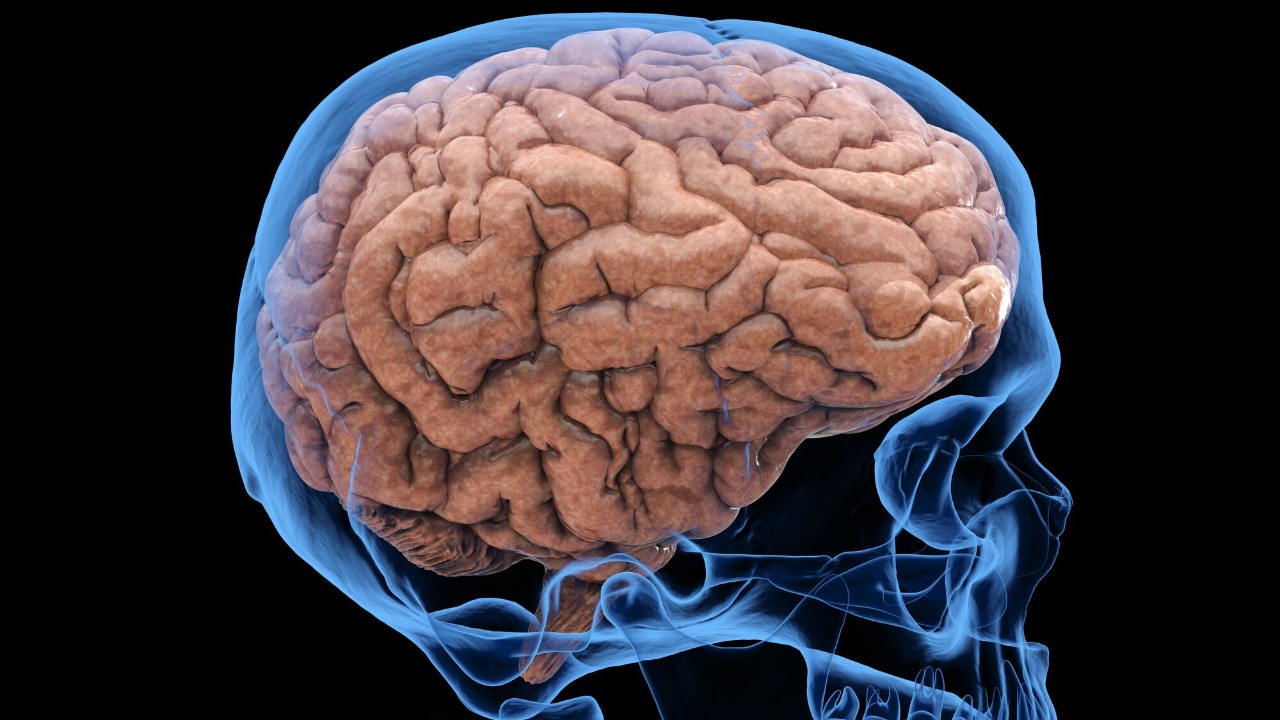

Researchers have crossed a threshold that once belonged squarely to science fiction: they have built working models of brains, both in silicon and in living tissue, that can learn, adapt, and even begin to resemble the circuitry of thought. The result is not a single Frankenstein breakthrough but a convergence of digital brain simulations, synthetic tissue, and organoid “mini-brains” that together push neuroscience and artificial intelligence into a far more volatile era. The stakes have shifted from whether we can mimic the brain to how quickly these systems might transform medicine, computing, and our understanding of consciousness itself.
What is emerging is an ecosystem of experimental brains, from a fully digital mouse cortex to totally synthetic human brain tissue and lab-grown neural clusters that wire themselves. Each of these advances solves a different piece of the puzzle, and taken together they raise a blunt question for policymakers and the public: are we ready for a world where brains are not just born, but built?
The digital cortex that changed the conversation
The clearest sign that the field has entered a new phase is the creation of a detailed, functioning digital model of a mouse cortex that behaves like its biological counterpart. In that project, scientists did not simply simulate a few neurons, they assembled a full network that fires, synchronizes, and processes information in ways that mirror real cortical tissue. One researcher described the result with the phrase “Scientists Built, Working Brain, And Now the, Possibilities Are Endless, Scientist Says, Even,” capturing both the technical achievement and the sense that the boundary between neuroscience and computer science has started to blur.
What makes this digital cortex so disruptive is not just its fidelity, but its flexibility. A fully software based brain model can be paused, rewound, or flooded with virtual chemicals to test how it responds, something that is impossible in a living animal. The same platform can be scaled up to explore how a larger network might support memory or attention, or pared down to isolate a single circuit. By turning the cortex into code, the team effectively created a testbed for hypotheses about consciousness and cognition that can be probed at machine speed, as described in the report on a fully digital mouse cortex.
Mini-brains in dishes and the rise of organoid intelligence
Alongside digital models, biologists have spent the past decade coaxing stem cells into three dimensional clusters that resemble tiny brains, often called organoids. These structures are not full organs, but they do develop layered architectures, electrical activity, and even rudimentary sensory responses that echo early human brain development. As one review of organoid work put it, researchers needed an in vitro system to perform functional studies of human brain development, and only a few years ago this was thought to be unattainable, yet now these “mini-brains” are standard tools for probing disease and development.
The more these organoids behave like real neural tissue, the more they attract interest from technologists who see them as potential biological processors. That prospect has alarmed some of the scientists who pioneered the field, who now warn that organoids are edging into biocomputing territory without clear ethical guardrails. One analysis noted that, more and more, it looks like these miniature lab-grown brain models are able to do things that resemble the biological brain, including learning-like changes when exposed to toxins or a genetic mutation, raising fears of a backlash if organoids are treated as disposable hardware for experiments in biocomputing.
Fully synthetic brain tissue, no animals required
While organoids rely on living cells, another line of work has produced brain-like tissue that is entirely synthetic, built from engineered materials rather than biology. In one landmark experiment, scientists engineered the first fully synthetic brain tissue model that mimics the mechanical and electrical properties of neural matter. This material can host neurons, support their growth, and transmit signals in ways that resemble real brain tissue, but it is manufactured in the lab with precise control over its composition and structure.
The team behind this advance emphasized that the New material could enable more reliable, animal-free drug testing, since it removes the variability and ethical concerns that come with using live animals as the norm, which they argued is not ideal for high throughput screening. By tuning the stiffness, porosity, and chemical cues in this synthetic matrix, researchers can model specific disease environments or injury conditions and watch how neurons respond. The work, described by Author, Jules Bernstein, points toward a future where pharmaceutical companies run early stage trials on standardized synthetic brains, reducing both cost and animal use through a fully synthetic brain tissue model.
From mouse to human: synthetic brain models scale up
The leap from animal-like tissue to human-like models has come faster than many expected. Researchers have now realized the first totally synthetic human brain model, a system that recreates key aspects of human neural organization using engineered scaffolds and cultured cells. Rather than a loose cluster of neurons, this model is structured to reflect how human brain cells behave and interact, with defined regions and pathways that can be studied in isolation or as part of a larger network.
According to one detailed account, the new brain tissue platform was described as the first totally synthetic human brain model and was reported By Pranjal Malewar, who highlighted how the system allows scientists to observe how cells behave and interact under controlled conditions. This kind of model opens the door to personalized neurology, where cells derived from a specific patient could be grown on a synthetic scaffold that mimics their brain environment, then exposed to candidate drugs. It also raises the possibility of building larger, more integrated synthetic brains that could, in principle, support complex computation, as suggested in the report on synthetic human brain models.
Brain cells that outlearn machine learning
Perhaps the most provocative data point in this new landscape is the finding that living brain cells can, under the right conditions, learn faster than some machine learning algorithms. In experiments conducted in Melbourne, Australia, researchers grew networks of neurons on electrode arrays and trained them to respond to stimuli in ways that resembled simple tasks. These Brain cultures adapted their firing patterns in real time, adjusting to changing inputs with a speed and efficiency that surprised even seasoned neuroscientists.
The team behind the work reported that, in Melbourne, Australia, Researcher groups observed brain cells learning faster than machine learning algorithms react to certain stimuli, suggesting that even small neural assemblies have learning dynamics that current AI systems struggle to match. This does not mean that a dish of neurons is smarter than a modern language model, but it does underscore how much optimization evolution has baked into biological learning. It also hints at hybrid systems where living neural tissue handles pattern recognition or control tasks while digital systems manage memory and logic, a vision grounded in the findings on brain cells learning faster than machine learning.
Self-wiring tissue and the end of manual brain building
One of the biggest technical hurdles in lab-grown brain research has been getting neurons to form stable, functional connections instead of degenerating in culture. Traditional methods often left stem cells stressed by their artificial environment, which meant they struggled to find their neighbors and the whole culture degraded before meaningful networks could form. That bottleneck limited both the size and the sophistication of organoids and other tissue models.
Recent work with crystal loaded microgels has started to change that picture by giving cells a scaffold that encourages them to wire themselves. In these systems, microgels loaded with specific cues guide neurons into position and support their growth, allowing lab-grown brain tissue to finally wire itself into coherent circuits. The approach addresses the stubborn problem with growing brain tissue in labs, where stem cells stressed by their artificial environment fail to connect, and instead creates conditions where they can find their neighbors and avoid the degradation that plagued earlier cultures, as detailed in research on crystal loaded microgels.
From organoids to intelligence explosions
As these brain-like systems grow more capable, they intersect with long standing debates about artificial intelligence and the possibility of runaway self improvement. The core idea behind an intelligence explosion is that once AI systems can themselves design and build even more capable AI systems, there would be a feedback loop that rapidly accelerates their capabilities. That concept has usually been framed in terms of software agents optimizing code, but brain inspired hardware, whether digital or biological, could provide the substrate for such self amplifying systems.
One influential analysis distinguishes three types of intelligence explosion, each depending on how quickly an AI can improve its own architecture and training process. If a digital cortex model or a synthetic brain platform can be used to test thousands of new designs in parallel, the rate of improvement could jump, especially if those systems begin to automate their own research. The same logic applies to organoid based computers that learn faster than conventional chips. In that context, the convergence of digital brain models, synthetic tissue, and organoid learning looks less like a curiosity and more like the early stages of an intelligence explosion.
Preserving the brain in a world of built minds
The rush to build brains has also sharpened interest in preserving the ones we already have. Advocates of long term neuroprotection argue that the brain is the pillar of human survival, and that advances in AI and synthetic biology are making once speculative ideas, such as whole brain emulation or advanced neuroprosthetics, feel less like fiction and more like a timeline compressed inevitability. They point to the same breakthroughs that enable digital and synthetic brains as tools that could one day stabilize, repair, or even replicate human neural structures.
In one forward looking assessment, the author notes that, Fast forward to late 2025, the past two years have seen a surge in interdisciplinary breakthroughs fueled by AI, advanced imaging, and materials science, all converging on the goal of preserving brain function. That perspective reframes digital cortex models and synthetic tissue not just as research curiosities, but as rehearsal spaces for future medical interventions that might extend healthy cognition. It also raises ethical questions about who will have access to such technologies and how they will be governed, themes that run through discussions of preserving the brain.
Why this moment feels different from past brain hype
Neuroscience has seen waves of excitement before, from early brain imaging to the first stem cell derived neurons, but the current moment stands out because so many threads are converging at once. Organoid research that began as a way to model development has matured into a platform where mini-brains can be grown, manipulated, and even integrated with sensors, as summarized in work on dishing out mini-brains that emphasized how in order to perform functional studies in human brain development, researchers needed an in vitro system that was once thought unattainable. At the same time, digital models have crossed from toy simulations to working cortical networks, and synthetic materials now provide brain-like scaffolds that can be mass produced.
What ties these advances together is that they all move brain science from observation to construction. Instead of only recording from neurons in animals or patients, researchers are now building brains in code, in gels, and in organoids, then watching how they behave under controlled conditions. That shift enables a level of experimentation and iteration that was previously impossible, and it is why the stakes feel so high. The same tools that let scientists refine a synthetic cortex for drug testing could, in principle, be used to optimize a brain-like computer for pattern recognition or control, a trajectory that was foreshadowed in the early review of brain organoid research.
The stakes: medicine, computing, and the meaning of mind
In the near term, the most tangible impact of these brain building efforts will likely be in medicine. Synthetic tissue models promise more accurate and humane drug testing, organoids offer personalized platforms for studying disorders like epilepsy or autism, and digital cortex simulations can help decode how specific circuits contribute to disease. Together, they could shorten the path from basic discovery to clinical treatment, especially for conditions that have long resisted conventional approaches, such as Alzheimer’s disease or traumatic brain injury.
Beyond medicine, however, the implications are harder to contain. If brain cells can learn faster than some machine learning systems, and if digital cortex models can be scaled and iterated rapidly, then the line between neuroscience and AI research will continue to erode. That fusion could yield powerful new forms of computation that borrow the efficiency of biology and the precision of silicon. It also forces a reckoning with questions that used to belong to philosophy seminars: at what point does a constructed brain, whether digital, synthetic, or organoid, deserve moral consideration, and how will societies respond if such systems begin to show signs of awareness? Those are the stakes that have quietly exploded as scientists move from studying the brain to building it.
More from MorningOverview