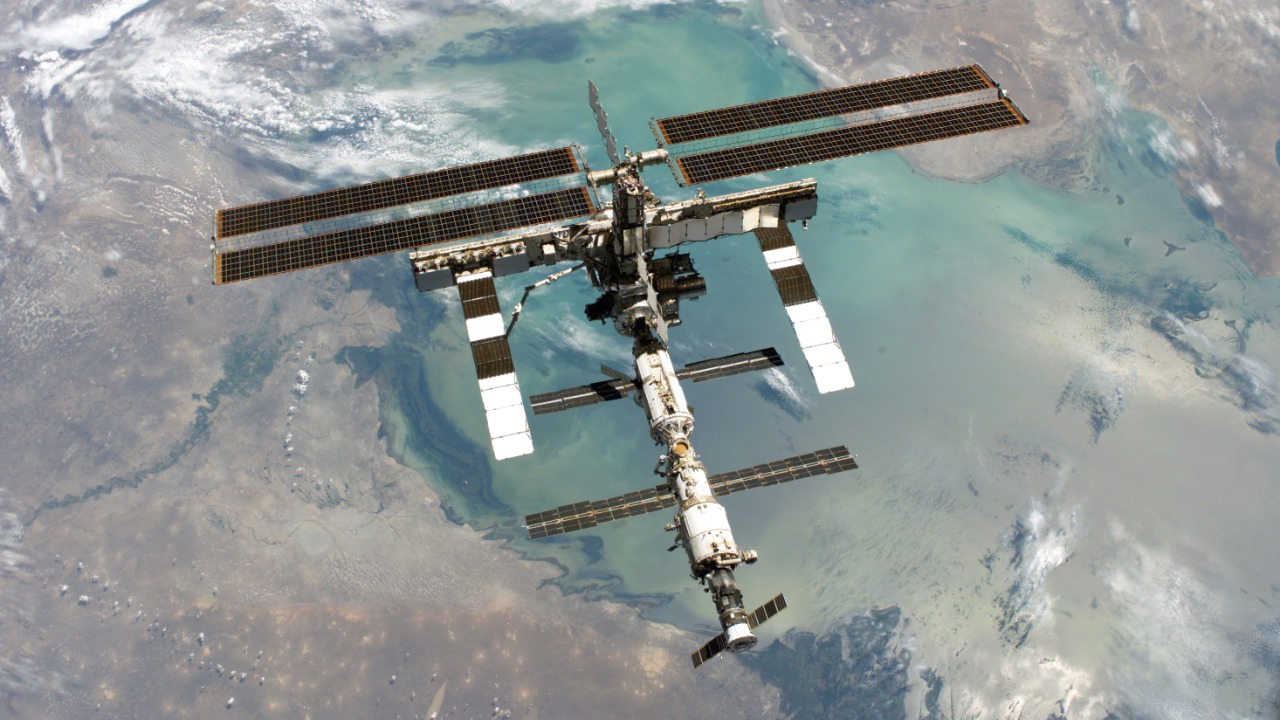

Russia is preparing a space experiment that sounds equal parts thrifty and risky: detaching its aging modules from the International Space Station and turning them into the core of a new national outpost. Instead of sending those components to a fiery death over the Pacific, Moscow wants to give them a second life in orbit as the backbone of a Russian-led station. The plan could keep Russian crews in low Earth orbit after the ISS is retired, but it also raises hard questions about safety, engineering limits, and geopolitics.
From ISS partner to solo operator
For more than two decades, Russia has been a central partner in the International Space Station, providing propulsion, life support, and some of the oldest hardware still flying. As the ISS edges toward retirement, Moscow is pivoting from shared stewardship to a strategy built around national autonomy, with officials signaling that Russian crews should not be left without a permanent orbital base once the current complex is deorbited. That shift is driving a search for ways to stretch existing assets, including the controversial idea of salvaging parts of the ISS rather than abandoning them.
The concept has been framed domestically as a pragmatic response to financial pressure and sanctions, with Russian planners looking to reuse hardware that has already survived decades in orbit instead of paying for an entirely fresh build. In that context, the decision to recycle the Russian-built core of the ISS into a new station has been described as a kind of orbital upcycling, a move that would see the Russian core will fly onward even as the rest of the complex is guided into the atmosphere.
What the Russian Orbital Service Station is supposed to be
On paper, Russia’s next platform is not just a patched-together relic but a defined project with its own architecture and mission profile. The Russian Orbital Service Station, officially rendered in Russian as Российская орбитальная станция and often shortened to Rossiyskaya, is envisioned as a modular outpost that can support long-term human presence in low Earth orbit. Its design calls for a cluster of pressurized modules, docking ports, and service elements that can host cosmonauts, visiting spacecraft, and potentially international partners under Russian leadership.
Crucially, the Russian Orbital Service Station is being pitched as the successor to the ISS era, timed to come online as the current complex is prepared to be deorbited by 2030. Russian planners have described a phased build-up in which early modules establish a basic foothold in orbit, followed by additional elements that expand living space, research capacity, and servicing capabilities, all under the umbrella of the Russian Orbital Service Station program.
Recycling the ISS: a radical cost-saving move
The most striking twist in Russia’s plan is the decision to treat the ISS not as disposable infrastructure but as a parts warehouse for its next station. Instead of building every module from scratch, Russian engineers intend to detach key elements of the existing Russian segment, refurbish them in orbit where possible, and integrate them into the new complex. That approach turns the ISS into a kind of orbital scrapyard, where decades-old modules are evaluated for a second tour of duty rather than written off as space junk.
Oleg Orlov, director of the Institute of Biomedical Problems of the Russian Academy of Sciences, has been cited as a prominent voice in favor of this approach, arguing that the Russian segment still has usable life and can support future missions if properly maintained. His institute has long studied how hardware and humans age in space, and his endorsement gives political cover to a plan that would see the Recycling the ISS become a central pillar of Russia’s orbital strategy.
How the new station design keeps changing
Russia’s next-generation station did not start out as a recycling project. Early concepts imagined a bold, all-new complex with multiple fresh modules, advanced power systems, and a layout optimized from the ground up for modern operations. Over time, however, that ambition has been scaled back, with planners acknowledging that sanctions, budget constraints, and industrial bottlenecks make a fully new build difficult to sustain. The result is a hybrid design that leans heavily on existing ISS hardware to keep costs and timelines within reach.
Reporting on the evolving blueprint notes that the new Russian space station was initially going to be quite an ambitious design, but the current plan is that the new Russian space station will mostly use the ISS, with the Russian segment forming the backbone of the future outpost. That shift is captured in analyses that describe how the new Russian space station concept has migrated from a clean-sheet vision to one that is anchored in hardware already in orbit.
Technical and safety risks of flying on with aging modules
Reusing ISS modules is not as simple as unplugging them and moving them to a new address. The Russian segment includes some of the oldest pressurized structures in orbit, with seals, wiring, and plumbing that have endured years of thermal cycling, micrometeoroid hits, and human wear and tear. Engineers will have to assess whether these components can safely handle another decade or more of service, especially if they are expected to operate in a new configuration with different loads and docking patterns.
There are also operational risks in detaching and reconfiguring modules that were never designed to be rearranged midlife. Any misstep in undocking, tugging, or redocking could damage critical systems or create debris that threatens other spacecraft. Analysts have pointed out that the plan only works if Russia can get its launchpad working again and avoid a broader economic collapse, conditions that are flagged in assessments of how the next-generation space station would function in practice, including the challenge of maintaining a polar orbit of 250 miles with aging hardware.
What Russian officials say they want from ROS
Russian space leaders have framed the new station as a way to preserve national prestige and scientific capability in orbit at a time when international partnerships are strained. They argue that a sovereign platform will let Russia set its own agenda for microgravity research, technology demonstrations, and military-adjacent experiments without relying on Western partners or commercial providers. In that narrative, the Russian Orbital Service Station is less a luxury than a strategic necessity, a way to keep Russian crews flying and Russian hardware visible in the sky.
Earlier this year, Russia approved initial designs for what it called the Russian Orbital Station, a project that overlaps conceptually with the Russian Orbital Service Station and is meant to maintain human presence in low Earth orbit under Russian control. Officials highlighted that the station is being designed to be operated without cosmonauts aboard for extended periods, a feature that would allow Russia to ride out funding gaps or crew shortages while keeping the platform alive. That capability was underscored when Russia, according to an account illustrated by Image Sergei Bobylev TASS, approved designs that explicitly call for the station to be operated without cosmonauts aboard.
Public reaction: fascination, skepticism, and dark humor
Outside Russia, the idea of bolting together a new station from ISS leftovers has drawn a mix of fascination and skepticism. Spaceflight enthusiasts have noted that reusing orbital hardware is not inherently absurd, especially if the modules are structurally sound and can be upgraded with new avionics and life support systems. At the same time, critics question whether a country facing economic strain and launch infrastructure problems can safely execute such a complex orbital surgery without compromising crew safety or creating debris.
That tension is visible in online discussions where users dissect the plan in real time. In one widely shared Comments Section on r/space, participants zeroed in on the notion that instead of building new modules, Russia would simply detach and repurpose the ISS core modules for their new station, treating the ISS as a donor body rather than a terminal patient. The tone ranges from dry humor to genuine concern, reflecting a broader unease about extending the life of hardware that many assumed would retire with the rest of the ISS.
Strategic motives: sanctions, security, and Ukraine
Behind the engineering debate sits a blunt geopolitical calculus. Sanctions have squeezed Russia’s access to Western components and financing, making it harder to field entirely new spacecraft and stations at scale. Reusing ISS modules offers a way to sidestep some of those constraints by leaning on hardware that is already in orbit and already paid for, even if it requires complex operations to detach and reposition. It is a strategy shaped as much by economic necessity as by technical ambition.
Security concerns also loom large, particularly in the context of the war in Ukraine and the threat of long-range weapons. Analysts have noted that the new Russian space station is being conceived with an eye toward survivability, including orbits and configurations that keep it relatively safe from Ukraine’s long-range weaponry while still supporting national objectives. That framing appears in assessments that describe how the Russian plan to maintain its own station is intertwined with broader strategic concerns, from sanctions to battlefield dynamics.
What we know from official presentations and leaks
Russian officials have begun showcasing the new station concept in public forums, mixing glossy renderings with hints of the underlying constraints. In one widely circulated presentation, commentators walked through how the International Space Station is nearing the end of its operational life and how Russia intends to avoid a gap in crewed presence by transitioning to a new platform. The narrative emphasized continuity, portraying the future station as a natural evolution rather than a desperate salvage operation, even as the visuals suggested a heavy reliance on familiar module designs.
Video explainers have amplified that message, with one International Space Station focused segment outlining how, when the ISS is finally retired, it is not just the multinational partnership that will end but also the infrastructure that has anchored Russian human spaceflight for years. In those accounts, the new station is presented as both a technical project and a symbol, a way for Russia to signal that it remains a serious space power despite isolation and budgetary strain.
Can Russia actually pull this off?
Whether Russia can turn this plan into a functioning station is an open question. The country’s space industry has struggled with launch failures, aging infrastructure, and funding shortfalls, all of which complicate a project that requires precise orbital choreography and new support hardware. Even if the ISS modules can be safely detached and reused, Russia will still need reliable rockets, tugs, and ground systems to assemble and operate the new complex, along with a steady pipeline of trained cosmonauts and mission controllers.
Analysts who have tracked the program caution that the entire scheme exists in a narrow band between ingenuity and overreach. Some note that, at least in theory, the plan could work if Russia stabilizes its economy and restores full launch capability, allowing it to maintain a polar orbit of 250 miles and keep the station supplied. Others point out that these are significant ifs, and that the scenario in which the next-generation space station will mostly use the ISS may remain more aspirational than real if those conditions are not met.
More from MorningOverview