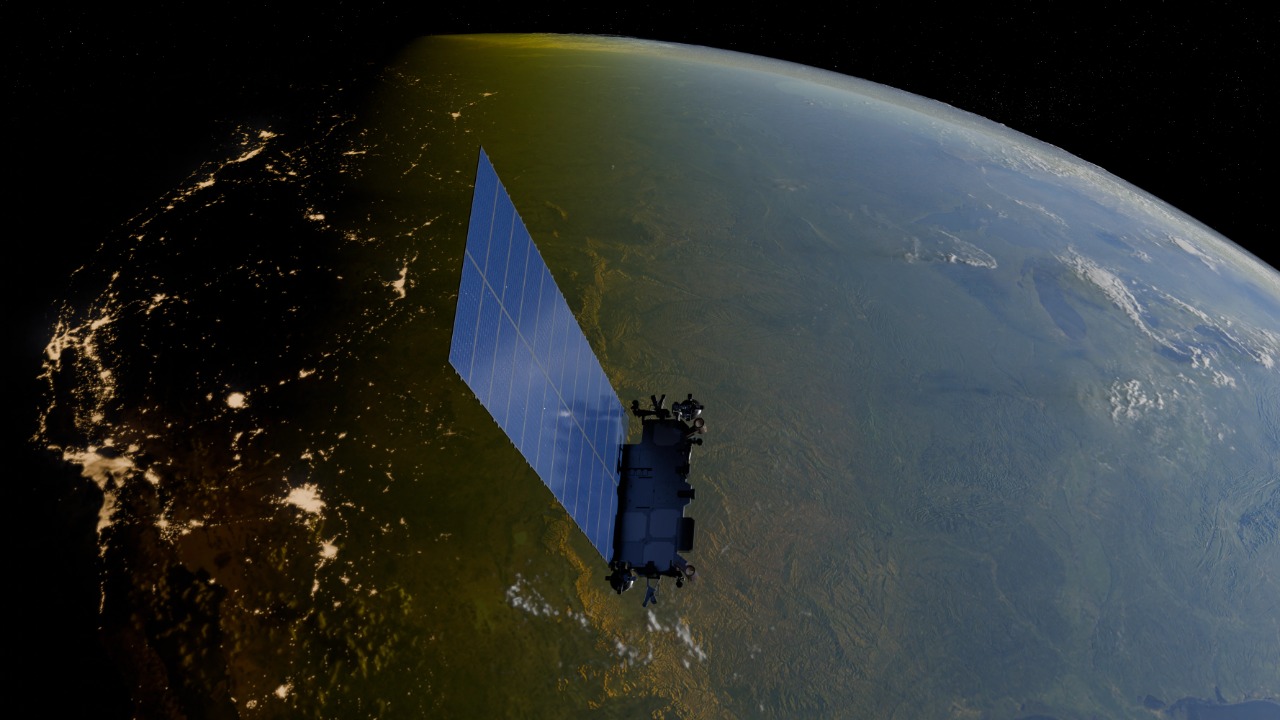

Space used to be a mostly quiet backdrop for rockets and research. Now it is crowded with thousands of internet satellites that are not only brightening the night sky but also sending out unexpected radio noise that experts say could interfere with the very systems that keep spacecraft safe. The odd signals coming from Starlink and related spacecraft are forcing astronomers, engineers, and regulators to confront a new kind of risk to spaceflight itself.
Instead of a clean separation between civilian broadband, classified defense payloads, and scientific instruments, the lines are blurring in orbit. I see a growing concern that the same commercial networks that connect trains, ships, and rural homes could also drown out the delicate radio links that guide rockets, track debris, and listen for faint signals from deep space.
How Starlink grew from experiment to orbital infrastructure
Any discussion of strange satellite signals has to start with scale. Starlink has rapidly turned low Earth orbit into a dense shell of hardware, transforming what was once a sparse environment into a busy layer of moving transmitters. As of Dec. 19, 2025, there are currently 9,357 Starlink satellites in orbit, a figure that illustrates how thoroughly the network now wraps the planet.
That number is not just a milestone for broadband coverage, it is a structural change in how space operates. The sheer size and scale of Starlink means that any design quirk, software bug, or unintended emission is multiplied thousands of times over. I see that as the core reason odd signals from even a subset of satellites can ripple into a systemic threat for navigation, collision avoidance, and scientific observation.
The first hints: mysterious Starshield Transmissions
The alarm over strange activity did not begin with public Starlink internet service but with a more secretive cousin. A constellation of classified defense satellites built by SpaceX, operating under a program known as Starshield Transmissions, started emitting a mysterious signal that caught the attention of independent observers. These spacecraft, tied to U.S. government missions, were not supposed to be broadcasting in ways that would be obvious to civilian receivers.
The oddity was not just that the signal existed, but that it appeared to come from a network that blended classified payloads with commercial-style buses and orbits. I see this as an early sign that the same industrial base building Starlink is now also fielding defense constellations whose emissions are harder to predict or scrutinize. When a classified system shares design DNA with a mass-market network, any interference pattern it creates can be much harder for outside experts to separate and mitigate.
Scott Tilley and the Canadian amateurs who heard something wrong
The story of these signals is also a story of persistence from outside the industry. A Canadian amateur satellite tracker, Scott Tilley, has become a central figure in uncovering what is happening in orbit. While scanning the skies, he noticed transmissions that did not match known public Starlink channels, hinting at hidden activity layered on top of the commercial network.
Reporting on the classified constellation notes that Oct was the moment those Starshield Transmissions first came into focus, and it was Tilley who first spotted the signals. In parallel, another account describes how an Amateur astronomer, again identified as Scott Tilley, accidentally discovered anomalous radio signals from SpaceX’s classified Starshield constellation. I see his work as a reminder that the first line of accountability in orbit often comes from dedicated hobbyists, not official monitoring networks.
Why these uplink-style signals are so disruptive
Once the signals were identified, the technical puzzle deepened. Analysts noted that some of the secretive SpaceX satellites operated by the U.S. government appeared to be using uplink signals instead of standard downlink frequencies, a choice that puzzled specialists. One report explicitly states, But it is unclear why they are using uplink signals instead of standard downlink frequencies, highlighting how unconventional this behavior is.
From a spaceflight safety perspective, uplink-style transmissions that shoot power into space rather than toward Earth can be especially problematic. They can overlap with bands used for tracking, telemetry, and command links that keep rockets and crewed vehicles under control. The same report notes that in 2023, a group of researchers found that newer satellites were emitting more radio noise than their Generation 1 counterparts, reinforcing the idea that design changes are increasing the interference footprint of these spacecraft. I see that as a warning that each new hardware revision can quietly shift the risk profile for everyone else in orbit.
Leaky Starlink hardware and the threat to radio astronomy
Even outside the classified realm, the public Starlink fleet is not behaving like a perfectly quiet neighbor. Measurements from observatories show that SpaceX’s Starlink satellites leak radio signals that threaten to ruin astronomy, particularly in frequency ranges that scientists had hoped would remain relatively pristine. Space is usually quiet at the frequencies used by sensitive radio telescopes, but the presence of thousands of satellites with imperfect shielding and emissions control is changing that baseline.Another detailed analysis concludes that Starlink satellites are leaking radio signals that may ruin astronomy, undermining our ability to study faint radio signals from where Our universe is most mysterious. I see a direct link between that leakage and spaceflight safety, because the same interference that drowns out distant galaxies can also mask the weak beacons used to track debris, small satellites, and even some deep space probes.
Astronomers are sounding the alarm about a crowded, noisy sky
Professional astronomers are not treating this as a niche technical issue. In one widely shared warning, Jack Henry is credited as Video Editor on a report that highlights how ASTRONOMERS ARE SOUNDING the alarm over the increasing threat to space research as more satellites are set to launch. The capitalized phrasing, ASTRONOMERS, ARE, SOUNDING, captures the urgency scientists feel as they watch both optical and radio interference climb.
From my perspective, their concern is not only about losing clean data, but about losing situational awareness in orbit. If telescopes and radar arrays are blinded or confused by satellite noise, it becomes harder to map the swarm of objects around Earth and to predict close approaches. That, in turn, raises the odds of collisions that could generate debris fields, which would then threaten crewed missions and robotic spacecraft alike. The warnings from the scientific community are therefore as much about operational safety as they are about pure research.
Weird Starlink signals and the risk to spacecraft communications
The odd behavior is not confined to classified Starshield craft or passive leakage. Reports describe how Starlink Satellites Are Sending Weird Signals That Could Seriously Mess Up Spaceflight, with certain transmissions appearing in bands that spacecraft rely on for critical communications. Since the first Starlink satellites went up, observers have watched the network evolve into a complex mesh of beams and side lobes that can be hard to predict from the ground.Technical breakdowns of the issue note that Starlink Satellites Are Sending Weird Signals That Could Seriously Mess Up Spaceflight because Certain bands on the radio spectrum are shared between satellite internet and the systems that help rockets and spacecraft talk to controllers. I see the risk as twofold. First, a spacecraft passing through a dense Starlink shell could experience interference at the worst possible moment, such as during launch or reentry. Second, ground stations trying to track and command multiple vehicles might find their receivers flooded with unintended Starlink noise, reducing the margin for error in already tight operations.
Everyday reliance on Starlink hides systemic vulnerabilities
Part of what makes these risks so tricky is how deeply Starlink has already embedded itself in daily life. Rail operators, airlines, shipping companies, and remote communities now treat the network as basic infrastructure. One example is a trial in which a rail operator used the service to keep passengers online, a project described under the headline Starlink Satellites Are Sending Weird Signals That Could Seriously Mess Up Spaceflight in a broader context. Here, the same beams that keep a train connected also add to the radio clutter that other spacecraft must navigate.
From my vantage point, this dual role creates a subtle but important vulnerability. The more critical services depend on Starlink, the harder it becomes to impose strict limits on its emissions or to slow its expansion, even if those steps would reduce risk for other missions. The reference in that rail trial story to “Here” as a pointer to what readers will learn underscores how the conversation around Starlink is shifting from novelty to necessity, even as the technical community flags unresolved safety questions.
Falling satellites, anomalies, and the debris domino effect
Odd signals are not the only concern. Hardware failures and orbital decay add a physical layer of risk on top of the electromagnetic one. Reports note that SpaceX’s Satellites Are Falling From the Sky Every Single Day, with at least one Starlink Satellite Suffers Anomaly In orbit that led to debris being detected. In response, Elon Musk’s SpaceX Confirms Satellite Anomaly After Debris Detected In Orbit and stated that the affected spacecraft Will Reenter The Earth, Atmosphere And burn up, according to a post on X.
On its own, a controlled reentry is not unusual. What worries many in the field is the combination of frequent anomalies, a huge fleet size, and the possibility that a malfunctioning satellite could lose attitude control while still transmitting. A tumbling spacecraft that continues to broadcast could sweep interference across wide swaths of spectrum while also posing a collision risk. I see that as a scenario where radio noise and physical debris feed into each other, making it harder to track and manage the very objects that are misbehaving.
Why regulators and industry need to treat radio quiet as safety infrastructure
All of these threads point to a single conclusion: radio quiet is not a luxury for astronomers, it is part of the safety infrastructure that keeps spaceflight viable. When Space is no longer usually quiet at key frequencies, the margin for error in launch windows, docking maneuvers, and collision avoidance shrinks. I see a need for regulators to treat unintentional emissions and unconventional uplinks with the same seriousness they apply to orbital debris and launch licensing.
At the same time, the industry has incentives to get ahead of the problem. The reports that Dec findings show Starlink Satellites Are Sending Weird Signals That Could Seriously Mess Up Spaceflight, and that Certain bands are at the heart of this potential communication problem, give engineers a clear target for mitigation. Better shielding, stricter spectral masks, and more transparent coordination with scientific and spaceflight users could all reduce the risk that a commercial network becomes an accidental hazard for every rocket that leaves the pad.
More from MorningOverview