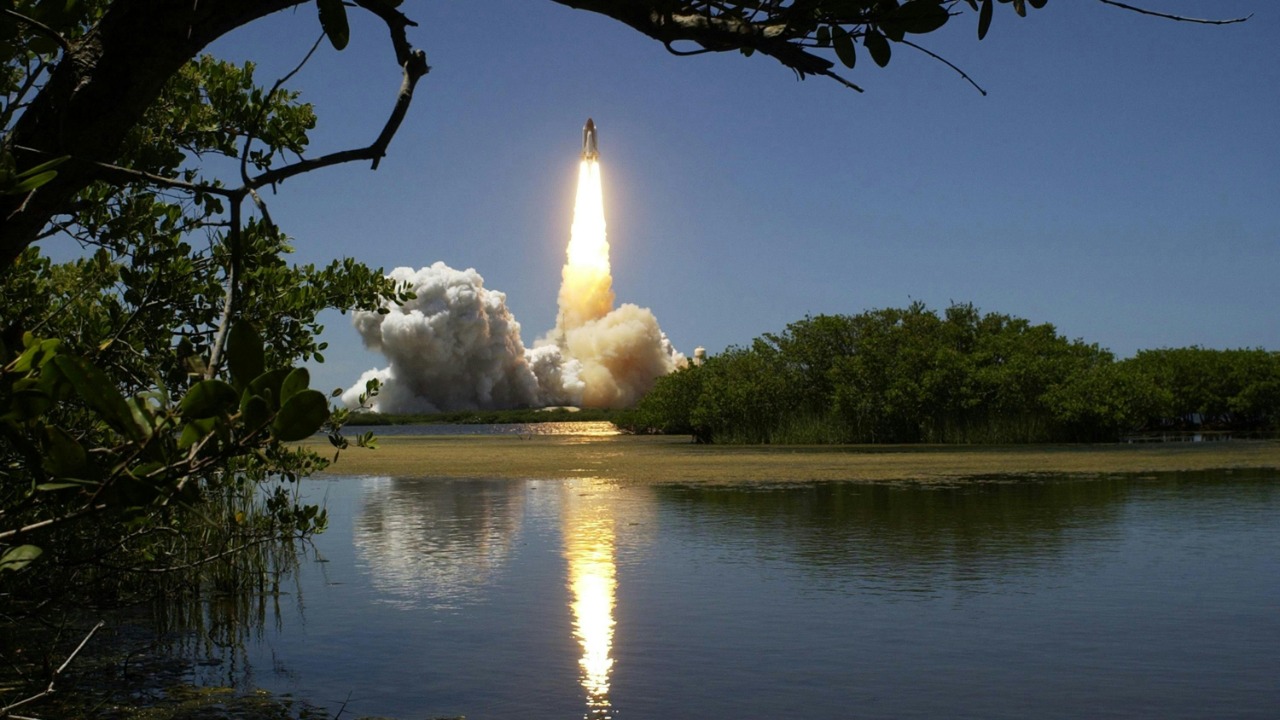

Japan’s flagship H3 rocket has suffered a fresh setback, with an engine failure in its upper stage cutting short a high‑stakes mission and leaving a navigation satellite stranded short of orbit. The loss of the spacecraft, part of a regional positioning system meant to bolster GPS coverage, is a blow to Japan’s ambitions to field a reliable, cost‑competitive launcher in an increasingly crowded commercial space market. It also raises urgent questions about how quickly engineers can diagnose the fault and restore confidence in a vehicle that underpins national security, disaster response and economic plans.
The aborted flight, which ended after the second stage shut down prematurely, is the latest in a series of hard lessons for a program that was supposed to mark a new era of dependable, lower‑cost access to space. Instead, The Japan Aerospace Exploration Agency is once again in failure‑review mode, facing pressure from government, industry and international partners to explain what went wrong and how the H3 can be made as dependable as the missions it is meant to carry.
What went wrong on the H3’s latest flight
The most recent H3 mission unfolded normally through liftoff and first‑stage ascent, only to unravel when the second stage was supposed to carry the payload the rest of the way to orbit. Telemetry showed that the upper‑stage engine started as planned, then suffered an anomaly that led to a premature shutdown, leaving the vehicle short of the velocity needed to place its satellite into the planned trajectory. Analysts tracking the flight have described a clean separation between stages followed by a brief burn and then a cutoff that came far earlier than mission design allowed, consistent with a serious propulsion or control fault in the upper stage.
According to detailed accounts of the anomaly, the second‑stage malfunction occurred roughly half an hour after liftoff, at a point when ground controllers expected to be confirming orbital insertion rather than watching performance degrade. The Japan Aerospace Exploration Agency, or JAXA, has said the engine startup sequence was followed by behavior outside its expected envelope, and that commands to terminate the burn were issued almost immediately after the problem appeared, effectively ending the mission and dooming the satellite to reentry instead of a stable orbit, a sequence described in depth in second‑stage failure reports.
The lost QZS‑5 navigation satellite and why it mattered
The payload sacrificed in the failure was a navigation spacecraft known as QZS‑5, part of a broader system designed to augment global positioning signals over Japan and its neighbors. The satellite was intended to join a constellation that improves accuracy and reliability for users on the ground, from smartphone navigation to precision agriculture and logistics, by broadcasting additional timing and correction data that complement existing GPS coverage. Its loss is not just a technical setback, it also delays planned upgrades to services that depend on centimeter‑level positioning in crowded urban environments and remote rural areas.
Project documentation describes the spacecraft as a Quasi‑Zenith Satellite System unit, often abbreviated as QZSW, that would extend high‑precision navigation across Japan and into the wider Asia and Oceania regions with longitudes close to the country, with designers expecting up to a quarter‑century of orbital service from each satellite in the series. Officials had highlighted that QZSW can be used even in challenging terrain and dense cities where conventional GPS signals are obstructed, and that the full constellation is meant to support applications ranging from autonomous vehicles to disaster response, ambitions now put on hold by the H3 failure that cut short the QZSW launch.
A pattern of upper‑stage trouble for Japan’s new flagship
The latest anomaly fits an uncomfortable pattern for the H3 program, which has struggled most visibly with its upper stage. The very first H3 launch attempt ended when the second‑stage engine failed to ignite at all, forcing controllers to send a destruct command and scattering debris into the Pacific instead of placing its payload into orbit. Later missions did achieve successful flights, but the recurrence of a serious second‑stage issue on this eighth launch underscores that the most complex part of the vehicle remains its most fragile link.
Reports on the most recent failure note that the rocket’s second‑stage engine burn experienced an unexpected premature cutoff, followed by a separation event that left the satellite in an unusable trajectory rather than the intended geolocation orbit. That description echoes earlier concerns that the upper‑stage propulsion system, which must restart and throttle precisely to reach its target, has not yet demonstrated the level of robustness expected of a national flagship launcher. The fact that the first H3 failed because its second‑stage engine did not ignite, and that this latest mission ended when the same stage shut down too soon, has sharpened scrutiny of design margins, quality control and software safeguards, as highlighted in analyses of how Japan’s new flagship H3 rocket fails to put geolocation satellite into orbit.
Inside JAXA’s response and the investigation ahead
Within hours of the anomaly, The Japan Aerospace Exploration Agency moved to secure telemetry, debris projections and range safety data, while publicly acknowledging that the mission had not achieved orbit. Engineers now face the painstaking task of reconstructing the final minutes of the flight, correlating sensor readings from the second stage with guidance commands and engine control logic to pinpoint the root cause. That process will determine whether the issue lies in hardware, such as turbomachinery or valves, or in software and control algorithms that may have misinterpreted sensor noise as a fault.
JAXA’s leadership has signaled that no further H3 launches will proceed until the failure review board completes its work and corrective actions are in place, a stance consistent with the agency’s broader safety culture and its public commitment to transparency on its official JAXA portal. The investigation will also have to weigh how any fix interacts with previous modifications made after the first H3 failure, since changes to one part of a complex system can introduce new vulnerabilities elsewhere. For Japan’s space planners, the priority is to avoid a cycle of incremental patches and instead reach a stable configuration that can support a regular launch cadence without recurring upper‑stage surprises.
How Japanese media and officials framed the failure
Coverage inside Japan has reflected both the technical gravity of the failure and the broader national stakes. Early reports emphasized that the H3 rocket failed to reach orbit after its engine shutdown, noting that the vehicle had to be written off and that the cause of the failure remained under investigation. Commentators have pointed out that the H3 is not just another launcher, it is the backbone of Japan’s strategy to maintain independent access to space for weather, communications and navigation satellites, which makes each setback a matter of strategic concern rather than a purely scientific disappointment.
Accounts from Tokyo stressed that the aborted mission would likely delay parts of the national space programme, since payloads that were counting on H3 slots will now have to wait for a redesigned flight schedule or seek alternative rides. One widely cited dispatch from TOKYO described how a Japanese H3 rocket failed to launch successfully, losing its navigation satellite and prompting officials to warn that the mishap could delay the national space programme, a sober assessment captured in reports that a Japanese H3 rocket fails to launch, losing navigation satellite. Domestic broadcasters have also highlighted the emotional toll on engineers and the disappointment of communities that had gathered to watch what was supposed to be a routine ascent from the launch site.
The eighth H3 launch and the weight of expectations
The failed mission carried extra symbolic weight because it was the eighth launch of the H3, a point at which many in the industry had hoped the vehicle would be settling into a predictable rhythm. Instead, The Japan Aerospace Exploration Agency, or JAXA, had to announce that the eighth launch of the H3 had failed, confirming that the rocket did not deliver its payload to orbit and that the second‑stage anomaly was to blame. For a program marketed as Japan’s new workhorse, the idea that the eighth outing could still end in a mission loss has rattled confidence among satellite operators and policymakers who had banked on a mature system by now.
Reports on the flight noted that the launch took place from Japan’s Tanegashima Space Center, a site long associated with successful missions and precision countdowns, which only heightened the sense of shock when the anomaly unfolded. One detailed account described liftoff of the seventh H3 rocket from Tanegashima Space Center, timed to Dec. 23 (UTC), and then chronicled how the second‑stage startup was followed almost immediately by termination commands that sealed the fate of the QZS‑5 satellite, a sequence that underscored how quickly a mission can unravel once an upper‑stage engine misbehaves, as outlined in coverage of how Japan’s H3 suffers second‑stage anomaly, QZS‑5 satellite lost. The contrast between the flawless liftoff and the quiet failure in space has become a central narrative thread in Japanese news segments dissecting what went wrong.
Implications for Japan’s regional navigation ambitions
The immediate consequence of losing QZS‑5 is a gap in the planned expansion of Japan’s regional navigation network, which was designed to provide more resilient and accurate positioning than relying solely on foreign systems. The Quasi‑Zenith Satellite System is meant to keep at least one satellite almost directly overhead in Japan at all times, improving signal quality in urban canyons and mountainous terrain where GPS alone can struggle. Without QZS‑5, the roadmap for enhancing coverage and redundancy across Japan and neighboring territories must be revised, potentially slowing the rollout of services that depend on continuous, high‑precision location data.
Regional partners in Asia and Oceania, who were expecting to benefit from stronger augmentation signals at longitudes close to Japan, will also feel the impact of the delay. The system’s architects had promoted QZSW as a tool that could support everything from shipping lanes to aviation corridors and cross‑border logistics, making the constellation a quiet but important piece of regional infrastructure. With the latest satellite lost, planners must decide whether to accelerate production of a replacement, reassign future spacecraft, or adjust service expectations, a dilemma that has been widely discussed in analyses of how Japanese H3 rocket fails during launch of navigation satellite and what that means for the broader QZSS project.
Public reaction and political pressure in Japan
Public reaction in Japan has mixed frustration with a measure of understanding that rocket development is inherently risky, especially in its early years. Still, the fact that this failure comes after earlier H3 troubles has fueled criticism that the program may have been pushed toward operational status before all major issues were fully resolved. Comment sections and talk shows have featured voices asking why a rocket that has already suffered a second‑stage ignition failure is again stumbling at the same stage, and whether oversight mechanisms inside JAXA and the Ministry of Education, Culture, Sports, Science and Technology are robust enough.
Politically, the setback has given opposition lawmakers an opening to question budget priorities and risk management in Japan’s space policy. Some have argued that repeated failures could undermine confidence in using H3 for critical national security payloads, while others warn that delays in navigation satellites could ripple into sectors like transportation and disaster response that rely on precise timing and positioning. National broadcasters have amplified these concerns, with one NHK WORLD‑JAPAN segment headlined that Japan’s 8th H3 rocket launch fails, quoting The Japan Aerospace Exploration Agency, or JAXA, on the nature of the anomaly and its potential impact on future missions, a framing reflected in coverage that Japan’s 8th H3 rocket launch fails and that the agency must now reassess its schedule.
What the failure means for Japan’s place in the launch market
Beyond national pride, the H3’s reliability record has direct implications for Japan’s competitiveness in the global launch market. The rocket was conceived as a lower‑cost, flexible alternative to older vehicles, intended to attract commercial customers who might otherwise turn to providers in the United States, Europe or emerging space powers. Each high‑profile failure, especially one that destroys a valuable satellite, makes it harder to persuade risk‑averse operators to entrust their payloads to a launcher that has not yet demonstrated consistent performance across a dozen or more flights.
Industry observers have noted that the H3’s troubles come at a time when other launch providers are ramping up cadence and driving down prices, leaving little room for a vehicle that is still working through basic reliability issues. One analysis pointed out that the launch of the first H3 failed because its second‑stage engine did not ignite, that later rocket launches were successful, and that this latest failure occurred about 30 minutes after liftoff, reinforcing the perception of a program that has not yet turned the corner into routine operations. The same assessment highlighted how the H3 is expected to support missions ranging from Earth observation to agricultural machinery monitoring and disaster recovery, roles that depend on a dependable launcher, as underscored in reporting that Japan’s H3 rocket fails 30 minutes after liftoff and what that means for downstream services.
Can H3 still become the workhorse Japan needs?
Despite the latest setback, many engineers and policymakers in Japan still see the H3 as a necessary pillar of the country’s space future, provided its flaws can be systematically addressed. The rocket’s modular design, use of domestically developed engines and integration with existing ground infrastructure at Tanegashima Space Center give it long‑term advantages if reliability can be brought up to par. The key question now is whether JAXA and its industrial partners can move from a reactive posture, fixing each failure as it comes, to a more proactive regime that anticipates and mitigates potential failure modes before they manifest on the pad.
From my perspective, the path forward will hinge on how candidly The Japan Aerospace Exploration Agency communicates about the root cause of the second‑stage anomaly and how decisively it implements design or process changes. Japan has a track record of learning from hard lessons in aerospace, and the H3 program still has time to mature into the dependable launcher its architects envisioned, but only if this latest failure is treated as a turning point rather than an unfortunate blip. Public trust, commercial interest and regional partners’ confidence in systems like QZSW will all depend on whether the next H3 flights demonstrate that the rocket’s upper stage is no longer a recurring weak spot, a narrative that will be shaped as more technical details emerge from investigations reported by outlets such as Japan’s H3 rocket fails to reach orbit after engine shutdown and follow‑on briefings from JAXA.
More from MorningOverview