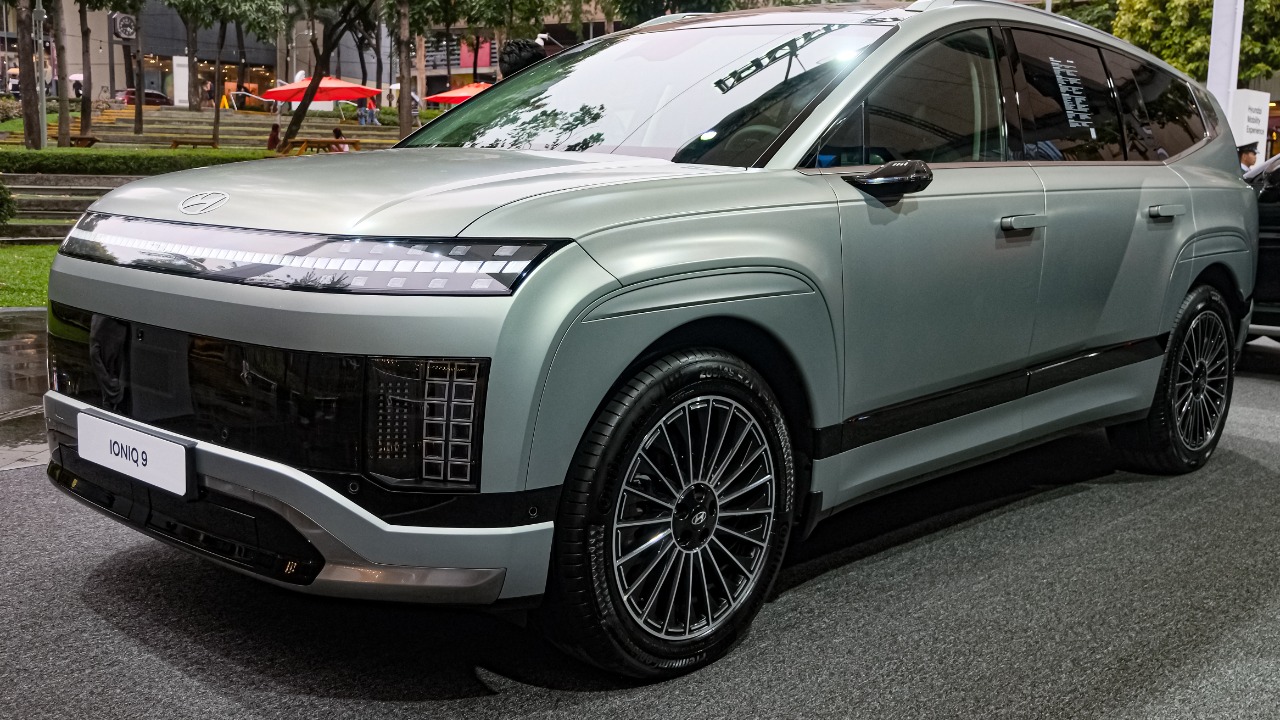

Hyundai is preparing to stretch its electric ambitions to a new scale, pairing its largest battery-powered model yet with an 800‑volt architecture aimed at faster charging and higher efficiency. Rather than simply supersizing an existing SUV, the company is using this flagship to test how far next‑generation battery tech and flexible platforms can push family and commercial EVs. As the market shifts toward bigger, longer‑range electric vehicles, Hyundai is betting that high‑voltage hardware and careful packaging will matter as much as raw size.
Hyundai’s biggest EV moment arrives
Hyundai is moving into a new phase of its electrification strategy, using its largest electric vehicle to signal how it wants to compete in the upper end of the market. The company has already framed this as a step change in scale and technology, positioning the new model as its biggest EV to date and tying it directly to a fresh wave of battery and charging hardware. That approach reflects a broader push by Hyundai Motor Group to expand its electric lineup across segments while keeping a clear technological throughline.
The debut is timed to coincide with a major European showcase, with The Brussels Motor Show set to host key launches from Hyundai Motor Group that highlight this 800‑volt battery strategy alongside conventional diesel and hybrid powertrains. By choosing such a high‑profile stage, Hyundai is signaling that its largest EV is not a niche experiment but a core part of its mainstream portfolio, intended to sit alongside its combustion and hybrid offerings rather than replace them overnight.
Why Hyundai’s largest EV is not just another giant SUV
On paper, a “biggest ever” electric model sounds like a straightforward play for SUV buyers, but Hyundai is taking a more nuanced route. The company already has a flagship electric SUV in the IONIQ family, so simply adding more bulk would risk redundancy and undermine efficiency. Instead, Hyundai is leaning on its most unconventional shapes and packaging ideas to carve out a distinct role for this new vehicle, one that can serve families and businesses without becoming an unwieldy, high‑drag box on wheels.
That strategy is visible in the way Hyundai has refreshed The Staria, a model that blends people‑mover practicality with a futuristic silhouette rather than traditional SUV cues. By prioritizing interior flexibility and aerodynamics in that refresh, Hyundai has shown how it can scale up cabin space without defaulting to a taller, heavier body. The same design philosophy is now informing its largest EV, which is expected to emphasize usable volume, low drag and multi‑role capability over sheer visual bulk.
IONIQ 9 sets the template for three‑row electric practicality
Within Hyundai’s electric portfolio, the IONIQ line has become the clearest expression of how the brand wants its EVs to look and feel, and the upcoming three‑row flagship is central to that plan. The company describes the 2026 IONIQ 9 as its first three‑row electric SUV, combining long‑range capability with family‑friendly packaging and a focus on aerodynamics. By framing it as “equal parts aerodynamics and family dynamics,” Hyundai is effectively promising that the vehicle will balance slippery design with the space and comfort that large‑SUV buyers expect.
On its own consumer site, Hyundai highlights the 2026 IONIQ 9 as “Our first‑ever three‑row electric SUV,” underscoring how important this model is to the brand’s EV identity. That positioning also hints at how the largest EV and the IONIQ 9 will coexist: the SUV will anchor the family‑oriented side of the lineup, while the even bigger electric model stretches into commercial or shuttle‑style territory, both benefiting from the same high‑voltage battery technology.
Seven seats, 300 miles and the scale of Hyundai Ioniq 9
As Hyundai scales up its EVs, the Hyundai Ioniq 9 is already showing what a large, long‑range electric family vehicle can look like in practice. The model is part of a growing group of electric three‑row crossover SUVs, and Hyundai has made a point of standardizing range expectations rather than reserving the best numbers for top trims. Every version of the Hyundai Ioniq 9 is quoted with “300 miles” of range, a figure that directly addresses concerns that bigger electric SUVs will be compromised on distance between charges.
That consistent “300 miles” target is detailed in reporting on the Hyundai Ioniq 9, which notes that all models share the same long‑range battery configuration rather than splitting the lineup into short‑ and long‑range variants. By locking in that figure across the board, Hyundai is effectively setting a floor for what it considers acceptable range in a large electric SUV, a benchmark that its even bigger EV will be expected to match or exceed through more advanced battery tech and the 800‑volt system.
Teasers, power figures and the commercial twist
Hyundai’s teaser campaign for its largest EV has focused less on lifestyle imagery and more on the hardware and silhouette, hinting at a vehicle that straddles the line between passenger carrier and light commercial workhorse. The official preview shows a boxier profile with a full‑width LED light bar, a look that aligns closely with Hyundai’s existing electric light commercial vehicles. That visual link suggests the new flagship may share underpinnings with a van‑based platform rather than a pure SUV chassis, which would explain its generous footprint and upright stance.
Reporting on the teaser connects it directly to a light commercial vehicle that uses a single electric motor rated at “215 hp (160 kW / 218 PS),” paired with either a “63” kWh‑class battery pack, figures that give a clear sense of the power and energy baseline Hyundai is working from. Those specific outputs and battery options are detailed in coverage of the Dec teaser, which frames the new model as an evolution of an existing electric van rather than a clean‑sheet design. By building on that hardware and then layering in 800‑volt battery tech, Hyundai can scale up payload and interior volume while keeping performance and charging times competitive with its SUV‑based EVs.
The Ioniq 9 as Hyundai’s largest electric SUV
Even as Hyundai prepares an even bigger electric model, the Ioniq 9 remains the brand’s largest electric SUV and a key reference point for what buyers can expect from a high‑end Hyundai EV. The Ioniq 9 is described as Hyundai’s largest electric car, an enormous seven‑seater SUV that shares much of its mechanical DNA with the company’s other dedicated EVs. That mechanical commonality allows Hyundai to spread development costs for its advanced battery and motor systems while tailoring the body and interior to different use cases.
Reviews of The Ioniq emphasize that it is Hyundai’s largest electric car and highlight how the SUV manages to combine its seven‑seat layout with styling that is still relatively easy on the eye. That balance between size, design and technology is central to Hyundai’s broader EV strategy: the Ioniq 9 anchors the SUV side of the range, while the upcoming largest EV stretches the same battery and motor toolkit into a more van‑like format that can serve shuttle operators, large families and commercial fleets.
“Largest EV Yet” and the seven‑seater message
Hyundai has not been shy about the way it talks about scale, repeatedly referring to its new flagship as its “Largest EV Yet” and tying that claim to the seven‑seat layout that has become a de facto standard for big family vehicles. The all‑electric Ioniq 9, for example, is framed as a seven‑seater that wears a Hyundai badge but is designed to cover long distances without “a single drop of fuel.” That language is as much about reassuring traditional SUV buyers as it is about touting environmental credentials, signaling that they will not have to sacrifice space or usability to go electric.
Coverage under the banner “Hyundai’s Largest EV Yet: Meet the Seven‑Seater Ioniq 9” spells out how the company uses the phrase “Meet the Seven” and “Seater Ioniq” to emphasize both the seating capacity and the Ioniq branding in one breath. In that reporting, Hyundai is described as pushing its biggest and most advanced EV yet, with the Ioniq nameplate serving as the bridge between its existing electric lineup and the new, even larger model that will share the same high‑tech battery backbone.
Pricing, positioning and the premium EV push
As Hyundai’s electric vehicles grow in size and sophistication, their pricing and market positioning are shifting upward as well. The 2026 Hyundai Ioniq 9 is presented as a premium electric SUV, with multiple trims that climb into territory once reserved for luxury brands. That move reflects both the cost of large battery packs and the reality that early adopters of big EVs are often willing to pay more for cutting‑edge technology, long range and high‑end interiors.
Detailed breakdowns of the Hyundai Ioniq lineup describe how Hyundai structures its trims, with the Electric SUV positioned competitively against rivals while still commanding a clear premium over smaller EVs in the brand’s range. Those reports also highlight the way Hyundai uses “Review” and “Photos” driven coverage to showcase the vehicle’s technology and cabin quality, reinforcing the idea that its largest EVs are meant to be aspirational products that can pull the rest of the lineup upmarket.
Next‑gen battery packs and the 800‑volt leap
The technical centerpiece of Hyundai’s biggest EV push is its adoption of an 800‑volt battery system, a step that allows for faster DC charging, thinner cabling and improved efficiency compared with more common 400‑volt setups. In practical terms, that means shorter stops on long trips and better performance under heavy loads, both of which are critical for large SUVs and van‑based vehicles that carry more passengers and cargo. By standardizing this high‑voltage architecture across its upper‑tier EVs, Hyundai can also simplify its engineering and supplier relationships while delivering a clear, easy‑to‑market benefit to customers.
Battery capacity is another area where Hyundai is leaning into next‑generation hardware. Reporting on the Ioniq 9 notes that “All cars come equipped with a 110.3kWh battery pack,” with the figure “110” standing out as a marker of just how much energy Hyundai is packing into its largest electric SUV. That specification is detailed in coverage of how Hyundai is giving customers plenty of choice in powertrains while still using that large battery to “give the longest EV range possible.” When combined with the 800‑volt system highlighted at The Brussels Motor Show, that capacity underpins Hyundai’s claim that its biggest EVs can deliver both long‑distance comfort and rapid charging, setting a high bar for rivals in the three‑row and light commercial segments.
More from MorningOverview