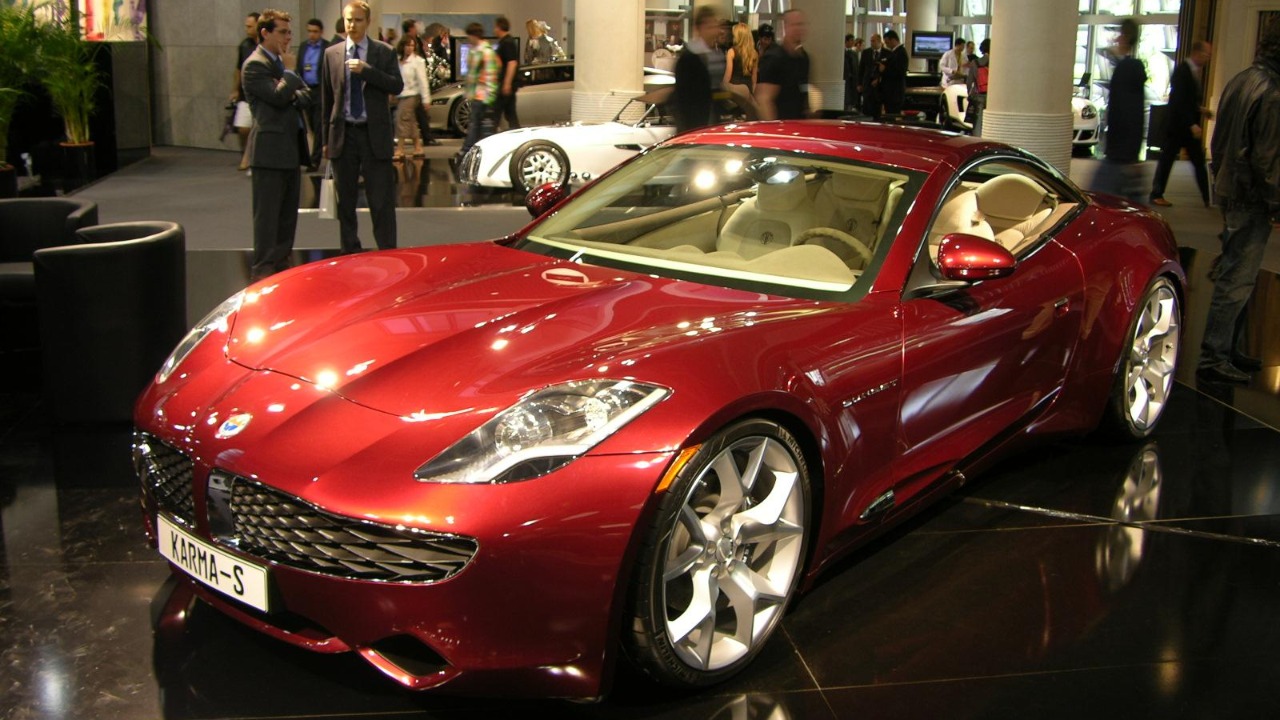

The electric-vehicle shakeout is accelerating, and a growing list of startups are either already bankrupt or effectively discontinued, leaving investors, workers, and owners exposed. Looking at which companies are collapsing now offers a blunt preview of which EV makers could be gone next, and two names, Fisker and Lordstown, stand out as cautionary examples of how quickly promising brands can unravel.
1) Fisker
Fisker is one of the clearest examples of an EV maker that moved from hype to collapse so fast that many customers are still figuring out what happens to their cars. In reporting on struggling electric brands, Fisker is explicitly listed among EV automakers that are bankrupt or discontinued, a blunt signal that the company’s business model has already failed in practice even if some vehicles remain on the road. The financials behind that failure are stark: Fisker generated about $273 million in revenue in its last full year but simultaneously racked up $940 million in losses and owed roughly $850 million to bondholders, figures that show how far out of balance its operations had become. When a manufacturer is losing more than three times what it brings in and is carrying $850 million in debt, the odds of a sustainable turnaround shrink dramatically, and bankruptcy becomes less a surprise than an inevitability.
Those numbers matter because they reveal how fragile the underlying business was, even as the company tried to present itself as a serious rival to established automakers. I see the $273 million in revenue as evidence that Fisker did manage to find real customers for its Ocean SUV and related services, but the $940 million in losses show that each sale effectively deepened the hole rather than closing it. The $850 million owed to bondholders meant that even if Fisker could cut costs, it still faced a towering wall of obligations that would siphon off future cash flow before it could be reinvested in product support, warranty work, or new models. For owners, that imbalance translates into practical worries about parts availability, software updates, and resale value, because a bankrupt or discontinued automaker has limited ability and incentive to maintain a robust service network. For employees and suppliers, the collapse underscores how dependent they were on a single, highly leveraged customer whose survival hinged on constant access to new capital. In the broader EV market, Fisker’s implosion signals that design flair and early demand are not enough; without a path to profitability and a manageable debt load, even a brand with a recognizable name can quickly become one of the EV makers that could be gone next.
2) Lordstown
Lordstown, another high-profile EV startup, has followed a similarly grim trajectory, moving from ambitious promises about electric pickups to being grouped with companies that are effectively finished. In coverage of the sector’s weakest players, Lordstown appears alongside other EV automakers facing bankruptcy or discontinuation, a classification that reflects how far it has fallen from its early positioning as a savior for a shuttered Ohio assembly plant. While the specific financial figures cited for Fisker are not repeated for Lordstown in the same reporting, the inclusion of Lordstown in a list of bankrupt or discontinued EV companies indicates that its capital structure and operating performance also failed to support long-term production. The company’s strategy relied heavily on converting an existing factory and pitching an electric work truck to fleets, but without sustained revenue and with mounting costs, that plan could not withstand the pressure of delays, technical challenges, and investor skepticism. Being labeled as bankrupt or discontinued is not just a legal or accounting milestone; it is a market verdict that the business no longer has a viable path to compete in an increasingly crowded EV landscape.
From my perspective, Lordstown’s collapse highlights a different but related risk compared with Fisker, one rooted in overreliance on a single flagship product and a narrow customer base. Where Fisker tried to build a lifestyle brand around the Ocean and other potential models, Lordstown concentrated its hopes on an electric pickup aimed at commercial buyers, a segment that demands reliability, strong after-sales support, and clear evidence of long-term viability. Once Lordstown was grouped with other bankrupt or discontinued EV makers, fleet managers had little reason to commit to large orders, knowing that service, parts, and warranty coverage could be jeopardized by the company’s financial distress. That hesitation likely fed back into Lordstown’s revenue shortfalls, making it even harder to justify continued investment in tooling, engineering, and safety validation. For workers in the repurposed plant and for local communities that had pinned hopes on a new wave of EV manufacturing jobs, the company’s effective disappearance is a reminder that not every high-profile factory revival will endure. In the wider EV sector, Lordstown’s fate reinforces the idea that capital-intensive manufacturing, complex supply chains, and demanding commercial customers leave little room for error, and that any automaker sliding into the bankrupt or discontinued category is, in practical terms, one that could be gone next.
More from MorningOverview