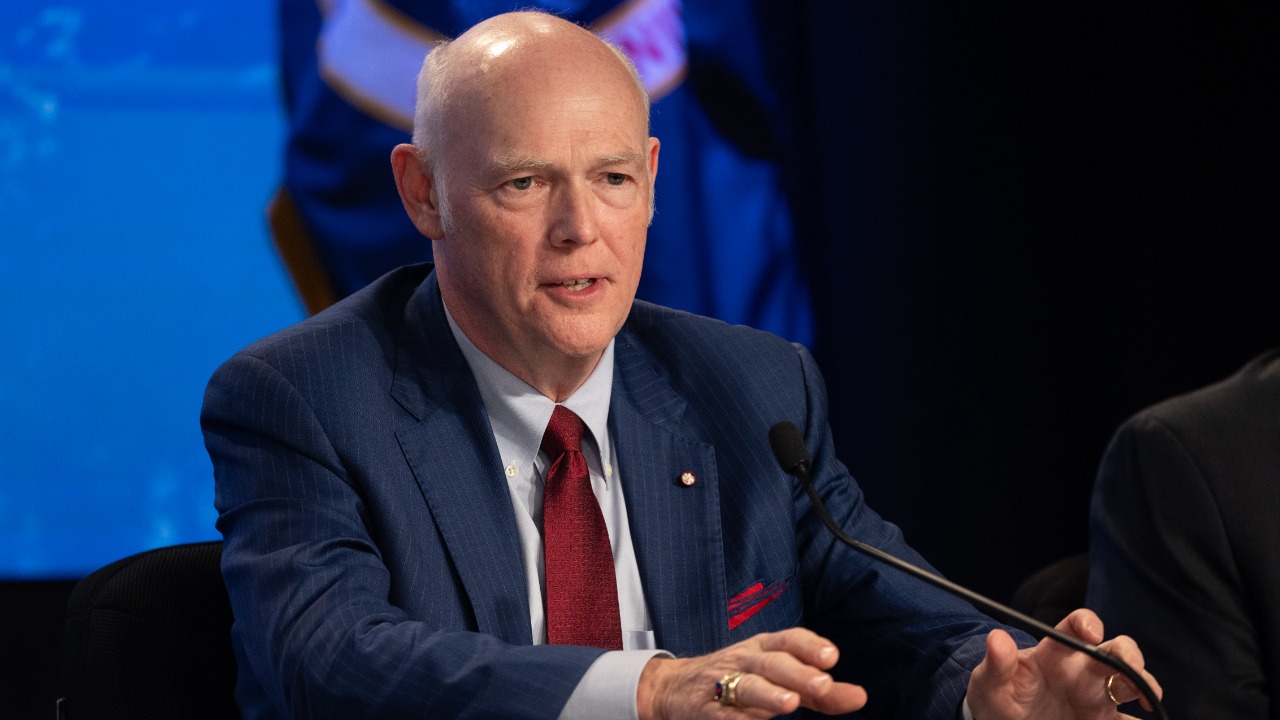

United Launch Alliance has been upended by the abrupt resignation of its longtime chief, with Tory Bruno stepping down after more than a decade at the helm of the rocket maker. The surprise exit leaves a critical gap at the top of one of the United States’ most strategically important launch providers just as competition in space access is intensifying and national security customers are demanding flawless performance.
Bruno’s departure, framed as the end of a 12 year run leading ULA, instantly shifts attention to the company’s succession plan, its relationship with government customers, and the future of its launch portfolio. I see the move as a pivotal moment that will test whether ULA can reinvent itself under new leadership while preserving the reliability that has defined its brand.
The shock of a 12 year tenure ending overnight
The first striking element of this story is how quickly a long running leadership era came to a close. After 12 Years of Leadership as CEO, Tory Bruno went from being the public face of ULA’s strategy to a departing executive in a single announcement, a jarring transition for a company that has long projected stability. The framing of his exit as a resignation, rather than a gradual handover, underscores how sudden the change felt both inside and outside the launch industry, especially for partners accustomed to his steady presence.
Public reaction captured that sense of whiplash, with social media feeds lighting up around the phrase “ULA CEO Tory Bruno Resigns After 12 Years of Leadership” and users noting that Tory Bruno stepped down from ULA after guiding the company through a period of intense competitive and political pressure. In those conversations, many highlighted how the Dec decision closed a chapter in which Bruno became known not only for technical stewardship but also for Bruno’s communication and leadership, a reminder that his influence extended well beyond internal boardrooms into the broader space community that followed every launch and policy debate. I read that mood clearly in trending discussions that centered on Tory Bruno stepped down and what his absence might mean.
A terse announcement and a wave of speculation
What has fueled the sense of drama is not only the fact of Bruno’s resignation but the way it was communicated. The formal statements were notably concise, offering little narrative about why the CEO was leaving or how the decision had been reached, which is unusual for a figure who had become synonymous with ULA’s public messaging. That brevity left room for interpretation, and I see it as a key reason the story has quickly shifted from a simple leadership change to a broader debate about the company’s direction.
In the online Comments Section where space enthusiasts dissect every development, users like Adeldor zeroed in on how “terse” the announcement felt, while others, such as todd0x1, responded with a succinct “Hmm” and a resigned “Yeah” that captured a mix of surprise and unease. Those reactions, clustered around the news that United Launch Alliance CEO Tory Bruno resigns, show how even small tonal choices in corporate communications can shape public perception of a leadership transition. The thread on United Launch Alliance CEO Tory Bruno resigns quickly became a barometer of that skepticism, with readers parsing every word for clues about what might have prompted the move.
Inside the surprise: what we know and what remains unverified
From a reporting standpoint, the defining feature of this episode is how little concrete explanation has been offered for why Bruno is out as CEO at this particular moment. Coverage has consistently described the development as a surprise announcement, emphasizing that the decision was not telegraphed through the usual signals like extended succession planning briefings or gradual role changes. I read that as a sign that either the internal deliberations were tightly held or that circumstances shifted quickly enough to force a rapid call, though the precise trigger remains Unverified based on available sources.
One detailed account noted that Stephen Clark described how Tory Bruno, the former president and CEO of United Launch Alliance, was suddenly no longer in the top job, even as the company faces pressure to ramp up the new rocket’s launch cadence. That framing, which highlighted the abruptness of the leadership change, also referenced the specific figures 51 and 40 in the context of reader engagement, underscoring how intensely the space community is tracking every twist in this story. The sense that Bruno is out as CEO in Dec, at a time when ULA’s operational tempo is under scrutiny, is central to the narrative captured in Stephen Clark’s account, even if the deeper boardroom dynamics remain opaque.
United Launch Alliance at a crossroads
Bruno’s exit lands at a moment when United Launch Alliance is navigating a complex mix of technical, commercial, and political challenges. The company has long been a pillar of U.S. access to space, particularly for national security missions, but it now operates in a landscape where rivals are pushing reusable rockets, aggressive pricing, and rapid launch cycles. Losing a chief who had become closely identified with ULA’s response to that competition raises immediate questions about whether the board wants to accelerate change or recalibrate its strategy.
Reports on the leadership change consistently describe United Launch Alliance as the central stage on which this drama is unfolding, with one account bluntly stating that United Launch Alliance chief Tory Bruno resigns and that the company confirmed Bruno was leaving the company in Dec. That simple sentence, that the chief of United Launch Alliance is stepping away, carries outsized weight because it signals a potential inflection point for how ULA positions itself in the next phase of the launch market. I see the reference to United Launch Alliance chief Tory Bruno resigns as more than a personnel note; it is a marker that the company is willing to rethink who leads it into an era defined by both government contracts and commercial constellations.
From “head of ULA” to a search for the next leader
Another key dimension is how the company is framing the transition from Bruno’s tenure to whatever comes next. Descriptions of the move emphasize that Tory Bruno resigns as head of United Launch Alliance, language that underscores his role not just as a corporate officer but as the person who set the tone for ULA’s culture and external posture. When a figure described as the head of ULA steps aside, it is not just a change in signature on contracts; it is a reset of the leadership style that employees, customers, and policymakers have come to expect.
At the same time, the reporting makes clear that attention is already shifting to the next leader of ULA, with the company and its stakeholders focused on how quickly a permanent successor can be identified and what profile that person will bring. I read the phrase Tory Bruno resigns as head of United Launch Alliance as the opening line in a longer story about succession, one that will determine whether ULA doubles down on continuity or opts for a more disruptive choice. That tension is captured in coverage that notes the move as a Featured development and highlights how the organization is already looking ahead to the next leader of ULA, a theme reflected in the analysis of Tory Bruno resigns as head and what kind of executive might follow.
John Elbon steps in as interim chief
For now, the most concrete development is the appointment of an interim leader to steady the ship. In the same breath that ULA confirmed Bruno’s resignation, it also announced that John Elbon would serve as interim chief, a move that signals the board’s desire to maintain operational continuity while it searches for a permanent CEO. I see the choice of an interim figure with deep industry experience as an attempt to reassure both employees and government customers that the company’s day to day work will not be disrupted by the leadership shakeup.
One detailed local report spelled this out clearly, noting that ULA CEO Tory Bruno resigns and that John Elbon was named interim chief, while also describing Elbon’s role as United Launch Alliance President and Chief Executive in the context of the transition. That framing suggests that Elbon is not a placeholder plucked from obscurity but a known quantity within the organization and its ecosystem, someone who can speak credibly to both technical teams and external partners. The emphasis on his title as United Launch Alliance President and Chief Executive in Dec reinforces that he is being positioned as the public face of the company during this interregnum, a point underscored in coverage of how John Elbon named interim chief is meant to stabilize ULA’s leadership picture.
Owners’ role and the message behind the move
Behind the scenes, the owners of United Launch Alliance are central to understanding what this leadership change might signal. ULA is not an independent startup but a rocket company backed by powerful corporate parents, and the decision to part ways with a CEO after such a long tenure inevitably reflects their assessment of where the business stands. When those owners announce that CEO Tory Bruno has left the company to pursue other opportunities, they are not only closing a chapter but also sending a message about their expectations for the next phase of growth and performance.
One account highlighted that the owners of the United Launch Alliance rocket company announced that CEO Tory Bruno has left the company, and that John Elbon takes over as interim CEO, while also noting that many in the space community will be cheering ULA on as it navigates this transition. I interpret that as a subtle reminder that, despite the internal upheaval, there is still a broad base of stakeholders who want ULA to succeed, from national security customers to industry observers who value competition in launch services. The way the owners framed the change, captured in the description that Tory Bruno leaves ULA and John Elbon takes over as interim CEO, suggests a balancing act between acknowledging the end of an era and projecting confidence in the company’s future.
How the space community is reading the resignation
Beyond corporate statements, the reaction from the broader space community offers clues about how this leadership change is being interpreted. Enthusiasts, analysts, and industry insiders have followed Bruno’s public persona for years, from his technical explanations of launch systems to his engagement with fans and critics alike. The abruptness of his departure has prompted a wave of commentary that blends respect for his contributions with pointed questions about what prompted the timing and what it means for ULA’s competitive posture.
In online discussions, I see a recurring theme: a sense that the announcement was unusually brief for a figure who had become such a visible ambassador for the company. Comments that describe the statement as “terse” and respond with a simple “Hmm” or “Yeah” may seem casual, but they capture a deeper unease about whether there is more to the story than has been publicly disclosed. That mood is especially evident in threads centered on the idea that United Launch Alliance CEO Tory Bruno resigns, where users dissect every phrase and compare it to past corporate transitions. The conversation on r/space has effectively become a running commentary on how a company that prizes reliability handles a moment of uncertainty at the very top.
More from MorningOverview