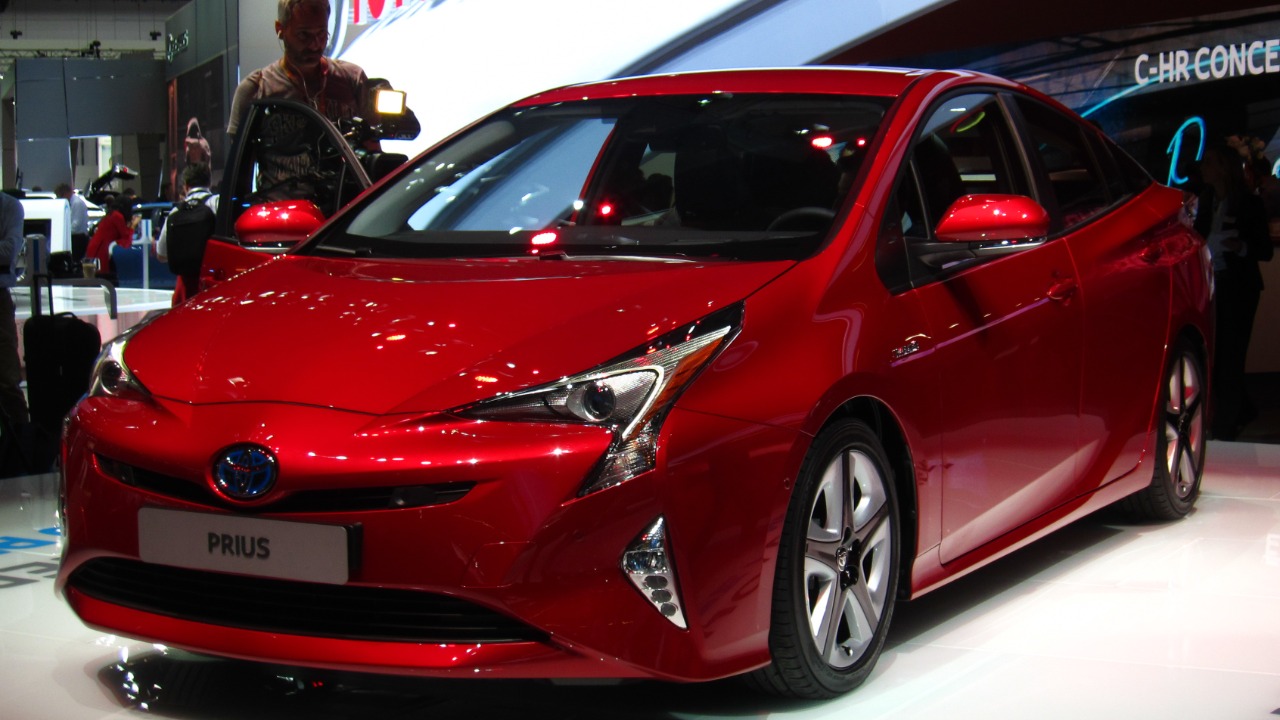

Gas prices and stricter emissions rules are pushing more drivers to look at hybrids that can stretch a gallon well past 50 miles without giving up everyday usability. The latest crop of high-mileage models spans compact sedans, hatchbacks, and SUVs, and the best of them pair standout efficiency with livable pricing and real-world performance. I am focusing on the hybrids that clear that 50‑mpg bar and stand out for value, practicality, or both.
How I define a standout 50‑mpg hybrid
To make this list, a hybrid needs to deliver around 50 miles per gallon in combined driving or better, based on manufacturer estimates and independent rankings, and still function as a primary car for most households. That means four real seats, usable cargo space, and a price that does not drift into luxury territory. I am also weighing how each model balances efficiency with acceleration, comfort, and technology, because a miserly fuel gauge is not enough if the rest of the car feels like a penalty box.
Several sources now track the most efficient vehicles on sale, and they consistently highlight compact hybrids and dedicated eco models at the top. Rankings of Cars with Best Gas Mileage put the latest Toyota Prius and similar hybrids at or near the front, with combined fuel economy figures that reach into the high 50s. Advice pieces on fuel-efficient hybrid cars also underline that some mainstream compact sedans now hit about 50 m combined, while still earning an Overall Score of 8.3 out of 10 in at least one case, which shows that efficiency and quality can coexist.
Toyota Prius: still the high‑mpg benchmark
The Toyota Prius remains the default answer for anyone chasing maximum miles per gallon, and the latest generation backs up that reputation with hard numbers. One breakdown of the most efficient models lists the Toyota Prius at a Combined Fuel Economy of up to 57 m, and calls out its Positives in fuel use. Another comparison of Top Hybrid Cars in 2025 pegs the Toyota Prius at 57 M, with a price of $25,000 and a 0 to 60 m time of 7.7 seconds, which shows that this hybrid no longer trades all performance for efficiency.
Independent fuel‑sipping roundups go even further, describing the Toyota Prius as “The Hybrid Champion” and listing its MPG as an Estimated 58 city and 53 highway, numbers that comfortably clear the 50‑mpg threshold in everyday use. That same overview explains Why It is a Top Pick, pointing to its blend of efficiency and practicality. Detailed spec sheets under headings like Toyota Prius Specs, Features, Configurations and Toyota Prius Models confirm that the current Toyota Prius lineup offers multiple trims and configurations, giving buyers flexibility while keeping the core efficiency story intact through every version of the Toyota Prius.
Hyundai Elantra Hybrid: 50+ mpg without a Prius badge
For drivers who want Prius‑level economy in a more conventional sedan shape, the Hyundai Elantra Hybrid has quietly become one of the most compelling options. Pricing guides that rank the best hybrids for the money list the 2025 Hyundai Elantra Hybrid in the Compact Car segment with a Price (including destination) of $26,645, which undercuts many rivals while still delivering strong Gas mileage. That combination of a mainstream Compact Car footprint and a $26,645 entry point makes it one of the most accessible high‑efficiency sedans on sale, especially for commuters who value a traditional trunk over a hatchback.
Technical breakdowns of the Hyundai Elantra Hybrid show why it belongs in any conversation about 50‑plus‑mpg cars. Official specs list its Fuel Economy at 50 to 54 combined mpg, with Horsepower of 139 hp and a Curb Weight between 2,965 and 3,069 pounds, figures that help explain its balance of thrift and usable power. One detailed review notes that this Eng setup gives the Elantra Hybrid an exceptional range of around 620 miles on a tank, which is the kind of number that changes how often a driver has to think about refueling. A separate model overview from a dealer perspective describes how Hyundai and Hyundai Motor have updated the Elantra Hybrid with bolder styling and upgraded tech, saying the Elantra Hybrid brings fresh style and enhanced features into the lineup, which helps it stand out from older‑feeling economy cars.
Prius pricing and trims: where the 50‑mpg sweet spot sits
High efficiency only matters if buyers can afford to get into the car, and the latest Prius lineup is structured to keep its best mileage within reach. Detailed pricing for the 2025 Toyota Prius shows that the LE (GS) trim starts at $28,350, with EPA figures of 57 City and 56 Hwy, and a warranty that stretches to 60 m in one key coverage area. That LE (GS) configuration is the entry point to the most efficient version of the Prius, and the 57 City and 56 Hwy ratings mean buyers do not have to climb the trim ladder to access the best fuel economy.
Other pricing references help frame where the Prius sits in the broader hybrid market. One dealer blog lists a Starting Price and notes that MSRP starts at around $28,250 for a comparable hybrid sedan, using the phrase Starting Price and MSRP to underline how close that figure is to the Prius LE (GS) number of $28,350. Another configuration guide for a previous Toyota hybrid sedan shows a Hybrid LE starting at $28,250 M, with a line that repeats Hybrid LE, Starting, and MSRP at $28,250, reinforcing that the Prius is priced in line with other mainstream hybrids rather than as a premium outlier. When I compare those figures, the Prius LE (GS) at $28,350 looks like a logical step for buyers already considering a Hybrid LE sedan in the $28,250 range, especially given its 57 and 56 mpg ratings.
Hybrid sedans beyond Prius and Elantra: Civic and Camry
The Prius and Hyundai Elantra Hybrid are not the only sedans capable of flirting with or surpassing 50 mpg, and shoppers who prefer a more traditional look have credible alternatives. A video rundown of top hybrids highlights the MPG highway performance of the 2025 Honda Civic Hybrid Powertrain, describing its 2L 4‑cylinder layout with a two‑motor hybrid system that is matched to an e‑CVT. That same clip later references the MPG highway of the 2025 Honda CR‑V Hybrid Powertrain, again tied to an e‑CVT, which shows how Honda is spreading this efficient architecture across both cars and SUVs. While exact combined figures are not spelled out in that summary, the focus on MPG highway and the shared Honda Civic Hybrid Powertrain technology suggests that Honda is targeting the same high‑efficiency space as Toyota and Hyundai.
On the midsize side, the Toyota Camry hybrid continues to appeal to buyers who want more rear‑seat space without giving up fuel savings. A ranking of Best Hybrids Under $30K lists the 2025 Toyota Camry among its top picks, using labels like Best Hybrids Under, Compare Model, Positives, Standard, and All to emphasize that the Toyota Camry offers a Standard fuel‑efficient hybrid drivetrain and available All‑wheel drive in some configurations. Historical configuration data for the 2020 Toyota Camry shows a Hybrid LE starting at $28,250 MSRP, with the line Hybrid LE: Starting at $28,250 M and a repeated $28,250 figure, which helps illustrate how Toyota has long kept its midsize hybrid sedan within reach of mainstream budgets. Taken together, the Civic Hybrid and Camry hybrid show that drivers can get close to Prius‑level economy in more conventional packages.
Hybrid SUVs that still flirt with 40–50 mpg
Not every buyer can live with a compact sedan or hatchback, and hybrid SUVs now offer a compromise between efficiency and utility. Rankings of the Best Hybrid SUVs list models such as the 2026 Hyundai Tucson Hybrid, the 2026 Kia Sportage Hybrid, the 2026 Honda CR, and the 2025 Hyun entries among the top performers, and explicitly discuss which one is the most fuel efficient model among hybrid SUVs. While these crossovers generally fall short of the 50‑plus‑mpg figures of the smallest cars, they still deliver a meaningful cut in fuel use compared with non‑hybrid SUVs, often landing in the high 30s or low 40s in combined driving.
For families, that tradeoff can be worth it. A compact hybrid SUV like the Hyundai Tucson Hybrid or Kia Sportage Hybrid offers a higher seating position, more cargo room, and available all‑wheel drive, while still being counted among the Best Hybrid options for efficiency. The inclusion of the Honda CR in that same list, alongside the 2025 Hyun entries, shows how multiple brands are converging on similar formulas: a small turbo or naturally aspirated engine paired with an electric motor and battery pack, tuned to maximize mpg without sacrificing the everyday usability that SUV buyers expect. I see these models as the bridge for drivers who want to cut fuel bills but are not ready to downsize into a compact car.
Corolla Hybrid and other compact overachievers
Compact hybrids are where the 50‑mpg magic really happens, and the Toyota Corolla Hybrid is a prime example. A detailed efficiency guide notes that the Corolla Hybrid delivers 50 m combined and earns an Overall Score of 8.3 out of 10, and goes on to say that Outstanding gas mileage is just the tip of the iceberg. That combination of a 50 m rating and an 8.3 Overall Score suggests that the Corolla Hybrid is not just efficient, it is also competitive on comfort, features, and safety, which matters for buyers who want a well‑rounded daily driver.
The Corolla Hybrid also benefits from Toyota’s broader hybrid ecosystem. It sits alongside the Toyota Prius in efficiency rankings and shares many of the same engineering principles, but wraps them in a more conventional sedan body that some buyers prefer. In lists of Top Hybrid Cars for fuel savings, the Corolla Hybrid often appears just behind the Toyota Prius and Hyundai Elantra Hybrid, which are singled out for their MPG and pricing, including the Hyundai Elantra Hybrid figure of 54 MPG and the Toyota Prius at 57 M with a $25,000 price and 0 to 60 m time of 7.7 seconds. That context helps explain why I see the Corolla Hybrid as a sleeper pick: it delivers near‑Prius efficiency with a more traditional look and feel.
Value, performance, and how to choose your 50‑mpg hybrid
Once you know which models can realistically clear 50 mpg, the next step is deciding which one fits your life and budget. I start by looking at total ownership cost rather than just the sticker price. The 2025 Hyundai Elantra Hybrid at $26,645, the Prius LE (GS) at $28,350 with 57 City and 56 Hwy, and the historical Hybrid LE Camry at $28,250 MSRP all sit in a similar price band, but their fuel economy and performance differ. The Prius, with its 57 M combined rating and $25,000 reference price in one Top Hybrid Cars list, will save more fuel over time than a slightly less efficient sedan, while the Hyundai Elantra Hybrid’s 50 to 54 combined mpg and 139 hp output may appeal to drivers who want a bit more conventional driving feel at a slightly lower entry cost.
Performance and practicality also matter. The Prius’s 0 to 60 m time of 7.7 seconds shows that it is no longer the slow lane stereotype, while the Hyundai Elantra Hybrid’s 2,965 to 3,069 pounds Curb Weight and 139 hp Horsepower give it a light, efficient character that still feels adequate on the highway. For buyers who need more space, the Best Hybrid SUVs like the Hyundai Tucson Hybrid, Kia Sportage Hybrid, Honda CR, and 2025 Hyun entries provide a middle ground, sacrificing some mpg for cargo and versatility. Detailed Toyota Prius Specs, Features, Configurations and Toyota Prius Models listings, along with dealer notes about Starting Price and MSRP starting at around $28,250 for comparable hybrids, underline that there is no single right answer. The standout 50‑mpg hybrid for you will be the one that threads your personal needle between efficiency, price, and the way you actually drive.
Supporting sources: 2020 Toyota Camry Configurations.
More from MorningOverview