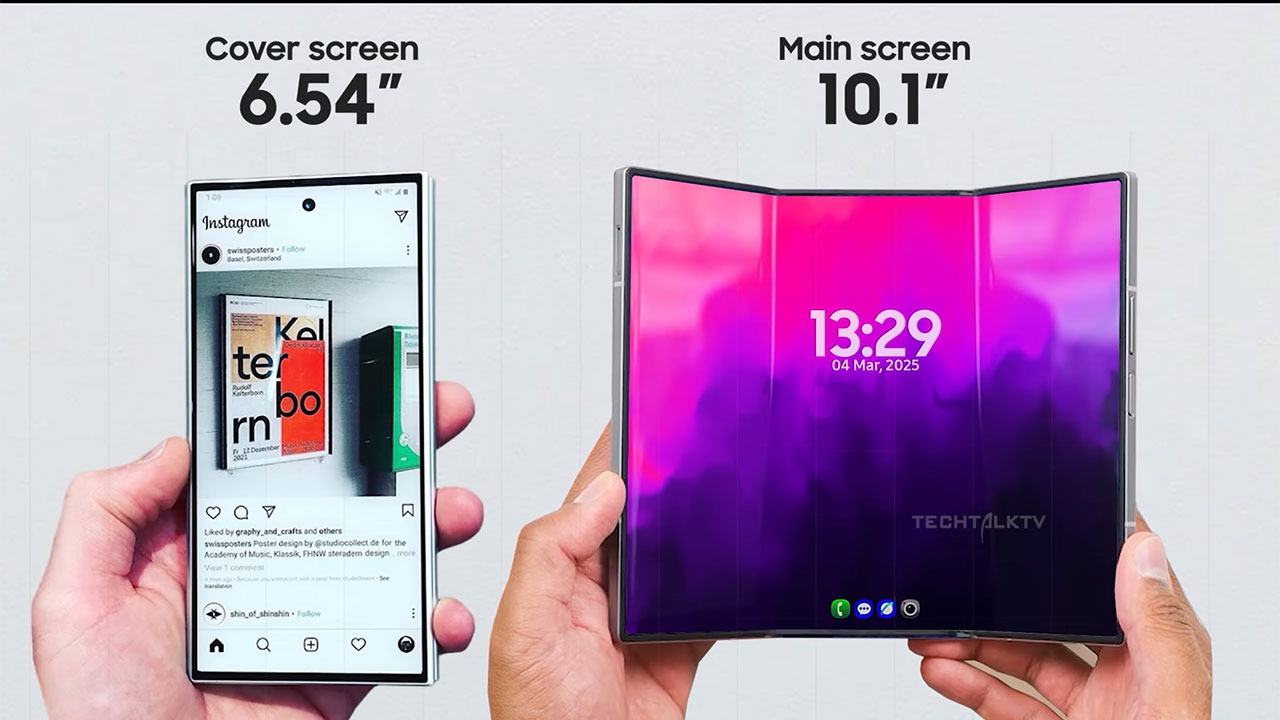

The Galaxy Z TriFold arrives as the most radical rethink of the smartphone since the first modern foldables, promising to merge phone, tablet, and even laptop-style use into a single device. Instead of simply bending once, it introduces a triple-panel design that aims to solve the long‑standing trade‑off between portability and screen size. If it delivers on that ambition, it could reset expectations for what a “phone” is supposed to be and force the rest of the industry to respond.
From concept to catalyst: why a tri-fold matters now
Foldables have spent the past few years proving they are more than a novelty, but the Galaxy Z TriFold is the first mainstream attempt to turn one device into three distinct modes of computing. The Galaxy Z TriFold is described as a product for people who want a large screen without giving up portability, and when it is fully opened it turns into a tablet‑class canvas while still collapsing into a pocketable bar for everyday use, according to The Galaxy. That pitch lands at a moment when traditional slabs are hitting diminishing returns, with incremental camera and processor upgrades that are harder to market as genuine breakthroughs.
Samsung is leaning into that timing. Company leaders have framed the Galaxy Z TriFold as part of a broader push to make foldables central to its roadmap in 2026, a strategy some analysts link to what they call The Apple effect and the desire to get ahead of Cupertino on new form factors. In that context, a tri‑fold is not just another model, it is a statement that the next wave of competition will be about shape, flexibility, and software experiences rather than just raw specs.
Design and engineering: three panels, one device
The most obvious way the Galaxy Z TriFold could reshape the category is through its physical design, which uses three connected displays that fold inward to protect the main screen. Reporting on Samsung Galaxy notes that the Design uses an inward‑folding mechanism, which means there is still a separate outer screen for quick tasks while the larger interior panels stay shielded from scratches and impacts. When fully opened, the three segments can create a display that approaches 10 inches, effectively turning the phone into a compact tablet without requiring users to carry a second device.
Making that work required a rethinking of the hinge and chassis. Samsung has said that Every part of the device was crafted with deep attention to structural innovation and product assurance, with a new multi‑axis hinge and a reinforced frame that adds rigidity without increasing bulk, according to its own description of how Every component works together. That kind of engineering is not just about durability, it is also about making the transitions between modes feel natural so users are encouraged to keep switching between phone, tablet, and mini‑laptop setups throughout the day.
Portability versus screen size: solving the old compromise
For years, buyers have had to choose between a compact phone that fits any pocket and a large device that is better for reading, gaming, or editing documents. The Galaxy Z TriFold is explicitly pitched as a way out of that compromise, with Samsung describing it as a Pocket Sized Cinematic Viewing Experience that still folds down to a familiar smartphone footprint when you are on the move, a claim it makes when highlighting the Pocket friendly nature of the hardware. In practice, that means you can reply to messages or check maps on the outer display, then open up the full tri‑fold layout for a movie, a spreadsheet, or a drawing app without ever leaving the same device.
That flexibility is already changing how early reviewers talk about use cases. One hands‑on video frames the Galaxy Z TriFold as “three devices in one,” noting that while it might not fully replace a dedicated tablet for everyone, it comes closer than any previous foldable and packs one of the biggest batteries Samsung has ever put in a foldable, according to a breakdown of how Nov reviewers see the trade‑offs. Another unboxing calls it a “piece of engineer marvel” and argues that three categories of products might have been merged into a single object, a point made while The Samsung Galaxy Z TriFold is here and being shown in action in The Samsung Galaxy coverage.
A new kind of mobile workspace
The tri‑fold layout is not just about watching bigger videos, it is also about turning the phone into a serious productivity tool. Samsung Electronics has highlighted how, when the device is fully opened, the three panels can act as a mobile workspace with multiple apps running side by side, effectively giving users a laptop‑style environment that still folds into a pocket, a vision it set out when On December it unveiled the concept. That is where software becomes as important as hardware, because the interface needs to understand which panel is active, how windows should snap, and when to shift into a more desktop‑like layout.
One UI 8 is central to that ambition. Analysis of how the platform is evolving argues that Conclusion The upcoming Galaxy Tri Fold could mark the next big shift in the smartphone industry by blending phone, tablet, and PC experiences, with the software described as the “soul” that lets the tri‑fold form factor feel coherent rather than gimmicky, a point made in a deep dive into how Conclusion The interface is being tuned. Naturally, much of the discussion around the Galaxy Z TriFold has focused on its shiny new hardware, but some observers argue that its best feature will actually be how it runs DeX and other multitasking tools, calling that an “absolute revolution for mobile productivity” in commentary that stresses how Naturally the software layer could be the real differentiator.
Entertainment machine: cinema in your pocket
Entertainment is the other obvious frontier where a tri‑fold can change expectations. Samsung has described the Galaxy Z TriFold as a device that unlocks a Cinematic Viewing Experience in a compact form, with the larger unfolded display and improved speakers designed to create a truly immersive experience for streaming and gaming, a promise it makes when positioning the Cinematic Viewing Experience. That matters for services like Netflix, Disney Plus, and YouTube, where a bigger canvas can make HDR content and multi‑pane interfaces feel closer to a small TV than a phone.
Commentary from mobile computing specialists has already framed the Galaxy Z TriFold as potentially the perfect mobile movie machine, pointing to the combination of portability and convenience that made them fall in love with folding phones in the first place and arguing that this new form factor could be the best foldable yet for long‑form video, a case laid out in analysis of why Dec reviewers are excited. When one screen is not enough, and two still fall short, advocates argue that three panels finally give streaming apps and cloud gaming services room to breathe, a sentiment captured in a LinkedIn post that calls the newly launched and first of its kind Galaxy Z TriFold the ultimate answer to that age‑old dilemma, as When the device is shown in use.
Can it really replace your laptop or tablet?
The biggest strategic question around the Galaxy Z TriFold is whether it can stand in for a laptop or tablet for most people. Some analysts argue that it should be a net positive for Samsung overall, even if it overlaps with other product lines, because buyers who might have purchased both a phone and a tablet could instead opt for a single tri‑fold device, with one report suggesting that traditional tablets might end up accounting for only a third of the TriFold’s impact on the broader portfolio, a view laid out in an assessment of how the Galaxy strategy fits together. Another detailed look at value argues that It ( The Galaxy Z TriFold ) appeals most to users who want a single device that shifts between phone and tablet modes, while warning that for some in that group the cost may outweigh the benefits, a trade‑off explored in a piece asking whether The Galaxy is worth it.
On the productivity side, the laptop replacement question Can the Galaxy Z TriFold actually replace a laptop is framed as depending entirely on what you do, with some analysts concluding that for email, document editing, and a lot of creative work, the answer is increasingly yes, especially when paired with a keyboard and DeX, a position spelled out in a feature that asks Can the Galaxy really take over. At the same time, durability and ingress protection remain concerns, with reports noting that one of the biggest questions around the Design is how well the complex hinge system will handle water and dust protection over years of use, an issue raised in coverage of how The Galaxy might fare in real‑world conditions.
How Samsung is positioning the TriFold in a crowded market
Samsung is not launching the Galaxy Z TriFold into a vacuum. Users have already begun comparing Samsung to American and Chinese competitors, debating whether the company has done enough to justify the premium price and whether the tri‑fold design offers a clear advantage over dual‑fold rivals, a reaction captured in coverage of how Users are responding. Samsung has emphasized that unfolding protects the inner display and that the device was engineered for durability, trying to reassure buyers who remember the teething problems of early foldables and who may be wary of adding a third panel and extra hinge into the mix.
Marketing materials present the Galaxy Z TriFold as a masterpiece of craftsmanship and intelligent design that shifts from phone to tablet and beyond, with social posts that say Introducing the #GalaxyZTriFold and show it moving fluidly between modes, a message amplified in an Instagram reel that opens with Introducing the tagline. At the same time, Samsung Electronics Co., Ltd. has framed the device as part of a broader mission to drive new forms of productivity, creativity, and connection, positioning it as a flagship example of how the company wants to lead the next era of mobile innovation, a stance spelled out in its statement that Samsung is shaping what comes next.
The cancellation twist and what it really means
Complicating the narrative is at least one report that the much‑anticipated Galaxy Z TriFold foldable smartphone project, announced earlier this year, has been officially cancelled and is no longer in development, with that account saying the device had been expected to shake up the phone market with its unique tri‑fold design before being halted, a claim laid out in a blog post that bluntly states the Galaxy is no longer in development. That stands in sharp contrast to Samsung’s own global and regional announcements, which present the Galaxy Z TriFold as a real, shipping product with detailed descriptions of its hardware, software, and use cases.
Given that Samsung’s official channels describe how Every part of the device was crafted with deep attention to structural innovation and how the Galaxy Z TriFold delivers a Pocket Sized Cinematic Viewing Experience, while videos and social posts show Samsung Electronics staff unboxing the device and demonstrating its mobile workspace and cinematic viewing modes, the cancellation claim appears to conflict with the bulk of available information, so its accuracy is Unverified based on available sources. What is clear is that Samsung Electronics has invested significant marketing and engineering capital into the tri‑fold concept, presenting it as a key part of its foldable strategy even as some third‑party reports question whether the initial project has changed scope or timing.
Why the TriFold could reset expectations for future phones
Stepping back from the conflicting reports, the Galaxy Z TriFold still represents a blueprint for where high‑end phones could be heading. When one screen is not enough, and two still fall short, three panels open up new possibilities for multitasking, entertainment, and creative work that simply are not possible on a flat slab, a point echoed by executives who describe the Newly launched and first of its kind tri‑fold as a response to that demand in posts that celebrate how Newly this form factor is. If developers embrace the layout with apps that treat each panel as a distinct zone, from triple‑pane email clients to DJ tools and stock trading dashboards, the tri‑fold could become a platform for entirely new categories of software.
At the same time, the Galaxy Z TriFold is already being treated as a reference point in broader discussions about where Samsung is heading. Commentators note that Samsung seems to be focusing on foldables in 2026 as part of a strategy to stay ahead of rivals, with some pointing to The Apple effect and the company’s history of trying to get the drop on Cupertino by launching new categories before an Apple logo appears on them, a pattern described in analysis of how Samsung is positioning itself. Whether the first Galaxy Z TriFold becomes a long‑running product line or a short‑lived experiment, it has already pushed the conversation about what a phone can be, and that alone is likely to influence the next generation of devices from Samsung, American rivals, and Chinese manufacturers alike.
What early reactions reveal about demand
Early reactions to the Galaxy Z TriFold show a mix of excitement and skepticism that is typical for a first‑generation product trying to redefine a category. Some reviewers who have gone hands‑on describe it as “the future is here,” while also cautioning that three devices in one is more of an aspiration than a guarantee, noting that it will not actually be a perfect replacement for every tablet or laptop even if it comes closer than previous foldables, a nuance highlighted in a video that frames the Galaxy Z Tri-Fold as a bold step forward while acknowledging its limits, as seen in the breakdown shared in Samsung focused commentary. Others emphasize that the device packs the biggest batteries Samsung has ever put in a foldable, which could help offset concerns about powering three panels throughout a full workday.
On social platforms, the tone is similarly split. Some posts celebrate the launch with captions like “The Samsung Galaxy Z TriFold is here!” and marvel at the engineering, while also pointing out that three categories of products might have been merged into one, a reaction captured in unboxing clips where Dec creators walk through all features. Others focus on price and durability, echoing the concerns raised in more formal reviews that question whether the cost will be justified for people who do not fully exploit the tri‑fold’s multitasking and entertainment strengths.
How to think about buying one
For potential buyers, the Galaxy Z TriFold is less a straightforward upgrade and more a bet on a new way of using a phone. It is already listed as a premium product in online catalogs, where the device appears as a high‑end product with pricing that reflects its cutting‑edge status. For people who already carry both a phone and a tablet, or who regularly dock their phone to a monitor for DeX, consolidating into a single tri‑fold could make financial and practical sense over the life of the device.
For others, especially those who mostly use their phones for messaging, social media, and casual video, a traditional flagship might still be the smarter choice. Shoppers comparing options will find the Galaxy Z TriFold alongside other listings in search results, where it is grouped with similar product categories and compared on specs, price, and availability. As more retailers add it to their catalogs, it will sit alongside other foldables and tablets, giving buyers a clearer sense of how it stacks up against both, and additional search listings already show the device as a distinct product type rather than just another variant of existing phones.
The bigger bet on foldables
Ultimately, the Galaxy Z TriFold is part of a larger bet that foldables will move from niche to mainstream over the next few years. Samsung Electronics has framed the device as the Shape of What’s Next in mobile innovation, arguing that its combination of structural engineering and software can unlock new forms of productivity, creativity, and connection, a message it repeats when introducing Dec the tri‑fold concept. The company’s broader communications stress that Every part of the device, from the hinge to the display layers, has been tuned to make folding and unfolding feel routine rather than fragile, which is essential if tri‑folds are ever going to reach the same scale as today’s slabs.
That ambition is echoed in the way Samsung Electronics unveiled the Galaxy Z TriFold, with videos that show staff unboxing the device, folding it into different shapes, and using it as both a mobile workspace and a cinematic viewing screen, underlining how Galaxy is meant to be used in daily life. If that vision resonates with enough buyers, the Galaxy Z TriFold could do more than add another model to Samsung’s lineup. It could change what people expect from a phone, push rivals in American and Chinese markets to respond with their own tri‑folds, and mark the moment when foldables stopped being an experiment and started to redefine the default shape of personal computing.
More from MorningOverview