
The United States openly tracks thousands of nuclear warheads, yet a small number have slipped permanently out of reach. Yes, the US has lost 6 nuclear weapons, and each disappearance left a trail of secrecy, environmental risk, and unresolved questions that still shape how I think about nuclear safety today. From bomber crashes to a vanished submarine jet, these incidents show how a single mishap can echo through decades of arms control debates and public distrust.
1. The 1950s B-36 Bomber Incident – Missing Mark 4 Nuclear Bomb
The 1950s B-36 Bomber Incident involved An American intercontinental bomber that took off from Alaska on a training mission to Texas with a Mark 4 nuclear bomb on board. According to accounts of the flight, the 36 lost power in multiple engines over the Pacific, began losing altitude, and the crew was ordered to jettison the weapon off the coast of British Columbia before bailing out. Reporting on the history of lost warheads notes that this Mark 4, designed as an early-generation fission device, was dropped into the ocean with its high explosives on board, although the nuclear core was reportedly removed before the mission. The aircraft eventually crashed into remote terrain, but the bomb itself has never been recovered and is still officially missing for decades.
What makes this incident so significant is that it occurred at the dawn of the Cold War, when the United States was racing to refine its nuclear arsenal and procedures. Later analysis of these early accidents, including the B-36 loss, underpins modern concerns about how nuclear powers manage weapons during routine training and transit. The same anxieties surface today when experts assess nuclear risks in other countries, such as debates over whether Iran has crossed the line from enrichment capability to actual warhead possession, a question examined in detail in assessments of whether Iran really possesses nuclear weapons. In both cases, the stakes are not just about technology, but about how transparent governments are willing to be when the worst-case scenario involves radioactive material that could remain dangerous on the seafloor or in the wrong hands for generations.
2. The 1956 B-47 Disappearance Over the Mediterranean – Two Nuclear Capsules
The 1956 B-47 Disappearance Over the Mediterranean involved a United States Air Force Boeing B-47 Stratojet that simply vanished during a Cold War training and ferry mission. The aircraft departed from Florida, headed toward Morocco, carrying two nuclear weapon capsules as part of a long-range deployment. As described in reconstructions of the flight, the In March of that mission the 47 was scheduled to perform aerial refueling over the Mediterranean Sea, then continue to North Africa, but radio contact was lost and the bomber never arrived. A separate historical summary of the 1956 B-47 disappearance notes that extensive searches of the Mediterranean Sea failed to locate any wreckage or the nuclear material, leaving investigators with no confirmed crash site and no physical evidence of what went wrong.
The missing capsules were not complete bombs, but they contained key nuclear components that would have been mated with other hardware at their destination, which is why they are still counted among the six lost US nuclear weapons. The unresolved nature of the disappearance, with no debris field and no recovered crew, has fueled decades of speculation about whether the bomber broke up at high altitude, plunged intact into deep water, or suffered some other catastrophic failure. For policymakers, the case underscores how easily nuclear assets can be lost in routine operations, even without combat, and how difficult it is to guarantee recovery once an aircraft goes down over deep ocean. That reality continues to inform modern debates about nuclear basing and transit routes, especially in crowded regions like the Mediterranean Sea where military traffic, commercial shipping, and coastal populations all intersect with the risks of a single lost warhead core.
3. The 1958 Tybee Island Bomb Drop – Mark 15 Hydrogen Bomb
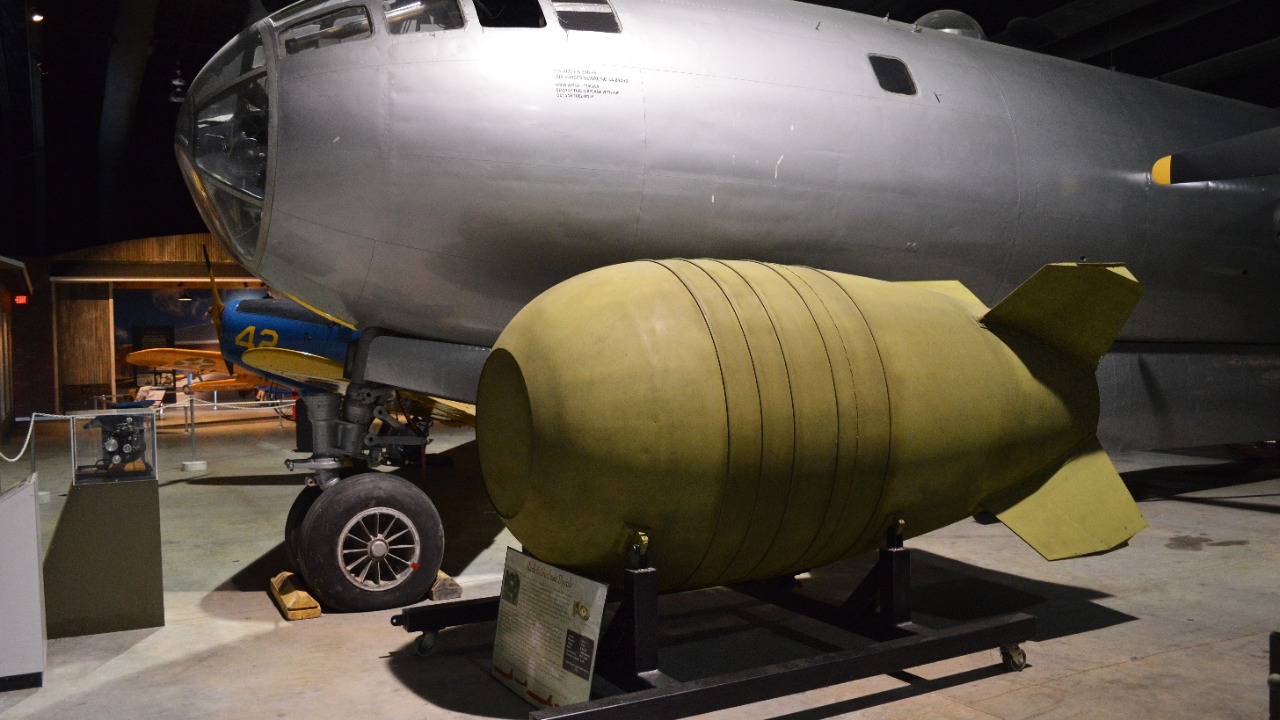
The 1958 Tybee Island Bomb Drop is perhaps the most famous of the six missing weapons, because it involved a fully assembled Mark 15 hydrogen bomb jettisoned near the US mainland. In the early hours of February 5, 1958, a B-47 bomber carrying a 3,400-kilogram, 7,500-pound Mark 15 collided with another jet during a training mission near the Georgia coast, an event detailed in reconstructions of the US bomber that dropped a 3,400-kilogram, 7,500-pound Mark 15. To stabilize the damaged aircraft and attempt an emergency landing, the crew released the bomb into the waters near Tybee Island, Georgia, where it sank into the seabed. A separate fact sheet notes that On February 5, a B-47 dropped a 7,600-pound nuclear bomb after colliding with an F-86, reinforcing that the device was a full-scale weapon, not just a test shape.Despite multiple search efforts, including sonar sweeps and diver operations, the Tybee Island bomb has never been recovered, and official assessments eventually concluded that it is likely buried under sediment in Wassaw Sound. A later radio report marking Fifty years since the incident described how the B-47 crew believed the bomb landed in relatively shallow water off Tybee Island, yet no trace has been found. For residents of Tybee Island, Georgia, and nearby Savannah, the unresolved presence of a hydrogen bomb offshore has become a recurring source of anxiety whenever hurricanes, dredging projects, or fishing accidents raise the possibility of disturbing the site. The Pentagon has long argued that the bomb’s nuclear core may have been removed or that corrosion has reduced the risk, but the lack of definitive recovery data leaves a lingering uncertainty that continues to shape local politics and environmental monitoring in coastal Georgia.
4. The 1961 Goldsboro B-52 Crash – Lost Uranium Core from a Mark 39
The 1961 Goldsboro B-52 Crash over North Carolina is one of the most chilling near-misses in US nuclear history, because it involved two powerful thermonuclear bombs and a partial failure of their safety systems. A B-52 on airborne alert duty broke apart in flight near Goldsboro, scattering debris and its payload of Mark 39 hydrogen bombs across farmland. Investigations summarized in overviews of the six US nuclear weapons that remain missing explain that one bomb’s parachute deployed and it was recovered largely intact, while the other plunged into a muddy field and broke apart. Technicians were able to retrieve some components, but the uranium core of the second weapon could not be fully excavated, and the government eventually purchased the land to secure the site.
Declassified documents later revealed that several of the safety mechanisms on at least one of the Mark 39 bombs had failed, leaving only a single low-voltage switch between the crash and a potential nuclear detonation. That revelation transformed Goldsboro from a local accident into a global case study in how close the world has come to unintended nuclear catastrophe. The buried uranium components are still considered lost, encapsulated in the soil beneath the former crash site, and they continue to raise questions about long-term contamination and land use. For North Carolina residents and arms control advocates, Goldsboro illustrates how even sophisticated safety engineering can be overwhelmed by mechanical failure and human error. It also feeds into broader debates about nuclear modernization, including whether current warheads and delivery systems are truly safer than their Cold War predecessors or whether similar vulnerabilities persist in today’s arsenals.
5. The 1965 Philippine Sea Submarine Incident – Lost Hydrogen Bomb from an A-4 Skyhawk
The 1965 Philippine Sea Submarine Incident involved a US Navy A-4 Skyhawk attack jet that rolled off the deck of the aircraft carrier USS Ticonderoga and plunged into deep water with a hydrogen bomb attached. Historical accounts of the event describe how the aircraft, pilot, and weapon were lost in the Pacific Ocean near Japan during what was supposed to be a routine handling operation. The bomb, a powerful thermonuclear device, sank to the seafloor and has never been recovered, making it one of the most strategically sensitive of the six missing US nuclear weapons. For years, the exact location of the accident was obscured in public records, which initially suggested it occurred far from land, but later disclosures indicated it happened closer to Japanese territory than first acknowledged.
The political implications of this loss have been particularly acute in East Asia, where memories of nuclear devastation in Hiroshima and Nagasaki remain central to public opinion. Japanese officials and local communities have repeatedly pressed Washington for more detailed information about the bomb’s condition and the environmental risks it might pose to fisheries and coastal ecosystems. The Pentagon has maintained that the depth of the water and the design of the weapon make significant contamination unlikely, but independent experts note that corrosion, seismic activity, or future undersea development could eventually disturb the wreckage. The incident also resonates in contemporary debates about nuclear basing in the Pacific, especially as the United States and its allies weigh how to deter regional adversaries without repeating the secrecy and risk tolerance that characterized Cold War deployments. For me, the Philippine Sea loss highlights how nuclear accidents can strain alliances and fuel anti-nuclear movements far beyond the immediate crash site.
6. The 1968 Thule Air Base B-52 Crash – Four Bombs and Incomplete Cleanup
The 1968 Thule Air Base B-52 Crash in Greenland marked the last of the six missing US nuclear weapons and exposed the limits of even massive cleanup operations. A B-52 on airborne alert duty caught fire and crashed onto sea ice near Thule Air Base while carrying four hydrogen bombs, scattering plutonium and other radioactive material across the frozen landscape. Emergency response teams mounted an intensive recovery effort, collecting contaminated ice and debris and shipping it away for disposal, but later reviews of the operation concluded that not all components of the weapons were found. Analyses of the incident, including discussions of how US nuclear weapons might be used against hardened sites like Iran’s Fordow nuclear facility, often cite Thule as a reminder that even advanced warheads can break apart unpredictably when aircraft fail.
For the workers and local Greenlandic population, the crash left a legacy of health concerns and political tension over who bears responsibility for long-term monitoring of the contaminated area. The incomplete recovery of bomb components means that some nuclear material remains in the environment, locked in sea ice and seabed sediments that are now being reshaped by climate change. As Arctic ice melts and new shipping routes open, the possibility that buried debris could shift or become more accessible has become a fresh concern for environmental scientists and defense planners. The Thule crash also feeds into current debates in Washington about how to maintain nuclear readiness during periods of domestic strain, including times when the federal government is partially closed and oversight capacity is stretched, as highlighted by recent coverage of how a federal government shutdown affects national operations. For me, Thule stands as the clearest example of how a single accident can leave both physical contamination and political fallout that last far longer than the Cold War that produced it.
More from MorningOverview