
General Motors once treated every division as its own little kingdom, each with a distinct V8 that gave Chevrolet, Pontiac, Oldsmobile, Buick and Cadillac loyalists something to argue about in the driveway. Over time, that sprawling engine empire became a financial and regulatory liability, and the company quietly shifted to a shared “corporate” V8 strategy that put efficiency ahead of brand mystique. The story of why GM quit making brand-specific V8s is really a story about how a century-old industrial giant tried to survive tightening emissions rules, changing buyers and brutal cost pressure without losing the performance image that made those engines famous.
The age of a “million” GM brands and their own V8s
For decades, GM’s structure encouraged every division to build its own hardware, which is how the company ended up with a family tree of small-blocks, big-blocks and oddball V8s that shared displacement numbers but not much else. Enthusiasts still talk about how “back in the day, GM had like a million different brands and each one had their own engines,” a sentiment that captures the way Chevrolet, Pontiac, Oldsmobile, Buick and Cadillac all pursued separate engineering paths even when their cars shared platforms and body shells. In that world, a 350 from one division was a different animal from a 350 from another, and the badge on the fender really did tell you something about the block under the hood.
That brand-by-brand approach filtered all the way down to how people discussed the company in enthusiast corners of the internet, where a Comments Section exchange involving users named Turdsworth, Amazing, Can and Slideways still gets cited as shorthand for the era when each GM division guarded its V8 identity. The pride was real, but so were the costs: every unique casting, head design and accessory layout meant separate tooling, separate inventories and separate engineering teams. As long as GM’s market share was huge and profits were fat, the company could afford that redundancy. Once those numbers started to slide, the logic behind a dozen different V8 families began to crumble.
Market share collapse and the end of indulgence
The financial backdrop to GM’s engine consolidation is stark. The company’s share of the United States market shrank steadily, dropping below 40% in 1986, then below 30% in 1998, and finally below 20% in 2010, a trajectory that left far less room for internal extravagance. Analysts have pointed out that by the time GM was fighting to stay relevant in a landscape where online retailers like Carvana could command eye-catching valuations, the old model of funding multiple overlapping V8 programs for shrinking divisions was no longer sustainable. The same corporate culture that once treated every brand as a fiefdom had to confront the reality that the empire itself was shrinking.
As that pressure mounted, GM “became like a lot of other automakers,” in the words of one detailed analysis of its V8 strategy, and the indulgence of maintaining unique V8s for every division had to stop. The shift was not just about engines, it was about survival in a market where GM’s dominance had eroded from that 40% peak to a fraction of the total pie. Once the company could no longer count on sheer volume to cover the cost of parallel engine lines, the case for a shared corporate V8 became less a philosophical choice and more an accounting necessity.
Emissions, fuel crises and the shrinking big-block
Regulation and fuel prices did as much to kill off brand-specific V8s as any spreadsheet. As emissions rules tightened and oil shocks reshaped buyer expectations, the big, high-compression V8s that defined GM’s muscle era were forced into retreat. Power and compression dropped in the big V8s and smaller engines started to take over, a trend that made it harder to justify keeping multiple large-displacement families alive when their headline numbers were falling and their fuel economy was under scrutiny. The glory days of effortless torque and cheap gas were giving way to catalytic converters, lower compression ratios and a new obsession with miles per gallon.
By the time GM reined in all the overlapping programs, the company had gone from a sprawling catalog of V8s to a more rational set of corporate powertrains, with a handful of architectures serving everything from trucks to performance cars. That consolidation mirrored a broader industry move toward fewer, more flexible engine families, but it also reflected the specific way GM responded to regulatory and economic pressure. A detailed look at how Power and compression dropped in its big V8s shows how quickly the company went from a dozen engines in varying configurations to a much smaller stable of shared designs.
The 1977 engine scandal and the birth of “corporate” V8s
The turning point inside GM was not just about money or emissions, it was about trust. In the late 1970s, the company was rocked by a scandal when buyers discovered that some cars were being sold with engines from a different division than the badge suggested, a practice that angered loyalists who thought they were paying for a specific brand’s V8. GM learned their lesson after the 1977 scandal, and the lesson was the correct one: the issue was not so much that engines were shared, it was that the sharing was hidden and customers felt misled. Once that line was crossed, the company had to rethink how it talked about powertrains and how it structured its engine programs.
In the years that followed, GM moved more openly toward a corporate engine strategy, where the same basic V8 could appear in multiple divisions without pretending otherwise. A detailed history of that transition notes that once the scandal faded, the company was able to standardize engines across brands almost overnight with a nary whimper from the market. The outrage had been about secrecy, not about the mechanical reality that a well engineered corporate V8 could serve multiple badges just as effectively as a division-specific design.
After 1977: rapid engine swapping and the quiet phase-out
Once GM committed to a more transparent approach, the pace of consolidation accelerated. After 1977, GM engine swapping rapidly picked up speed, and it did not take long before some divisions stopped making their own V8s entirely. What began as a cost-saving measure in the wake of a scandal turned into a structural shift, as plants were retooled, engineering teams were merged and the old division-specific blocks were quietly retired. The process was incremental on paper, but from an engineering standpoint it represented a clean break with the era when every brand insisted on its own iron.
By the time the last holdouts made the switch over to corporate powertrains, the idea of a Buick-only or Oldsmobile-only V8 had become a historical footnote rather than a selling point. A detailed timeline of how each division exited the V8 business shows how After 1977 the dominoes fell, with each brand eventually giving up its standalone V8 program in favor of shared corporate engines. The shift happened with surprisingly little public drama, in part because buyers were increasingly focused on fuel economy, features and monthly payments rather than the casting codes on their engine blocks.
Brand identity without brand-specific blocks
Ending division-specific V8s did not mean GM stopped caring about brand identity, it meant the company had to express that identity in ways that did not require separate engine families. Marketing and design took on a bigger role, especially for prestige divisions that once leaned heavily on unique powertrains to justify their status. Cadillac, for example, has been repositioned with campaigns that try to harness a more modern, aspirational image, using sleek visuals and lifestyle messaging to sell the idea of American luxury even as its engines share architecture with other GM products. One campaign built around the ampersand symbol was part of a broader effort to show how GM revitalizes Cadillac by harnessing design, technology and branding rather than bespoke V8s.
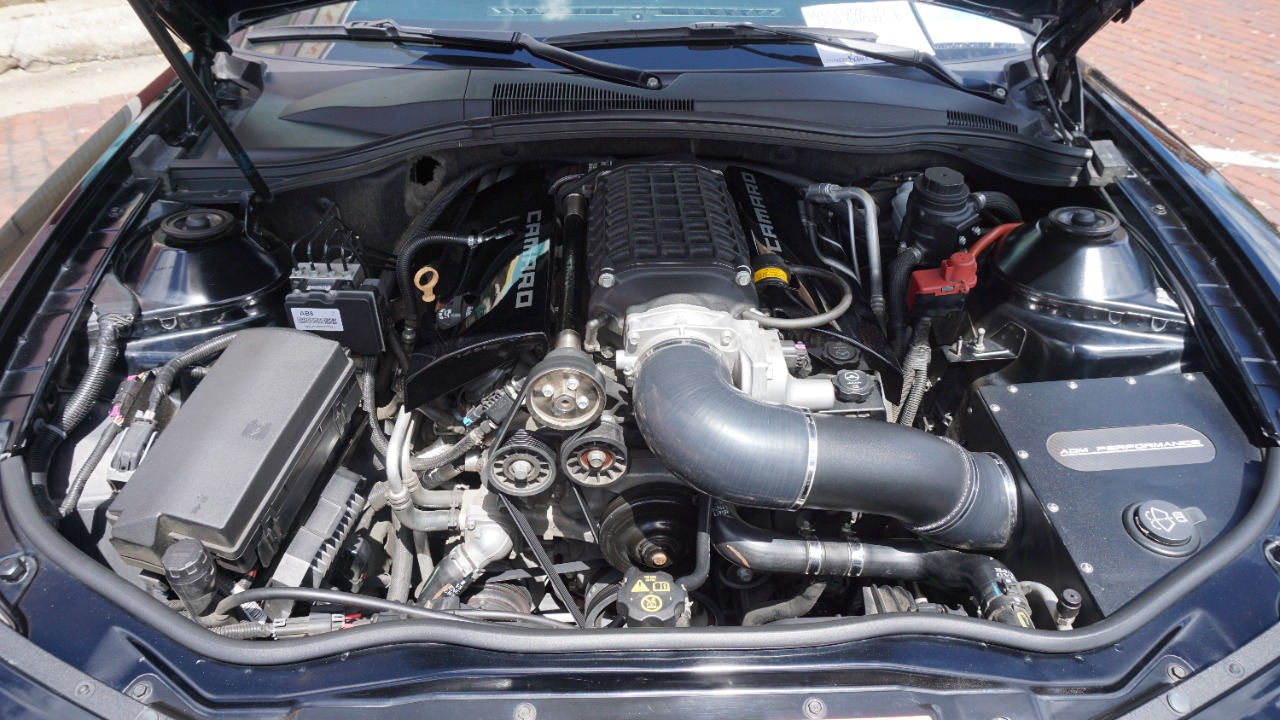
Other divisions leaned on performance tuning and model-specific calibrations to differentiate themselves within the shared engine universe. Chevrolet’s Camaro ZL1, for instance, uses a supercharged V8 and a 10 speed automatic transmission with certain parts that are unique to that model, even though the basic components are shared with other GM vehicles. Engineers have acknowledged that There are certain parts of the 10 speed that are unique to this model, while the transmission itself is a joint development that appears in trucks and other performance cars. That approach, highlighted in coverage of how Chevrolet drops the “Hammer” with the Camaro ZL1, shows how GM now uses software, gearing and bolt on hardware to create distinct personalities without building entirely separate V8 families for each badge.
Oldsmobile’s demise and the shrinking GM universe
The end of brand-specific V8s also coincided with a broader contraction of GM’s portfolio, most dramatically illustrated by the death of Oldsmobile. Oldsmobile, originally known as Olds Motor Works, joined General Motors in 1908, a move that helped create the multi brand structure that later supported so many different V8 programs. For much of the twentieth century, Oldsmobile sat in the middle of GM’s hierarchy, offering its own engines and styling cues to buyers who wanted something a little more upscale than a Chevrolet but less formal than a Cadillac.
By the time GM announced it would junk Oldsmobile, the division’s unique V8s were already gone, replaced by shared corporate engines that blurred the mechanical lines between brands. The decision to wind down a marque that had been part of General Motors Corp for nearly a century underscored how much the company’s world had shrunk from the days when it could afford to fund separate engine lines for every badge. A detailed account of how Oldsmobile (Olds Motor Works) joins General Motors and later exits the stage shows how the same economic and strategic forces that killed off division-specific V8s also made some divisions themselves redundant.
From casting codes to engine codes: the modern GM V8
In the corporate V8 era, GM has shifted from celebrating division-specific castings to playing up engine codes and technical features that cut across brands. The company still builds a range of V8s, especially for trucks and performance cars, but they are organized around shared architectures like the small block family rather than around individual divisions. That has created a new kind of complexity for enthusiasts, who now have to navigate a maze of RPO codes and marketing names to figure out exactly which version of a corporate V8 they are dealing with, rather than simply trusting the badge on the grille.
One example is the way General Motors loves reusing classic engine designations, which can make it hard to find the exact V8 you want when names like L86 and L87 are applied to different generations and configurations. A detailed breakdown of what’s the difference between GM’s L86 & L87 engines shows how the same 6.2 liter displacement can hide meaningful differences in hardware and tuning. In that sense, GM has traded the old world of division-specific blocks for a new world where a single corporate V8 can spawn multiple variants, each defined more by software and accessories than by which brand’s foundry cast the block.
Technology, efficiency and the global V8 squeeze
Even as GM rationalized its V8 lineup internally, external forces continued to squeeze the format. Modern V8s are expected to deliver more power, better fuel economy and lower emissions than their predecessors, which has pushed automakers toward technologies like direct injection, cylinder deactivation and advanced variable valve timing. These technologies aim to improve efficiency and emissions but require sophisticated control systems and careful integration, which in turn raise development and manufacturing costs. For a company like GM, that reality reinforces the logic of concentrating resources on a small number of shared V8 architectures rather than spreading investment across multiple brand-specific designs.
A broader look at the V8 engine impact on global automotive trends notes that cost remains a significant hurdle for V8 engines, especially as electrification and downsized turbocharged engines capture more of the market. In that environment, GM’s move away from brand-specific V8s looks less like a retreat from heritage and more like a prerequisite for keeping any V8s alive at all. By pooling development across divisions, the company can afford to keep building high output engines for trucks and halo cars even as regulatory and market headwinds grow stronger.
Modern headaches: lawsuits, reliability debates and online scrutiny
The corporate V8 strategy has not insulated GM from criticism, especially when reliability issues surface. Earlier this year, owners and enthusiasts were trading stories about V8s that could allegedly die without warning, with some pointing to design choices and others to maintenance or software as potential culprits. In one widely discussed Comments Section, a user identified as allgasnoshit, labeled as a Top 1% Commenter, argued that the truck engines have some differences with high performance variants, pushing back on the idea that a single corporate design flaw explained every failure. The debate underscored how a shared engine architecture can concentrate both praise and blame when things go right or wrong.
Those online arguments echo older conversations about GM’s V8s, but they play out in a world where information spreads instantly and legal action can follow quickly behind a wave of social media posts. The same corporate consolidation that made it easier for GM to manage costs also means that a problem in one V8 family can affect a wide range of vehicles across multiple brands, raising the stakes for every design decision. Enthusiasts who once obsessed over which division cast their block now find themselves parsing build dates, software versions and service bulletins, a shift that reflects how far the company has traveled from the era of brand-specific V8s to a tightly integrated corporate engine strategy.
More from MorningOverview