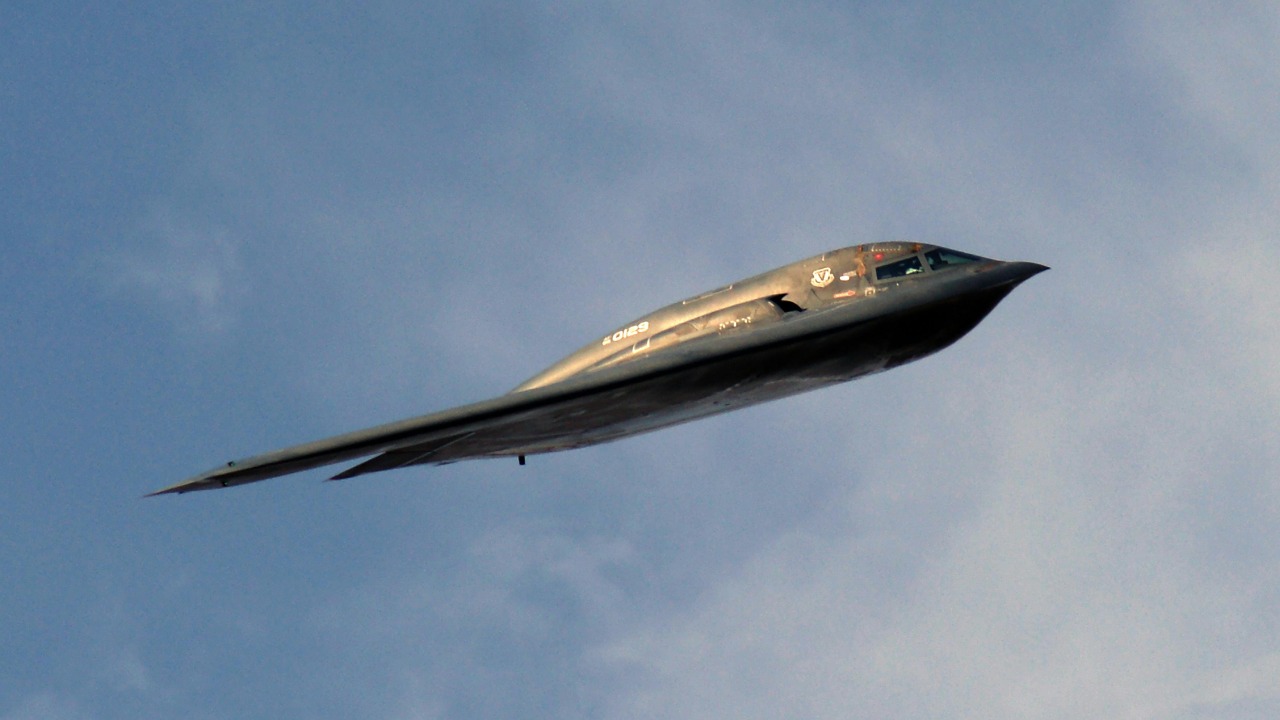

The B-2 Spirit has always been one of the most expensive aircraft the United States has ever built, and for years a serious mishap could quietly threaten to erase a bomber from the inventory. Now, a new repair approach has turned what looked like a total loss into a case study in how to save hundreds of millions of dollars while keeping a scarce stealth asset in the fight. By combining advanced digital analysis, creative use of existing hardware, and tightly managed on-site work, the Air Force has effectively written a new playbook for reviving damaged B-2s instead of writing them off.
The payoff is already visible in the return of a heavily damaged aircraft to frontline duty at a fraction of its original cost, and in the way that experience is reshaping how the service thinks about sustaining the rest of the fleet. I see this as more than a one-off engineering triumph; it is a signal that the Air Force can stretch every B-2, and every dollar, further at a time when long-range stealth capacity is under pressure.
The B-2’s staggering value and fragile numbers
The B-2 Spirit has always been defined as much by its price tag as by its flying wing silhouette. Each bomber cost American taxpayers a reported $2.1 billion, a figure that turns any serious damage into a strategic and budgetary crisis rather than a routine maintenance problem. With only a small number of airframes ever built, losing even one aircraft to an accident or structural failure would punch a hole in the nation’s long-range strike capacity that money alone could not quickly fill.
That scarcity is why the fate of a single bomber can drive high-level decisions about force structure and future investment. Although the Air Force has been weighing what to do with the money it will eventually save from retiring the B-2, the service has also been clear that the aircraft must remain ready for combat at any time, a tension captured in reporting that notes how Although the Air Force is planning ahead for a post B-2 era, it cannot afford to let today’s fleet atrophy. In that context, finding a way to restore a badly damaged bomber for a fraction of its replacement cost is not just thrifty, it is strategically essential.
From near write-off to “Spirit of Georgia” reborn
The most vivid proof of this new approach is the aircraft known as the B-2 “Spirit of Georgia,” which suffered severe damage after a landing gear collapse that left its future in doubt. According to detailed accounts, the bomber was nearly categorized as a total loss, with some assessments suggesting it Was Nearly Scrapped before engineers made the case that it could be saved. The damage was concentrated around the landing gear and wing root, exactly the sort of structurally complex area that makes stealth aircraft so hard to repair without compromising their low observable qualities.
Instead of giving up, the Air Force and its industry partners embarked on a multi-year effort to bring the bomber back from the brink. Reporting on the project notes that the Air Force quite literally The Air Force Brought It Back From the Dead, culminating when the Spirit of Georgia took to the skies again on November 6 after years of painstaking work. That first flight was more than a test hop; it was a validation that a bomber once written off on paper could be restored to full operational status.
A four-phase roadmap for saving a stealth bomber
What made the Spirit of Georgia’s return possible was not a single trick, but a structured repair concept that can now be applied to future mishaps. The Air Force has described a four phase process that began with designing the repair, moved through testing the concept, then shifted to physically repairing the aircraft and finally certifying it as airworthy again. All the structural repairs were validated through rigorous modeling and then checked in the real world, with key work supported by academic partners such as teams at George Washington University that helped confirm the bomber’s strength under load.
I see that framework as important because it turns what could have been a one off rescue into a repeatable method. By documenting each phase, from initial damage assessment through final checks, the Air Force has effectively created a template for future B-2 recoveries. That template is already being described in detail in technical write ups that walk through how engineers began restoring the damaged bomber using digital scans and rapid analysis, a process that is now captured in official accounts of USAF B-2 Spirit innovative repair efforts.
Digital scans, analysis and non-destructive technique
The heart of the new method lies in how engineers used data rather than guesswork to understand the damage. Teams started by creating high fidelity digital scans of the aircraft, then ran rapid analysis to map out how the structure had been stressed and where hidden weaknesses might lurk. Detailed descriptions of the project explain How engineers began restoring the damaged B-2 bomber using digital scans and rapid analysis, turning what initially looked like a total loss into a salvageable airframe. Those steps alone saved an enormous amount of time and money compared with fully rebuilding a stealth wing from scratch.
Alongside the digital work, specialists leaned heavily on Non-destructive testing to probe critical components without cutting into them. Reports on the repair highlight how Non-destructive testing techniques were used to assess the outboard wing spars and other load bearing structures, confirming that there was no internal spar damage even where the skin and surrounding hardware had been badly compromised. In my view, that combination of digital modeling and careful inspection is what allowed the team to draw a clear line between parts that had to be replaced and parts that could safely remain in service.
Leveraging new technologies and Finite Element Method analysis
Beyond basic scanning, the repair team leaned on advanced computational tools that have matured since the B-2 was first designed. One of the most important was Finite Element Method analysis, which allowed engineers to simulate how the bomber’s structure would respond to aerodynamic loads, landing forces and internal fuel tank pressures after the repairs were complete. Official accounts of the project describe how Finite Element Method analysis was used to model aerodynamic loads, giving decision makers confidence that the restored bomber would behave like its undamaged peers.
I see this as a textbook example of what one official summary calls Leveraging New Technologies to solve an old problem. Instead of relying solely on legacy drawings and conservative safety margins, the team could virtually stress test the bomber before committing to physical modifications. That not only reduced the risk of rework, it also meant the final repair could be more precise and less invasive, preserving stealth shaping and materials wherever possible.
Creative hardware solutions and composite skin harvesting
Even the best analysis does not matter if there is no way to physically replace damaged sections of a stealth bomber, and here the team showed a different kind of ingenuity. One of the most striking choices was to harvest an 8 by 4 foot composite skin panel from a dedicated test airframe known as Test Article 0998, rather than trying to manufacture a brand new piece from scratch. Technical reporting notes that One innovative solution involved harvesting an 8-by-4-foot composite skin panel from Test Article 0998, a move that kept the project on schedule and reduced the risk of having to redo complex work if a newly built panel did not fit perfectly.That kind of parts cannibalization is not new in aviation, but doing it with stealth composite structures is far more complex than swapping a wing panel on a conventional fighter. By choosing a proven piece of hardware from Test Article 0998, the team could be confident that the material properties and stealth characteristics matched the rest of the bomber. In my view, this is where the repair effort shifted from being just a clever engineering exercise to a practical demonstration of how to sustain a tiny fleet of exotic aircraft with limited spares, a lesson that will matter for future stealth platforms as well.
On-site work, custom heating and thermal survey challenges
Once the design and parts were in place, the physical repair work presented its own set of obstacles, especially around bonding new composite sections to the existing airframe. The team had to cure adhesives and composite materials in a controlled way without the benefit of a factory autoclave, which meant building advanced custom built heating equipment that could wrap around the bomber’s curves. One account of the project explains that This was overcome by utilising advanced custom-built heating equipment, a solution that effectively turned a hangar into a bespoke composite curing facility.
To make sure those improvised systems worked as intended, engineers carried out detailed thermal surveys and adjusted insulation until the temperature profile across each repair zone met strict tolerances. That focus on survey and feedback loops mirrored the earlier digital analysis, closing the gap between theoretical design and real world execution. It is also consistent with broader descriptions of the project that emphasize how damage surveys and non destructive inspections guided every major decision, with one summary noting that Damage surveys and non-destructive inspections found significant structural harm but also identified exactly where repairs would be most effective.
Logistics, ferry flight and the role of Northrop Grumman
Before any of that work could happen, the damaged bomber had to be moved safely to a facility capable of handling such a complex project. The aircraft was able to make a single flight to Northrop Grumman‘s Palmdale, California, facility in 2022 so repairs could be carried out under controlled conditions, a ferry mission that required its own set of temporary fixes and risk assessments. That move concentrated the necessary expertise and tooling in one place, turning Palmdale into the focal point for one of the most ambitious repair efforts in the fleet’s history.
From my perspective, that partnership underscores how tightly the B-2’s fate is tied to its original manufacturer. Northrop Grumman’s Palmdale, California, site is one of the few locations with the classified knowledge, specialized jigs and secure infrastructure needed to work on the bomber’s stealth structure. The fact that the aircraft could be stabilized enough to make that single flight, then undergo years of methodical work, speaks to the value of having a deep industrial base behind a small but critical fleet, as described in detailed coverage of the repairs in the fleet’s history.
Time, cost and why it took four years
Even with all these innovations, the repair was not quick. The big question that emerges for many observers is why it took roughly four years to fix a single bomber, especially when the Air Force needs every B-2 it can get. Detailed timelines explain that the plane only made its way back into the skies on November 6 after extensive repairs, with one analysis bluntly asking Why Did These Repairs take so long. The answer lies in the need to design, test and validate novel repair techniques on an aircraft that was never meant to be rebuilt in this way.
Yet when I look at the numbers, the time investment seems easier to justify. Public accounts put the total repair bill at about $23.7 million, a tiny fraction of the roughly $2 billion value of the bomber itself and a sum that would barely cover a handful of modern cruise missiles. One detailed breakdown notes that temporary repairs alone saved a significant amount by stabilizing the structure and main landing gear door hinges, with The temporary repairs saved the program from even more costly delays. In that light, four years and $23.7 million looks less like a boondoggle and more like a bargain.
Airworthiness certification and frontline return
Bringing the Spirit of Georgia back to life was only half the battle; the bomber also had to prove it could safely rejoin the fleet. The final phase, airworthiness certification, entailed a rigorous series of structural checks, systems verifications and flight tests that pushed the aircraft through a range of conditions it might face in combat. Reporting on the project notes that The final phase, airworthiness certification, was treated as a matter of strategic necessity, not just a bureaucratic box to check.
Once those hurdles were cleared, the bomber was declared ready to return to frontline duty, effectively giving the Air Force a “new” B-2 without having to build one. One detailed narrative describes how the Spirit of Georgia took to the skies again and re entered service this month, a milestone that capped a repair effort measured in years. In my view, that successful return is what ultimately validates the entire approach: it shows that a bomber can go from a collapsed landing gear and severe structural damage to full operational status, with the process documented well enough to guide future recoveries of other aircraft in the fleet.
Strategic and budgetary ripple effects
The implications of this new repair method extend well beyond a single tail number. By proving that a severely damaged B-2 can be restored for roughly $23.7 million instead of being written off as a $2 billion loss, the Air Force has effectively changed the calculus for how it manages risk in operations and training. Decision makers now know that even a catastrophic looking mishap does not automatically mean the permanent loss of a bomber, which could influence everything from how aggressively the aircraft are used to how maintenance budgets are structured in the years ahead.
There is also a broader lesson here about how to sustain small fleets of high end platforms as they age. The same digital scans, rapid analysis, Non-destructive testing and creative hardware solutions that saved the Spirit of Georgia can be applied to other stealth aircraft, including future bombers that will eventually replace the B-2. Detailed technical write ups on How engineers began restoring the damaged B-2 bomber make clear that those methods are now part of the Air Force’s toolkit, not just a one time experiment. In that sense, the millions saved on this repair may be only the first dividend from a much larger shift in how the service cares for its most valuable aircraft.
More from MorningOverview