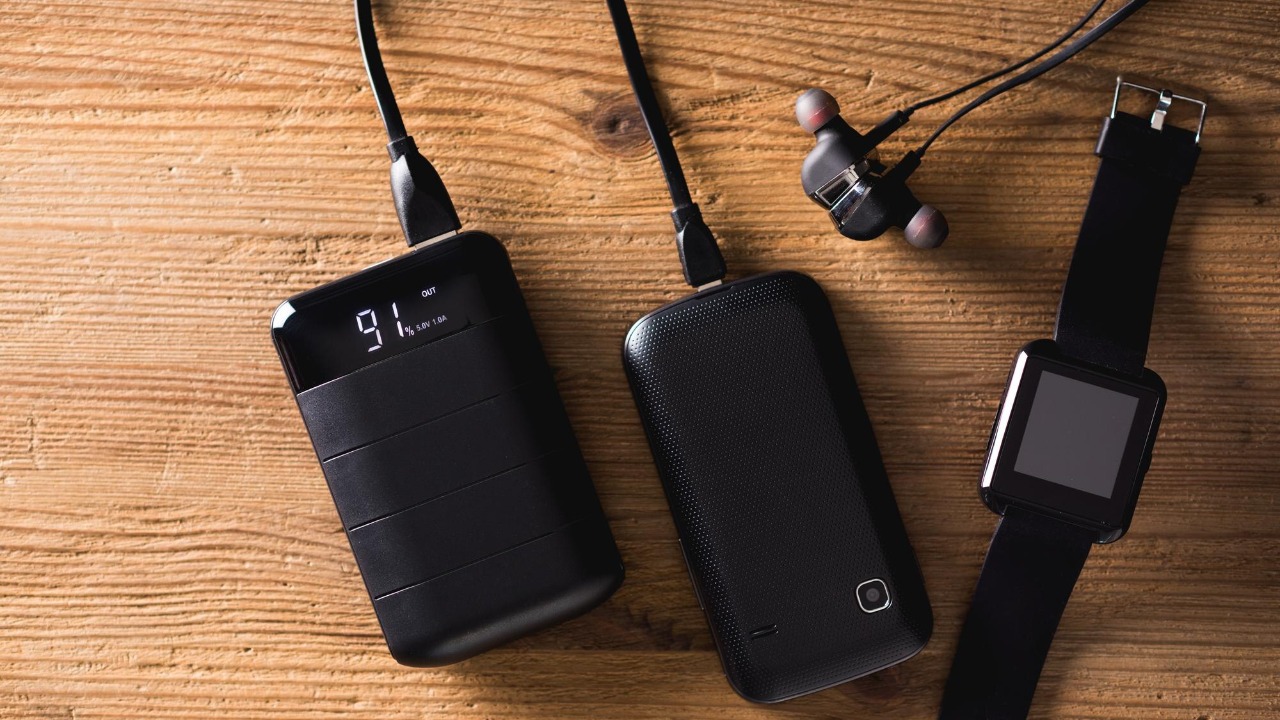

Old power banks often end up forgotten in drawers once faster, slimmer models arrive, but their lithium cells usually still hold enough energy to be useful. I see them as compact, already-packaged batteries that can be reassigned to new roles, and with a bit of planning they can become surprising tools for lighting, connectivity, and everyday convenience instead of e‑waste.
1. Transform It Into an Emergency Light Source
Transform It Into an Emergency Light Source is the most intuitive way to give an old portable charger a second life, because the device is already designed to deliver stable 5‑volt power that LED lights can use efficiently. Reporting on unexpected uses for old power banks highlights how these bricks can drive compact LED setups during outages, turning what looks like obsolete clutter into a hands‑free lantern. I treat the power bank as a modular battery pack, then pair it with low‑draw USB accessories such as clip‑on reading lamps, LED light strips for hallways, or small camping lanterns that plug directly into a USB‑A port. Because LEDs convert electricity into light with far less waste heat than incandescent bulbs, even a modest 5,000 mAh pack that no longer feels “trip ready” for phones can still keep a room navigable for several hours when the grid goes down.
To make this reuse genuinely practical, I focus on reliability and placement rather than novelty. I label one older power bank as “lights only,” keep it fully charged, and store it next to a short USB extension cable and a compact LED bar so I can mount it on a shelf or doorframe during a blackout. That turns the combination into a portable emergency light source that does not depend on disposable AA batteries, which often run out or corrode in flashlights that sit unused. The stakes are obvious for households in storm‑prone regions or apartments with limited natural light, where a sudden outage can make stairwells and kitchens hazardous. By dedicating a retired charger to lighting, I reduce demand for new battery‑powered lanterns, cut down on waste, and gain a predictable, rechargeable backup that is easy for anyone in the home to activate with a single button press.
2. Power a Dedicated Device Station
Power a Dedicated Device Station takes inspiration from guidance on keeping older electronics in service, such as advice on clever uses for your old smartphone, which shows how aging hardware can be reassigned to focused, always‑on roles. I apply the same logic to power banks by turning them into semi‑permanent energy sources for low‑priority gadgets that do not need the latest fast‑charging standards. An older 10,000 mAh pack that struggles to keep up with a modern flagship phone can still be ideal for a dedicated e‑reader, a Bluetooth remote for a smart TV, or a compact wireless keyboard that charges over micro‑USB. By parking those accessories on a small shelf and plugging them into the retired power bank, I create a self‑contained charging hub that keeps secondary devices topped up without tying up wall outlets or newer, high‑capacity batteries.
Structuring a station this way also helps manage clutter and usage patterns. I can assign one corner of a desk as the “secondary dock,” coil short cables for each device, and leave the power bank connected so it functions like a mini UPS for gadgets that lose charge slowly. When the bank runs low, I recharge it once from the wall, then let it quietly distribute that energy over days or weeks. For families, this approach reduces competition for primary chargers and makes it easier for children or roommates to find the accessories they need in one predictable place. It also extends the functional life of the power bank itself, delaying disposal and reducing the environmental impact associated with manufacturing and recycling lithium cells. In practice, that means fewer frantic searches for a cable before a trip and a more organized, sustainable way to keep everyday tools ready to use.
3. Boost Compatibility for Modern Gear
Boost Compatibility for Modern Gear focuses on aligning older batteries with current devices, a task that becomes easier when I study evaluations of the best power banks and portable chargers for every device in 2025. That reporting breaks down how capacity, port types, and output profiles affect real‑world performance, and those same criteria help me decide how to repurpose a charger that no longer feels cutting edge. If a legacy pack only offers USB‑A output at 5 volts and 2 amps, I can still pair it with modern gear that does not require USB‑C Power Delivery, such as wireless earbuds, fitness trackers, or compact action cameras that charge slowly by design. By matching the bank’s capabilities to devices with modest power needs, I avoid the frustration of sluggish phone charging while still extracting meaningful value from the remaining battery cycles.
To make this compatibility boost practical, I rely on inexpensive adapters and cables rather than hardware modifications. A short USB‑A to USB‑C cable lets an older pack top up a Nintendo Switch Lite or a mid‑range Android phone overnight, while a USB‑A to Lightning cable can keep an older iPad or AirPods case ready for travel. The key is to treat the power bank as a secondary, not primary, source, ideal for backpacks, glove compartments, or desk drawers where a full‑featured 2025 charger would be overkill. For commuters and students, this strategy reduces the risk of being stranded with a dead accessory, and it also spreads charging load across multiple batteries, which can reduce wear on newer, more expensive packs. In broader terms, aligning old hardware with current ecosystems helps slow the churn of constant upgrades and supports a more incremental, resource‑efficient approach to personal tech.
4. Enable Niche Lifestyle Accessories
Enable Niche Lifestyle Accessories builds on the idea that shifts in personal habits often create demand for small, battery‑powered devices, which in turn benefit from portable energy sources. Reporting on how cannabis consumption in Canada changed in surprising ways after legalization describes evolving patterns of use and new forms of consumption that emerged once legal frameworks were in place. Those changes have been accompanied by a wave of electronic accessories, from portable vaporizers with USB charging to odor‑control gadgets that rely on small fans and filters. I see an old power bank as a natural companion for such niche devices, because it can provide discreet, off‑grid power in parks, at private gatherings, or in shared housing where outlets are scarce or inconvenient. Instead of buying a dedicated battery pack marketed specifically for one lifestyle product, repurposing an existing charger can meet the same need with less cost and waste.
Beyond cannabis‑related gear, the same principle applies to other specialized accessories that have become part of everyday routines, such as USB‑powered air purifiers for desks, personal fans for crowded transit, or compact LED panels used in hobby photography. By assigning a retired power bank to one of these roles, I create a portable “energy budget” that matches the accessory’s modest draw without tying up my main charger. For users, the stakes involve both convenience and privacy, since a separate battery can keep sensitive or stigmatized devices off shared power strips and away from workplace outlets. On a broader level, this reuse pattern reflects how consumer technology ecosystems adapt to social and regulatory changes, with existing hardware like power banks quietly underpinning new behaviors. Treating the old charger as a flexible power module rather than trash makes it easier to experiment with emerging gadgets while keeping environmental and financial costs in check.
5. Create a Backup Network Extender
Create a Backup Network Extender takes the idea of emergency use a step further by focusing on connectivity rather than light or personal devices. Guidance on diverse, non‑traditional applications for discarded power banks points out that residual battery life can keep small electronics running when primary power fails, and I apply that insight to networking gear. Many compact Wi‑Fi routers, mesh nodes, and 4G or 5G hotspots draw power through 5‑volt USB inputs, which makes them compatible with older chargers that still deliver stable current. By pairing a retired power bank with a travel router or mobile hotspot, I can assemble a backup network extender that activates during outages or in remote locations where wall outlets are unavailable. This setup can keep messaging apps, cloud documents, and basic browsing online for long enough to finish critical tasks or coordinate with colleagues and family.
To make the extender reliable, I test the combination in advance, noting how long the router or hotspot runs on a full charge and labeling the power bank with that estimate. I then store the pair together in a small pouch with the necessary cable, so I can quickly plug the network device into the battery when the main modem or power strip goes dark. For remote work, travel, or households that rely on connected security cameras and smart sensors, the stakes are significant, because even a short loss of connectivity can disrupt monitoring, meetings, or time‑sensitive uploads. Using an old power bank in this way also reduces the need to buy specialized UPS hardware for low‑power networking gear, which can be costly and bulky. Instead, I turn an otherwise idle charger into a compact, flexible safeguard that helps keep digital infrastructure functioning when it matters most.
More from MorningOverview