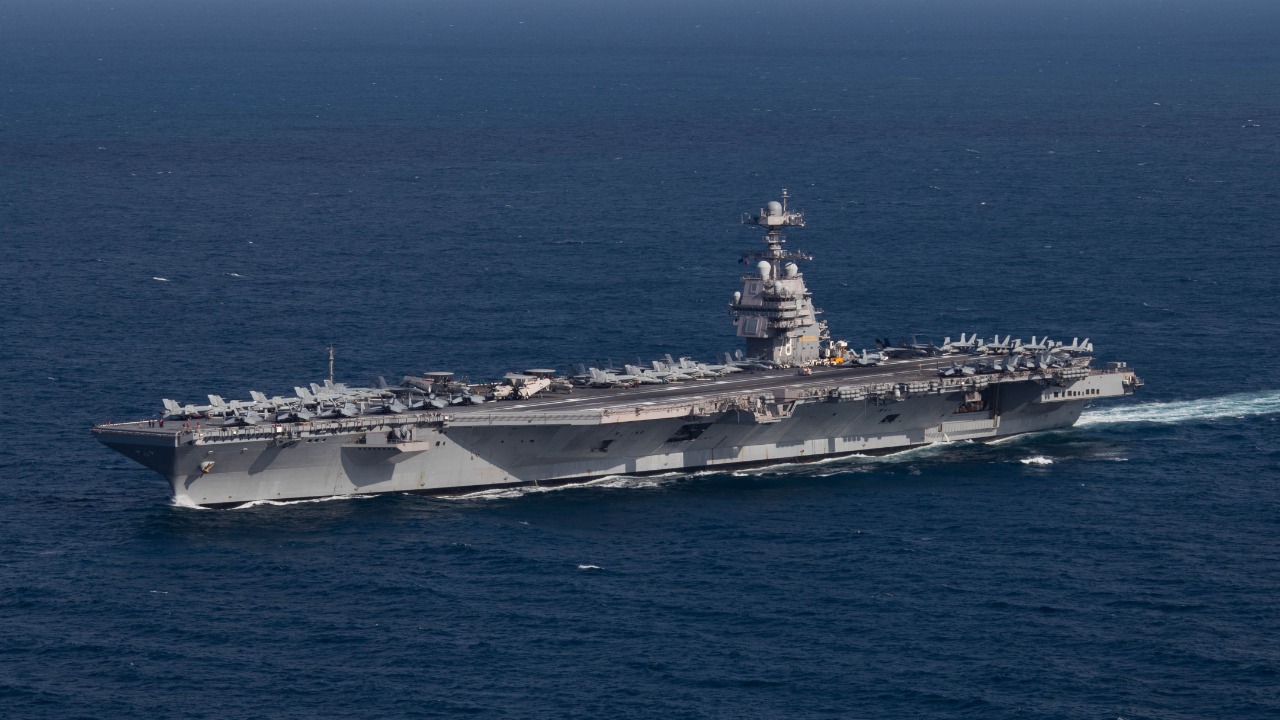

The U.S. Navy’s most potent symbols of power are carrying a new, unofficial label, and it is not flattering. “Dock Dweller” has become shorthand for aircraft carriers that spend more time tied up than at sea, a jab that cuts against decades of branding these ships as agile power projectors. I see that nickname as more than barracks humor, because it crystallizes a deeper anxiety about cost, readiness, and whether the fleet’s biggest investments are actually available when crises erupt.
How ‘Dock Dweller’ became the Navy’s ugliest new nickname
The phrase “Dock Dweller” has gained traction as critics point out that some of the Navy’s most advanced ships are spending long stretches in port instead of on deployment. The label is aimed squarely at the Nimitz and Ford, Class Aircraft Carriers, which were built and sold to the public as unmatched Power Projectors but are now derided as Hangar Queens when maintenance or technical problems keep them pier side. In that context, calling them dock dwellers, or “dwellers,” if you prefer, is a way of questioning whether the Navy is getting operational value commensurate with the staggering cost and political capital that go into each hull, especially as global demand for presence missions keeps rising.
What makes the insult sting is that it collides with the Navy’s own narrative of constant forward presence and rapid response. When sailors and analysts talk about the Navy Aircraft Carriers Have a New Name and It is Not Good, Dock Dweller, they are not just being flippant, they are highlighting a pattern of delays, refits, and pier-side troubleshooting that undercuts the image of carriers as always ready. The nickname has become a kind of shorthand in debates over whether the current carrier-centric model is sustainable in an era of contested seas, tight budgets, and increasingly sophisticated adversaries.
Ford and Nimitz classes under the microscope
The criticism embedded in the Dock Dweller tag lands hardest on the two carrier families that dominate the modern fleet, the Nimitz and Ford, Class Aircraft Carriers. These ships were designed to be the centerpiece of American sea power, with the Ford class in particular marketed as a leap ahead in sortie generation, automation, and life-cycle efficiency. Yet the same vessels that were supposed to be the ultimate Power Projectors are now being cited as examples of Hangar Queens when they are sidelined by extended maintenance, integration of new technologies, or the sheer complexity of keeping nuclear-powered aviation platforms at peak readiness.
In commentary that has circulated widely in defense circles, critics argue that the U.S. Navy’s Aircraft Carriers Have a New Name and It is Not Good, Dock Dweller, precisely because the gap between promise and performance has become too visible to ignore. When a ship that cost tens of billions of dollars spends months wrestling with catapult software or elevator reliability, the perception hardens that the Navy has built exquisite but temperamental assets. That perception matters, because it shapes congressional oversight, allied confidence, and even adversary calculations about how often a carrier will actually be on station when tensions spike.
Gerald R. Ford and the symbolism of CVN 78
No ship embodies the tension between ambition and availability more than The Gerald, Ford, CVN 78, the lead vessel of its class and the most visible test bed for the Navy’s new carrier technologies. The Gerald R. Ford (CVN 78) is the lead ship of its class of U.S. Navy nuclear-powered aircraft carriers and is named for President Gerald R. Ford, a choice that was meant to signal continuity with a long tradition of honoring national leaders while fielding cutting edge capability. Yet the ship’s early years were marked by highly publicized struggles with its electromagnetic launch system, advanced arresting gear, and weapons elevators, all of which fed the narrative that the Navy had overreached on complexity and underdelivered on operational days at sea.
Those growing pains have made CVN 78 a focal point in arguments over whether the Ford program justifies its cost and whether future hulls will avoid the same teething issues. When analysts talk about the U.S. Navy Aircraft Carriers Have a New Name and It is Not Good, Dock Dweller, the USS Gerald R. Ford Aircraft Carrier is often the implied reference, because it sits at the intersection of technological ambition and political scrutiny. The ship’s history, from its naming to its incremental progress toward full deployment, has become a case study in how a single high-profile platform can shape perceptions of an entire class, for better or worse.
Dry docks, overhauls, and the reality of time in port
The Dock Dweller label also reflects a hard logistical truth, even the most battle-ready carrier must periodically vanish into a shipyard for deep maintenance. The USS Ronald Reagan, for example, arrived at Puget Sound Naval Shipyard in Bremerton, Wash, in August 2024 to begin a major dry dock period that will keep the ship unavailable now for sea duty while crews tackle hull, propulsion, and systems work. For sailors and planners, that is a necessary investment in extending the ship’s life, but for critics tallying days at sea, it is another data point that a marquee asset is literally stuck in a dock, unable to respond to emerging crises in the Pacific or beyond.
Even more striking is the case of a Nimitz-class ship that, according to one detailed account, will go nowhere for over 5 years while it undergoes Refueling and Complex Overhaul, or RCOH, a process that began in 2021 and was originally set to be finished by Aug of a later year. The warship began its Refueling and Complex Overhaul, RCOH, in 2021, and work was originally set to be finished by Aug, but schedule slips have extended the period in which the carrier is effectively a construction project rather than a deployable asset. When observers see a vessel tied up for half a decade, it becomes easier to understand why the term Dock Dweller resonates, even if the underlying work is essential to keeping the hull in service for decades to come.
Naming carriers after presidents, from Ford to Clinton and Bush
While critics focus on how often carriers are in port, Navy leaders are still making high-profile decisions about what to call the next generation of these ships. During a private ceremony at the White House on Jan 3, 2025, Secretary Del Toro announced that future aircraft carriers CVN 82 and CVN 83 would carry the names of former presidents, a choice that underscores how deeply these vessels are woven into the country’s political and historical fabric. The official statement noted that During a private ceremony at the White House, Secretary Del Toro detailed the naming decisions in front of senior leaders and family members, reinforcing the idea that each carrier is not just a piece of hardware but a floating monument to national figures.
Additional reporting has filled in the picture, explaining that, as one account put it, Editor, Konstantin Toropin, writing for a Military audience, described how new Ford-class aircraft carriers will be named after Bill Clinton and George W. Bush, aligning CVN 82 and CVN 83 with presidents who shaped the post–Cold War era. That choice continues a pattern that began with the Gerald R. Ford class itself and extends back through the Nimitz lineage, where ships often honor commanders in chief or major wartime leaders. The symbolism is powerful, but it also raises the stakes, because when a vessel named for a president spends long stretches as a Dock Dweller, the reputational hit is not just technical, it is political.
The USS Musk prank and the politics of ship names
The intensity of debate around carrier names was highlighted in unusual fashion when a story circulated that a new U.S. Navy aircraft carrier would be named USS Musk, after Elon Musk. Initial reports claimed that The USS Musk will be the 3rd Gerald R Ford-class carrier and will replace the USS Dwight D Eisenhower (CVN 69) in service, even suggesting that the president’s expertise on ship design had influenced the decision. The idea of naming a nuclear-powered flattop after a living tech magnate, and tying it to the Gerald, Ford lineage, sparked immediate reactions about the commercialization and politicization of military honors.
That uproar turned out to be misplaced, because Naval News confirms that the US Navy’s naming aircraft carrier after Elon Musk was a joke, not reality, according to Naval News, which clarified that the USS Musk story was an April Fool’s prank. The episode still matters, though, because it showed how quickly the public will seize on carrier naming as a proxy for broader arguments about celebrity influence, defense spending, and presidential priorities. In a climate where real carriers are being labeled Dock Dwellers for their time in port, even a fake name like USS Musk can become a flashpoint for anxieties about what, and whom, these ships are supposed to represent.
Official narratives versus the ‘Dock Dweller’ reality
Against this backdrop of nicknames and naming controversies, the Navy continues to present a confident official narrative about its carrier program. The US Navy has unveiled the name of its newest Gerald, Ford, Acting Secretary of the US Navy announcing that the ship would carry a presidential name and emphasizing its 50-year service life as a cornerstone of future power projection. In formal statements, leaders stress that each Ford-class hull is designed to operate for half a century, with improved efficiency and reduced crew requirements that, on paper, should translate into more days at sea and lower long-term costs.
Yet the persistence of the Dock Dweller label suggests a gap between that narrative and what sailors, analysts, and allies see in practice. When the U.S. Navy’s Aircraft Carriers Have a New Name and It is Not Good, Dock Dweller, as one widely cited analysis put it, the critique is not just about snark, it is about whether the promised 50-year service life will be characterized by high operational tempo or by long stretches in shipyards and piers. I find that tension especially stark when official press releases about future carriers, such as the announcement that SECNAV Del Toro names future aircraft carriers CVN 82 and CVN 83, sit alongside reports of existing ships struggling through extended overhauls, because it raises the question of whether the Navy is better at christening new symbols than at keeping current ones ready to sail.
What ‘Dock Dweller’ tells us about strategy and expectations
In the end, the ugly new nickname is really a verdict on expectations that the Navy itself helped set. For decades, the service has sold Nimitz and Ford, Class Aircraft Carriers as ever-present Power Projectors, able to surge anywhere on the globe at short notice, and the public has largely accepted that image. When reality intrudes in the form of Hangar Queens that spend months troubleshooting systems or sitting in dry dock, the cognitive dissonance invites a cutting shorthand, and Dock Dweller fits the bill. I see it as a kind of dark accountability mechanism, a way for insiders and observers to signal that the gap between rhetoric and readiness has grown too wide.
That does not mean the carrier model is obsolete or that the Navy is indifferent to the problem, but it does mean that future debates over budgets, fleet composition, and basing will be colored by this perception. Analysts who write that U.S. Navy Aircraft Carriers Have a New Name and It is Not Good, Dock Dweller, are really asking whether it still makes sense to concentrate so much money and prestige in platforms that can be knocked out of the lineup for years by a Refueling and Complex Overhaul or a protracted integration of new technology. As the service moves ahead with new names, from Gerald R. Ford to Bill Clinton and George W. Bush, and as it fields successors to CVN 78, the measure of success will not be the ceremony at the White House or the symbolism of the hull number, it will be whether those ships are known around the fleet as reliable workhorses at sea, rather than as permanent residents of the pier.
More from MorningOverview