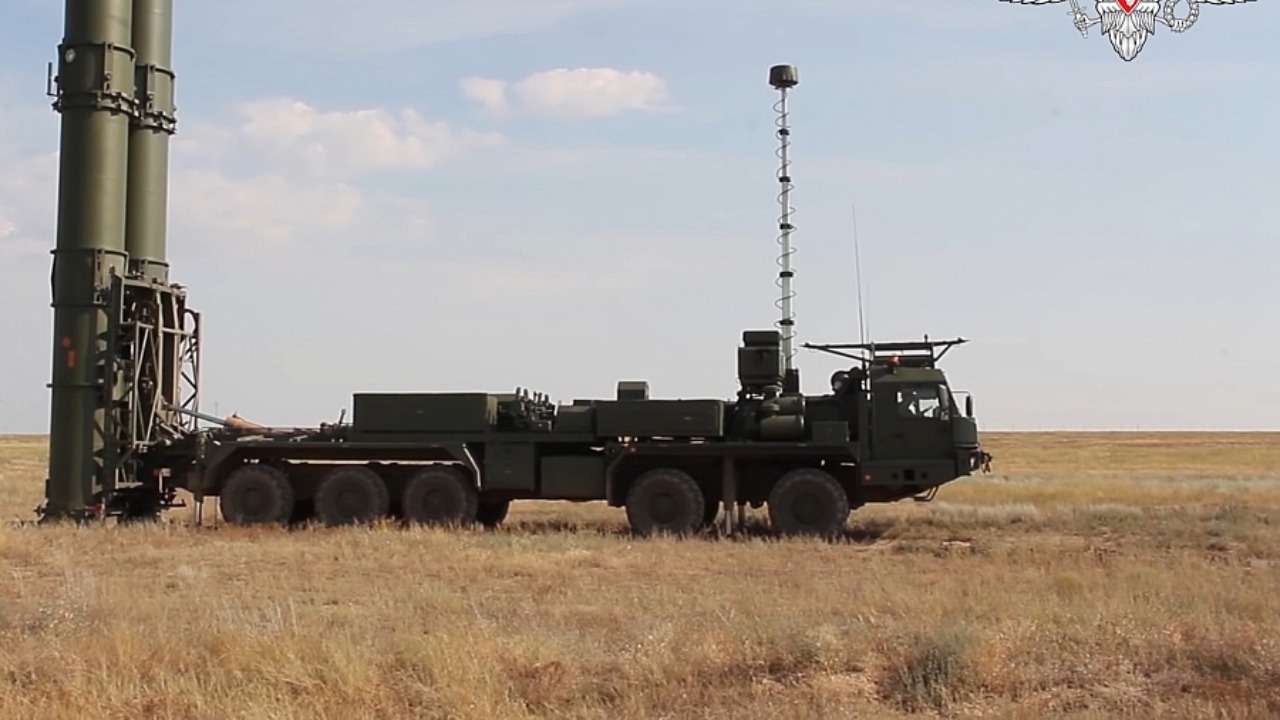

Russia is promoting its new S-500 Prometheus as the first air and missile shield designed from the ground up to hunt fifth generation fighters like the F-22 and F-35. The system is entering limited service just as U.S. stealth fleets expand, raising a sharp question for air power planners: are Moscow’s claims about being able to track and kill those jets credible, or mostly strategic theater.
I see the S-500 debate as a test case for how far modern air defenses can really push into the stealth era, and how much of the current rhetoric is aimed at deterrence rather than proven battlefield performance. The available reporting sketches a system that is technically ambitious and potentially dangerous to high value aircraft, but still short of the “invisible jet killer” label that Russian messaging implies.
What Russia says the S-500 can do
Russian officials have framed the S-500 as a generational leap over earlier surface to air systems, describing it as a Missile System “Custom Built” To Shoot Down U.S. Air Force F-22 and F-35 fighters. In that narrative, the Prometheus is not just another long range battery, but a tailored answer to the radar cross section, altitude and speed profile of American fifth generation jets. Russian messaging leans heavily on the idea that the system can detect, track and engage stealth aircraft at ranges where previous systems would struggle even to get a reliable radar return.
Those claims extend beyond fighters. Moscow has suggested the S-500 is optimized to counter a spectrum of high end threats, from cruise missiles and ballistic missiles to low observable bombers and support aircraft. In some accounts, the system is portrayed as more than a routine fighter killer, a multi layer complex with significantly enhanced capabilities that can plug into a broader integrated air and space defense grid, a framing echoed in a second detailed look at the same Custom Built system. Taken at face value, Russia is signaling that any F-22 or F-35 entering its defended airspace would face a qualitatively new level of risk.
How the S-500 fits into Russia’s air defense doctrine
To understand those boasts, I find it useful to place the S-500 inside Russia’s long standing emphasis on layered air defense. For decades, Moscow has invested in overlapping rings of systems, from short range point defenses to strategic interceptors, designed to protect critical infrastructure and military assets. The Prometheus is presented as the new top tier of that structure, sitting above the S-400 and earlier systems as a high altitude, long range shield that can engage targets in both the atmosphere and near space. Reporting on the S-500 Prometey notes that it symbolizes a transformative development in missile defence technology, Still in limited operation but already associated with intercepts at extreme altitudes and velocities.
That doctrinal role helps explain why Russia is willing to talk up the system’s ability to threaten the F-22 and F-35. If the top layer of the shield can credibly hold at risk the most advanced aircraft in the U.S. inventory, it reinforces the deterrent value of the entire network beneath it. It also supports Moscow’s narrative that its air and space defense is evolving into a single continuum, with the S-500 bridging the gap between traditional anti aircraft roles and anti ballistic missile missions, a theme that recurs in descriptions of the Prometheus as part of a broader air and space Defense System Claimed to Threaten F-22 and F-35 stealth fighters.
Range, altitude and the “toughest targets” pitch
On paper, the S-500’s reach is central to its appeal. The Prometheus is described as Russia’s most advanced air defense system, with an estimated 373-mile (600 km) range, a figure that, if accurate, would allow a single battery to cover vast swaths of airspace. That range, combined with high altitude intercept capability, is what underpins claims that the system can engage not only fighters but also ballistic missiles and potentially low orbit targets. In Russian military messaging, the S-500 is even portrayed as being built for the toughest targets, a missile that can take down America’s stealth kings, the F-22s and F-35s, with reports from earlier years suggesting it can do more than simply detect them, a theme highlighted in coverage that introduces readers to the In Russian claims about the missile.
Those performance numbers are not fully verifiable from open sources, and the Kremlin has not released a complete technical data sheet. However, the consistent emphasis on long range and extreme altitude intercepts aligns with the idea of a system designed to push engagement envelopes outward, forcing adversary aircraft to operate further from defended targets or accept higher risk. In that sense, the S-500’s advertised range is as much a psychological tool as a tactical one, signaling to U.S. and allied planners that even high flying support assets like tankers and surveillance aircraft could be threatened if they stray too close to Russian airspace.
Stealth versus sensors: can the S-500 really see F-22s and F-35s?
The heart of the matter is whether the S-500 can reliably detect and track aircraft that were engineered to slip past radar. The Prometheus is often described as using advanced radar and networking to challenge U.S. stealth jets, with Russian sources claiming it can track and destroy F-22s and F-35s by exploiting multi band sensors and data fusion. One detailed assessment notes that Russia’s S-500 promises to challenge U.S. stealth jets with advanced radar and networking, potentially shifting the air power balance if it can consistently “hit” a stealth jet rather than just paint it intermittently.
At the same time, more cautious analyses stress that detection is only the first step. One close look at the Prometheus argues that the S-500 will likely be able to “see” a fifth generation aircraft, but detection is not enough, because it all depends on whether the system can maintain a fire control quality track long enough to guide a missile to impact. That piece underscores that the S-500 will likely be able to see a fifth generation aircraft, but detection is not enough, a point made explicitly in a study of how the system makes F-22 and F-35 fighter pilots cringe. In other words, even if the S-500’s radars can intermittently detect an F-22 or F-35 at long range, turning that into a reliable kill chain against a maneuvering, jamming, networked stealth jet is a much harder problem.
Operational status and early deployment
Beyond the marketing, the S-500 is no longer just a concept. Russia deploys first S-500 air defense unit, claims it can down U.S. stealth jets, with the system described as coming with a major upgrade over previous generations and entering combat service for the first time since the Soviet era fielded comparable strategic interceptors. That initial deployment, reported as a significant milestone, suggests that at least one operational unit is now integrated into Russia’s air defense network, even if production numbers remain limited and the system is still being refined, a reality captured in coverage that notes Russia deploys first S-500 air defense unit and highlights its claimed ability to down U.S. stealth jets.
Other analyses describe the S-500 Prometey as Still in limited operation, emphasizing that the system symbolizes a transformative development but has not yet been produced or fielded in large numbers. That limited deployment status matters for assessing risk. A handful of batteries can protect specific high value areas and complicate planning for any potential U.S. or NATO operation near Russian territory, but they do not yet amount to a nationwide shield. For now, the Prometheus appears to be a high end, scarce asset, likely reserved for the most critical sectors rather than a ubiquitous threat across every potential theater.
Western skepticism and intelligence doubts
While Russian statements about the S-500 are sweeping, Western defense sources are more cautious. Some of those who track Russian capabilities closely have expressed doubts that the system can yet do everything Moscow claims, particularly when it comes to defeating the F-35 in realistic combat conditions. One detailed report notes that Defense sources told the Defense community they doubt Russia’s claims that its S-500 air defense system can defeat F-35s, suggesting that some of the rhetoric may be outpacing the technology.
Those doubts are reinforced by broader skepticism about Russian military transparency. Another account points out that, Despite Russia announcing that its cutting edge air defense system, the S-500, is now operational and can defeat Western stealth aircraft, there is still limited public evidence of full scale testing against representative targets, and some analysts see the messaging as part of a pattern in which Moscow inflates the performance of its newest systems. That perspective is captured in a piece that notes how, Despite Russia announcing operational status and anti stealth prowess, outside experts remain wary of taking those claims at face value.
What we actually know about the Prometheus design
Technical details about the S-500 remain sparse, but some broad outlines have emerged. Analysts describe the system as a mobile, multi channel interceptor complex that combines several radar types and missile variants to cover different target sets. The Prometheus label itself has become shorthand for a family of capabilities rather than a single launcher, with some missiles optimized for aerodynamic targets like aircraft and others for ballistic or hypersonic threats. One assessment notes that, as with many Russian military systems, the S-500 Prometheus is likely highly capable, but whether it is as advanced as advertised will depend on how many batteries are produced and how well they are integrated into the wider network, a point made in a study that describes the Russian Prometheus as impressive on paper but still unproven in meaningful numbers.
The Kremlin has been explicit about what it will not share. Another detailed look underscores that The Kremlin hasn’t released the full specifications of the S-500, but has acknowledged that the Prometheus could “fill” roles that go beyond traditional air defense, potentially including anti satellite functions and coverage against future platforms like a Boeing F-47 fighter. That same analysis notes that the The Kremlin sees the Prometheus as a flexible tool that can evolve alongside new threats, which helps explain why official statements focus more on broad mission sets than on specific radar frequencies or missile kinematics.
Claims of threatening F-22 and F-35 in context
Russian messaging about the S-500’s ability to threaten the F-22 and F-35 fits a broader pattern of positioning new systems as direct counters to flagship U.S. platforms. One detailed overview of the Prometheus highlights that Russia’s S-500 “Prometheus” Air-Defense System is Claimed to Threaten F-22 and F-35 Stealth Fighters, framing the system as a bespoke answer to those jets rather than a generic upgrade. That same reporting notes that the S-500 is presented as part of a larger modernization push in which Russia seeks to close the gap with U.S. air power by fielding advanced air and space defense capabilities, a narrative that reinforces the idea of the Prometheus as a strategic equalizer, as captured in the description of Russia’s S-500 Prometheus Air-Defense System Claimed to Threaten F-22 and F-35 stealth fighters.
At the same time, some Western analysts caution against assuming that every “F-35 killer” label reflects tested capability. The Prometheus is often compared to earlier Russian systems that were also touted as game changers but turned out to have mixed performance in real conflicts. The gap between marketing and battlefield results is one reason why intelligence assessments tend to treat the S-500 as a serious potential threat that must be planned for, but not yet as a proven overmatch for U.S. stealth technology. In that sense, the system’s claimed ability to target F-22s and F-35s is best understood as a warning signal rather than a confirmed fact.
Export ambitions and global ripple effects
Even in its early deployment phase, the S-500 is already being discussed as an export product, which could extend its impact far beyond Russia’s borders. One detailed analysis notes that Beyond providing battlefield tactical air defense, the mobile S-500 Prometheus system is considered one of the most advanced in the world and is being evaluated for potential sale to major partners like China and India. That same reporting underscores that the system is designed to protect primary targets of cruise and ballistic missiles, suggesting that any export customer would be looking to shield critical infrastructure and command nodes, a point captured in the description that Beyond providing battlefield tactical air defense, the Prometheus is aimed at primary targets of cruise and ballistic missiles.
If those exports materialize, they would complicate U.S. and allied planning in multiple regions. A Chinese or Indian S-500 deployment would extend the reach of advanced air and missile defense into new theaters, potentially affecting how U.S. forces operate in the Western Pacific or the Indian Ocean. It would also deepen Russia’s role as a supplier of high end defense technology, reinforcing political ties and creating new dependencies. For Washington, that prospect adds another layer to the calculus around the F-22 and F-35, since the jets could eventually face S-500 batteries not only near Russian territory but also in other strategically sensitive areas.
Balancing capability, numbers and narrative
When I weigh the available reporting, I see the S-500 Prometheus as a system that is both technically ambitious and wrapped in heavy strategic messaging. On the one hand, descriptions of the S-500 Prometey as a transformative missile defence development, Still in limited operation but capable of intercepts at extreme altitudes and velocities, suggest that Russia has indeed fielded a new tier of air and space defense. On the other hand, the emphasis on being Custom Built To Shoot Down U.S. Air Force F-22 and F-35 fighters, and on being able to Threaten F-22 and F-35 stealth fighters, reflects a deliberate choice to market the system as a direct answer to American air power, a narrative that serves deterrent and political goals as much as it reflects tested performance.
For U.S. planners and pilots, the prudent approach is to treat the S-500 as a serious and evolving threat, without assuming that every Russian claim is already matched by real world capability. The Prometheus’s combination of long range, high altitude intercepts and advanced sensors means that F-22 and F-35 crews will need to account for its presence in mission planning, tactics and electronic warfare preparation. At the same time, the limited number of deployed units, the lack of public evidence of successful engagements against representative stealth targets, and the skepticism voiced by Defense sources who doubt Russia’s more expansive claims all point to a system that is still maturing. In that gap between promise and proof, the S-500’s most immediate impact may be psychological, forcing adversaries to think harder about how they operate near Russian defended airspace, even as the true extent of its anti stealth power remains unverified based on available sources.
More from MorningOverview