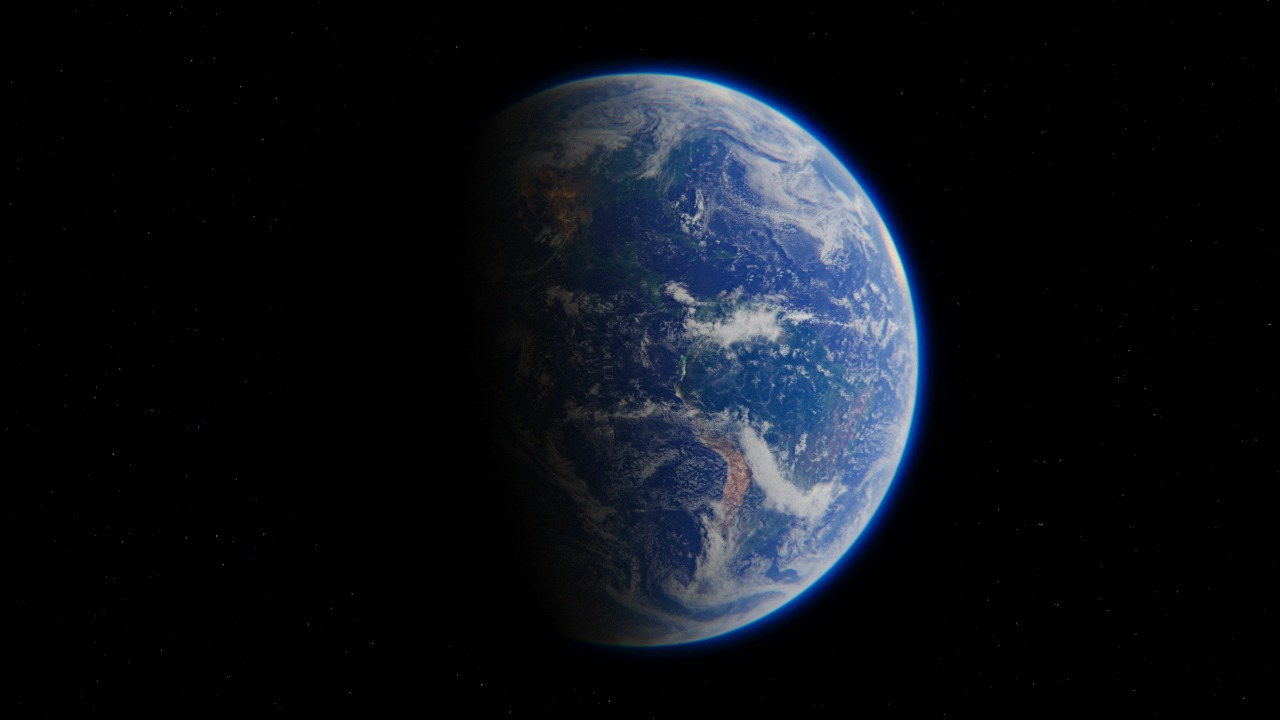

Far from our solar system, astronomers have finally watched a star consume one of its own planets, catching in real time a process that will eventually reshape, and likely erase, the world we live on. These “planet-eating” stars are not just cosmic curiosities, they are previews of the violent transformation that awaits Earth when the Sun swells into a red giant and reaches across the inner solar system. By studying these distant catastrophes, I can trace a surprisingly detailed outline of how our planet’s story is likely to end.
The picture that emerges is both chilling and clarifying. The same physics that drives a star to swell, cool, and engulf its neighbors is already written into the Sun’s future, and the latest observations give that script sharper lines. From a distant twin of Earth’s orbiting environment to a star that has already swallowed a Jupiter-sized world, the universe is quietly running simulations of our fate billions of years ahead of schedule.
What it means to watch a star eat a planet
For decades, astronomers inferred that stars must eventually consume close-orbiting planets, but they had only indirect hints, such as odd chemical fingerprints or dust clouds that suggested past destruction. The breakthrough came when Astronomers finally saw a star brighten and flare in a way that matched a planet spiraling inward and vanishing into its parent, a process that had long been predicted but never directly witnessed. In that event, a Jupiter-sized planet was seen to have spiraled into its star, giving researchers a front-row view of a planetary system’s final act and a concrete example of how Earth’s own story could end.
What makes this observation so powerful is that it connects theory to a specific, violent moment. The star’s light changed in a way that could not be explained by normal stellar activity, and the energy released matched expectations for a massive world being torn apart and swallowed. When I read that a similar event is predicted for Earth 5 billion years from now, as the Sun evolves and its outer layers expand, the distant spectacle suddenly feels personal, a reminder that our seemingly stable sky is part of a much longer and more volatile timeline anchored in the same physics that drove that rare discovery.
The Sun’s red giant turn and Earth’s shrinking safe zone
The Sun is not exempt from this cosmic pattern, it is on a well-understood trajectory that will eventually transform it into a swollen red giant. As hydrogen in the core is exhausted, The Sun will expand dramatically, its outer layers cooling and ballooning outward while its internal fusion shifts to new layers. Scientists know the Sun will eventually grow so large that it will consume Earth, a prediction grounded in detailed models of stellar evolution that track how a star’s radius and luminosity change over billions of years as it ages and its fuel supply shifts.
In that future phase, the inner solar system will be radically reshaped. Around 5 billion years from now, the Sun will expand to become a red giant star, and calculations suggest it will engulf Mercury, Venus, and very likely Earth as its atmosphere stretches outward. Even if our planet somehow avoids direct contact with the solar surface, the intense heat and tidal forces from the swollen Sun would strip away any remaining atmosphere and oceans, leaving a scorched, uninhabitable rock. The idea that the Sun will consume Mercury, Venus, and Earth is not a metaphor, it is a literal description of the geometry of a red giant’s radius compared with the orbits of the inner planets, a scenario that has been vividly described in explanations of what happens around 5 billion years from now.
New clues from a distant “twin” of Earth’s future
To understand Earth’s long-term prospects, astronomers often look for analogues, planetary systems that are older and further along the same evolutionary path. One such case has been described as 8 Billion Years Ahead, a system where a Distant Twin Planet orbits a star that has already entered a more advanced stage of its life. In that system, the planet’s orbit, composition, and the star’s swollen state combine to create a snapshot of what Earth’s environment could look like when our own Sun has aged by a similar amount, a kind of time machine that lets researchers test their models against a real-world example.
This scenario could indeed be a preview of Earth’s Fate Revealed, because it shows how a once temperate orbit can become a death zone as the host star brightens and expands. The fact that astronomers can point to a specific case, framed in reports that literally ask “What is this?” as they unpack the physics, gives me a sense of how concrete these predictions have become. Instead of abstract curves on a graph, the future of Earth is mirrored in a star system that sits billions of kilometers away, yet follows the same rules that govern our own Sun, as described in detail in the analysis of a Distant Twin Planet.
Red-handed evidence: the first devoured planet in real time
For all the theoretical work on stellar evolution, there is a special weight to seeing a prediction unfold in front of a telescope. Researchers had long suspected that as sun-like stars exhaust their core hydrogen, they would expand and eventually engulf close-orbiting planets, but, as one scientist put it, “But we have never caught a star red-handed eating a planet.” That changed when a star was observed to flare in a way that matched the expected signature of a planet being torn apart and swallowed, a sudden brightening followed by a lingering glow from heated material and dust.
This is expected to occur when a sun-like star exhausts its fuel and begins to swell, and the observed event has been framed explicitly as a preview of Earth’s future demise. The devoured planet’s mass, roughly comparable to Jupiter, and its tight orbit made it especially vulnerable once the star’s outer layers began to puff outward. By matching the light curve and spectral fingerprints to models of planetary engulfment, astronomers could say with confidence that they were watching a world’s final moments, a milestone that has been described as the first time we have seen a star devouring a planet for the first time.
How astronomers actually spot a planet being swallowed
From a distance of thousands of light years, a planet vanishing into a star is not a neat visual of a tiny dot slipping beneath a glowing surface, it is a complex pattern of light and heat that has to be teased out of noisy data. In the landmark case, astronomers combined optical observations with infrared measurements to track how the star’s brightness changed over time, looking for a sharp spike followed by a slower fade that would match the energy released as a planet’s material is stripped and heated. The fact that Earth will meet a similar fate in 5 billion years gives this technical work a haunting relevance, because the same methods used to decode that distant event could one day be applied to other systems that mirror our own.
One key tool in this effort has been space-based infrared surveys, which can pick up the warm glow of dust and gas created when a planet is shredded and mixed into a star’s outer layers. In the engulfment event that has drawn so much attention, the star sits in the eagle-like constellation Aquila, and the observations were tied to data from NASA’s NEOWISE mission, which tracks changes in the sky at infrared wavelengths. By cross-checking those measurements with ground-based telescopes, researchers could build a coherent picture of a star swallowing a planet, a process described in detail in reports on how astronomers spot a star swallowing a planet.
Sampling “hungry” stars to forecast the Sun’s appetite
One dramatic event can capture the imagination, but to understand whether planet-eating is typical for stars like the Sun, astronomers have turned to broader surveys. By sampling a large number of aging, Sun-like stars, researchers have found chemical signatures that suggest these stars have already consumed rocky planets, their atmospheres enriched with elements that are more common in planetary crusts than in stellar interiors. This kind of statistical work shows that our Sun is about halfway through its life and that stars of its type often end up devouring at least some of their inner worlds as they age.
The implication is stark, elderly stars just get hungry. As their outer layers expand and their gravitational grip on nearby planets changes, orbits can decay, and worlds that once sat in stable, life-friendly zones are dragged inward and destroyed. The phrase “Planet-Eating Stars Hint at Earth’s Ultimate Fate” captures the way these surveys turn distant data into a forecast for our own system, suggesting that the Sun is likely to follow the same pattern as the stars in these samples, a conclusion drawn from work that explicitly links Planet-Eating Stars Hint at Earth’s Ultimate Fate.
Bone-chilling visuals and why they resonate
Scientific papers on stellar evolution are dense with equations and models, but the public imagination often connects more viscerally with images and videos that translate those ideas into something you can almost feel. In one widely shared clip, a narrator describes how, in a groundbreaking discovery, astronomers have directly observed a planet being swallowed by its own star, calling the event “bone chilling” as they walk through the stages of the engulfment. The video pairs animations of a planet spiraling inward with real observational data, turning an abstract light curve into a story of a world’s final orbit.
When I watch that kind of explanation, I am struck by how it compresses billions of years of stellar evolution into a few minutes of narrative, making the stakes of these discoveries instantly clear. The idea that this is the first time we have seen such an event, and that it offers a direct view of what will happen when the Sun eats the Earth, gives the visuals a weight that goes beyond spectacle. They are not just simulations, they are anchored in a specific observation that has been described in detail in a video titled “Bone Chilling! Astronomers Just Saw a Star Eat Its Own Planet,” which has been shared widely on platforms like YouTube.
A sneak peek at Earth’s death from a distant system
Some of the most vivid reporting on these events has framed them as a glimpse of the end of the world, a way to see, in another star system, the kind of catastrophe that will eventually unfold here. Astronomers discovered a distant star swallowing a planet for the first time ever, and the details read like a science fiction plot: a world in a tight orbit, a star beginning to swell, and a sudden, catastrophic interaction that ends with the planet gone and the star altered. Follow Morgan McFall-Johnsen and other reporters have described how this single event serves as a sneak peek at Earth’s death, not because the timelines match exactly, but because the underlying physics is the same.
In that framing, the engulfed planet becomes a stand-in for our own, a way to visualize what it will mean when the Sun’s radius grows to match or exceed Earth’s orbit. The fact that this was the first time Astronomers had seen such a process in real time gives it a special status, a benchmark against which future events will be compared. It is one thing to say that Earth will be consumed in 5 billion years, it is another to point to a specific star and say, in effect, “this is what that will look like,” a connection drawn explicitly in coverage that describes how astronomers glimpse the end of the world.
What an aging alien system tells us about the Sun eating Earth
Beyond single dramatic events, astronomers are also dissecting entire planetary systems that are already in the late stages of their evolution, using them as laboratories for what will happen when the Sun eats the Earth. Recent observations of an aging, alien planetary system show how planets can be stripped, scattered, or engulfed as their star evolves, leaving behind debris disks, odd orbits, and chemical traces in the star’s atmosphere. These systems reveal not just that engulfment happens, but how it reshapes the architecture of a planetary family, turning once orderly orbits into a chaotic mix of survivors and remnants.
In that context, the phrase New Clues for What Will Happen When the Sun Eats the Earth is not hyperbole, it reflects the way each new observation tightens the constraints on our models. Some researchers, like the astronomer Stephen Kane, have even argued that while the Sun’s red giant phase will be catastrophic for Earth, other stars with different masses and fuel supplies could burn for trillions of years, offering far longer windows for life elsewhere. That contrast, between our finite timeline and the almost unimaginable longevity of some stars, is a recurring theme in analyses that present New Clues for What Will Happen When the Sun Eats the Earth.
From “prior hints” to a full picture of planetary doom
Before the first direct observation of a star swallowing a planet, astronomers had already seen plenty of circumstantial evidence that such events were common. Prior to this recent discovery, they had watched stars building up to a planetary snack, with orbits shrinking and energy signatures shifting, and they had seen stars rubbing up against planets in ways that suggested tidal interactions and mass transfer. They had also cataloged white dwarfs whose atmospheres were polluted with heavy elements, a sign that they had consumed rocky bodies long after their main sequence lives had ended.
What they had not seen was an event that did not fit either the slow buildup or the aftermath, a sudden, unmistakable signature of a planet being actively devoured. The engulfment that has drawn so much attention filled that gap, providing a missing link between theory and observation and confirming that the processes inferred from polluted stars and odd orbits do, in fact, culminate in outright destruction. That progression, from hints to a complete narrative, has been laid out in analyses that describe how a planet-eating star grants a view to Earth’s future, emphasizing that Prior to this recent discovery astronomers had only partial pieces of the puzzle.
Why a far-off apocalypse matters for us now
It is tempting to treat all of this as a curiosity, a story about a disaster so far in the future that it feels irrelevant to daily life. Yet I find that the clarity of these predictions, and the way they are grounded in direct observations of other stars and planets, has a subtle but important effect on how we think about our place in the universe. Knowing that The Sun and Earth are locked into a long, slow dance that ends with the Sun’s Red Giant phase and the likely destruction of our planet underscores the fact that habitability is temporary, a window that opens and closes on cosmic timescales.
That realization can sharpen our sense of responsibility in the present. The knowledge that Earth will not last forever does not diminish the urgency of dealing with climate change, biodiversity loss, or other human-driven crises, if anything, it heightens it, because it reminds us that the conditions that make life possible are fragile even without our interference. When I read explanations that spell out how Dec, The Sun, Earth, Sun, and Red Giant are linked in a single evolutionary arc, I am reminded that our species is living in a brief, favorable chapter of a much longer story, one that has been vividly outlined in discussions of what will happen when the Sun enters its Red Giant stage.
More from MorningOverview