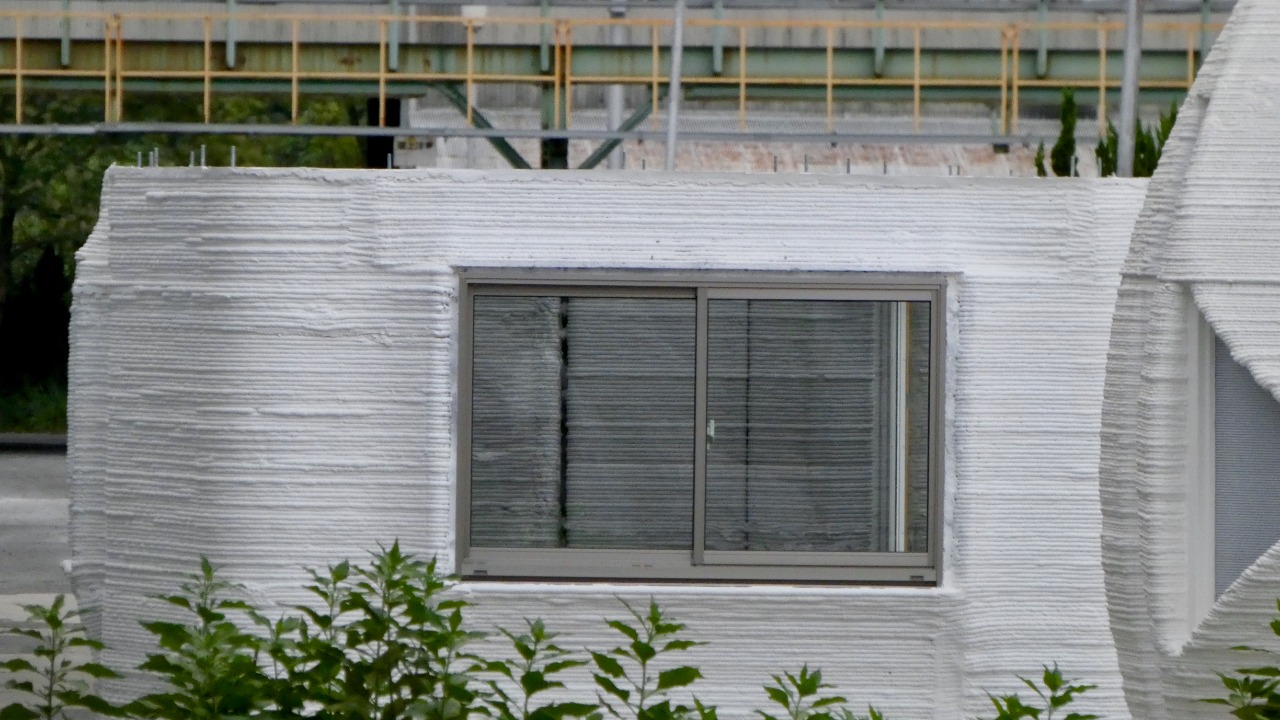

Across Europe, 3D-printed housing has quietly crossed a threshold: projects that once took weeks of continuous printing are now being delivered in a matter of days. The shift is not just about spectacle, it is about turning experimental prototypes into repeatable, code-compliant homes that can be produced at a pace conventional construction struggles to match. As printers speed up and designs mature, the continent is becoming a test bed for how fast, factory-style building might ease housing shortages without sacrificing quality or character.
The headline promise, that Europe’s fastest 3D-printed homes went from weeks to days, is already visible on real streets, from student apartments in Denmark to compact houses in Luxembourg and full-scale prototypes in Belgium. I see a pattern emerging: larger, more capable printers, smarter concrete mixes, and better project logistics are combining to compress timelines while keeping costs and emissions in check, hinting at a new normal for how quickly a neighborhood can rise.
From forest edge to fast-track: the Danish development that reset expectations
In the small Danish town of Holstebro, a new cluster of 3D-printed student apartments has become the clearest proof that printing homes can move at a daily rhythm instead of a weekly slog. Walking through the development, visitors pass century-old trees threaded between low-rise blocks, a deliberate choice to show that rapid construction can still respect existing landscapes and create a calm, campus-like setting. The project’s layout, with apartments grouped around shared outdoor spaces, turns what could have been a pure technology demo into a livable community that happens to be printed rather than poured in the usual way.
The real breakthrough, however, is speed. Reporting from the site describes how the team refined its process until the printer was effectively delivering one apartment per day, making traditional methods seem glacial by comparison once the crew hit its stride. The development is framed as Europe’s fastest 3D-printed housing project, and the on-site experience, from the preserved trees to the compact clusters of apartments, is captured in detail in a feature that invites readers to walk through the scheme in Dec Walking.
Inside the Skovsporet sprint: one apartment per day in practice
The Holstebro project, known as Skovsporet, shows how that “one apartment per day” claim plays out in practice. Early in the build, the team wrestled with the usual teething problems of any new method, from calibrating the print head to sequencing trades around the machine. Over time, the crew learned to keep the printer running in longer, more efficient stretches, trimming idle time between layers and coordinating material deliveries so the concrete mix was always ready when the gantry moved into position.
By the end of the schedule, the project’s own account notes that “Over the course of the project, printing productivity increased significantly,” with “Printing time reduce…” as the team dialed in the process and reached that cadence of roughly one completed apartment shell per day. The development, described as student housing in the town of Holstebro, is profiled as a case where a 3D printer shifted from novelty to workhorse, a transition captured in detail in coverage of how Dec Over the COBOD Printing project unfolded.
COBOD’s BOD3 and the race to scale up
Behind Skovsporet’s pace is a new generation of industrial printers that are bigger, faster, and more flexible than the early machines that produced Europe’s first 3D-printed houses. Danish manufacturer COBOD has become a central player in this shift, supplying gantry-style systems that can be assembled on site and reconfigured for different building footprints. Its portfolio spans single-family homes, multi-unit blocks, and even industrial structures, all built around the same core idea of extruding a tailored concrete mix layer by layer.
One flagship example is described as “Europe’s Largest 3D Printed Housing Project Completed in Denmark Using COBOD’s BOD3,” where a BOD3 printer was used to produce 36 student apartments as part of what is explicitly framed as Europe Largest Printed Housing Project Completed Denmark Using COBOD. The company’s broader ambitions, from housing to wind turbine bases, are laid out on its own site, where it presents itself as a global leader in construction printing technology at COBOD.
From three weeks to “two days in the future”: the Kamp C benchmark
To understand how far the technology has come, it helps to look back at one of Europe’s earliest headline-grabbing builds. In Belgium, a provincial innovation center called Kamp C used what was described as Europe’s largest 3D-printer to complete a full-size, two-story house, a project that signaled the continent’s first serious attempt at a printed dwelling with conventional room layouts and finishes. The structure, with its staircase, large windows, and open-plan interior, was designed to show that printed concrete could support familiar domestic spaces rather than just experimental pods.
The house was completed on site over three weeks, a respectable figure at the time but one that now looks leisurely compared with the daily apartment rhythm in Denmark. Even then, Kamp C’s team argued that the process could be dramatically accelerated, stating that the same house might be printed in as little as two days in the future as the technology matured. That early prototype, and the ambition behind it, is documented in a detailed look at how Jul Kamp C’s printed house came together, while the organization’s broader work on sustainable construction can be explored through its own platform at Kamp.
Affordable and social housing: 35% faster becomes the new baseline
Speed is not just a party trick, it is increasingly tied to affordability. A European affordable housing project highlighted earlier this year was 3D printed in just 12 days, a schedule that was calculated to be 35% faster than conventional methods for a comparable build. That time saving translates directly into lower labor costs and shorter financing periods, two of the biggest drivers of final sale or rent prices in traditional developments, especially when interest rates are high.
The same figure appears in reporting on Europe’s first social housing project built with large-scale 3D-printing, which is described as “Europe’s first social housing project with astonishing 3D-printing technology” and again noted as being 35% faster than traditional construction. I read that repetition as a sign that 35% has become a kind of baseline advantage for well-run 3D-printed housing schemes in Europe, a margin that can either be passed on to residents through lower rents or reinvested in better finishes and shared amenities.
Luxembourg’s tiny home experiment and the power of compact design
While Denmark and Belgium showcase multi-unit and full-size houses, Luxembourg is testing how 3D printing can reshape the tiny home segment. A compact dwelling there has been presented as a 3D-printed tiny home that cuts build time in half and directly challenges the country’s housing crisis, using a small footprint and efficient layout to squeeze more livable units onto scarce plots. The design leans on a south-facing entrance and a carefully planned corridor to connect all major rooms, proving that even a small shell can feel generous if circulation and daylight are handled with care.
The project’s interior sequence is described in detail, from a technical area and bathroom through to the main living spaces, in coverage that highlights how a small south-facing entrance leads into a corridor that connects every major room, from a technical area and bathroom to the rest of the home. That walkthrough is captured in a feature on how a 3D-printed tiny home aims to reshape expectations in Luxembourg, while a companion piece underscores that this layout, with its corridor and technical core, is intended as a template that could be replicated in Luxembourg, and possibly beyond, as described in the section that begins “A small south-facing entrance” at Dec.
How fast is fast? Putting “days” in global context
To appreciate what “days instead of weeks” really means, it helps to compare Europe’s projects with global benchmarks. Industry roundups of 3D-printed houses note that, depending on the printer, design, and materials used, it may take about 24 hours to three weeks to 3D print a house, excluding time for foundations, utilities, and finishing trades. That range captures everything from small single-story cabins to more complex multi-room homes, and it underscores how much variation still exists between different systems and project types.
Against that backdrop, a Danish development printing one apartment per day and a European affordable housing project completed in 12 days sit at the faster end of the spectrum, especially once you factor in that these are not bare shells but code-compliant dwellings with proper insulation and services. The global context, including the observation that “How long does it take to 3D print a house? It may take about 24 hours to three weeks to 3D print a house,” is laid out in a broader overview of Oct How 3D-printed homes compare on time and cost.
From giant gantries to robotic arms: the evolving toolset
Europe’s early experiments leaned heavily on massive gantry printers, the kind that tower over a building site and move on rails to trace out walls. The Belgian house built with Europe’s largest 3D-printer is a textbook example, where a single, fixed-frame machine completed what was described as Europe’s largest 3D-printed house, showing that even a two-story structure could be extruded in situ. That project, which used a giant gantry printer to complete Europe’s largest 3D-printed house, is chronicled in a feature on how Aug Europe pushed the limits of printer size to match architectural ambition.
More recently, the toolset has diversified. Companies experimenting with construction printing now include firms that use robotic arms instead of gantries, pairing them with specialized concrete mixes that can be extruded in precise, continuous beads. One industry observer notes that “Companies like Peri and MaxiPrinter are using robotic arms and specialized concrete mixes to print entire houses in a …” process where a single layer of concrete is printed at a time, a description that captures how Companies Peri and MaxiPrinter are pushing the field toward more flexible, factory-like setups that can be deployed on or off site.
Digital concrete and the next leap: printing structure and services together
Speed gains so far have mostly come from better logistics and faster printers, but the next leap may come from rethinking what gets printed in the first place. Research into large-scale digital concrete construction, such as the CONPrint3D concept, envisions on-site, monolithic 3D-printing where structural walls, reinforcement, and even service conduits are integrated into a single continuous pour. In a first phase, the focus is on getting the basic extrusion process right, but the roadmap quickly moves toward more complex elements.
In a second development step, reinforced concrete components are to be produced in order to expand the application scenarios successfully, with the goal that, eventually, elements like water and sewage are to be integrated directly into the printed structure. That vision, where the printer not only shapes walls but also embeds the pathways for utilities, is outlined in technical detail in a study on large-scale digital concrete, and it hints at a future where the gap between “printing the shell” and “finishing the home” shrinks even further.
Why cities are watching: density, land use, and the European map
Municipalities across Europe are watching these experiments closely because they intersect with some of the continent’s thorniest planning challenges: how to add housing without erasing green space, how to keep construction emissions down, and how to deliver new units fast enough to keep up with demand. The Holstebro development, with its century-old trees preserved between printed blocks, offers one model for gentle densification at the edge of existing neighborhoods, while Luxembourg’s tiny home shows how compact footprints can unlock awkward or leftover sites.
Urban planners are also weighing how 3D-printed housing might fit into mixed-use districts, student campuses, and social housing estates, where speed and cost control are critical but design quality and community acceptance are equally important. Some of that thinking can be glimpsed in planning documents and visualizations shared through local portals, such as the map-based view of a housing site accessible via a Google viewer that situates a printed development within its wider urban context, underscoring that these projects are no longer isolated prototypes but pieces of real city fabric.
More from MorningOverview