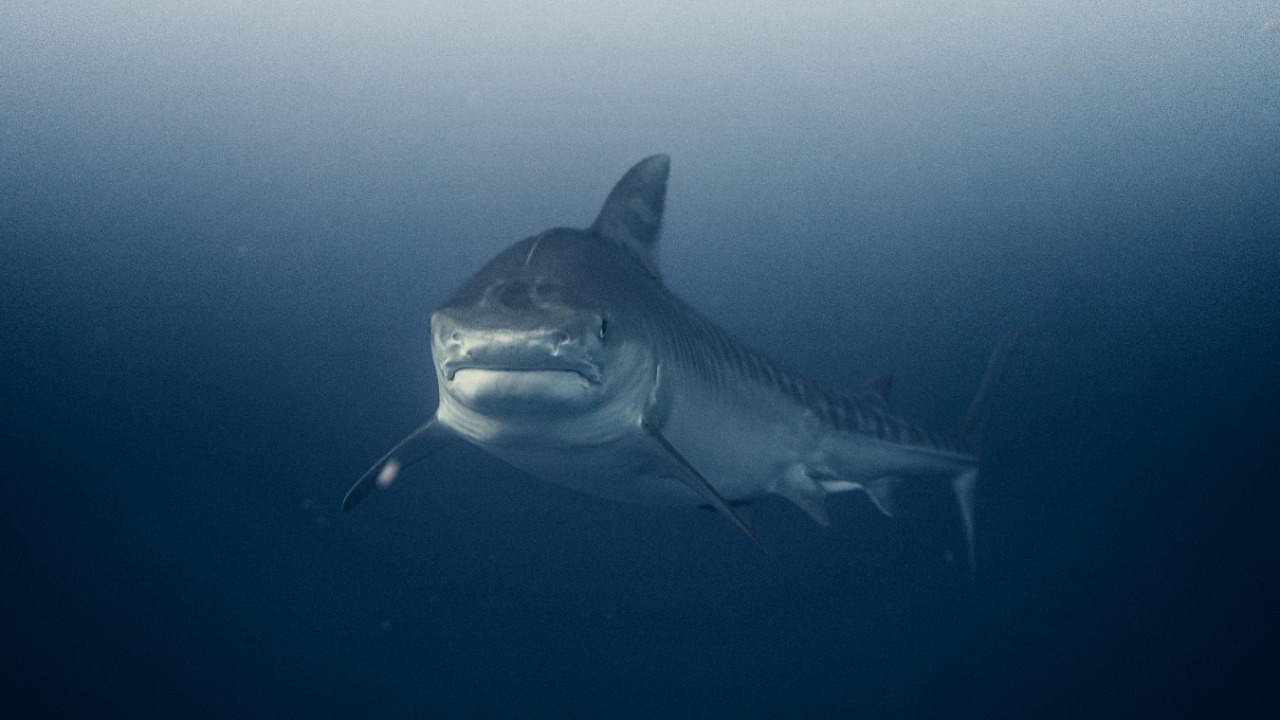

For years, great white sharks were the undisputed apex predators along parts of South Africa’s coast, gathering in dense numbers around seal colonies and drawing tourists from around the world. Then, within a few seasons, the sharks largely vanished from some of their most famous haunts, and carcasses began washing ashore with grisly, surgical wounds. Marine biologists now argue that two individual killer whales, not human activity, have effectively driven great whites out of their own waters.
In tracking this upheaval, I see a rare natural experiment in how a pair of highly specialized hunters can reshape an entire marine ecosystem. The story of Port and Starboard, the orcas blamed for this upheaval, is not just about predators displacing other predators, it is about how quickly fear can redraw the map of the ocean and expose the hidden links between sharks, seals, and coastal communities.
The mystery of the missing great whites
When great white sharks began disappearing from traditional aggregation sites off South Africa, many researchers initially focused on human pressures. It was easy to suspect overfishing, pollution, or boat traffic, especially because shark populations worldwide are under strain and the region had long been marketed as a “shark capital of the world.” In the early phase of the mystery, some scientists and local operators pointed to declining catch records and shifting tourism patterns as evidence that human activity was to blame for the sudden drop in sightings.
The narrative changed once dead great whites started washing ashore in significant numbers, some days as many as 17 in a single stretch of coastline, with their bodies marked by distinctive injuries. These carcasses had gaping holes in their flanks and missing organs, particularly the liver, a pattern that investigators linked to a new predator entering the scene. As more remains turned up and tracking data showed sharks abandoning key hotspots, research confirmed that the disappearance was not just a statistical blip but a response to a direct threat, overturning the early assumption that human activity alone explained the collapse.
From human blame to a “scarier predator”
As tracking tags and carcass examinations accumulated, a different picture emerged, one centered on fear rather than fishing quotas. Great whites that once returned predictably to specific islands and reefs began avoiding those areas for extended periods, sometimes vanishing from monitoring arrays for months. I see that shift as a behavioral alarm bell, the kind of large scale avoidance that usually signals the arrival of a new top predator capable of killing even an apex hunter.Researchers described this new threat as a “Scarier Predator,” a label that captured how great whites were fearfully avoiding their normal gathering place once killer whales appeared in the region. The disruption was not subtle, it rewired the sharks’ movement patterns and undermined the reliability of long term study sites that had anchored decades of research. Tag data and field observations showed that when orcas moved through, white sharks fled almost immediately and stayed away, a pattern that matched reports that Great White Sharks Have Been Fearfully Avoiding Their Normal Gathering Place due to this Scarier Predator and the resulting Disruption.
Meet Port and Starboard, the shark hunters
At the center of this upheaval are two individual killer whales, nicknamed Port and Starboard for the distinctive collapse of their left and right dorsal fins. I find it striking that a pair of animals, rather than an entire pod, could have such an outsized impact on a population of large sharks that once dominated these waters. Observers repeatedly documented these two orcas near sites where shark carcasses later appeared, and their unusual hunting style quickly drew scientific attention.
Port and Starboard are not generic orcas, they are specialists that target sharks for their livers, which are rich in lipids and vitamins. After one attack, an animal was seen with tooth rake marks on its pectoral fin and teeth marks slashed along its side, injuries that matched the precision wounds on dead great whites whose livers had been removed with almost surgical accuracy. Researchers linked these patterns to the same pair of orcas, noting that after the attack, white sharks abandoned the area, a behavioral shift that highlighted how Port and Starboard had effectively cleared out local shark populations.
When a single orca takes down a great white
For years, scientists assumed that orcas needed coordinated group tactics to tackle large prey like great whites, but recent observations have challenged that view. In South Africa, researchers documented a single killer whale killing a great white shark alone, a first for the region and a vivid demonstration of how refined these hunting skills have become. I see that as a turning point in our understanding of orca behavior, showing that individual specialists can execute complex attacks without the support of a full pod.
Witnesses described how the lone orca approached, subdued, and disemboweled the shark with a level of precision that left little doubt about its experience. The event confirmed that, While killer whales can hunt large prey individually, this was the first documented instance in South Africa involving a great white shark, and it reinforced earlier findings that white sharks rapidly vacate an area when killer whales are nearby. That single encounter, captured and later analyzed, has become a key data point in explaining why great whites now avoid certain stretches of coast whenever South Africa’s orcas appear.
Eyewitness to a shattered food chain
For shark researchers and cage diving operators who had spent years watching great whites rule these waters, seeing an orca dismantle one of these predators in real time was a shock. One observer described Watching a favorite apex predator taken down with honed precision by a lone orca, a moment that shattered long held assumptions about who truly sits at the top of the marine food chain. I read that account as more than a dramatic anecdote, it is a window into how quickly field experts had to recalibrate their mental models of predator hierarchies.
The same report identified Starboard as half of an infamous duo of shark hunting orcas, linking the lone attack to the broader pattern of Port and Starboard removing great whites from South African aggregation sites. That continuity matters, because it shows that these are not isolated incidents but part of a consistent hunting strategy that has been refined over multiple seasons. By tying the eyewitness narrative to the documented disappearance of sharks from key hotspots, the account of how Starboard hunts great white sharks helps explain why entire local populations have shifted their behavior.
How two orcas redrew South Africa’s shark map
Great white sharks once ruled South Africa’s coast, especially around islands where Cape fur seals congregate, turning those waters into a global destination for shark tourism. That dominance began to erode when Port and Starboard arrived, repeatedly targeting sharks near these seal colonies and leaving behind carcasses with missing livers. I see the timeline as stark: within a few years of their appearance, sightings of large white sharks plummeted at sites that had previously hosted reliable daily encounters.
Video explainers now describe how these two orcas claimed white shark territory for themselves, with fewer sharks leaving Cape fur seals more abundant and altering the balance between predators and prey. The cascading effects extend beyond wildlife, affecting local businesses that built their livelihoods around cage diving and wildlife watching. By tracing how Great white sharks once ruled South Africa’s coast until Port and Starboard arrived, I can see how two predators effectively redrew the region’s shark map.
Science catches up to the carcasses
As carcasses accumulated and shark sightings collapsed, scientists intensified their efforts to document exactly what was happening beneath the surface. Over several years, they recorded multiple great whites washing ashore with similar wounds, each missing its liver and sometimes other organs, a pattern that pointed to a repeat predator rather than random scavenging. At first, numbers at first human activity was blamed for their disappearance, yet the remains of the sharks had begun to wash up on beaches with such consistency that researchers shifted their focus to direct predation.
Detailed dissections and tracking studies eventually confirmed that great white sharks were being scared from their habitat by just two predators, a conclusion that aligned with the timing and location of Port and Starboard’s movements. Video reports now summarize how, since 2017, scientists have documented this pattern of liver targeted attacks and subsequent shark flight from key aggregation sites. One widely shared clip explains how Great White Sharks Were Scared From Their Habitat by Just 2 orcas, while another long form analysis notes that these predators are exploiting the sharks’ nutritious, vitamin rich livers as a concentrated energy source.
Why shark livers are worth the risk
To understand why Port and Starboard focus so intently on great whites, I look to the biology of shark livers. These organs are massive, sometimes accounting for a significant fraction of a shark’s body weight, and they are packed with lipids that provide buoyancy and energy reserves. For a predator willing to take the risk, a single liver can deliver a caloric payoff that far exceeds the effort of the hunt, especially when the hunter has learned to disable and disembowel its prey with minimal struggle.
Reports on this phenomenon emphasize that, since 2017, scientists have documented orcas repeatedly targeting sharks for their nutritious, vitamin rich livers, often leaving the rest of the carcass largely intact. That selective feeding pattern is a hallmark of specialization, suggesting that Port and Starboard have refined a technique that other orcas may learn or copy. By highlighting how There is no sea creature whose name inspires terror – rightly so – quite like the great white shark, yet these sharks are being targeted for their livers, I see a stark reminder that even apex predators can become energy rich resources in a larger food web.
The wider consequences of orcas terrorizing sharks
The displacement of great whites by Port and Starboard is not an isolated curiosity, it is part of a broader pattern of orcas terrorizing sharks in multiple regions. Analysts now warn that the consequences could be profound, because sharks play critical roles in regulating prey populations and maintaining healthy marine ecosystems. When large sharks abandon an area, mid level predators can surge, prey species like seals and fish can boom, and the entire structure of the food web can tilt in unpredictable ways.
One recent analysis framed the issue bluntly, stating that Orcas Are Terrorizing Sharks, And The Consequences Could Be Profound, a warning that extends beyond South Africa’s coast. I read that as a call to monitor not just shark numbers but also the behavior of specialized orcas like Port and Starboard, whose hunting strategies may spread culturally within orca populations. By connecting the local story of two predators driving great whites from their own waters to this wider trend, I see a future in which the balance between killer whales and sharks becomes a central question for marine conservation, a shift underscored by reporting from Orcas Are Terrorizing Sharks, And The Consequences Could Be Profound by Michelle Starr, Mon.
More from MorningOverview