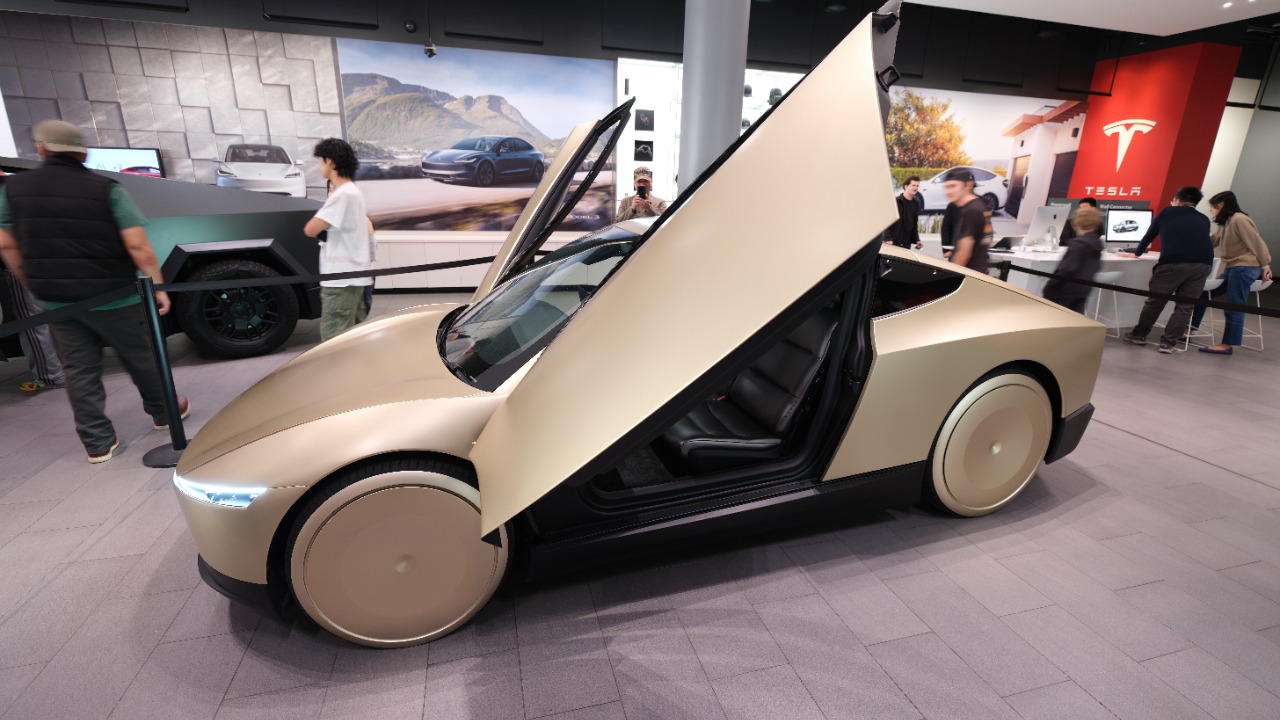

Tesla is quietly building the human backbone of its long‑promised Robotaxi network, shifting factory workers and sales staff into new roles that look a lot more like dispatch and remote operations than traditional driving. The hiring spree signals that the company is preparing to run a real transportation service, not just sell software, and that it expects people to stay in the loop even as the cars handle more of the driving themselves.
By recruiting inside its own ranks and advertising new positions across major U.S. cities, Tesla is trying to solve three problems at once: meeting Elon Musk’s aggressive Robotaxi deadline, satisfying regulators that someone is accountable when things go wrong, and keeping its workforce invested in the company’s most ambitious bet. The result is a hybrid model in which automation and human oversight are designed to grow together rather than one simply replacing the other.
From carmaker to operator: why Tesla is staffing up
The most striking shift is that Tesla is no longer hiring only to build and sell cars, it is hiring to operate a service. Internal postings show the company asking existing factory workers and sales staff to become “AI operators” for its Robotaxi program, a role that blends monitoring, intervention and customer support rather than assembly line work or showroom sales. By tapping people who already understand Tesla vehicles and software, the company can move faster than if it tried to build an entirely new operations team from scratch, and it can keep sensitive early‑stage service data inside a trusted circle of employees.
Those internal moves sit alongside external job ads that describe around‑the‑clock Robotaxi operations in multiple states, suggesting Tesla is planning a network that runs continuously rather than a limited pilot. Listings that reference 24/7 coverage and specific locations such as Las Vegas point to a model closer to a national ride‑hailing platform than a small‑scale test, and they reinforce that the company expects to manage fleets of vehicles directly rather than simply handing autonomy over to individual owners. The language in these postings, which present Tesla as the operator of a continuous Robotaxi service, underpins the decision to recruit factory workers and sales staff into the new AI operator role.
Inside the new “AI operator” and Robotaxi support jobs
Although Tesla markets Robotaxi as a fully autonomous service, the jobs it is posting describe a very human set of responsibilities. AI operators are expected to oversee vehicles in real time, step in when the software struggles, and help manage incidents that range from confused routing to rider complaints. In practice, that means watching telemetry dashboards, responding to alerts, and sometimes taking remote control of a car that is stuck or behaving unpredictably, a task that requires both technical familiarity and quick judgment.
Other roles focus on the logistics of keeping a Robotaxi fleet running, including coordinating charging, scheduling maintenance and handling handoffs between shifts so that coverage remains continuous. The company’s own description of these positions emphasizes that they are part of a broader push to make Robotaxi viable as a fully autonomous service, even as humans remain in the loop to smooth out the rough edges. That framing appears in job listings that invite candidates to follow Grace Kay and others tracking how Tesla is turning its autonomy software into a real‑world transportation product.
Why Tesla is leaning on its own workforce
Instead of building a Robotaxi workforce entirely from the outside, Tesla is offering existing employees extra pay to move into these new positions, a strategy that serves both speed and loyalty. Reports describe the company approaching people on the factory floor and in showrooms with offers to become Robotaxi “drivers” or AI operators, with hourly bumps that make the roles more attractive than standard production or sales jobs. For a company that has long pitched automation as a way to reduce labor, it is a notable pivot to treat human oversight as a premium skill worth paying for.
The approach also helps Tesla manage risk. Workers who already understand how the vehicles behave, how Autopilot and Full Self‑Driving operate, and how the company handles safety incidents are less likely to make costly mistakes when supervising Robotaxis. At the same time, the promise of higher hourly rates and a front‑row seat to the company’s most ambitious project can keep key staff from drifting to competitors. That mix of incentives and internal mobility is reflected in reports that TIMESOFINDIA has detailed, which describe Tesla offering extra pay to factory and sales departments as well.
Round‑the‑clock coverage and the 2025 Robotaxi deadline
Elon Musk has repeatedly set aggressive timelines for autonomy, and the current push to hire Robotaxi staff is closely tied to his goal of hitting an end‑of‑year 2025 milestone. Job listings in multiple states describe a hiring sprint aimed at supporting that deadline, with language that frames the roles as essential to getting Robotaxis on the road at scale rather than as experimental side projects. The geographic spread of these postings, which cover several testing cities, suggests Tesla is trying to build a national footprint quickly enough to match Musk’s public promises.
To make that possible, the company is designing operations around 24/7 availability, which requires overlapping shifts of human supervisors, dispatchers and support staff. Ads that reference continuous Robotaxi operations in places like Las Vegas show how Tesla is planning for a world in which riders can summon a driverless car at any hour, but a human team is always awake in the background to intervene. The scale of that ambition is clear in reports that Tesla is on a hiring push in specific states to meet the end‑of‑2025 Robotaxi goal.
City‑by‑city expansion: from Austin to Los Angeles and beyond
Tesla’s hiring pattern shows that the company is building its Robotaxi network city by city, often before local officials have been fully briefed. In Austin, a spokesperson for the Austin Transportation Department has said the company has not yet formally informed the city about Robotaxi operations, even as job listings and internal recruiting point to a growing presence. That gap between hiring and public disclosure highlights how Tesla tends to move first and negotiate later, relying on existing vehicle approvals while it layers in new services on top.
On the West Coast, Tesla is targeting Los Angeles, with job postings for a Vehicle Operator for Robotaxi work in Marina Del Rey that hint at a broader push into LA’s competitive ride‑hailing market. These roles are framed as part of a larger expansion effort, suggesting that Tesla sees dense, high‑traffic cities as prime territory for early Robotaxi deployment. The combination of internal recruiting and external ads in these locations aligns with reports that the company is eyeing specific neighborhoods, such as Job Opportunities in Marina Del Rey As part of its Los Angeles strategy.
Remote control and the limits of “self‑driving”
For all the talk of full autonomy, Tesla’s hiring plans acknowledge that the software is not yet capable of handling every situation on its own. The company has been building teams whose explicit job is to remote‑control Robotaxis when the vehicle software gets confused, a model that looks more like a high‑tech call center than a traditional taxi depot. These operators are expected to step in when the car encounters unusual road layouts, construction zones or unexpected behavior from other drivers, guiding it through the problem and then handing control back to the automated system.
The need for such a team underscores how far the technology still has to go and why human oversight remains central to Tesla’s Robotaxi rollout. Rather than undermining the autonomy narrative, the company presents this as an iterative step, arguing that remote intervention helps the system learn and improves safety in the meantime. That logic is laid out in reports that describe how, as Tesla struggles to make self‑driving work, it is Hiring a Team to remote‑control its Robotaxis when the vehicle software gets confused sometimes.
Human monitors inside a “self‑driving” service
Beyond remote control, Tesla is also hiring people to monitor self‑driving taxis continuously, watching for anomalies and stepping in long before a situation becomes dangerous. These roles resemble air traffic controllers more than drivers, with staff expected to track multiple vehicles at once, interpret sensor data and decide when to escalate a problem. The existence of such jobs makes clear that Tesla does not see Robotaxi as a fire‑and‑forget technology, but as a system that requires constant human vigilance behind the scenes.
That model mirrors how other high‑risk automated systems are managed, from industrial robots to warehouse fleets, and it reflects a broader industry recognition that autonomy will be supervised for years to come. Tesla’s own job descriptions emphasize safety and oversight, describing how monitors will ensure that self‑driving taxis behave appropriately and that riders have a way to reach a human if something feels wrong. The scale of this effort is evident in reports that Tesla is hiring humans to control its self‑driving Robotaxis and monitor the self‑driving taxis to ensure safety.
Pay, locations and the new Robotaxi labor market
For workers, the Robotaxi build‑out is creating a new category of jobs that sit somewhere between professional driving and tech operations, with pay to match. In New York City, Tesla is willing to pay up to 33.66 dollars an hour for Robotaxi test operators, a rate that competes with established ride‑hailing earnings while offering more predictable hours and benefits. These operators are tasked with driving or supervising vehicles in complex urban environments, collecting data and providing feedback that feeds directly into software improvements.
The company is not limiting this hiring to New York. Job postings show Tesla, Inc recruiting test drivers and Robotaxi operators in Texas, Florida and California, building a network of human supervisors across key markets where it hopes to launch or expand services. In Brooklyn, the company has also been hiring drivers to support testing and early operations, signaling that it sees dense boroughs as important proving grounds. These details are spelled out in reports that describe how Tesla, Inc is also hiring test drivers in Texas, Florida and Cali and was also hiring drivers in Brooklyn.
Global recruiting infrastructure behind Robotaxi
Behind the individual job ads sits a global recruiting machine that Tesla has been refining for years, and that is now being pointed squarely at Robotaxi. Senior recruiters in regions like Europe are directing candidates to centralized career portals where new autonomy and operations roles are posted alongside traditional manufacturing jobs. The message is that Robotaxi is not a side project, it is part of the core business, and applicants are encouraged to see it as a long‑term career path rather than a temporary experiment.
That global infrastructure matters because it allows Tesla to scale Robotaxi hiring quickly if regulators in new markets approve commercial operations. Recruiters can tap existing pipelines of engineers, technicians and operators, shifting them toward autonomy roles as demand grows. One senior recruiter at Gigafactory Berlin‑Brandenburg, Marion Mohr, has publicly pointed candidates to the company’s careers search page, explaining that the volume of inquiries requires people to apply through official channels. Her note, which directs applicants to the page at Tesla, underlines how the company is formalizing the path into roles that will increasingly include Robotaxi support.
Regulators, riders and the road ahead
As Tesla races to staff up its Robotaxi operations, regulators and city officials are still trying to understand exactly how the service will work and who will be accountable when something goes wrong. The fact that the Austin Transportation Department has not yet been formally notified about Robotaxi plans, even as Tesla recruits in the area, shows how the company’s speed can outpace local oversight. For riders, the presence of human operators and monitors may be reassuring, but it also raises questions about privacy, data collection and how much control those unseen workers have over a trip.
From my perspective, the hiring push reveals a more pragmatic Tesla than the one that once promised fully autonomous cars without caveats. By investing in AI operators, remote controllers and human monitors, the company is acknowledging that autonomy will be a spectrum for years, with people and software sharing responsibility for every ride. The details scattered across job postings, city statements and recruiter notes, from the Austin Transportation Department’s comments to the Austin Transportation Department spokesperson’s reminder that the company has yet to inform the city, make one thing clear: Tesla is hiring staff to run Robotaxi not because autonomy has failed, but because turning code into a real‑world service was always going to require a lot of people in the loop.
More from MorningOverview