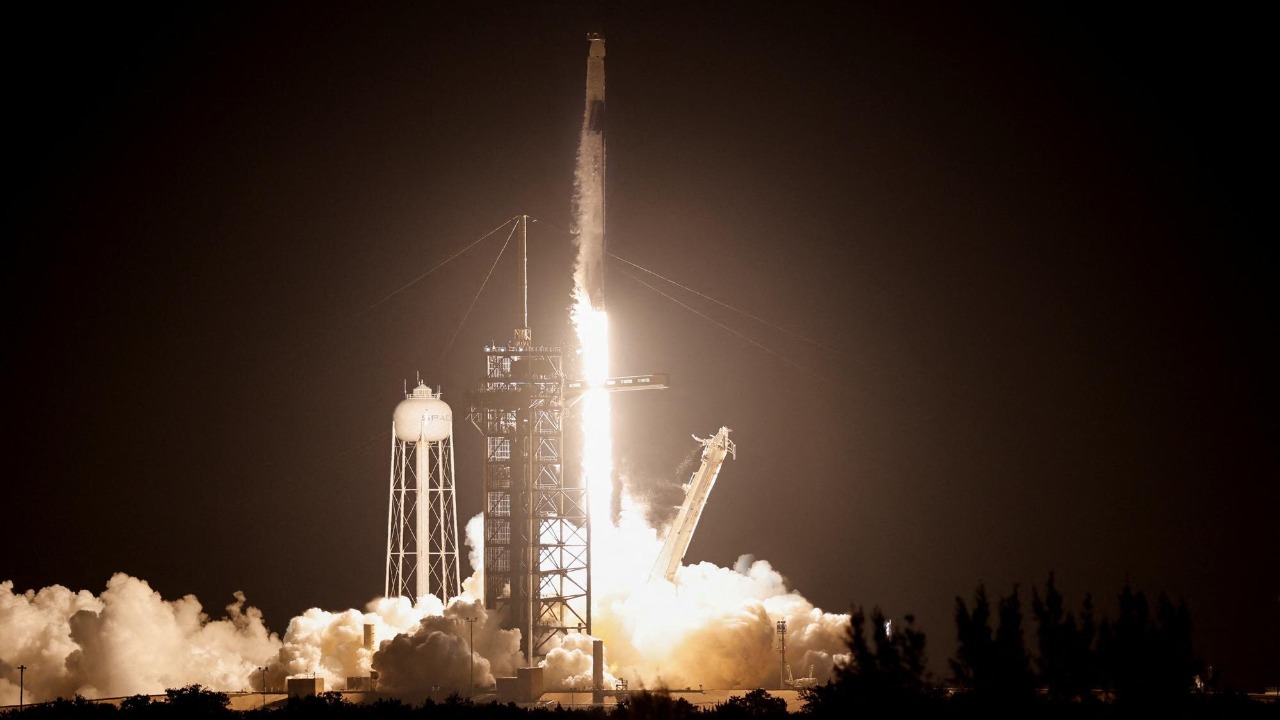

A test flight of SpaceX’s Starship rocket that broke apart in midair earlier this year did more than scatter debris over the Gulf of Mexico. Newly disclosed aviation records indicate the blast forced multiple airliners into emergency decisions, with pilots weighing fuel limits against the risk of flying toward a cloud of metal and propellant. The incident has sharpened questions about how commercial space launches intersect with already crowded air corridors and whether regulators are keeping pace with the risks.
What unfolded in the sky that day was not a theoretical near miss but a chain of real-time choices made in cockpits carrying hundreds of passengers. As investigators unpack what went wrong, the episode is becoming a test case for how far the United States is willing to stretch its airspace to accommodate rapid-fire launches without putting routine flights “at risk” across entire regions.
What happened when Starship blew apart
According to federal records, a midair breakup of SpaceX’s Starship during a January test flight turned a planned ascent into a chaotic hazard zone for nearby traffic. The rocket, operated by SpaceX’s parent company, which trades under the ticker SPACE, was destroyed less than ten minutes after liftoff, sending fragments and fuel into airspace that had been carved out for the launch but bordered busy commercial routes. Investigators later described the event as a midair explosion that created a serious and largely undisclosed threat to aircraft that were already airborne and nearing the edge of the restricted area.
Those records state that a midair explosion of SpaceX’s Starship in Jan forced controllers and pilots to reassess routes on the fly, with some jets already committed to paths that would bring them close to the debris field. The fact that the vehicle failed so quickly after launch limited the geographic spread of wreckage, but it also meant there was little time to adjust flight plans that had been built around the original launch window. What was supposed to be a tightly managed slice of risk for a single rocket instead spilled over into the broader air traffic system.
Passenger jets caught in the danger zone
The most alarming details in the records involve the passenger jets that suddenly found themselves with no good options. One airliner, already cruising with a cabin full of travelers, was forced to choose between continuing toward the area where Starship had disintegrated or diverting around it at the cost of precious fuel reserves. The crew ultimately faced a scenario in which the safest path from a debris perspective could have left them short of fuel, while the most efficient route risked flying closer to the remnants of the rocket.
Regulators later concluded that multiple commercial airliners and hundreds of passengers were exposed to what they described as an “extreme safety risk” as the Starship test flight came apart. In internal assessments, officials compared the potential consequences of a large fragment striking a jet to the catastrophic chain reaction seen in the 2000 Concorde crash, underscoring how a single launch failure can ripple through the airspace system. The same review found that a SpaceX Starship test flight earlier this year placed those jets at a level of danger regulators rarely acknowledge in public.
‘Mayday’ calls and Iberia’s impossible choice
The records also describe a sequence of radio calls that underline how close the situation came to disaster. One pilot, confronted with rapidly changing instructions and dwindling fuel margins, declared “Mayday” after the explosion, a formal distress signal that indicates an immediate threat to the safety of the aircraft. That call, made as crews tried to understand where the debris was falling and how far the hazard extended, shows how a launch failure can turn a routine long-haul flight into an emergency in a matter of minutes.
Two other planes, including an Iberia Airlines flight and a private jet, encountered the same dilemma, forced to choose between flying closer to the area where the rocket had been destroyed or risking a fuel emergency if they diverted too far. The documents say these aircraft were pushed into what investigators described as life-or-death choices for pilots, a stark phrase in a field that usually couches risk in probabilities and margins. The account of how two other planes, an Iberia Airlines flight and a private jet, were boxed in by the blast has already become a touchstone in debates over how much airspace should be closed for launches.
Inside the cockpit as the crisis unfolded
From the cockpit perspective, the Starship failure was not a clean, abstract event but a confusing blur of alarms, fuel calculations, and partial information. Pilots rely on air traffic control to define safe corridors around launch sites, but when a rocket is “destroyed” in flight, the shape of that danger changes instantly. Crews on the affected jets had to weigh their fuel status, weather, and the latest coordinates of the debris cloud, all while keeping passengers calm and maintaining separation from other aircraft that were also being rerouted.
One account describes how a SpaceX test flight that was “destroyed” less than ten minutes after launch forced multiple passenger jets to adjust course, with some aircraft ending up in closer proximity to each other than normal as they threaded around the hazard. Video and audio compilations of the incident show controllers juggling calls as they tried to keep jets clear of the area while preserving enough fuel for safe landings. The description of a SpaceX test flight that was ‘destroyed’ less than ten minutes after liftoff captures how quickly a launch anomaly can cascade into a broader air traffic challenge.
How the FAA is recalibrating launch rules
For the Federal Aviation Administration, which is responsible for both licensing commercial launches and safeguarding the national airspace, the Starship episode has become a catalyst for policy change. Officials have long argued that they can protect airline passengers while enabling a surge in private rockets, but the near miss with multiple jets has exposed the limits of existing procedures. In response, the agency has begun to tighten the conditions under which companies like SpaceX can send up large vehicles, particularly during peak travel periods.
One of the most concrete shifts is a new order that restricts many commercial space launches to nighttime hours in an effort to reduce conflicts with dense daytime traffic. Effective November, the FAA directed that launches from key spaceports avoid windows when airline routes are busiest, using its authority under 51 U.S.C. to reshape how companies schedule missions. The directive, which notes that the Federal Aviation Administration has imposed these nighttime restrictions, signals that regulators are no longer willing to accept the same level of overlap between rockets and airliners.
SpaceX, Elon Musk and the pressure to move fast
The Starship program sits at the center of SpaceX’s ambitions, and by extension, at the center of Elon Musk’s vision for sending people and cargo far beyond low Earth orbit. That ambition has always come with a tolerance for high-risk test flights, including vehicles that are expected to fail as engineers iterate on design. In this case, however, the failure did not occur in isolation over an empty range but in a sky shared with transoceanic jets, which has intensified scrutiny of how aggressively the company and regulators are pushing the test schedule.
One report on the incident describes how Elon Musk’s failed SpaceX launch left airliners in danger after the rocket suddenly exploded, with passenger jets forced into abrupt course changes and some aircraft ending up closer to each other than standard separation rules would normally allow. The same account notes that the test flight endangered several packed passenger jets that were already committed to their routes, highlighting the tension between experimental rocketry and routine commercial service. As Elon Musk’s failed SpaceX launch is dissected in public, the pressure is mounting on both the company and the FAA to show that lessons are being learned.
What the FAA will say, and what it will not
Publicly, the FAA tends to speak in careful, technical language about incidents that touch on both aviation safety and commercial spaceflight. Its general statements emphasize a commitment to protecting the flying public while supporting innovation, but they rarely spell out the full extent of near misses or internal disagreements over risk. In the wake of the Starship explosion, the agency has acknowledged that it is reviewing procedures and coordinating with operators, yet much of the most vivid detail about the threat to airliners has emerged from records obtained after the fact rather than from initial briefings.
The agency’s own communications hub, which publishes broad updates on safety initiatives and enforcement actions, offers a window into how it frames these issues without delving into every specific case. In those materials, officials stress that they continuously evaluate launch licensing and airspace integration, a phrase that covers everything from how wide to draw hazard zones to how quickly to reopen routes after a mission. The general posture outlined in FAA general statements suggests a regulator that wants to reassure travelers and industry alike, even as internal files on the Starship incident reveal just how close the system came to a worst-case scenario.
Pilots, unions and the demand for a safety buffer
Pilots and their unions have seized on the Starship episode as evidence that the current balance between launch access and airline safety is too thin. From their vantage point, the combination of tight fuel planning, crowded routes, and expanding launch schedules leaves little margin when something goes wrong. The “Mayday” call logged after the Jan explosion has become a rallying point in conversations about whether crews are being asked to shoulder too much of the risk created by decisions made on the ground.
Accounts of the incident describe how one pilot declared “Mayday” after Musk’s rocket explosion, underscoring that the crew believed the situation had crossed the line from manageable complication to immediate danger. That distress call, recorded in the files that revealed the Jan 16 explosion posed a greater danger to planes in the air than was publicly known, has fueled demands for larger buffer zones and more conservative launch windows. The report that a pilot declared ‘Mayday’ after Musk rocket explosion is now being cited in union briefings as a concrete example of why crews want a bigger voice in how launch-related airspace closures are designed.
What this means for future flights over launch corridors
For travelers, the most immediate consequence of the Starship blast is likely to be more frequent and longer reroutes around launch sites, particularly along transatlantic and trans-Caribbean corridors that intersect with major spaceports. Airlines may build in extra fuel and time to account for the possibility that a rocket could fail and expand the hazard area, which in turn could raise costs and complicate scheduling. At the same time, communities near launch facilities may see more missions shifted into late-night windows, trading daytime airspace conflicts for concerns about noise and environmental impact after dark.
In the longer term, the incident is forcing a broader reckoning over how to integrate a rapidly growing commercial space sector into an airspace system that was never designed for frequent, large-scale rocket launches. Regulators are experimenting with dynamic airspace management tools that can shrink or move restricted zones in real time, but the Starship failure shows that even the best software cannot eliminate the fundamental risk of a vehicle breaking apart where airliners are flying. As I weigh the lessons from this near miss, the central question is whether the drive to open the skies to rockets like Starship will be matched by an equally aggressive commitment to keeping every passenger jet far from the blast radius when something goes wrong.
More from MorningOverview