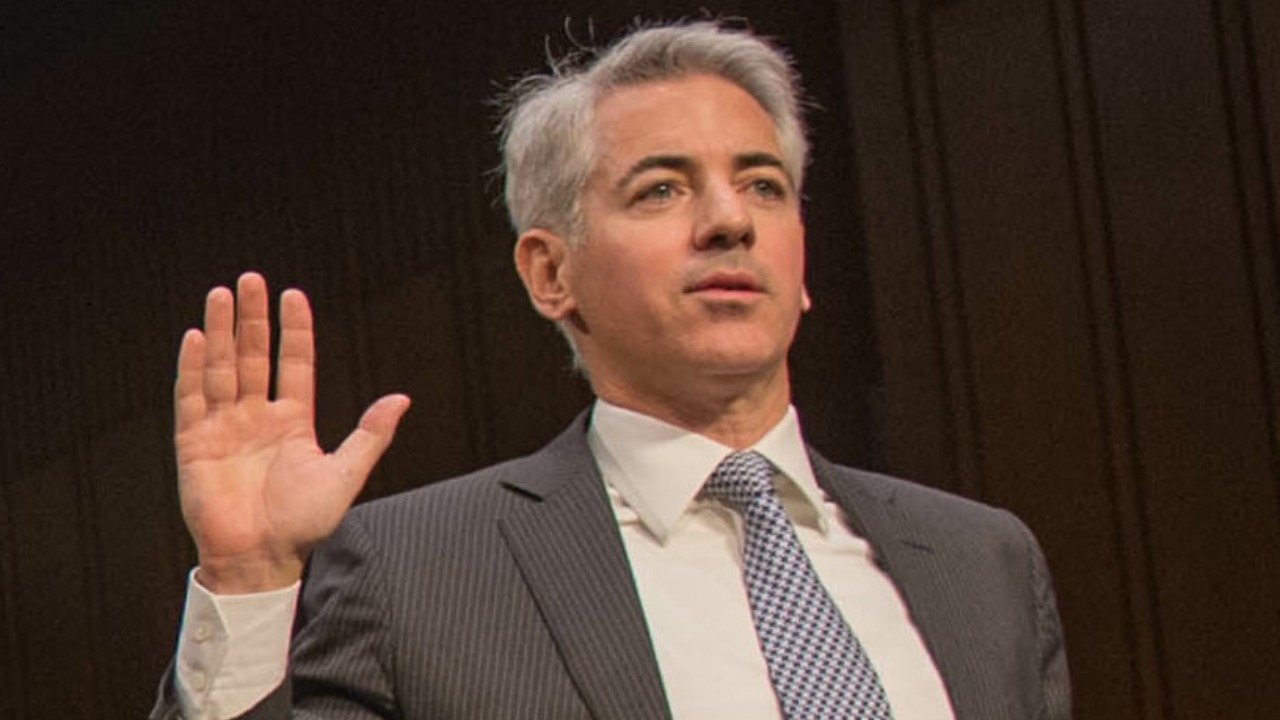

Bill Ackman is trying to rewrite the script for how one of the world’s most closely watched private companies reaches public markets. Instead of a conventional listing, the billionaire investor is pitching a merger between his blank-check vehicle and SpaceX that would use a SPARC structure to stage a future IPO-like debut. If Elon Musk accepts, the deal could test whether Wall Street is ready for a new hybrid between traditional offerings and the boom-and-bust era of SPACs.
The proposal lands just as expectations harden that SpaceX will IPO in 2026, with some analysts already sketching out valuations in the trillions. Ackman’s idea is not only about getting a piece of that growth, it is also a live experiment in whether SPARCs can fix what went wrong with the last wave of blank-check deals and give retail investors a cleaner way into marquee names.
The pitch: Ackman’s SPARC meets Musk’s rocket ship
At the core of the plan is Bill Ackman’s attempt to match his capital-raising machinery with Elon Musk’s most valuable private company. Ackman, described as a Billionaire investor in coverage of his latest vehicle, has floated a structure in which his SPARC would merge with SpaceX, effectively pre-packaging a path to the public markets while preserving flexibility on timing and valuation. The idea is to give SpaceX a ready-made shell and investor base, while still allowing Musk to control when and how the company actually lists its shares.
Reporting on the proposal notes that Ackman is pitching an “innovative approach” to taking SpaceX, which trades privately under the ticker SPACE, public through a SPARC merger that would function as a bridge to a full IPO. One account by Matthew Eisman describes how the billionaire is using his new vehicle to target a company of SpaceX’s scale, highlighting that the structure is meant to align incentives between early backers and future public shareholders by tying capital commitments to a specific deal rather than a blind pool of cash. That framing underscores why Ackman believes his SPARC merger could be a better fit for Musk than a conventional blank-check transaction.
How a SPARC differs from the SPAC boom that went bust
To understand why Ackman is leaning on a SPARC, it helps to recall how SPACs work and why they fell out of favor. In a standard SPAC, investors put money into a publicly traded shell that raises cash first and hunts for a target later, with the capital parked in trust while sponsors search for a deal. That model, which surged in popularity, left many shareholders exposed to rushed or low-quality acquisitions once the two-year deal clock started to run down, a dynamic that has been dissected in analyses of SPACs versus IPOs.
A SPARC, by contrast, flips the sequence. Instead of raising cash up front, the sponsor secures regulatory approval to issue rights that only turn into capital commitments once a specific deal is identified and presented. Legal commentary on SPAC vs. SPARC structures explains that SPARCs, while acoustically similar to SPACs, serve a distinct role in the financial lexicon by allowing investors to decide whether to fund a transaction after seeing the target and terms. In that framework, the SPARC retains the acquisition-vehicle DNA of a SPAC but removes the pressure of idle public capital at its onset, a distinction highlighted in detailed comparisons of SPAC vs. SPARC.
Ackman’s regulatory runway and his search for a flagship deal
Ackman has been preparing for a transaction of this scale for some time. His earlier blank-check efforts ran into regulatory headwinds, but more recent reporting shows that his special-purpose vehicle finally secured a green light from the Securities and Exchange Commission, clearing the way for him to look aggressively for a marquee acquisition. Once that approval arrived, he signaled that he was “looking for something to buy,” a phrase that underscored his ambition to pair his capital structure with a company that could justify the complexity and scrutiny of a novel listing route.
The SEC’s sign-off effectively gave Ackman permission to deploy his new structure in the hunt for a high-profile partner, and it is in that context that his outreach to SpaceX should be read. The same coverage that chronicled his regulatory progress also framed his vehicle as a potential template for future deals, suggesting that if he could land a company of SpaceX’s stature, it would validate the SPARC concept for a much wider audience. That is why his SEC-cleared vehicle, described in detail in reports on Ackman’s SPAC approval, now sits at the center of the SpaceX conversation.
Inside the proposal: priority access for Tesla shareholders
One of the most striking elements of Ackman’s pitch is how it tries to knit together Elon Musk’s different investor bases. Rather than limiting participation to institutional funds or SPARC rightsholders, the proposal envisions giving Tesla shareholders priority access to the eventual SpaceX offering. That twist is designed to reward the retail and long-term investors who have backed Musk’s electric vehicle company, effectively turning loyalty to Tesla into a ticket for early exposure to his space and satellite business.
Coverage of the plan spells this out explicitly, noting that “Bill Ackman Proposes Elon Musk’s SpaceX IPO Through SPARC Structure, Offering Tesla Shareholders Priority Access.” The wording underscores that the SPARC is not just a financing tool but also a distribution strategy, one that could channel a portion of the deal toward a defined group of investors rather than leaving allocation entirely to underwriters. By tying the structure to Tesla’s cap table, Ackman is signaling that his proposal for Elon Musk is as much about investor politics as it is about capital markets engineering.
Why SpaceX is the ultimate SPARC stress test
SpaceX is not just another private company looking for an exit, it is a business that has already reshaped launch economics and built a global communications network through Starlink. Analysts tracking its trajectory now say that SpaceX will IPO in 2026, and they have begun to model what that could mean for public-market valuations. One widely cited breakdown argues that the company may reach an IPO valuation of $1.5 trillion, a figure that would instantly place it among the most valuable aerospace and technology firms on earth.
Those projections rest on a mix of launch revenue, satellite broadband growth, and the optionality of future projects, and they help explain why Ackman is so eager to align his SPARC with Musk’s timetable. If SpaceX does list at a valuation around $1.5 trillion, early investors who secure allocations through a SPARC-linked structure could see substantial upside compared with later entrants. That is why analyses that ask how much SpaceX stock is worth, and that spell out the possibility of a public company worth $1.5 trillion, have become central to the debate over whether a SpaceX IPO valuation justifies the complexity of Ackman’s plan.
What the 2026 IPO timeline means for investors
The expectation that SpaceX will IPO in 2026 is no longer a vague rumor, it is now framed as a target date that shapes how investors think about timing and risk. Key Points summaries of the company’s outlook emphasize that SpaceX has confirmed a target IPO date of 2026 and that the company may reach an IPO valuation of $1.5 trillion, with some scenarios implying that the eventual share price could be nearly four times current implied private-market levels. For investors, that combination of a defined window and aggressive upside estimates is exactly the kind of setup that makes pre-IPO access so coveted.
In that light, Ackman’s SPARC proposal can be seen as a way to lock in a seat at the table ahead of the 2026 event, while still preserving the ability to walk away if the terms disappoint. The same Key Points analysis that highlights the 2026 target and the $1.5 trillion figure also underscores how sensitive the valuation is to assumptions about launch cadence and Starlink profitability, which means that any SPARC-linked deal would need to give investors room to reassess as new data arrives. That is why the Key Points on the IPO are so central to evaluating whether Ackman’s structure offers enough flexibility.
SPARCs as a response to SPAC backlash
SPARCs did not emerge in a vacuum; they are a direct response to the legal and economic backlash that followed the SPAC boom. Critics argued that traditional SPACs encouraged sponsors to prioritize closing any deal over finding a good one, since their compensation often depended on consummating a transaction before the clock ran out. Legal analysts examining the new structure have pointed out that, although the SPARC retains the fundamental nature of a traditional SPAC as an acquisition vehicle, it departs from that model by avoiding the accumulation of public capital at its onset and by giving investors more control over when their money is actually put at risk.
One detailed legal note on SPARCs stresses that “Although the SPARC retains the fundamental nature of a traditional SPAC as an acquisition vehicle, it also departs from that model by avoiding the accumulation of public capital at its onset.” That formulation captures the core design choice that Ackman is betting on: by eliminating the idle-cash period, SPARCs aim to reduce the pressure to do a bad deal simply to beat a deadline. For investors weighing the SpaceX proposal, the analysis of SPARCs as an alternative to SPACs is a reminder that the structure is meant to fix specific flaws, not just rebrand the same product.
Investor protections: why SPARC rights matter
Beyond the sequencing of capital, SPARCs also change the balance of power between sponsors and investors. In a traditional SPAC, shareholders who dislike a proposed deal can redeem their shares, but they have already tied up their money for months or years and must navigate a redemption process that can be complex. By contrast, legal commentary on Ackman’s structure emphasizes that, most prominently, SPARC investors, unlike their SPAC counterparts, have the ability to hold back their investment while still retaining the option to participate once a specific acquisition is announced.
That distinction is crucial in a volatile market, especially for a company as high profile and hard to value as SpaceX. If Musk and Ackman agree on terms that some investors view as too rich, SPARC rightsholders can simply decline to fund, reducing the risk that they are dragged into a deal they no longer believe in. The same analysis that highlights how “Most prominently, SPARC investors, unlike their SPAC counterparts, have the ability to hold back their investment” also notes that this feature could make SPARCs a more palatable option for institutional investors who were burned in the last SPAC cycle. Those protections are central to the legal assessment of whether Ackman’s attempt to “SPARC” a fix to SPACs will hold up under scrutiny.
How this differs from a plain-vanilla IPO
For all the innovation around SPARCs, the endgame is still to get SpaceX listed, which raises the question of how this route compares with a straightforward IPO. In a conventional IPO, a private company issues new shares and, with the help of an underwriter, sells them on a public exchange, setting a price range through a roadshow and book-building process. That model concentrates a lot of power in the hands of investment banks and often leaves retail investors with limited access to the most sought-after offerings, a dynamic that has been dissected in detailed comparisons of SPACs versus IPOs.
A SPARC-linked merger would change that choreography by inserting a pre-negotiated acquisition step before the shares trade freely, and by using rights rather than traditional underwriting to allocate much of the stock. Analyses of SPAC transactions explain that, in a SPAC deal, the private company effectively merges into a publicly listed shell, turning itself into a public entity without going through the classic IPO process. Ackman’s proposal blends that merger logic with SPARC rights and targeted access for Tesla shareholders, creating a hybrid that sits somewhere between a reverse merger and a standard listing. That is why the technical breakdown of SPACs and IPOs is so relevant to understanding what Ackman is trying to build.
The SPAC learning curve and why structure now matters
The last few years have given investors a crash course in the risks and rewards of alternative listing vehicles. Commentators like Adam Tracy, who has walked viewers through SPACs and reverse mergers in videos aimed at fintech and blockchain founders, have emphasized how these structures can accelerate access to public capital but also magnify governance and disclosure risks if not used carefully. His explanations of how a backdoor listing works, and why sponsors sometimes favor it over a traditional IPO, speak directly to the trade-offs that SpaceX and its backers must weigh.
That learning curve is one reason why Ackman is so focused on designing a structure that addresses the most glaring criticisms of the SPAC era. By giving investors more optionality and tying capital commitments to a specific deal, SPARCs aim to preserve the speed and flexibility that sponsors like while reducing the perception that these vehicles are simply shortcuts around IPO scrutiny. For retail investors who watched the last wave of blank-check deals with a mix of fascination and regret, educational content like Adam Tracy’s breakdown of SPACs and reverse mergers provides a useful backdrop for evaluating whether Ackman’s SpaceX gambit is genuinely different.
Market reaction and what comes next
Initial coverage of Ackman’s outreach to SpaceX has framed it as both a bold swing and a test of how much leverage Musk wants to give outside financiers. Reports summarizing the proposal describe how Bill Ackman, identified as a Billionaire, is pitching a SPARC-based IPO route that would merge his vehicle with SpaceX and then stage a listing, effectively turning the SPARC into a launchpad for one of the most anticipated offerings of the decade. That framing captures the stakes: if the deal proceeds, it could redefine how late-stage unicorns think about going public.
At the same time, the broader conversation about SpaceX’s path to market continues to evolve, with parallel coverage reiterating that SpaceX will IPO in 2026 and revisiting how much its stock might be worth under different scenarios. One widely circulated analysis, republished on a major portal, again stresses that SpaceX will IPO in 2026 and revisits the question of how much its stock is worth, reinforcing the sense that the timeline is firming up even as the structure remains in flux. That is why summaries of how much SpaceX stock is worth sit alongside reports that “Bill Ackman proposes SpaceX IPO via Sparc merger,” which describe his role as a Billionaire sponsor trying to shape the process through a Sparc IPO proposal.
More from MorningOverview