
Tesla has quietly registered more than 1,000 vehicles in California that it classifies as part of a “robotaxi” fleet, rapidly expanding the hardware footprint for its autonomous ambitions even as regulators insist the company still lacks approval for driverless operations. The surge in registrations sets up a high-stakes collision between Tesla’s aggressive rollout strategy and a state oversight regime that has already forced other self-driving players into painful slowdowns.
On paper, the numbers suggest Tesla is racing to match or surpass the scale of established robotaxi rivals in key markets like the San Francisco Bay Area. In practice, the company is still constrained to supervised ride-hailing, with human drivers in the front seat and a patchwork of permits that fall short of what California requires for true autonomous service.
What Tesla’s 1,000‑plus “robotaxis” in California actually represent
The headline figure, more than 1,000 Tesla vehicles registered in California as part of a robotaxi fleet, signals a company preparing for scale rather than one already operating a fully autonomous network. Registration data, as described in recent reporting, shows Tesla labeling a growing share of its cars in the state as robotaxis, even though they currently run with human drivers and under conventional insurance and licensing rules. The move effectively pre-positions a large pool of vehicles that could be switched into more automated service if and when regulators sign off.
By the end of the year, that registered fleet in California is described as having “jumped to over 1,000” vehicles, a scale that puts Tesla in the same numerical conversation as long-running autonomous programs. Yet those same reports stress that the cars are still operated by human drivers, underscoring the gap between Tesla’s branding and the legal definition of a driverless robotaxi in California.
Musk’s expansion targets: from Bay Area to Austin and beyond
Elon Musk has framed the California buildout as one piece of a broader robotaxi push that includes Texas and other states. In public comments, Musk has talked about ramping to 500 Robotaxis in Austin and 1,000 in the Bay Area by the end of 2025, presenting those figures as near-term operational goals rather than distant aspirations. That framing helps explain why Tesla is front-loading registrations in California: the company wants the vehicles in place before it flips any regulatory switch.
Separate reporting on a podcast appearance has Musk, identified as Musk and also as Elon Musk, saying there would be 1,000 vehicles in the Bay Area ride-hailing fleet as 2025 ends. Those comments line up with internal projections that the California fleet, already above 1,000 registered cars, could be redeployed into more intensive service in San Francisco and surrounding cities if the company can clear regulatory hurdles.
Inside Tesla’s Bay Area launch: a “robotaxi” with a human catch
On the ground in the Bay Area, Tesla’s launch has been more modest and more complicated than the registration numbers suggest. The company has told staff in an internal memo that it planned to launch the Robotaxi service in San Francisco over a weekend, describing a rollout that would initially rely on human drivers in the front seat while the software handles much of the driving. That internal communication, referenced in reporting on Tesla updating Robotaxi app users, underscores that the service is still supervised ride-hailing rather than fully driverless automation.
Coverage of the Bay Area launch has also highlighted what one outlet called a “human catch”: Politico noted that Politico reported Tesla does not have a permit to run an autonomous driving service in California, meaning it cannot launch a truly driverless Robotaxi service there. Instead, the company is threading a needle, marketing the experience as a robotaxi while keeping a licensed driver in the seat to stay within the bounds of existing rules.
Regulators push back: California’s permit problem
California regulators have been explicit that Tesla’s ambitions outpace its current approvals. State officials have said that Tesla’s Bay Area robotaxi launch is happening without an autonomous vehicle permit, stressing that the company has no AV permit on file even as it markets a robotaxi service in the region. That position is captured in coverage that describes Tesla, the Bay Area and California regulators in the same breath, underscoring the tension between corporate messaging and state oversight.
Regulators have also laid down clear conditions for any move toward driverless operation. One official statement put it bluntly: “If Tesla intends to conduct driverless testing or deploy autonomous technology, it must apply for the appropriate permit.” That requirement is not optional, and it means that the 1,000‑plus registered robotaxis in California cannot legally operate without human drivers until Tesla satisfies the state’s autonomous testing and deployment rules.
Investors, critics and the charge of “deception”
The gap between Tesla’s branding and its regulatory status has not gone unnoticed by investors and critics. One detailed analysis argued that Tesla is trying to deceive investors into thinking it has San Francisco robotaxis, pointing out that while the company did obtain a ride-hailing permit earlier in the year, it has not obtained a permit to operate an actual driverless service. That critique, tied directly to Tesla, centers on the idea that the company is blurring the line between supervised ride-hailing and true autonomy in its investor communications.
At the same time, investors are closely watching for signs that robotaxis will be a major driver of Tesla’s valuation. One report noted that investors are tracking whether robotaxi deployment “will be” a key factor for Tesla’s stock, linking that expectation to the company’s aggressive registration and expansion plans. Another analysis of Tesla’s AI strategy emphasized that, besides Austin, the only area where Besides Austin, Tesla and Tesla Inc currently offer supervised ride-hailing services is California’s San Fr, with plans to expand to Nevada, Arizona and Florida pending regulatory approval. That context helps explain why the California registration surge is so central to the company’s narrative.
How Tesla’s service compares with Waymo and other robotaxi rivals
In raw vehicle numbers, Tesla’s California fleet is starting to resemble those of established autonomous operators. By comparison, Waymo told Business Insider it has more than 1,000 vehicles operating in its autonomous fleet in the region, a figure that has been built up over years of testing and gradual expansion. Waymo’s cars run fully driverless in some parts of San Francisco and other cities, with no human in the front seat, under a suite of permits that California regulators have already vetted.
Waymo’s public materials describe a mature robotaxi service that has been carrying select members of the public since 2023, with a focus on safety metrics and tightly geofenced operating zones. Its official site, Waymo, highlights a service that is already live in multiple cities, contrasting with Tesla’s supervised model. That comparison underscores a key point: Tesla’s 1,000‑plus registered robotaxis in California may match rivals in scale, but they do not yet match the regulatory status or operational autonomy of competitors that have spent years navigating the state’s permitting process.
On the street: what a Tesla “robotaxi” ride feels like
For riders, the distinction between supervised and driverless can be both subtle and stark. A detailed video review titled “A Full Day Using Tesla’s $4.20 RoboTaxi – Here’s What Happened” walks through the experience of using Tesla’s app-based service, with the reviewer spending an entire day relying on the system to get around. The video, posted in Jun, describes how the car handles city streets, merges and unprotected turns, while a human driver remains ready to intervene.
Online forums add another layer of ground truth. In one discussion thread, a user asks whether Tesla has given up on robotaxis in the SF Bay Area, prompting responses that clarify the current rules. One commenter notes that “There has to be a licensed driver on board, and can’t drive for hire,” explaining that the setup is easy to get with proof of insurance and that it “works pretty well.” That description aligns with the regulatory picture: Tesla’s service today feels like a highly automated ride-hail, not a driverless pod.
From “Cybercabs” hype to California reality
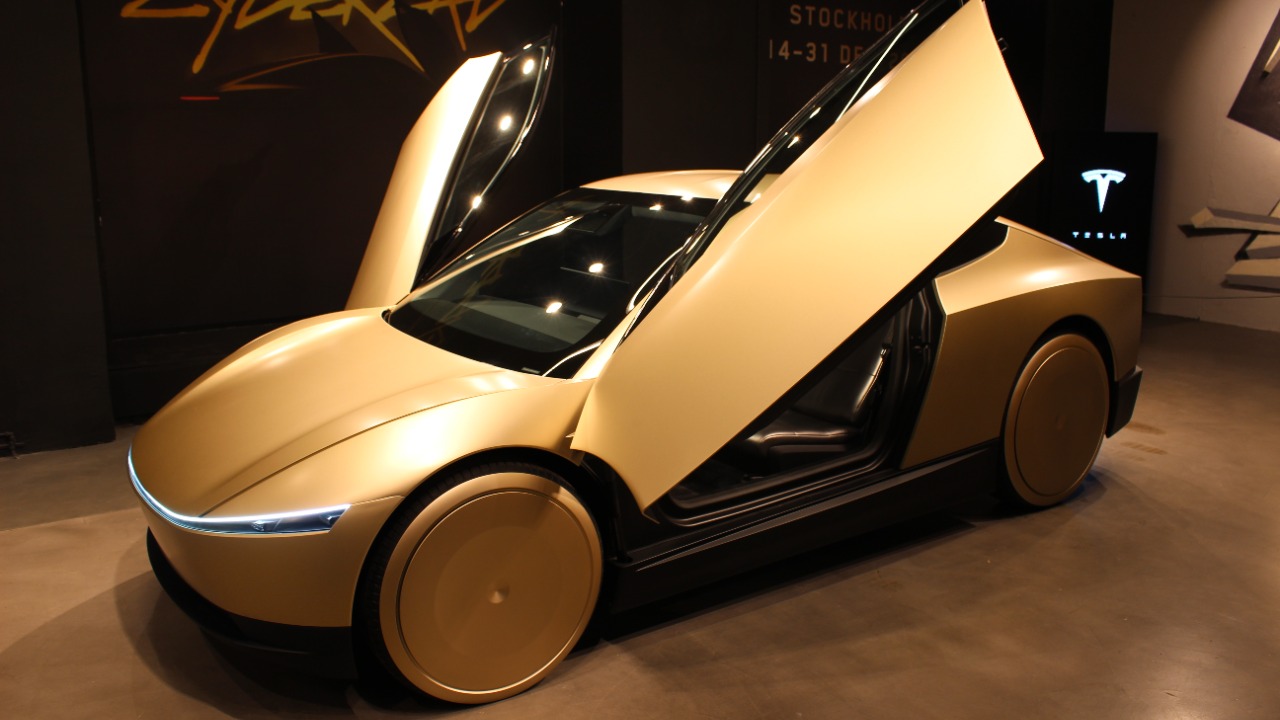
Musk’s rhetoric around robotaxis has often outpaced the on-the-ground reality, and California is no exception. Earlier commentary noted that, although he made promises that a fleet of Cybercabs would soon transport customers in several cities, the robotaxis currently operate in only a handful of markets. That analysis, which explicitly references Although and Cybercabs, captures the gap between Tesla’s global marketing and its limited, supervised deployments in places like the Bay Area and Austin.
At the same time, Tesla is not slowing its hardware buildout. One report on the company’s expansion plans said Tesla CEO Elon Musk has announced that the company will add more than 1,000 cars to its robotaxi fleet, with the Bay Area as a key focus. That piece, which credits Nov, One, Riz Akhtar Image and Joe Tegtmeyer, notes that the fleet in San Francisco stands at 2,000 vehicles when counting both existing and planned additions. The reference to Tesla CEO Elon Musk underscores how central the robotaxi narrative has become to the company’s broader growth story.
The road ahead: permits, perception and the next 1,000 cars
Looking forward, the key question is not whether Tesla can register another thousand cars in California, but whether it can secure the permits that would let those vehicles operate without human drivers. State regulators have already signaled that any move toward driverless testing or deployment will require formal applications and approvals, and they have publicly stated that Tesla currently has no AV permit in the Bay Area. Until that changes, the company’s robotaxi service will remain a hybrid: highly automated software wrapped in the legal shell of a conventional ride-hail.
For now, Tesla’s strategy appears to be to saturate key markets like the Bay Area and Austin with capable vehicles, build user familiarity through supervised rides, and then push regulators to acknowledge what the company argues is a safe, scalable system. Whether that approach succeeds will depend on more than marketing. It will hinge on safety data, public trust, and the willingness of California and other states to treat Tesla’s software as mature enough for true autonomy. If those pieces fall into place, the 1,000‑plus robotaxis already registered in California will look less like a branding exercise and more like the early backbone of a new kind of transit network.
More from MorningOverview