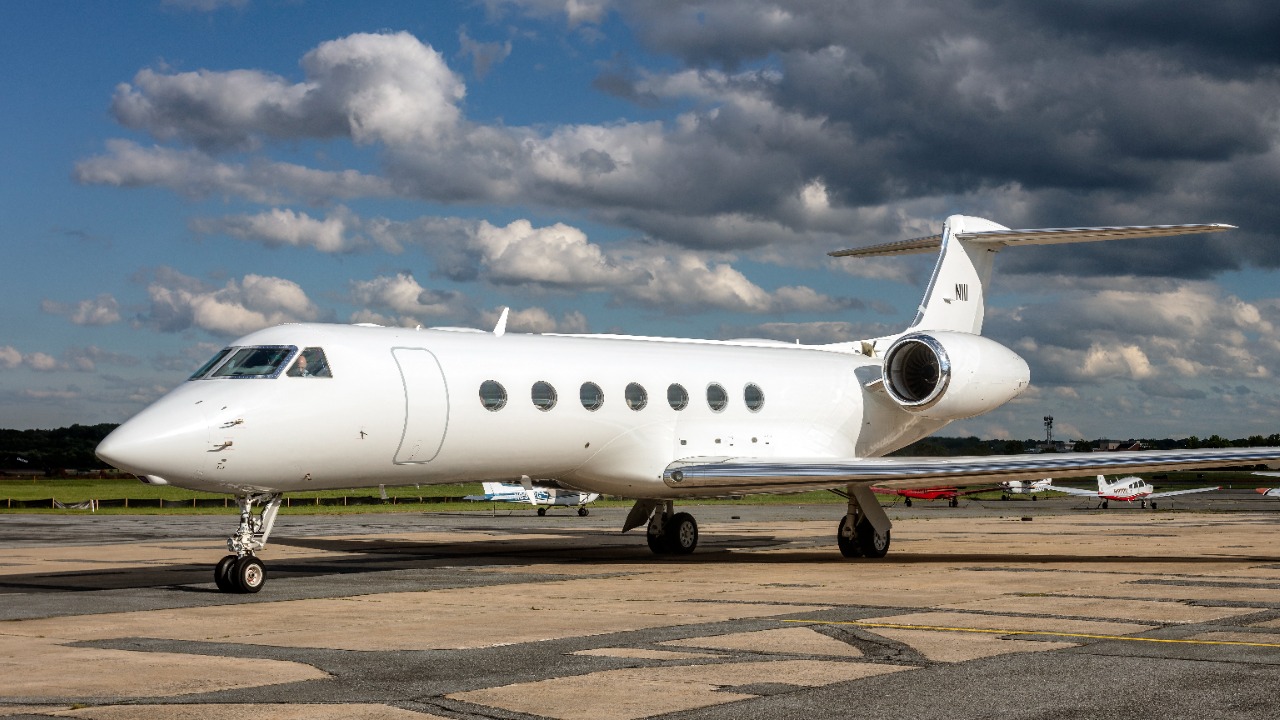

Gulfstream jets are among the most recognizable symbols of corporate and private aviation, but the story of who actually builds them and where they are assembled is far more complex than a single factory floor. The brand sits at the center of a global industrial network that stretches from the U.S. Deep South to the Midwest, from northern Mexico to the outskirts of Tel Aviv, with each site handling a specific slice of the work. Understanding that footprint is the key to understanding how these aircraft are designed, manufactured, and finished for some of the world’s most demanding customers.
In practice, that means separating the marketing image of a sleek business jet from the reality of a multi‑stage production chain that involves a parent defense contractor, specialized partners, and a cluster of completion centers. I will walk through who owns Gulfstream, how its main plants are organized, why some models are built abroad, and how interior customization and support facilities round out the picture of where Gulfstream jets are actually made.
Gulfstream’s corporate parent and Savannah roots
The company behind these aircraft is Gulfstream Aerospace, a business jet manufacturer that operates as a Subsidiary within a larger defense and aerospace group. That structure matters because it gives Gulfstream access to capital, engineering depth, and long‑term planning that would be difficult for a stand‑alone Company to match. The firm’s product line, which includes long‑range models such as the Gulfstream G650, Gulfstream G700, and Gulfstream G800, is the visible tip of a much larger industrial iceberg that is financed and coordinated at group level.
Historically, Gulfstream’s identity has been tied to the U.S. Southeast, and especially to Savannah. The Gulfstream Aerospace Corporation entry in the New Georgia Encyclopedia underscores that the business is based in Savannah and traces its lineage back to the original Gulfstream I, which helped define the modern business turboprop. That early decision to anchor operations in Georgia set the stage for a cluster of design, manufacturing, and completion facilities that still form the core of the company’s footprint today.
How General Dynamics investment shapes the factory network
Gulfstream’s ability to expand its manufacturing base is closely tied to the backing of its parent, General Dynamics. On its own corporate narrative, the company notes that it is Powered by investment from General Dynamics, which allows it to “chart a bold path for the future” as it develops new aircraft and technologies. In practical terms, that capital has funded new plants, upgraded tooling, and a broader global support network that would be difficult to sustain on aircraft sales alone, especially through cyclical downturns.
That same story emphasizes how General Dynamics’ resources support long‑term research and development, from advanced aerodynamics to cabin systems. The parent’s role is not just financial; it also shapes Gulfstream’s risk tolerance and its willingness to launch clean‑sheet programs like the G700 and G800. With General Dynamics underwriting those bets, Gulfstream can commit to large, multi‑year factory projects and workforce expansions that align with its next‑generation fleet rather than reacting piecemeal to short‑term demand.
Savannah as headquarters and wing‑building powerhouse
At the center of the production map is Savannah, which functions as both headquarters and a major manufacturing hub. The company recently highlighted that Gulfstream Produces its Aircraft Wing structures in Savannah, describing how its in‑House Precision Manufacturing Facility Supports Demand for Ne w‑generation jets. That milestone of the 1,000th wing underscores how much of the structural work for the large‑cabin fleet is concentrated at the Georgia headquarters, where engineering teams and production lines sit side by side.
Industry coverage of the same achievement notes that Building on the innovations introduced with the G650, Gulfstream used its Georgia headquarters to develop and manufacture wings for its next‑generation fleet. That continuity matters: by keeping wing design and production in Savannah, the company can iterate on aerodynamics, materials, and manufacturing techniques in a single campus, then roll those improvements directly into the G700 and G800 programs without fragmenting the knowledge base across multiple sites.
New Savannah facilities and the scale of the local workforce
Savannah is not just a legacy site; it is still expanding. Reporting on a recent unveiling describes how Gulfstream opened a new manufacturing facility tied to the G700 program, with Burns, a native Savannahian, noting that she started with the company nearly 40 years ago when it produced only the G3. That reference to “40” years of personal experience is a reminder of how long the brand has been embedded in the local economy and how much the product line has evolved from a single model to a multi‑type fleet.
The same account points out that the expansion adds to the area’s already 12,000‑plus workforce, with many of those employees living in surrounding communities and commuting into the Savannahian industrial corridor. That scale of employment helps explain why local officials treat Gulfstream as a cornerstone manufacturer, and why new facilities are framed not just as corporate investments but as regional economic events that ripple through suppliers, schools, and housing markets.
Deep South footprint: Savannah, St. Louis, Dallas and beyond
While Savannah is the flagship, Gulfstream’s manufacturing and completion network extends across the Deep South and Midwest. A detailed overview of the company’s history notes that How Much Money Should You Have Before Hiring a Financial Advisor is not the only question high‑net‑worth buyers ask; they also want to know where their jets are built. That same reporting stresses that Gulfstream Aerospace Corp has strong roots in the Deep South, with major operations in Georgia and additional facilities that handle service and completions, as well as a design space in London, England for European clients.
On the manufacturing side, the company has highlighted that interior completions are performed in Savannah and at facilities in St. Louis and Dallas. One corporate update explains that Interior completions are also performed in Savannah, as well as at Gulfstream sites in St. Louis and Dallas, which allows the company to spread high‑labor customization work across multiple locations. That network means a jet’s green airframe might be assembled in one place, then flown to another for cabin installation and finishing before delivery.
St. Louis, Dallas–Fort Worth and the customer support web
The St. Louis area plays a specific role in that network, particularly around completions and support. The company has pointed to its presence at St. Louis, Missouri, where industrial infrastructure and an experienced aerospace workforce support interior work and maintenance. That Midwestern location gives Gulfstream a central U.S. node that can serve customers who do not want to route aircraft through the Southeast for every upgrade or heavy check.
Further south and west, the company has been expanding its service presence in Texas. A recent announcement on its network explains that operations at Louis Downtown Airport in Illinois are complemented by growing Customer Support capacity in the Dallas–Fort Worth area. By investing in Dallas and Fort Worth, Gulfstream is effectively building a triangle of support between Georgia, Missouri, and Texas, which shortens ferry flights for maintenance and gives operators more options for scheduling downtime.
Appleton, Wisconsin and the rise of northern completion centers
Not all Gulfstream work happens in the South. The company has invested heavily in Appleton, a city in the upper Midwest that has become a key completions and maintenance hub. A recent delivery of a flagship jet highlighted that the aircraft was outfitted at Gulfstream (Gulfstream Aerospace) facilities in Appleton, Wisconsin, underscoring how much high‑end interior and modernization work is now handled there. That same site also functions as a modernised maintenance, repair and overhaul centre, giving operators in the northern United States a closer option for heavy work.
The city itself, Appleton, Wisconsin, offers a combination of airport access and manufacturing talent that has made it attractive for aerospace investment. A separate reference to Appleton in mapping data reinforces its role as a regional center, with Gulfstream’s presence adding a layer of specialized aviation employment on top of the broader industrial base. For customers, the key takeaway is that a jet’s final look and feel may owe as much to technicians in Wisconsin as to engineers in Georgia.
International manufacturing: Tel Aviv and Mexicali
Gulfstream’s global footprint is not limited to service centers; some aircraft are physically built outside the United States. The clearest example is the Gulfstream G280, a twin‑engine business jet that is manufactured by a partner in the Middle East. According to technical documentation, The Gulfstream G280 is a Gulfstream designed aircraft built by Israel Aerospace Industries (IAI) under a new type certificate, with IAI handling the physical assembly. That arrangement means the jet’s fuselage and wings are produced in Israel, then integrated into Gulfstream’s broader sales and support ecosystem.
The manufacturing work for that program is centered near Tel Aviv, Israel, where Israel Aerospace Industries, often abbreviated as IAI, has its main facilities. That location gives Gulfstream access to a highly experienced aerospace partner while allowing it to focus its own U.S. plants on larger‑cabin models. In parallel, the company has also tapped manufacturing capacity in northern Mexico, with industrial data pointing to aerospace activity in Mexicali, Mexico, a city that has become a cross‑border hub for aviation suppliers. While the precise breakdown of Gulfstream work there is not fully detailed in the available sources, the inclusion of Mexicali in the company’s geography reflects a broader trend of using specialized plants outside the U.S. for components and subassemblies.
From green airframe to bespoke cabin: how completions work
For many buyers, the most visible part of the manufacturing process is not the wing jig or fuselage line but the cabin completion stage. Industry guides on private aviation stress that Customizing the interior of a private jet to suit personal tastes and requirements is appealing but comes at a cost, with Completion centers charging significant sums depending on the level of personalization and materials used. Gulfstream’s own network of completion facilities in Savannah, St. Louis, Dallas, and Appleton is designed to capture that high‑margin work in‑house rather than outsourcing it to third parties.
The complexity of this stage is not unique to Gulfstream. A look at the private jet version of Boeing’s 777X, for example, notes that Once the design is finalized, the actual fitout of the interior is not done by the airframer itself but by specialist companies that are licensed to carry out the work. Gulfstream’s decision to keep much of its completion activity within its own facilities is therefore a strategic choice: it allows tighter control over quality and schedule, but it also requires a larger footprint of skilled craftspeople and dedicated hangars across multiple cities.
Why heritage and geography matter to Gulfstream buyers
For prospective owners, the question of who builds Gulfstream jets and where they are made is not just trivia; it shapes perceptions of quality, support, and resale value. Market overviews aimed at buyers emphasize that One of the best‑known names in Business Aviation, Gulfstream traces its origins to the 1950s and Grumman Aircraft Engin eering, and that heritage is part of the brand’s appeal. Knowing that a long‑range jet’s wing was built in Savannah, its cabin finished in Appleton, and its support handled through Dallas or St. Louis gives buyers a sense of the industrial depth behind the logo on the tail.
At the same time, the global nature of the production chain means that a “Gulfstream” is rarely the product of a single city. The G280’s reliance on Israel Aerospace Industries near Tel Aviv, the use of facilities in Mexicali, and the spread of completion centers across the United States all reflect a modern aerospace reality in which design, manufacturing, and finishing are distributed across borders. For a customer weighing whether to step into the Gulfstream ecosystem, understanding that network is as important as comparing cabin layouts or range charts, because it reveals how the company plans to support the aircraft over decades of service.
More from MorningOverview