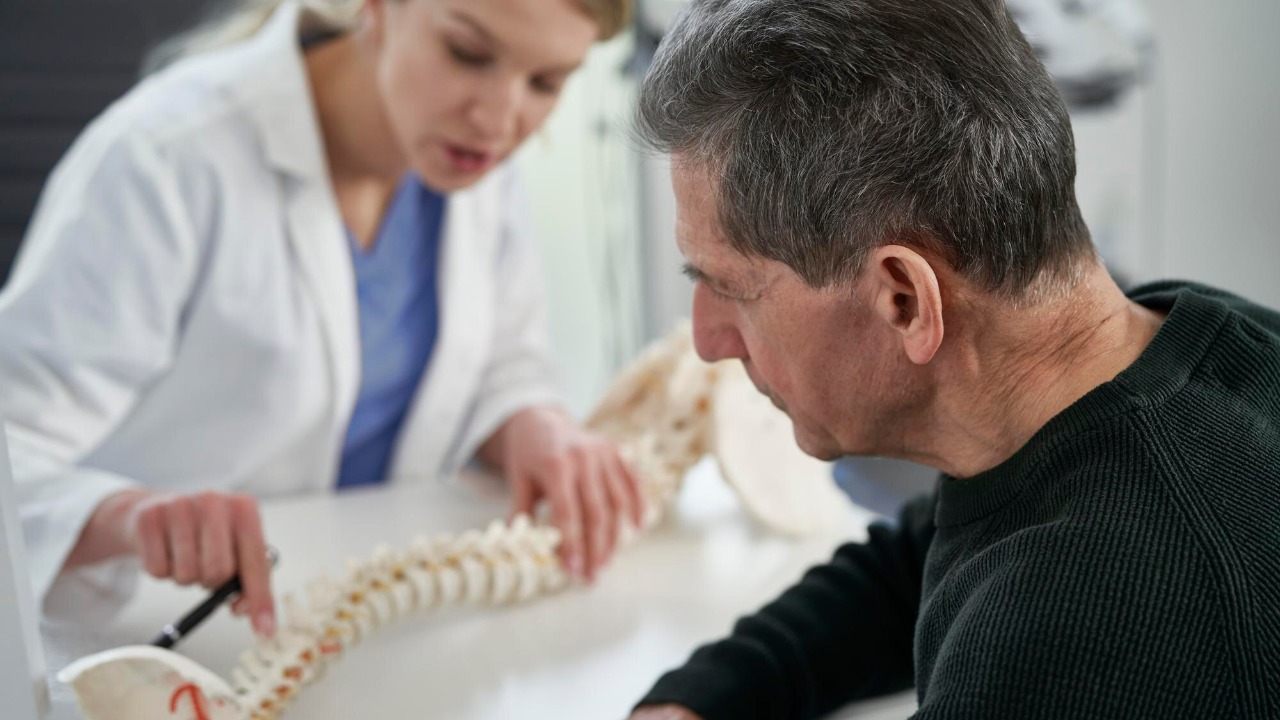

For decades, osteoporosis has meant a slow, one way slide toward fragile bones and fracture risk, managed but rarely truly improved. Now a series of discoveries is giving researchers reason to think that, instead of simply slowing bone loss, future treatments might actually rebuild damaged skeletons. At the center of that optimism is a newly spotlighted cell receptor that appears to switch bone building cells back on, hinting at therapies that could one day reverse osteoporosis like damage rather than just contain it.
Those advances are arriving just as clinicians are rethinking how lifestyle, nutrition, and emerging drugs can work together to protect bone. The science is still early and no one is promising an overnight cure, but the direction of travel is clear: the field is moving from damage control toward genuine regeneration, with implications for millions of older adults and younger people at heightened risk of bone loss.
The quiet crisis of thinning bones
Osteoporosis is often described as a silent disease, because bone density can fall for years before the first fracture exposes how fragile the skeleton has become. As experts like Prof. Cyrus Cooper explain, osteoporosis is the commonest bone disorder worldwide, associated with reduced bone density and an increased risk of fractures that can upend independence and quality of life. In practical terms, that means a minor fall that might have caused a bruise in midlife can later result in a hip or spine fracture that requires surgery and long rehabilitation.
What makes this especially concerning is that bone loss accelerates with age and hormonal change, yet it is also influenced by diet, physical activity, and other modifiable factors. In a detailed discussion of prevention, Prof. Cooper and Tim highlight how everyday choices around calcium, vitamin D, and protein intake can either buffer the skeleton or leave it more vulnerable, underscoring that what to eat to avoid osteoporosis is not an abstract question but a daily decision with long term consequences, as laid out in their conversation from Apr.
Why current osteoporosis drugs are not enough
For people already diagnosed, the standard toolkit has long focused on slowing further damage rather than rebuilding what is lost. Most current medications work to preserve bone rather than add new bone, an approach that stabilizes density but often leaves patients with a skeleton that is still weaker than it was before osteoporosis took hold. As Dr. Singer notes, there are new drugs awaiting FDA review that aim to shift this balance, but the dominant paradigm remains defensive, centered on preventing additional fractures instead of restoring robust bone strength.
Some therapies do try to push the body toward construction rather than conservation. Anabolic drugs increase the rate of bone formation, and according to the National Osteoporosis Foundation, there is a type of medication approved by the FDA that actively rebuilds bone for people at very high fracture risk. Even so, these anabolic options are typically used for limited periods and then followed by antiresorptive drugs, which means that for most patients, the long term plan is still about maintenance. That is why clinicians and patients alike are paying close attention to emerging research on treatments that might both protect and regenerate, as described in guidance on how to get stronger bones with Anabolic therapies and the broader overview of why Most existing drugs still fall short of true reversal.
A receptor called GPR133 reshapes the conversation
The most eye catching development in this shift toward regeneration is the identification of a cell receptor called GPR133 that appears to act as a master switch for bone building cells. Researchers from the University of Leipzig and Shandong University have shown that activating this receptor in experimental models can wake up osteoblasts, the cells responsible for laying down new bone, and in the process helped reverse osteoporosis like damage in animals. The work suggests that GPR133 is not just another molecular player but a central control point that could be targeted to restore bone density where it has already been lost.
What makes this receptor so intriguing is that it seems to be dormant or underused in many adults with bone loss, yet still present and capable of being reactivated. A detailed report on the huge scientific discovery that could one day reverse osteoporosis explains how a new collaborative study from Leipzig, Germany and Shandong University in Jinan, China mapped the role of GPR133 and showed that stimulating it could spur bone formation in damaged tissue. The same reporting notes that future gene based tools could stimulate inactive GPR133 genes, opening the door to therapies that do not just mimic hormones or block resorption but directly reprogram the cells that build bone, as described in coverage of the There receptor and the parallel summary of how the researchers from Leipzig, Germany and Shandong University, Jinan, China believe clinical applications may arrive sooner than many specialists expected.
How the new treatment appears to rebuild bone
At the cellular level, the emerging therapies inspired by GPR133 are designed to tip the balance back toward construction by directly energizing osteoblasts. In laboratory work highlighted in a feature on a New Breakthrough to Strengthen Bone Could Reverse Osteoporosis, scientists showed that activating this pathway increased the activity of bone building cells called osteoblasts and led to denser, stronger bone in treated animals. Rather than simply slowing the cells that break bone down, this approach tries to flood the skeleton with new material, effectively patching the microscopic holes that accumulate over years of imbalance between breakdown and repair.
That distinction matters because it hints at a future in which patients might see measurable gains in bone density, not just a plateau. The same reporting notes that this New Breakthrough is part of a broader effort to design drugs that can be given systemically yet act precisely on the GPR133 pathway, limiting side effects while maximizing bone formation. In parallel, social media summaries of the underlying research emphasize that Nov researchers from the University of Leipzig and Shandong University identified GPR133 as a key receptor and that experimental activation helped reverse osteoporosis like damage in preclinical models, a finding that has been widely shared as a potential game changer in how clinicians think about rebuilding bone, as captured in the description of how New Breakthrough therapies might work and the Instagram summary noting that Nov Researchers at the University of Leipzig and Shandong University pinpointed GPR133.
Other research pointing toward bone regeneration
GPR133 is not the only path scientists are exploring to move from preservation to repair. In SACRAMENTO, a team at Davis Health has reported potential keys to reversing bone loss that focus on how bone cells communicate with their environment and respond to mechanical and biochemical cues. Their work suggests that by targeting specific signaling pathways, it may be possible to encourage bone forming cells to become more active while simultaneously dialing down the cells that resorb bone, creating a double effect that both protects and rebuilds the skeleton.
The Davis Health researchers describe this as a promising new treatment path for various bone loss conditions, not just classic postmenopausal osteoporosis, which hints at applications for people with inflammatory diseases, long term steroid use, or cancer therapies that erode bone. Their findings sit alongside the GPR133 story as part of a broader shift in the field toward interventions that can reverse bone loss at the tissue level, rather than simply slowing its progression, as detailed in their report on a SACRAMENTO based study that outlines a promising new treatment path.
What large clinical trials already tell us
While the newest receptor based therapies are still in preclinical or early human testing, there is already solid trial evidence that more aggressive strategies can meaningfully change fracture risk. Over two years, 4,093 women with osteoporosis and a fragility fracture were randomly assigned to one of two groups in a major study that tested a drug designed to both increase bone formation and decrease bone resorption. The results showed that targeting both sides of the bone remodeling equation could significantly reduce new fractures, reinforcing the idea that rebuilding and protecting can be combined in a single treatment plan.
That trial is important because it proves that the skeleton can respond robustly when the right signals are delivered, even in people who already have substantial bone loss. It also provides a template for how future GPR133 based or signaling focused drugs might be evaluated, with large randomized groups and clear fracture outcomes rather than just changes in bone density scans. The detailed report on this significant breakthrough in treating osteoporosis emphasizes that the dual action drug worked by increasing bone formation and decreasing bone resorption in those 4,093 participants, offering a real world example of how a more regenerative approach can translate into fewer broken bones, as described in the account that begins with Over two years of follow up.
How lifestyle could amplify future therapies
Even as the science races ahead, specialists are clear that any future bone rebuilding drug will work best on a foundation of healthy habits. Weight bearing exercise remains one of the most powerful non pharmaceutical tools for maintaining and improving bone strength, because it sends a mechanical signal that encourages bones to adapt and thicken. Guidance on bone health stresses the importance of staying active, with Weight bearing exercises like brisk walking, jogging, stair climbing, and dancing singled out as practical ways to build strong bones and slow bone loss in everyday life.
Those same recommendations also highlight lifestyle choices that can either support or sabotage the skeleton, including avoiding tobacco and limiting heavy alcohol use, both of which are linked to weaker bones. The idea is that by combining regular movement, adequate calcium and vitamin D intake, and avoidance of bone harming habits, patients can create a biological environment in which new drugs have the best chance to work. That is why experts emphasize that even the most advanced therapy will likely be paired with lifestyle changes for enhanced effects, a point echoed in advice that urges people to Stay active with Weight bearing workouts and in social media summaries that note this suggest the treatment could one day be paired with lifestyle changes for people at heightened risk of bone loss, as captured in the Instagram reel that begins with Oct and the phrase Although the study was early stage.
What reversal might look like for patients
If the GPR133 based therapies and related signaling drugs fulfill their early promise, the experience of living with osteoporosis could change in several concrete ways. Instead of being told that the goal is simply to prevent further decline, patients might be offered a time limited course of a bone building drug designed to restore density toward a safer range, followed by a maintenance plan that keeps that new bone in place. For someone who has already suffered a fragility fracture, that could mean a realistic chance of regaining enough strength to reduce the fear of another break with every misstep.
Clinicians would still need to tailor these treatments carefully, especially for people with other medical conditions or those taking medications that affect bone. Monitoring would likely involve regular bone density scans, blood tests to track markers of bone turnover, and close attention to side effects, just as with current anabolic drugs and antiresorptives. Yet the psychological shift from managing inevitable decline to actively rebuilding could be profound, offering patients a sense that their skeleton is not a fixed liability but a living tissue that can respond to the right signals, much as it already does in response to targeted exercise, nutrition, and the best of today’s pharmacologic tools.
More from MorningOverview