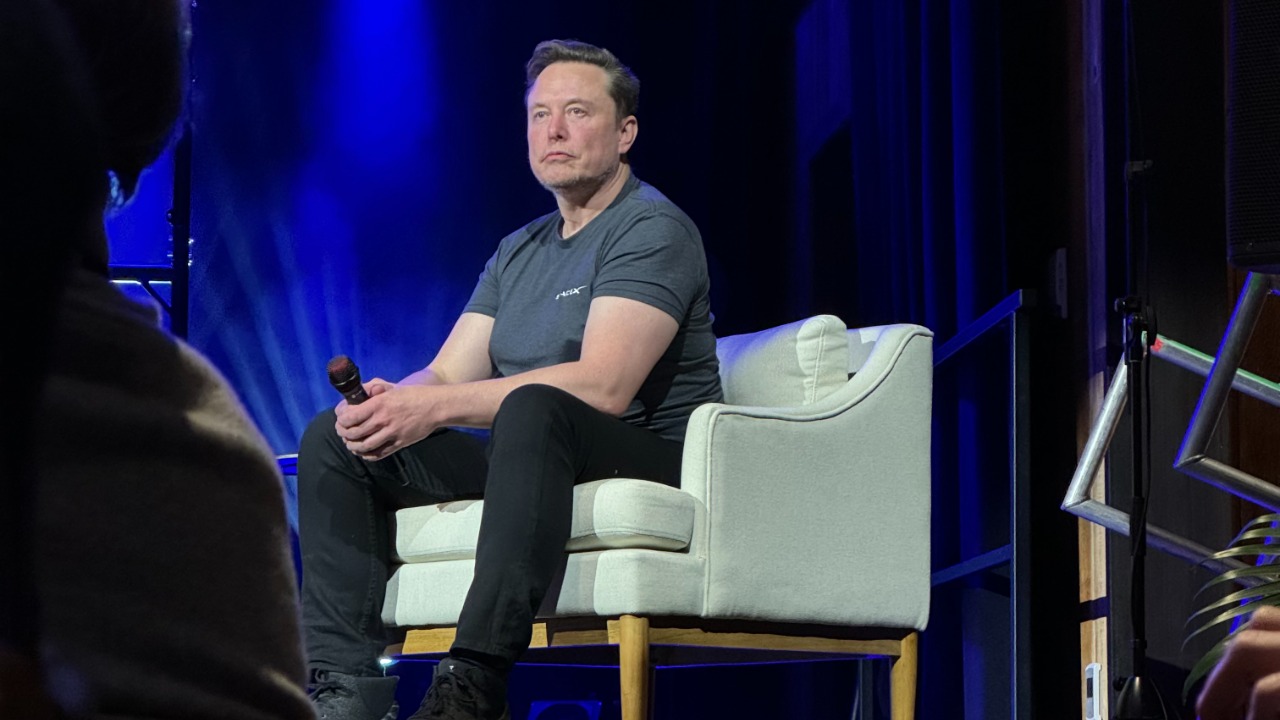

Elon Musk is sketching a future in which artificial intelligence and humanoid robots erase material hardship so thoroughly that paychecks and savings accounts fade into the background. In his telling, machines will handle almost all productive work, leaving people with a guaranteed standard of living and the freedom to treat jobs as a hobby rather than a necessity.
That vision, which stretches from factory floors to national economic policy, is forcing a sharper debate about what happens when technology collides with the basic logic of wages, wealth and welfare. I see Musk’s claims as less a concrete roadmap than a stress test for how prepared societies are for a world where traditional notions of work and money no longer anchor everyday life.
Musk’s promise of “universal high income”
Musk has started to describe the coming AI boom in almost utopian economic terms, arguing that advanced systems will generate so much value that every person can enjoy what he calls a “universal high income.” In public remarks, he has suggested that within roughly 10 to 20 years, work could be optional for most people because artificial intelligence and robots will be doing nearly all of the labor that currently earns human wages, a claim he links directly to the idea that saving money will become far less important than it is today. He frames this as a structural shift, not a marginal tweak, saying that AI and robotics are the only technologies capable of transforming living standards at that scale, and that they could even help address problems as large as the massive United States debt burden if harnessed correctly, a sweeping argument he has tied to the rise of universal high income.
In this narrative, the familiar trade off between time and money starts to dissolve because machines can produce goods and services at near zero marginal cost, making scarcity less binding. Musk’s language is deliberately provocative, but the core claim is straightforward: if AI systems can design products, run logistics, manage finance and even perform care work, then the economic pie grows so large that distributing a generous slice to everyone becomes technically feasible. The unresolved question is political rather than technological, namely whether governments and companies will choose to share that surplus broadly or allow it to concentrate among the owners of the algorithms and robots.
From “no poverty” to money becoming “irrelevant”
Alongside the income argument, Musk has begun to talk in absolutes about the end of deprivation itself, saying there will be “no poverty” in the future if AI and robotics unfold as he expects. He describes this destination as a state of “sustainable abundance,” where the basic needs of housing, food, healthcare and education are guaranteed at a level that makes traditional measures of poverty obsolete. In that scenario, he argues, the relevance of money declines dramatically because access to essentials is no longer mediated by paychecks or savings balances, a point he has tied to the idea that the economic system will be reoriented around abundant production rather than scarcity, a vision he has summarized as a future with no poverty.
He has gone further by predicting that money itself could become “irrelevant” as a social organizing tool once AI and robotics reach full maturity. In that framing, currency is a workaround for limited resources and human labor, and if both constraints are relaxed by machines that can work continuously at low cost, then the need to price every interaction in dollars or euros diminishes. Musk has linked this to a world where people are free to pursue personal interests, creativity and relationships without the constant pressure of earning enough to survive, a future he has contrasted with today’s reality in which most adults still depend on wages and savings to secure their basic needs, even as he insists that AI and robotics will eventually make money irrelevant.
Optimus and the robot workforce Musk is counting on
At the center of Musk’s poverty free future is a very specific machine, the Tesla humanoid robot known as Optimus. He has argued that fleets of these robots, deployed in factories, warehouses and eventually homes, could handle a vast share of physical tasks, from assembly line work to basic household chores, effectively multiplying the productive capacity of the human workforce. In a speech delivered after shareholders approved a multitrillion pay package for him, he claimed that Optimus would “eliminate poverty” by making it possible to produce goods and services at a scale and cost that current labor markets cannot match, tying his personal compensation directly to the success of a robot he says can help eliminate poverty.
Musk has also folded Optimus into a broader narrative about AI powered humanoids that extends beyond Tesla’s factories. In a live appearance, he placed the robot alongside other grand predictions, from Mars settlements to flying cars and even immortality by 2030, and then added a new claim, that AI will reshape everyday life by taking over most routine work. In that setting, he described a future where humanoid robots are as common as cars, performing tasks in offices, hospitals and homes, and suggested that this wave of automation would be the engine that drives his promised era of abundance, a vision he set out while discussing AI and humanoid robots in a live broadcast.
AI as the end of compulsory work
Beyond the hardware, Musk is betting on software advances that make AI systems capable of handling complex cognitive tasks, from scheduling and logistics to financial analysis and customer service. He has argued that in sectors like finance and logistics, AI is already cutting workloads by more than half, and that the world’s economy is quietly bending under the weight of these new tools. In one discussion, he framed this as the beginning of the end of compulsory work, suggesting that as AI systems become more capable, the share of tasks that truly require human judgment will shrink, leaving people to choose work for meaning or passion rather than necessity, a shift he described while predicting the end of compulsory work.
That argument rests on the idea that AI is not just another productivity tool but a general purpose technology that can be applied across nearly every industry. If algorithms can manage supply chains, optimize energy grids, draft legal documents and even generate software code, then the marginal value of an additional human worker in many roles declines. Musk’s optimism is that societies will respond by shortening workweeks, expanding leisure and providing income floors, rather than by allowing mass unemployment and inequality to fester. The tension is that the same technologies that make universal high income technically feasible also give employers and governments unprecedented power to monitor and control both labor and information.
Why Musk says savings and pensions may not matter
One of Musk’s more provocative claims is that traditional saving could become less relevant in the long run because AI and robotics will guarantee a high baseline standard of living. In social media posts, he has argued that rapid advances in these technologies will change the logic of personal finance, making it less important to accumulate large retirement accounts or children’s college funds when the economy itself is structured to provide for basic needs. He frames this as a shift from individual responsibility to systemic abundance, suggesting that the old advice to save diligently for decades may not fit a world where AI driven productivity ensures that everyone has access to housing, healthcare and education, a point he made while arguing that rapid advances in AI and robotics will reshape saving.
He has repeated this theme in another post, where he dropped what he called a future “truth bomb” about how deposits and savings accounts might lose their central role in household security. In that message, he again tied the argument to AI and robotics, suggesting that as these systems drive down the cost of essentials and increase overall wealth, the need to stockpile money in bank accounts diminishes. The implication is that pension systems, 401(k) plans and even children’s savings accounts could look outdated in a world where the state or AI enabled institutions guarantee a high standard of living, an idea he floated while predicting that traditional deposits and savings would matter less.
Clashing with Trump’s savings first approach
Musk’s abundance narrative has put him at odds with President Donald Trump’s more traditional emphasis on personal saving and family responsibility. When Trump promoted a children’s savings plan that encourages parents to set aside money for their kids’ futures, Musk publicly questioned whether that approach made sense in a world he believes is heading toward AI driven prosperity. He contrasted the idea of individual families scraping together savings with his own belief that AI and robotics will generate enough wealth to support every child at a high standard of living, a disagreement that surfaced when Billionaire Elon Musk questioned Trump’s plan.
That clash is more than a personality dispute, it highlights a deeper divide over how to prepare for technological change. Trump’s children’s savings plan assumes that the future will still be organized around individual accounts, interest rates and personal responsibility, while Musk is effectively arguing for a system level reset in which AI powered abundance makes such plans less critical. The political stakes are significant, because policies built around savings accounts and tax advantaged plans may look misaligned if AI does deliver universal high income, yet Musk’s scenario also raises questions about who controls the AI infrastructure and how citizens can hold those actors accountable if traditional financial levers lose their force.
Public reaction: awe, skepticism and fear
Musk’s sweeping predictions have drawn a mix of fascination and pushback, especially when he talks about ending poverty and making savings obsolete. In one widely shared segment, a commentator noted that every few years a tech billionaire makes a grand prophecy, listing cities on Mars, flying cars for everyone and immortality by 2030 as examples, before turning to Musk’s latest claim that AI will end poverty and money. The tone captured a broader skepticism that while such visions are compelling, they often gloss over the messy politics and social disruption that accompany technological change, a critique aired while discussing whether AI will end poverty and money.
Other coverage has focused on the practical implications of Musk’s statements, noting that his comments quickly reignited debates about whether technological progress can realistically deliver a world without poverty. Analysts have pointed out that even if AI driven productivity makes universal high income technically possible, there is no guarantee that governments will implement the policies needed to distribute that wealth fairly. Some have also warned that telling people savings will be obsolete could be dangerous if the promised abundance fails to materialize on schedule, a concern raised in reporting that examined his claim that AI will end poverty and make savings obsolete.
How Musk’s AI optimism fits his broader futurism
Musk’s economic predictions do not exist in isolation, they are part of a long running pattern of bold futurist claims that range from colonizing Mars to building fleets of flying cars and even achieving immortality by 2030. In one live discussion, a host rattled off that list of past promises before noting that Musk had added a new one, that AI will transform life on Earth by making work optional and eliminating poverty. The segment underscored how his latest economic vision sits alongside earlier bets on space travel, electric vehicles and brain computer interfaces, all of which share a belief that technology can rewrite the rules of human existence, a belief he reiterated while talking about AI and humanoid robots in a live appearance.
That broader context matters because it shapes how seriously audiences take his claims about money becoming irrelevant. On one hand, Musk has a track record of pushing industries like electric cars and private spaceflight from the margins to the mainstream, which gives his AI forecasts a certain credibility. On the other, some of his timelines have proven wildly optimistic, and critics argue that his economic predictions may be similarly overconfident. The tension between his visionary track record and his tendency to overpromise is part of why his comments about universal high income and the end of savings spark such intense debate.
Political theater and the global stage
Musk’s AI narrative is also unfolding against a backdrop of political theater that extends beyond the United States. In one video segment, the discussion of his predictions about work and poverty was interwoven with coverage of President Donald Trump’s diplomatic calendar, including a note that President Donald Trump said he will host New York’s mayor elect Zoran Mamani for a meeting on Friday after a fierce political fight. The juxtaposition highlighted how Musk’s ideas about AI driven abundance are being debated in the same media space as traditional political maneuvering, from city hall appointments to national policy fights, a blend captured in coverage that mentioned Trump’s plan to meet Zoran Mamani for talks.
Internationally, Musk’s claims are being filtered through local concerns about jobs, inequality and social stability. In some countries, leaders may see AI and robotics as tools to leapfrog stages of industrial development, while in others, unions and civil society groups worry about mass displacement of workers without adequate safety nets. The fact that Musk’s comments are being discussed in outlets that also track high profile political meetings and economic policy debates suggests that his vision is not just a tech story but a geopolitical one, with implications for how nations position themselves in an AI driven global economy.
The unresolved risks behind a world without paychecks
For all the optimism, Musk’s vision of life without poverty or paychecks leaves major risks unresolved. If AI and robotics do make money less central, societies will need new ways to allocate status, opportunity and power, since those have long been tied to income and wealth. There is also the question of who owns the AI systems and robot fleets that generate the abundance, because if a small group of companies or individuals controls that infrastructure, they could wield enormous influence even in a world where basic needs are met. Musk himself has acknowledged that AI and robotics are the only things that can solve problems as large as the massive US debt crisis, but that concentration of capability also raises the specter of new forms of dependency and control, a dynamic he hinted at while arguing that AI and ROBOTICS ARE uniquely powerful.
There is also the practical challenge of managing the transition from today’s wage based economy to the post scarcity world Musk describes. In the near term, AI is likely to displace some workers, compress wages in certain sectors and increase returns to capital, all before any universal high income system is in place. Policymakers will have to decide whether to introduce measures like universal basic income, job guarantees or aggressive retraining programs, and those decisions will be shaped by political ideologies that do not always align with Musk’s techno optimism. As debates over AI regulation, data ownership and labor rights intensify, his prediction that money will become irrelevant may serve less as a forecast and more as a provocation, forcing governments, companies and citizens to confront what kind of economic order they want in an age of intelligent machines, a provocation he sharpened when he said technology could make money irrelevant and free.
More from MorningOverview