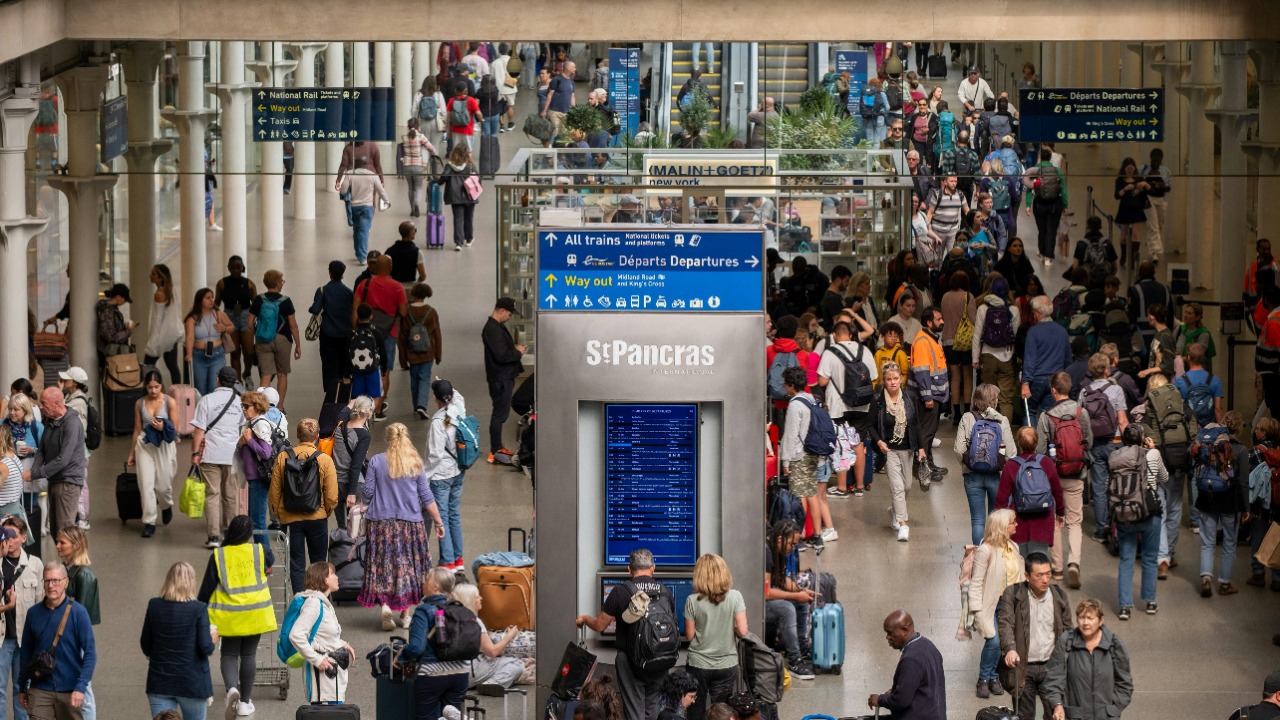

For years, airport Wi-Fi has been the default move for anyone trying to stream, work, or download a show before boarding. Fresh performance data now flips that habit on its head, showing that in much of the United States, your phone’s cellular connection is not just competitive, it is often decisively faster than the terminal hotspot. The latest airport tests make that gap impossible to ignore, and they point to a broader shift in how travelers should think about staying connected between check-in and takeoff.
I see a clear story in the numbers: mobile networks have quietly turned into the primary high-speed lane at many major hubs, while public Wi-Fi has struggled to keep up with demand and investment. That reality has implications for how airports design their infrastructure, how carriers market their plans, and how each of us decides which icon to trust in the status bar when the boarding group starts to line up.
Airport speed tests that broke the Wi-Fi myth
The most striking finding in the new data is simple: in most U.S. airports that were tested, mobile providers delivered a faster median download speed than the local Wi-Fi network. The testing looked at real-world performance inside terminals, not lab conditions, and found that cellular connections often provided more than twice the throughput that travelers saw when they joined the airport SSID. That kind of margin is not a rounding error, it is the difference between a smooth 4K Netflix stream and a buffering wheel.
According to the detailed airport breakdown, Mobile providers came out ahead in a majority of locations, with the report’s Key Takeaways explicitly noting that mobile networks had a faster median download speed than Wi-Fi in most airports and that in many cases they delivered more than double the performance of the public hotspot. Those findings are laid out in the core airport speed analysis, which frames the results as a clear signal that the balance of power between cellular and Wi-Fi has shifted inside terminals.
How often cellular actually wins at the gate
It is one thing to say mobile is “often” faster, and another to quantify how dominant it has become. The testing shows that cellular outperformed Wi-Fi in a large majority of the airports studied, with only a minority of locations where the terminal network still held an edge or managed to tie. In other words, if you walk into a random major U.S. airport today, the odds are that your phone’s data plan will beat the free Wi-Fi on raw speed.
The same dataset highlights that this was not a marginal advantage scattered across a few outliers, but a consistent pattern across dozens of hubs. One section focused on arrivals and departures performance notes that mobile networks were faster than Wi-Fi in 28 airports, including one tie, underscoring how broad the trend has become across the country. That specific tally is spelled out in the airport comparison, which makes clear that the cellular advantage is not confined to a single region or carrier.
Why airport Wi-Fi struggles to keep up
From a technical perspective, the underperformance of airport Wi-Fi is not especially mysterious. Terminal networks are shared infrastructure, often built years ago and then patched to handle ever-growing crowds of laptops, tablets, and phones. When hundreds of people in a gate area all open TikTok, Microsoft Teams, and Disney Plus at once, a Wi-Fi system that has not been aggressively upgraded will buckle, even if the backhaul connection to the internet is robust on paper.
By contrast, modern cellular networks are designed to handle dense crowds with features like advanced antenna arrays, spectrum aggregation, and traffic prioritization. The airport report notes that Mobile providers delivered better median download speeds than Wi-Fi in most locations, which is exactly what you would expect from networks that have been upgraded repeatedly for 5G and high-capacity LTE. The fact that mobile services often reached more than twice the performance of the terminal hotspot, as highlighted in the airport performance report, suggests that many airports have simply not kept pace with the investment curve that carriers have followed.
How big the speed gap really is
When you drill into the numbers, the gap between cellular and Wi-Fi is not just about bragging rights, it is about what you can realistically do before boarding. In some airports, mobile networks delivered nearly double the download speed of the Wi-Fi network, which can be the difference between finishing a large software update and abandoning it halfway through. For travelers trying to sync a work folder in OneDrive or download a full season of a show on Netflix, that extra headroom matters.
One section of the testing spells this out with a direct comparison, noting that cellular outperforms Wi-Fi in many U.S. airports and citing a specific case where mobile delivered 219.24 Mbps versus a much slower Wi-Fi result. That 219.24 Mbps figure, highlighted in the detailed speed comparison, is not theoretical capacity, it is measured performance inside an airport, and it shows how far ahead a well-built cellular network can be when the Wi-Fi system is overloaded or outdated.
Carrier bragging rights inside the terminal
Once you accept that cellular is often the better bet, the next question is which carrier actually delivers. The airport data does not just pit Wi-Fi against mobile in the abstract, it breaks down performance by provider, and that is where the competitive story gets sharper. Some carriers clearly used their spectrum holdings and 5G rollouts to turn airports into showcase environments, while others lagged behind.
One analysis of the same dataset notes that Ookla data shows Verizon delivered significantly higher median download speeds on mobile than travelers saw on Wi-Fi, with a specific comparison of 193 Mbps on cellular versus 101 Mbps on Wi-Fi in certain airport tests. That 193 Mbps versus 101 Mbps split, detailed in the carrier performance breakdown, gives Verizon a clear bragging point in the airport context and illustrates how the cellular advantage is not just about the technology, but also about how aggressively each provider has tuned its network for high-traffic venues.
What this means for your pre-flight routine
For travelers, the practical takeaway is straightforward: if you have a reasonably modern data plan and a recent phone, you should think twice before automatically joining the airport Wi-Fi. In many terminals, staying on 5G or LTE will give you faster downloads, more consistent upload speeds for sending large email attachments, and less frustration when you try to stream a live sports event while waiting to board. The old advice to “save your data and use Wi-Fi” simply does not match the performance reality in a lot of U.S. airports anymore.
That does not mean Wi-Fi is useless. If you are on a very limited data plan, or if your carrier has weak coverage in a particular airport, the terminal network can still be a lifeline, especially for basic browsing and messaging. But the fact that Mobile providers had a faster median download speed than Wi-Fi in most airports, as highlighted in the airport testing summary, suggests that the default choice for many people should now be to trust their cellular connection first and treat Wi-Fi as a backup rather than the other way around.
Why airports and airlines should care
From the perspective of airports and airlines, the shift toward cellular dominance raises uncomfortable questions about infrastructure priorities. Many hubs have spent years advertising “free Wi-Fi” as a passenger amenity, yet the latest data shows that in most cases, that network is no longer the fastest or most reliable option on the concourse. If travelers increasingly ignore the airport SSID in favor of their own data plans, the value of those Wi-Fi investments, and the sponsorships that sometimes support them, starts to erode.
At the same time, the rise of mobile as the primary high-speed lane inside terminals could reshape how airports think about partnerships with carriers. If Mobile providers are already delivering more than twice the performance of Wi-Fi in many locations, as the airport performance overview makes clear, there is a strong case for closer coordination on coverage maps, small cell deployments, and signage that helps passengers understand where their phones will work best. In a world where boarding passes, bag tags, and even in-flight entertainment are increasingly app based, the quality of that cellular connection is no longer a nice-to-have, it is part of the core travel experience.
The future of staying connected between check-in and takeoff
Looking ahead, I expect the gap between cellular and airport Wi-Fi to remain volatile rather than fixed. Some airports will respond to this data by upgrading their Wi-Fi systems, adding more access points, and investing in better backhaul, which could narrow or even reverse the advantage in specific terminals. Others may decide that if Mobile providers are already delivering superior speeds, their best move is to focus on coverage, power outlets, and wayfinding while letting carriers shoulder more of the connectivity burden.
For travelers, the smartest approach is to treat connectivity at the airport as a dynamic choice rather than a reflex. Check your signal strength, run a quick speed test if you have time, and do not be afraid to toggle between Wi-Fi and cellular based on what actually works in that moment. The latest airport data makes one thing clear: the old assumption that Wi-Fi is always the better option has been overtaken by reality, and in many U.S. terminals, your phone’s cellular connection is now the fast lane you can carry in your pocket.
More from MorningOverview